50 won 1978 specimen
About This Note
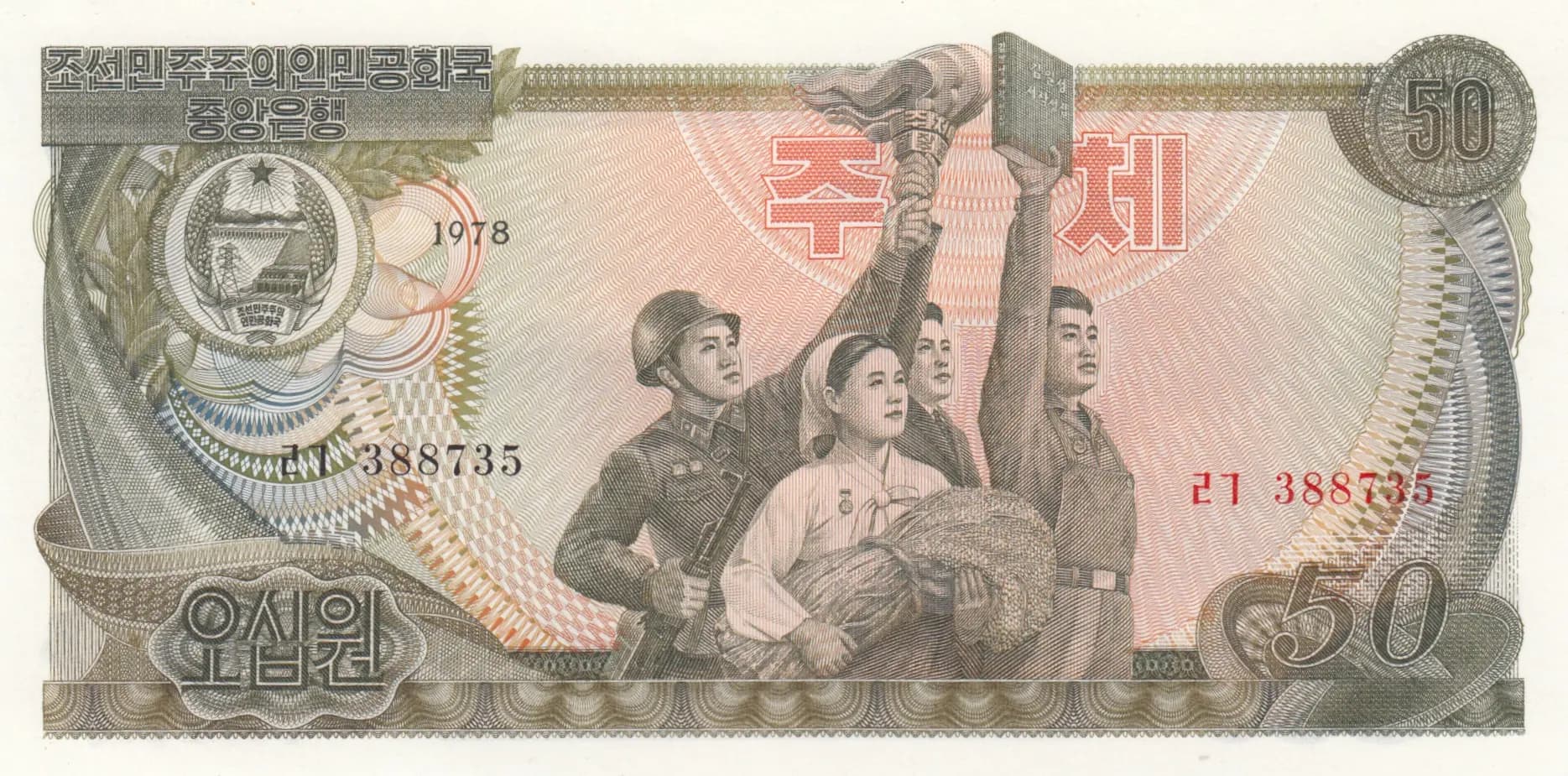
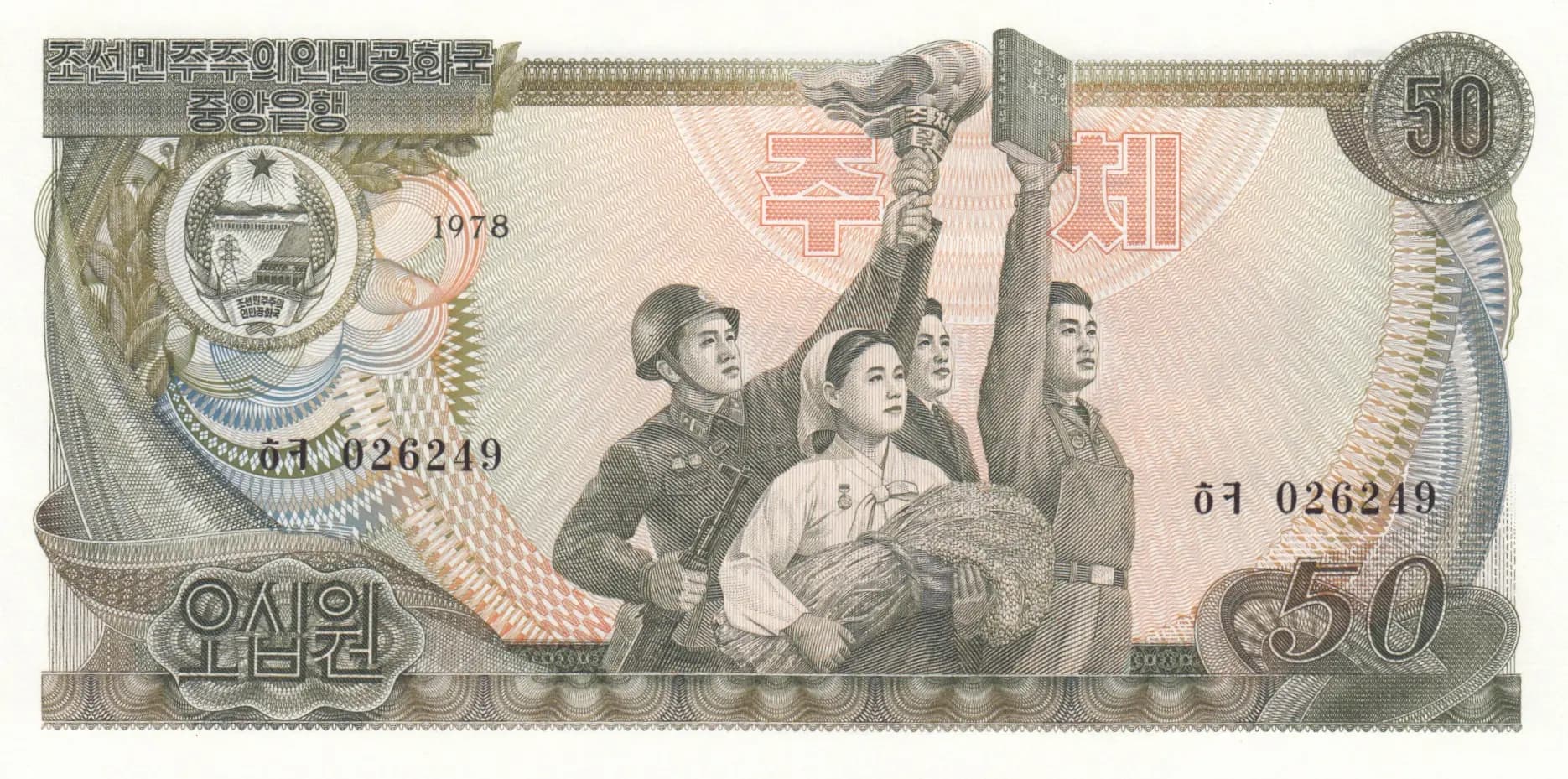
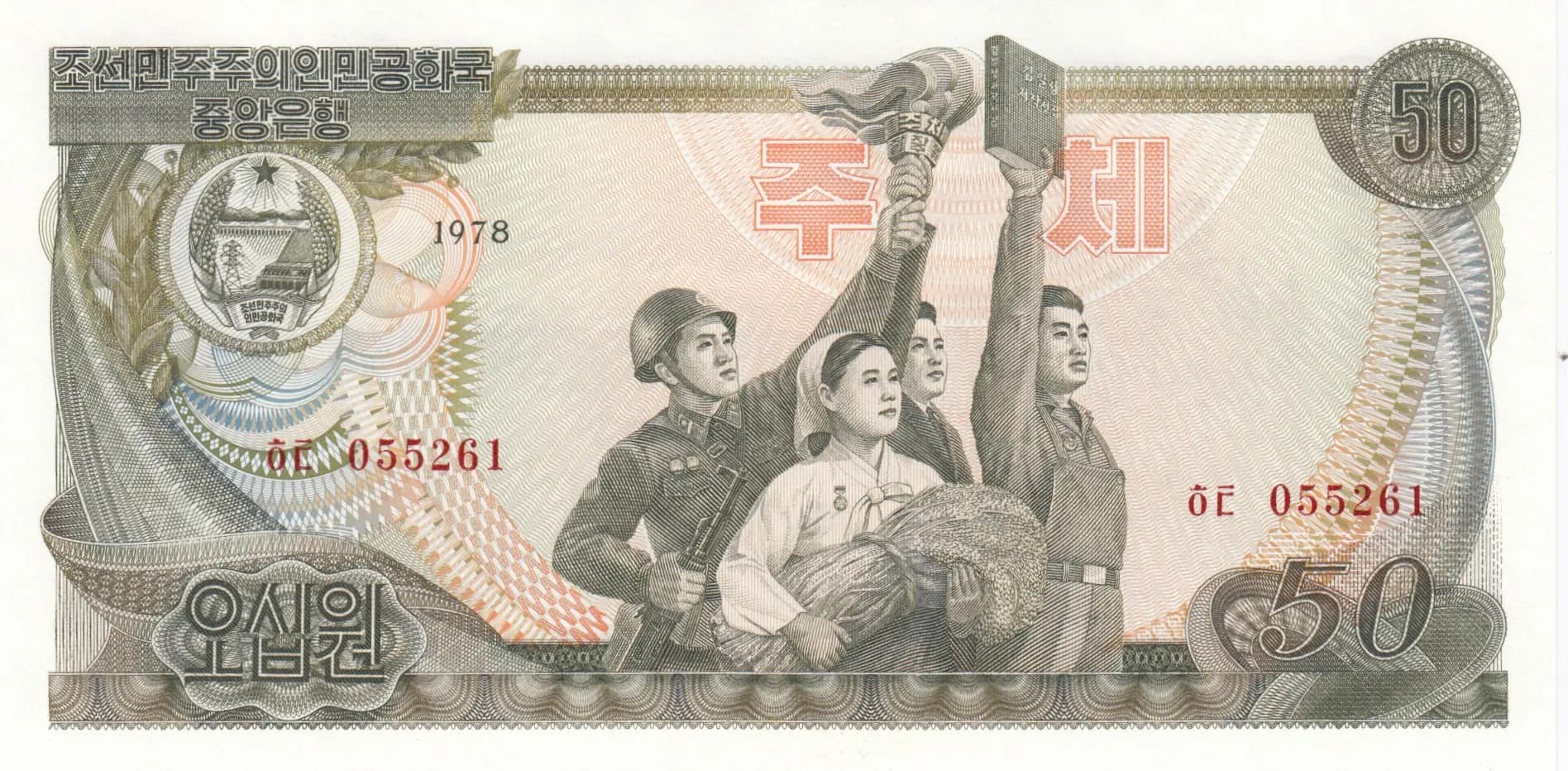
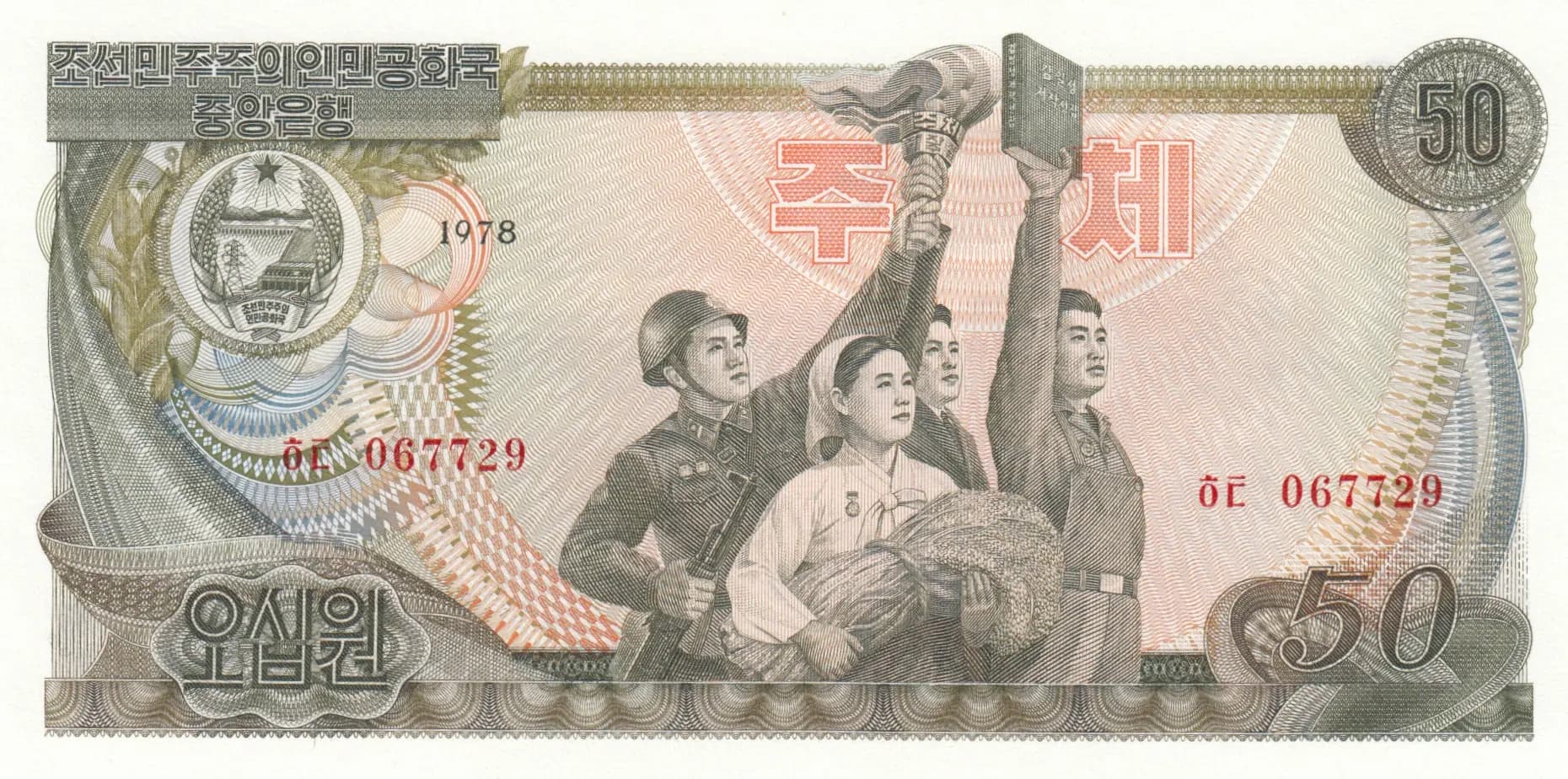
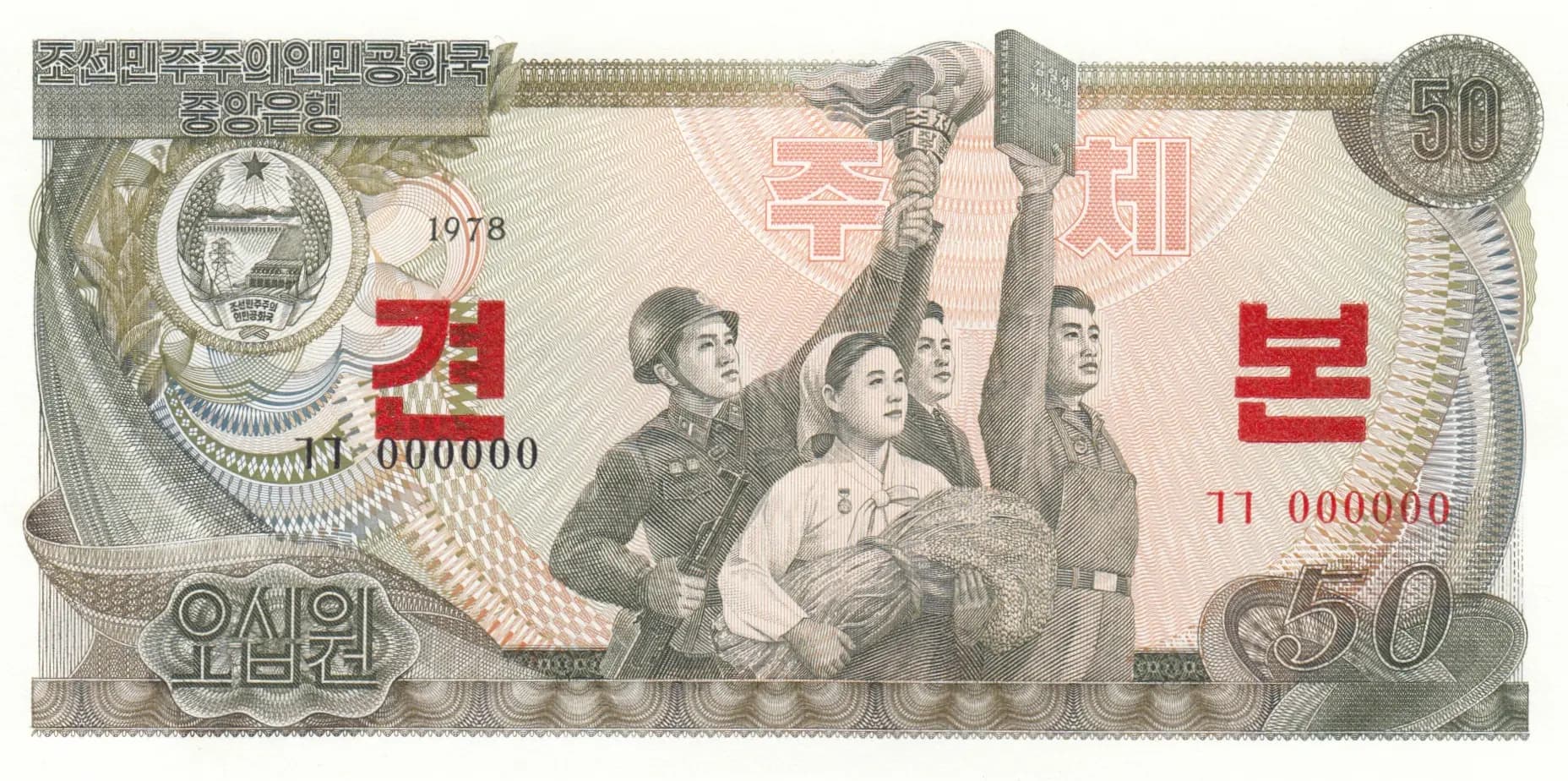
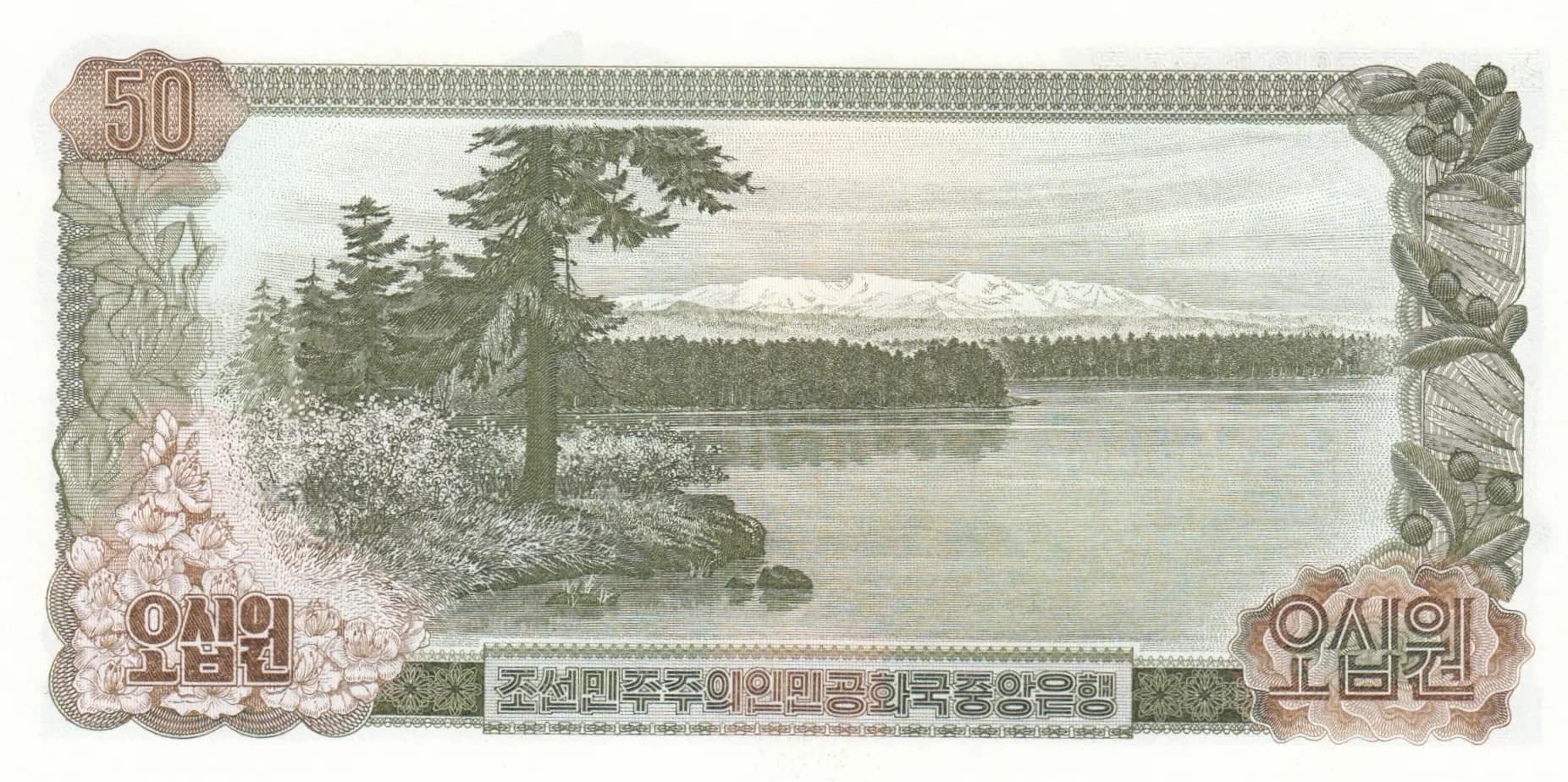
This is an uncirculated 1978 North Korean 50 Won specimen banknote (Pick P-21s) in exceptional condition, featuring striking propaganda imagery on the obverse depicting four figures raising a torch or flag in a heroic pose, complemented by the national emblem and intricate engraved patterns. The reverse presents a serene landscape scene with snow-capped mountains, coniferous forests, and a mountain lake, framed by decorative botanical borders—a design characteristic of DPRK currency that emphasizes both national pride and natural beauty. The crisp printing, lack of any wear or handling marks, and specimen designation make this a notable example of Cold War-era North Korean numismatic artistry.
Common. The 1978 50 Won note (Pick P-21s) is a standard circulation issue from North Korea's established currency system and was produced in quantities sufficient to meet domestic economic needs of the period. Specimen notes (marked as such) had limited official distribution but were not produced in restricted quantities compared to circulation issues. No evidence of recalls, short print runs, or significant collector premiums supports a rare classification. While North Korean currency generally attracts collector interest, this standard denomination in common condition grades trades at modest valuations typical of common Cold War-era notes.
Issued in 1978 by the North Korea Central Bank during the period of Kim Il-sung's consolidated rule, this banknote reflects the regime's propagandistic use of currency design to promote ideals of collective struggle and national achievement through the heroic torch-bearing figures depicted on the obverse. The landscape reverse, showcasing the mountainous Korean peninsula's natural grandeur, served as a counterbalance to the ideological messaging, presenting North Korea as a land of unspoiled natural beauty. The specimen designation and engraving quality indicate this note was part of the formal currency system during a period of relative economic assertion by the DPRK.
The obverse features a heroic socialist-realist composition centered on four figures—a soldier in military uniform, a woman, and two male workers—united in raising a torch or flag skyward, symbolizing revolutionary struggle and national unity. To the left is the circular national emblem of North Korea, featuring a pagoda within a wreath design, representing historical continuity and national sovereignty. The large denomination '50' in a circle appears prominently on the right. The background comprises intricate engraved radiating lines creating depth and security. The reverse depicts Mount Paektu or similar iconic Korean mountainous landscape with a prominent coniferous tree in the foreground, a pristine lake in the middle ground, snow-capped peaks on the horizon, and forested hills—an idealized representation of Korean natural heritage framed by decorative botanical borders.
Front side: '조선민주주의인민공화국' (Democratic People's Republic of Korea), '중앙은행' (Central Bank), '1978' (year of issue), '오십원' (Fifty Won), '50' (denomination in Arabic numerals), serial number fields marked '구 0000000' and '11 0000000'. Back side: '50' (denomination), '오십원' (Fifty Won), '조선민주주의인민공화국중앙은행' (Democratic People's Republic of Korea Central Bank).
Intaglio (engraved) printing on banknote paper, with multiple color passes visible in the dominant gray, beige, pink/salmon, red, green, and blue tones. The fine-line engraving throughout, complex background patterns with radiating lines, and detailed circular emblem work are characteristic of security printing employed by state banknote printers of the era. North Korean banknotes of this period were typically produced by the state's centralized printing facilities, with security features built into the engraving plates rather than applied separately.
This specimen is identified by the 'S' designation in the Pick catalog number (P-21s), indicating it is a specimen note rather than a regular circulation issue. Specimens typically feature overprints, special serial numbering (such as the '구' prefix visible here), or other markings distinguishing them from regular production. The serial number format visible on this example ('구 0000000' and '11 0000000') represents standard specimen numbering practices, though specific varieties within the specimen category may exist based on exact overprint configurations or serial number blocks used during production runs.