50 won 1978
About This Note
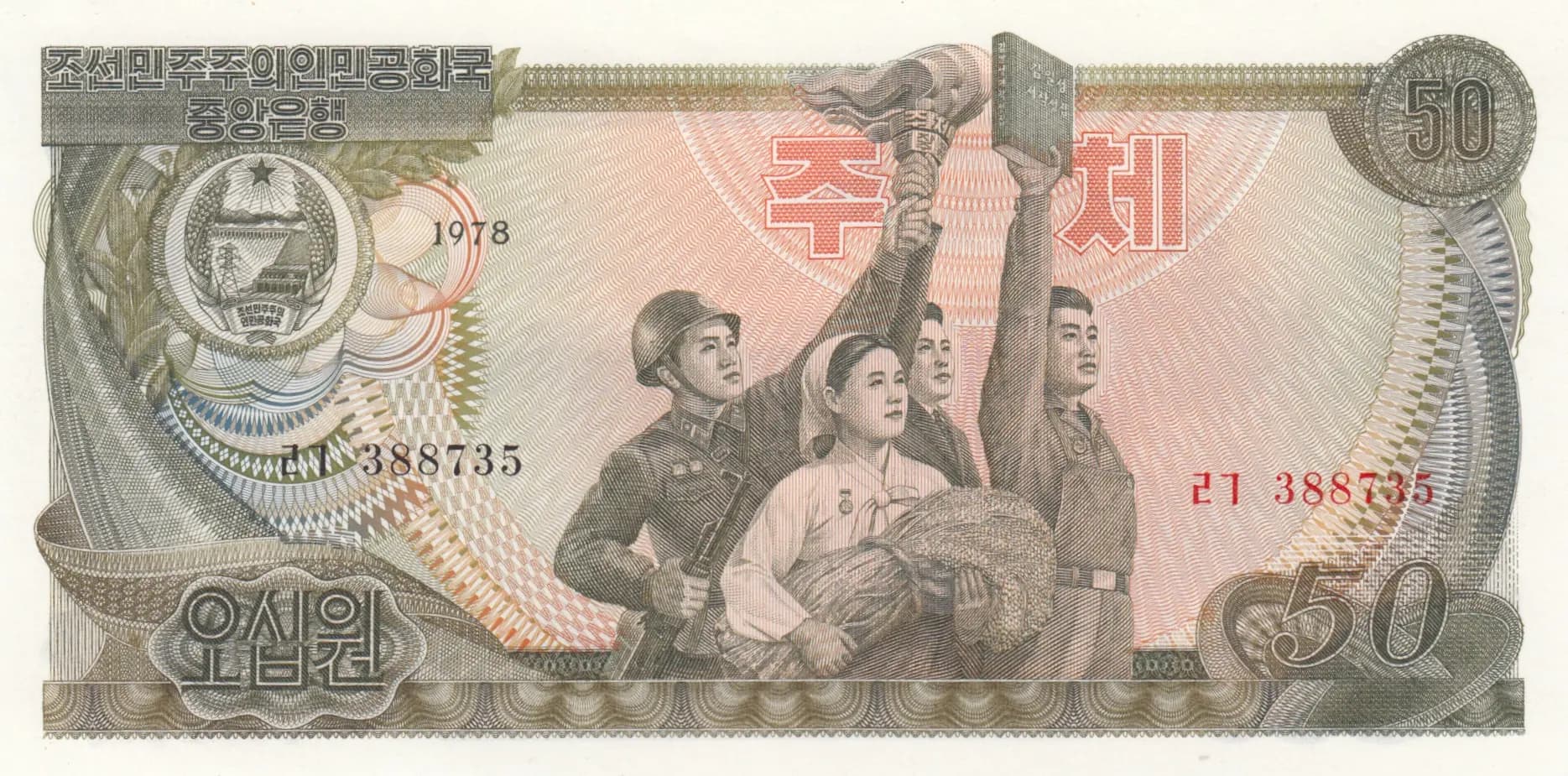
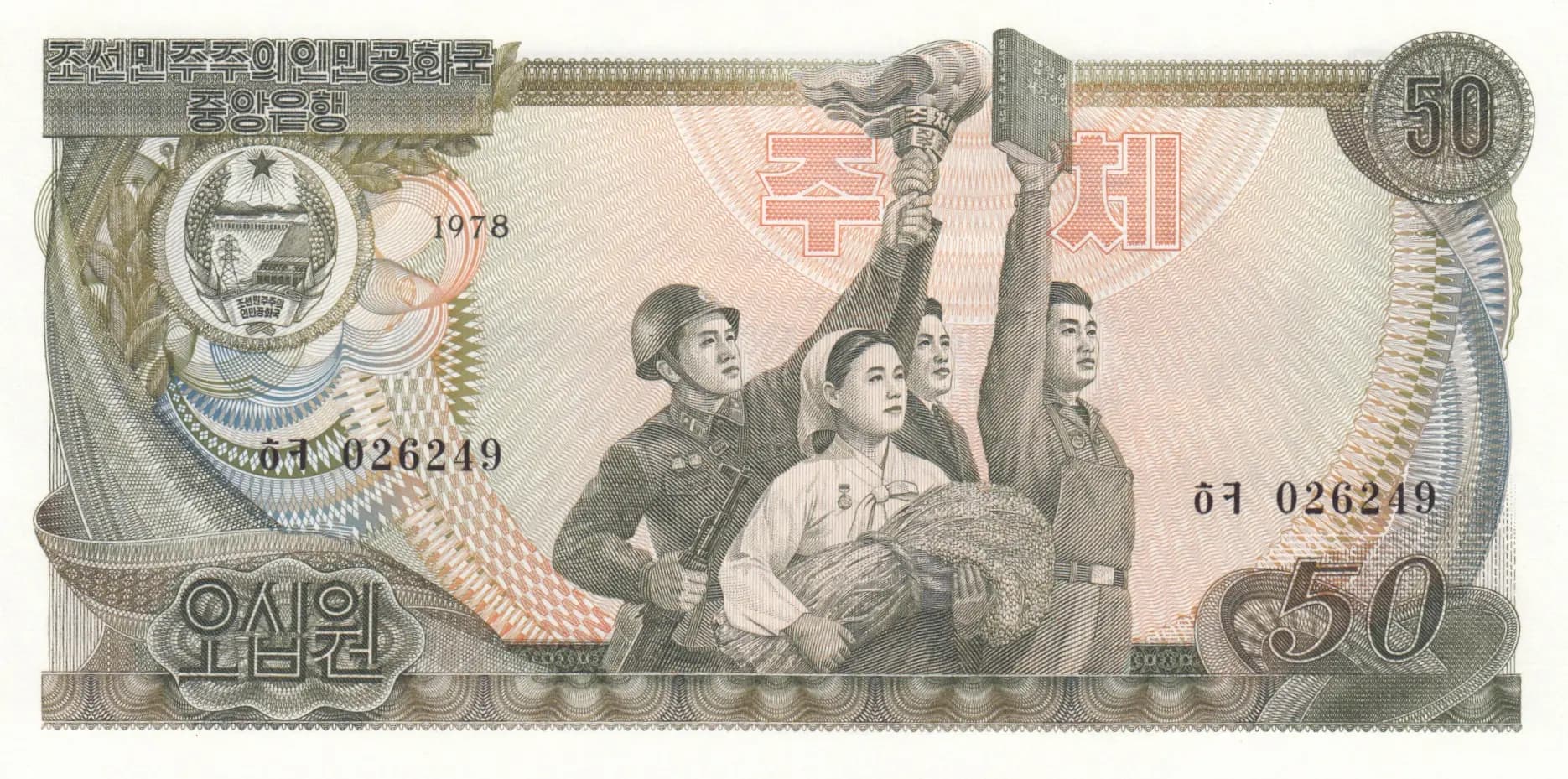
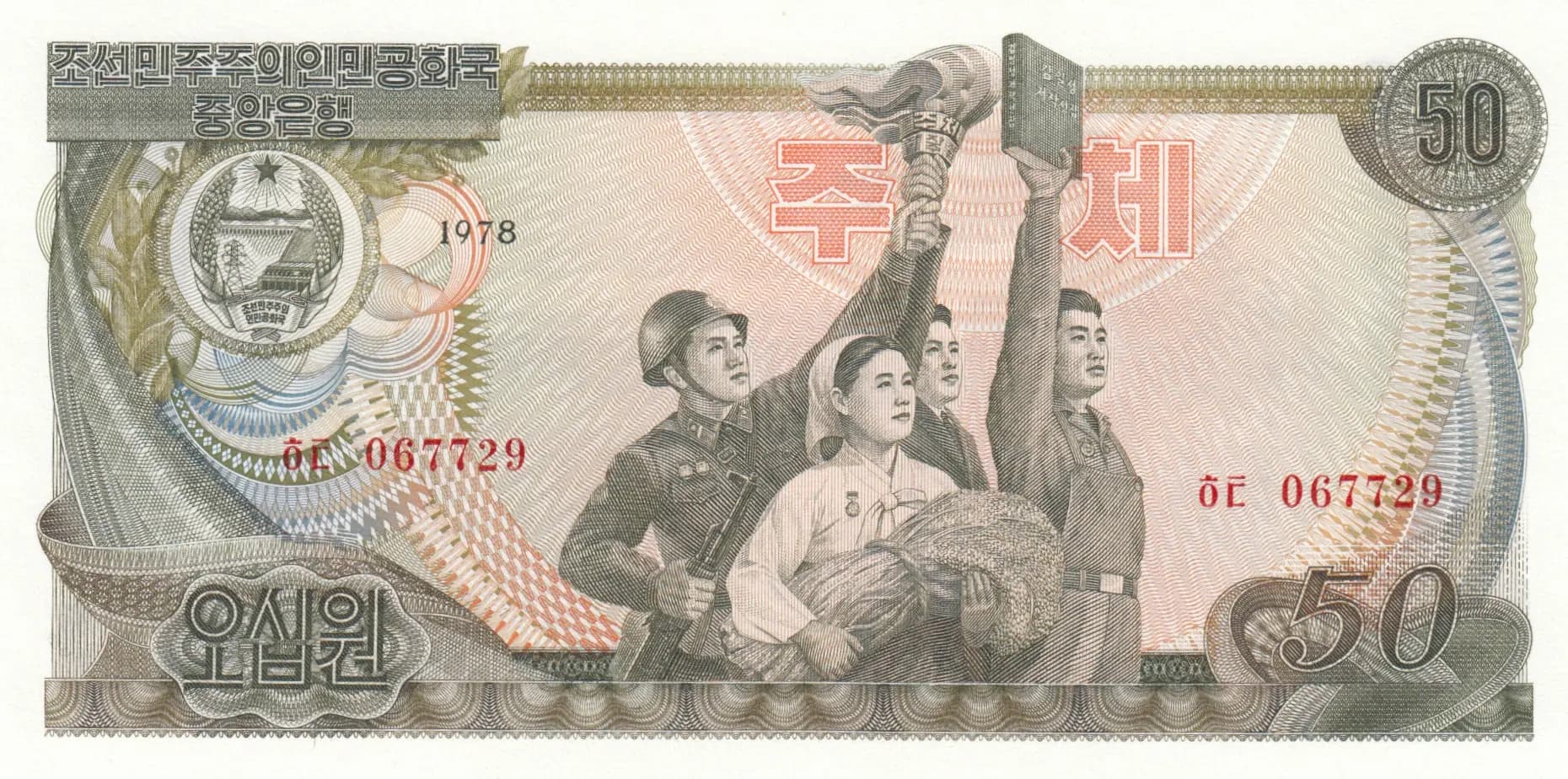
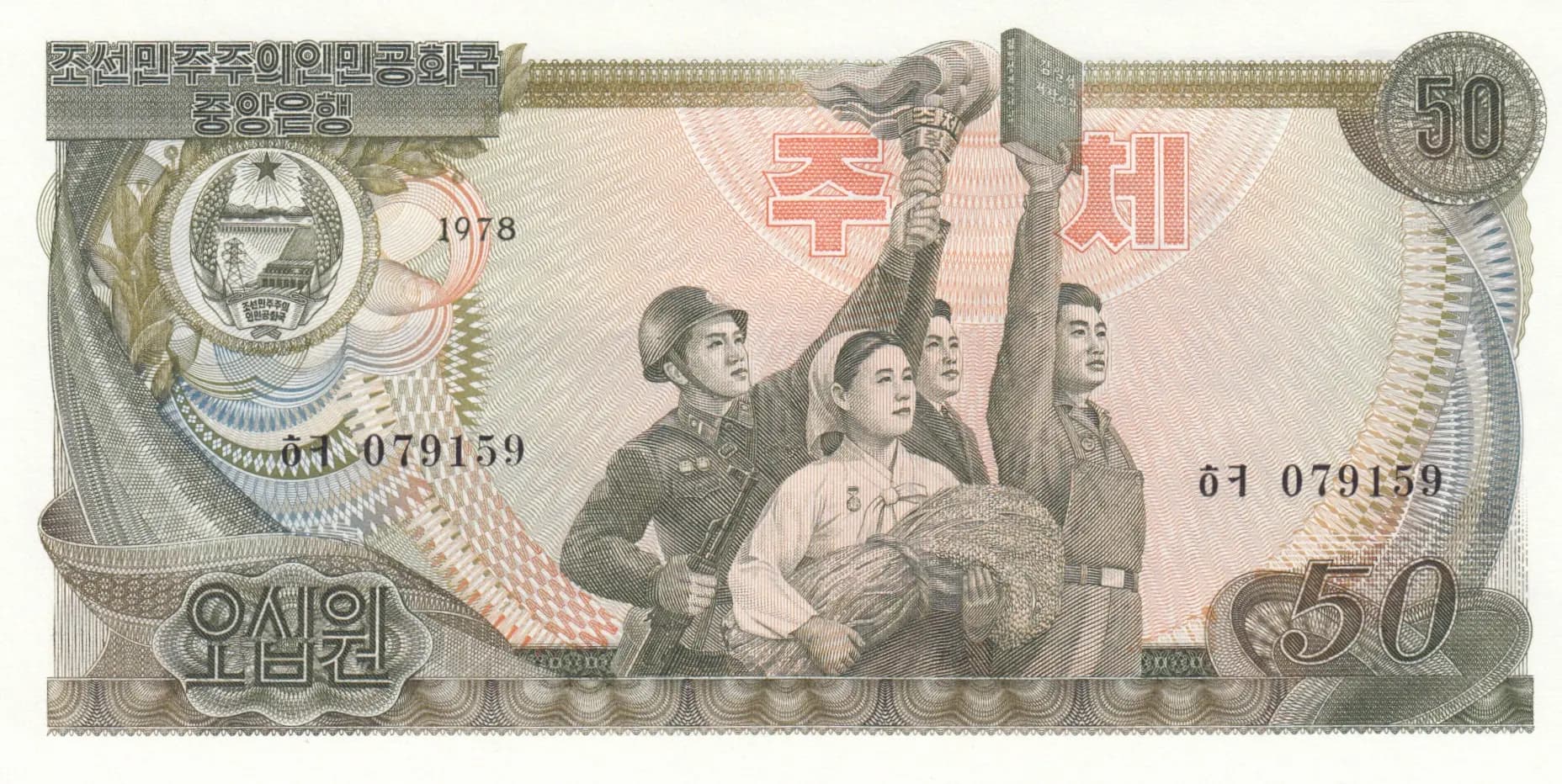
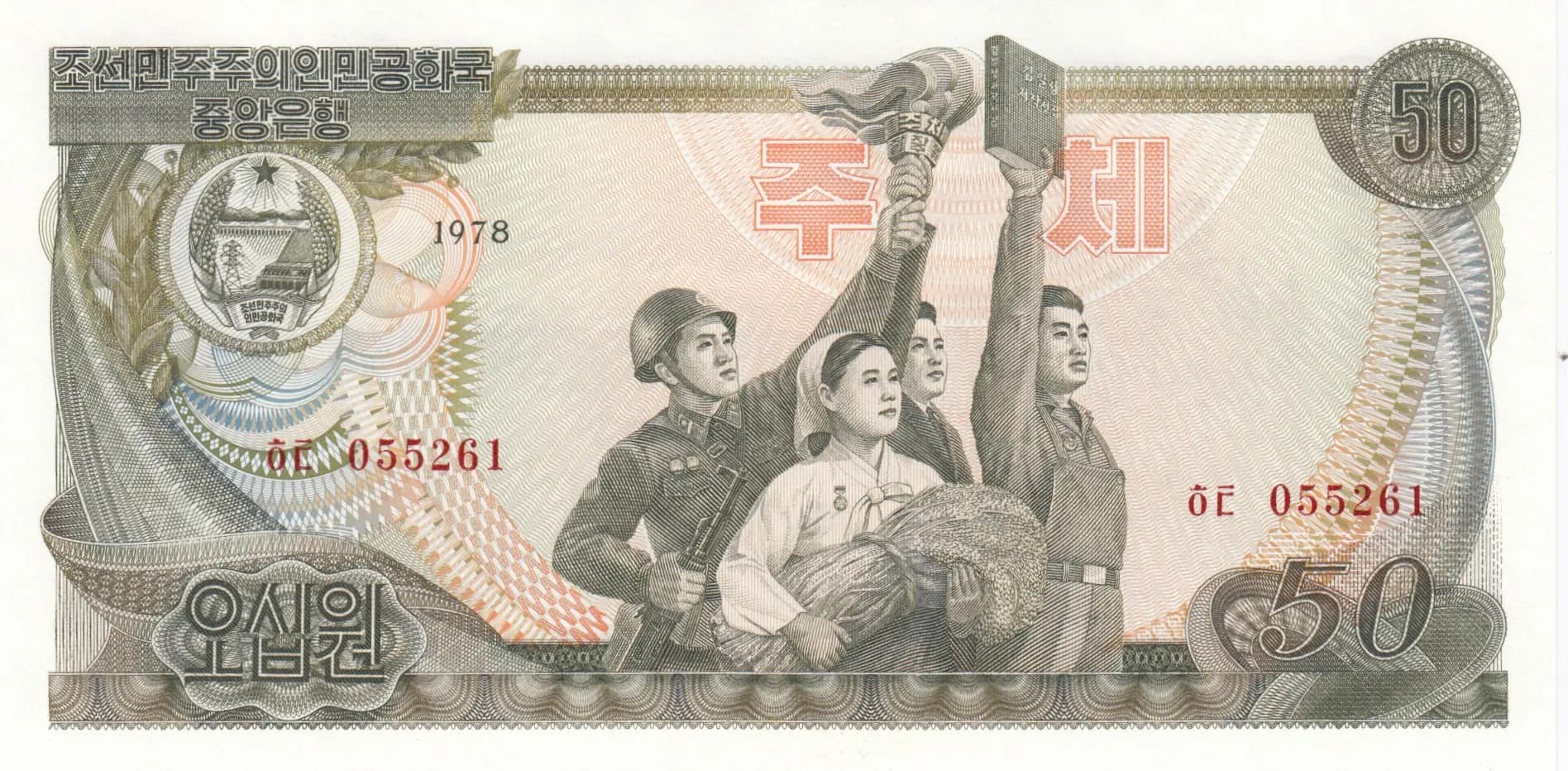
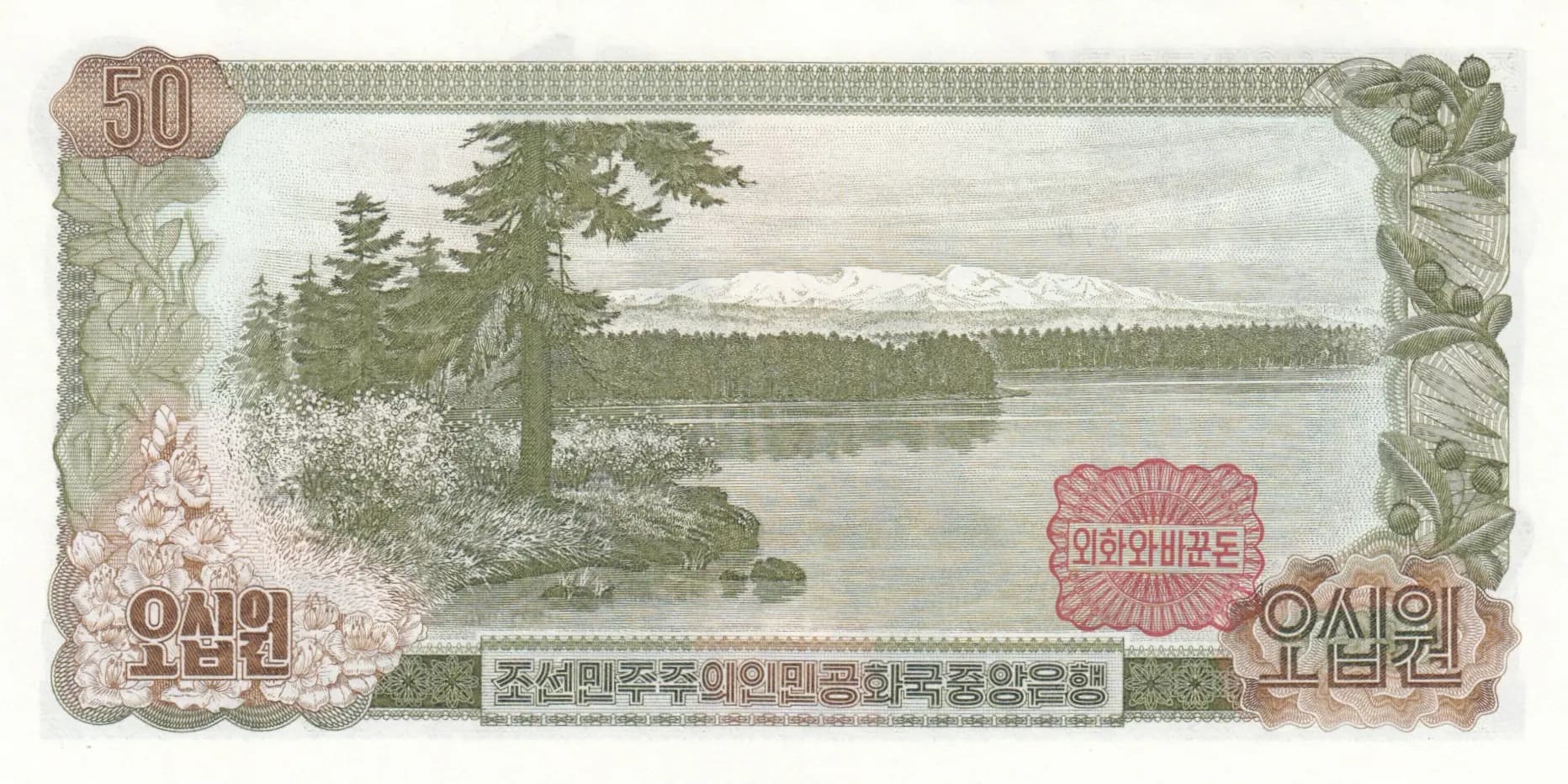
This is an uncirculated 1978 North Korean 50 won note (Pick P-21c) in pristine condition, featuring the iconic socialist realist imagery characteristic of DPRK currency. The obverse depicts three figures—a soldier, civilian, and additional male figures—holding agricultural produce, symbolizing the state's emphasis on military-agricultural cooperation, while the reverse showcases a serene mountain landscape with coniferous forest and snow-capped peaks, reflecting the natural beauty of the Korean peninsula. The note exhibits crisp printing with no signs of wear, making it an excellent example of late 1970s North Korean numismatic design.
Common. The 1978 North Korean 50 won note (Pick P-21c) was issued in substantial quantities as a standard circulating denomination and remains readily available in numismatic markets. No significant print run restrictions, special recall, or scarcity factors are documented for this issue. Uncirculated examples are moderately common in the secondary market, particularly from bulk lot sales of DPRK currency collections.
Issued in 1978 by the Central Bank of the Democratic People's Republic of Korea, this note reflects the Juche ideology and economic priorities of Kim Il-sung's regime during the post-Korean War reconstruction era. The imagery of military personnel and civilians collaborating in agricultural production directly illustrates the state's mobilization policies and emphasis on self-reliance, while the mountainous landscape on the reverse evokes national identity and the natural resources central to North Korea's economic vision.
The obverse features the national emblem of North Korea (a five-pointed star above a hydroelectric dam and factory, symbolizing the state) positioned on the left side, with the denomination '50' displayed in large circles at the top right and bottom left corners. Three figures in socialist realist style occupy the center-right: a soldier in military helmet on the left, a female civilian in the center holding agricultural produce (wheat or grain sheaves), and two additional male figures on the right, one in military uniform. Red Korean characters prominently display the denomination. The reverse depicts an idealized natural landscape with coniferous pine and fir trees in the foreground, a calm lake or water body in the middle ground, and snow-capped mountains rising in the background, with small botanical ornamental elements in the lower corners and the denomination '50' in the upper left. The palette employs cream, beige, green, gray, red, pink, and white, with ornamental guilloche border designs framing both sides.
Front side: '조선민주주의인민공화국중앙은행' (Central Bank of the Democratic People's Republic of Korea), '1978' (year of issue in Arabic numerals), '오십원' (Fifty won in Korean), '오E 055261' (Serial number). Back side: '50' (denomination in Arabic numerals), '오십원' (Fifty won in Korean), '조선민주주의인민공화국중앙은행' (Central Bank of the Democratic People's Republic of Korea), '오이민' (administrative designation).
This note employs multiple color lithography combined with fine line engraving techniques. The complex guilloche patterns, ornamental designs, and security features visible throughout indicate professional security printing. The North Korean Central Bank utilized East German and Soviet printing technology during this period; this note was likely produced by either the state printing works under Soviet supervision or potentially by VEB Giesecke & Devrient (East German printer). The multi-color registration and fine detail work suggest advanced offset lithographic printing with engraved security underprinting.
Serial number observed: '오E 055261' indicates the Hangul prefix '오E' (O-E). This represents one of several serial number variety series issued for the 1978 50 won note. Known varieties for Pick P-21c include different letter prefixes in the serial numbering system. The specific prefix and number range may indicate a particular printing batch or issue stage within the 1978 production run. Further serial number prefix documentation would be required to establish whether this represents a cataloged variety.