50 won 1978
About This Note
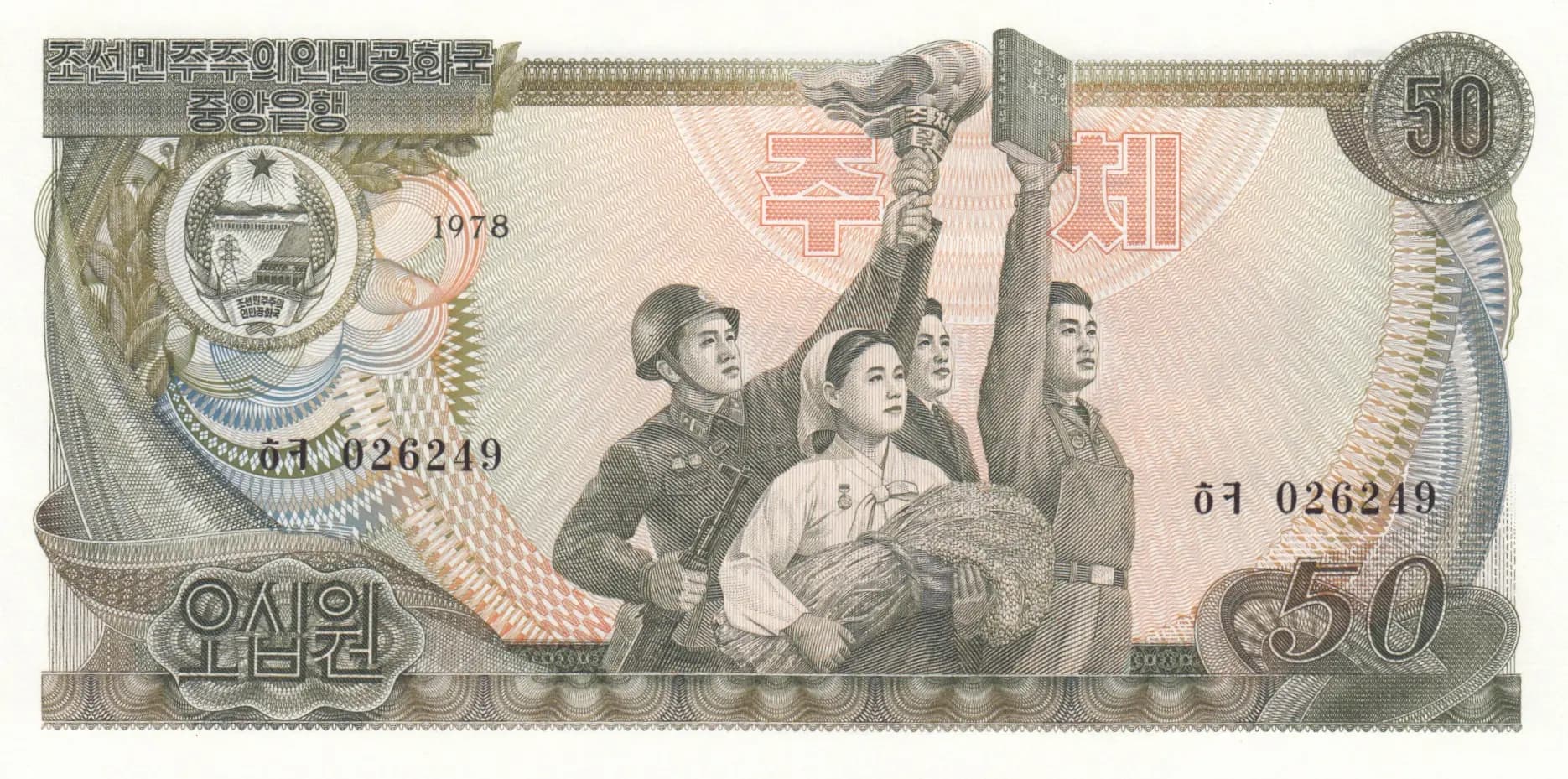
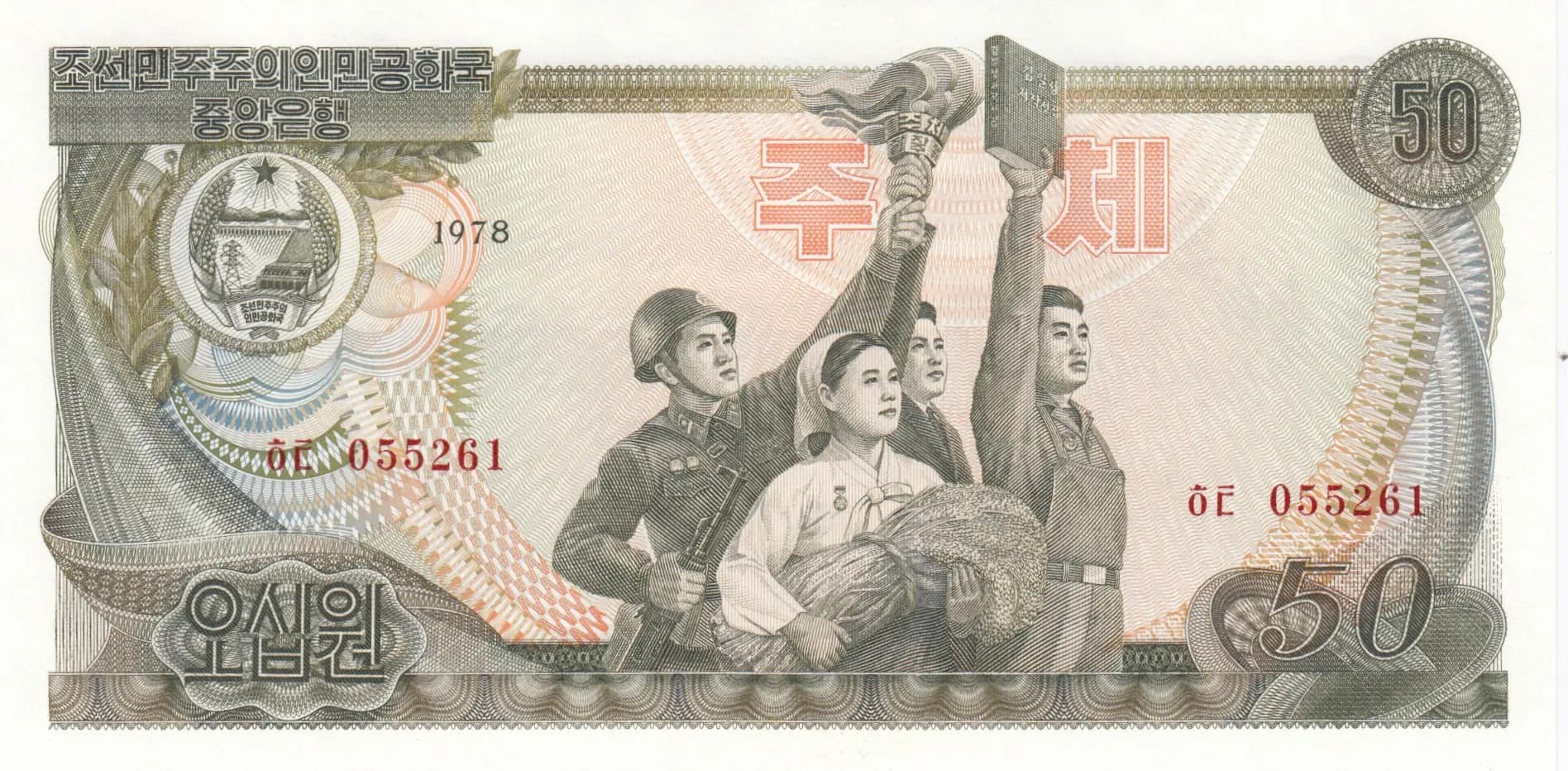
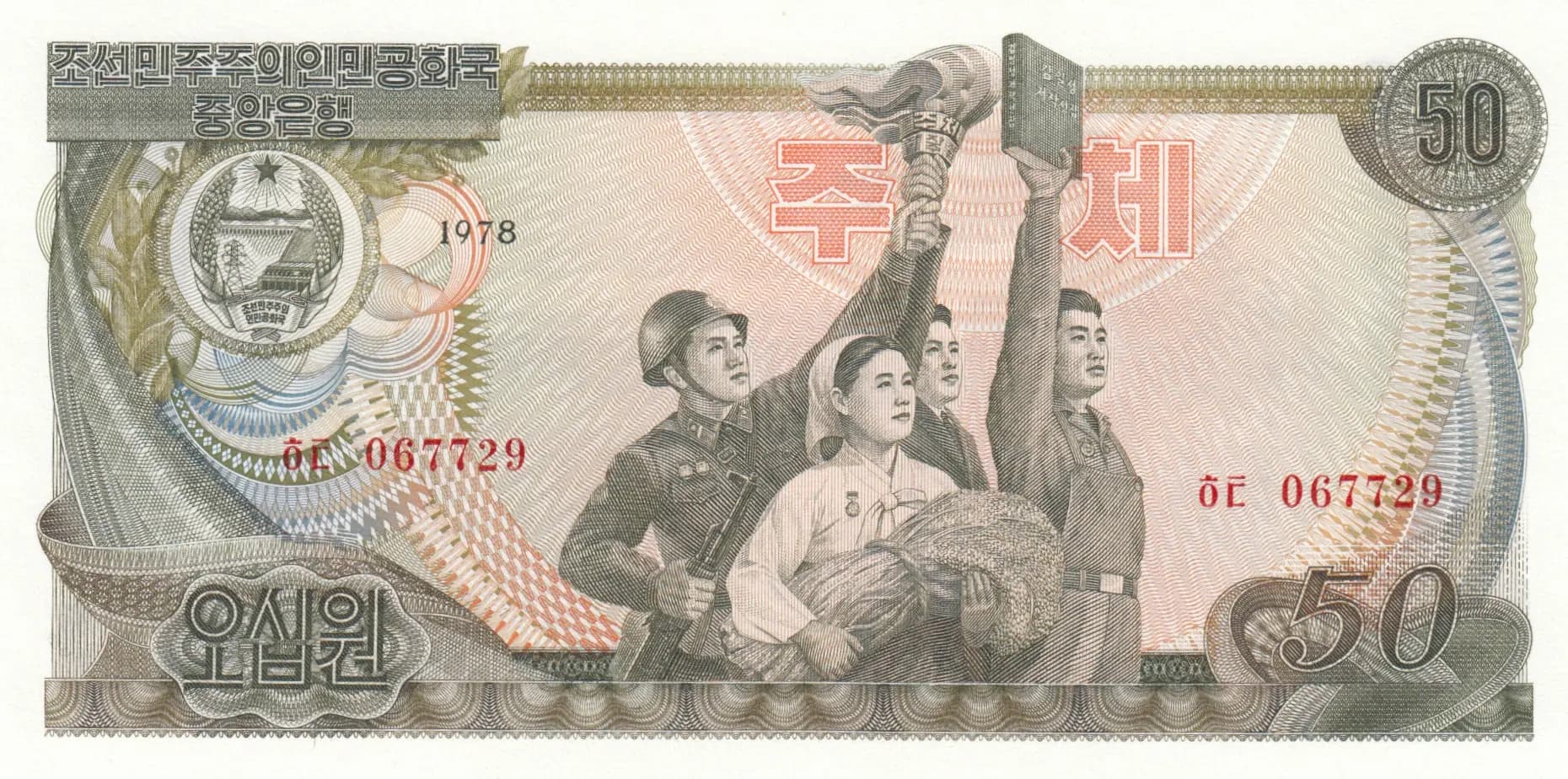
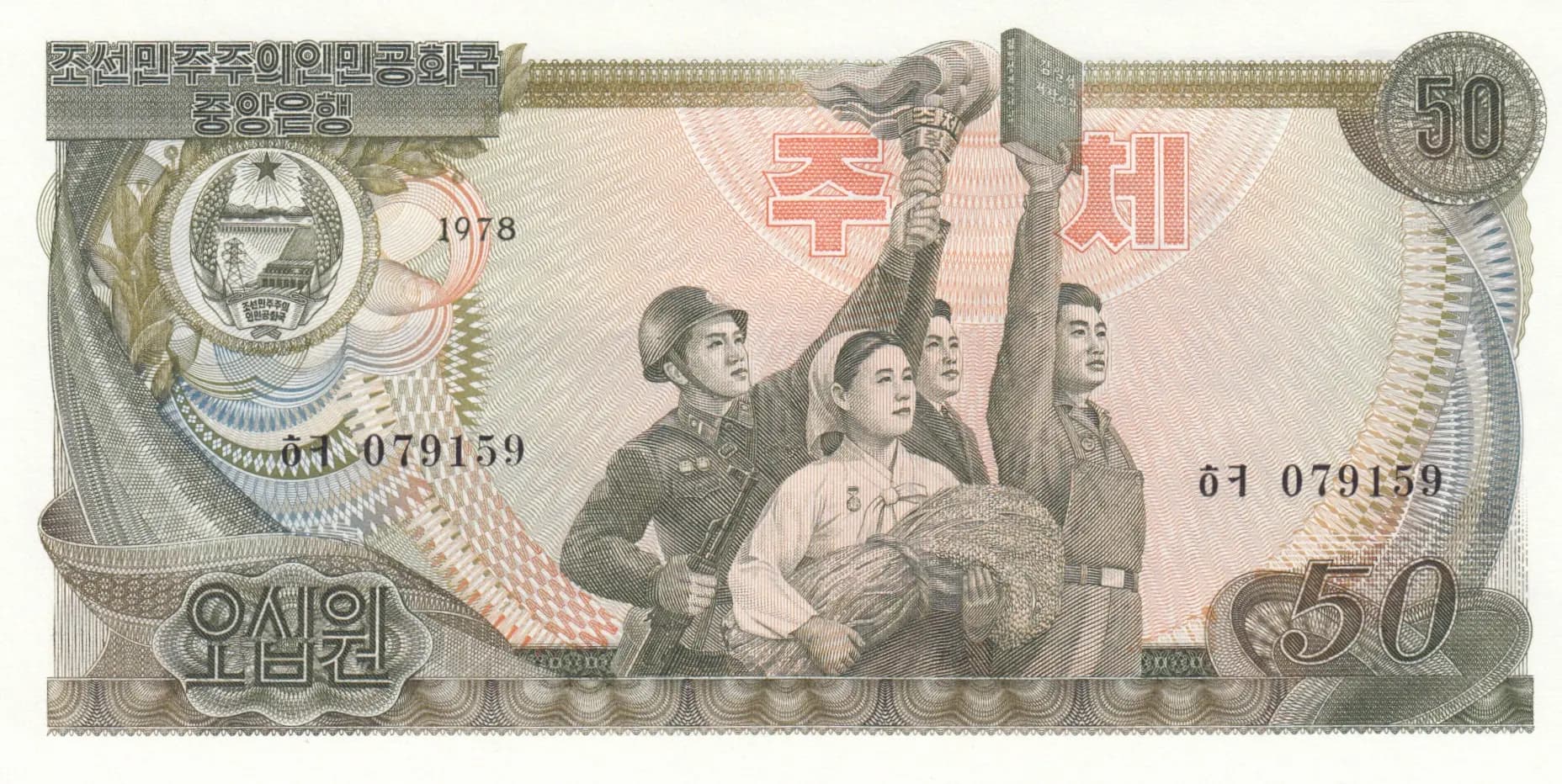
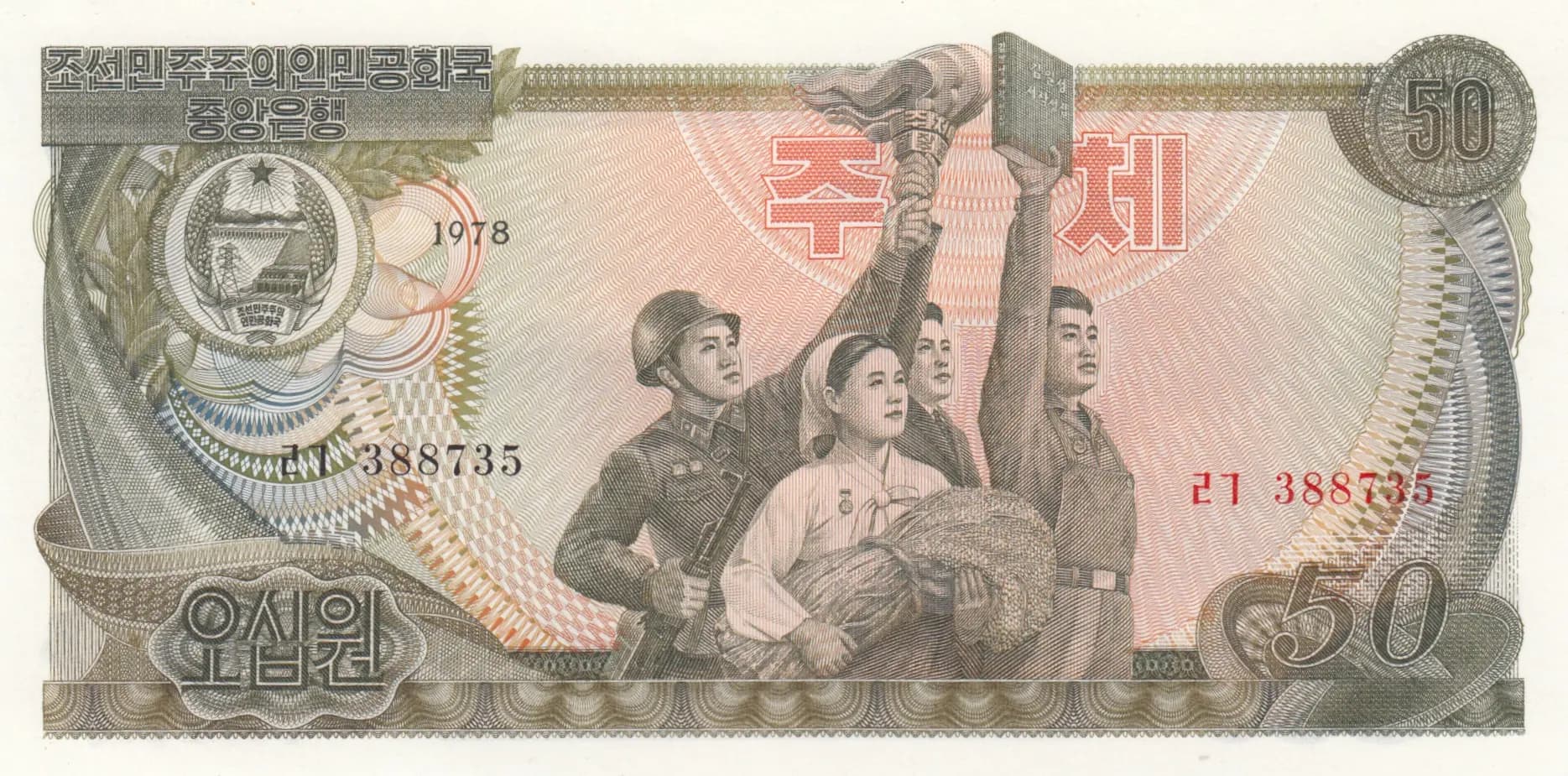
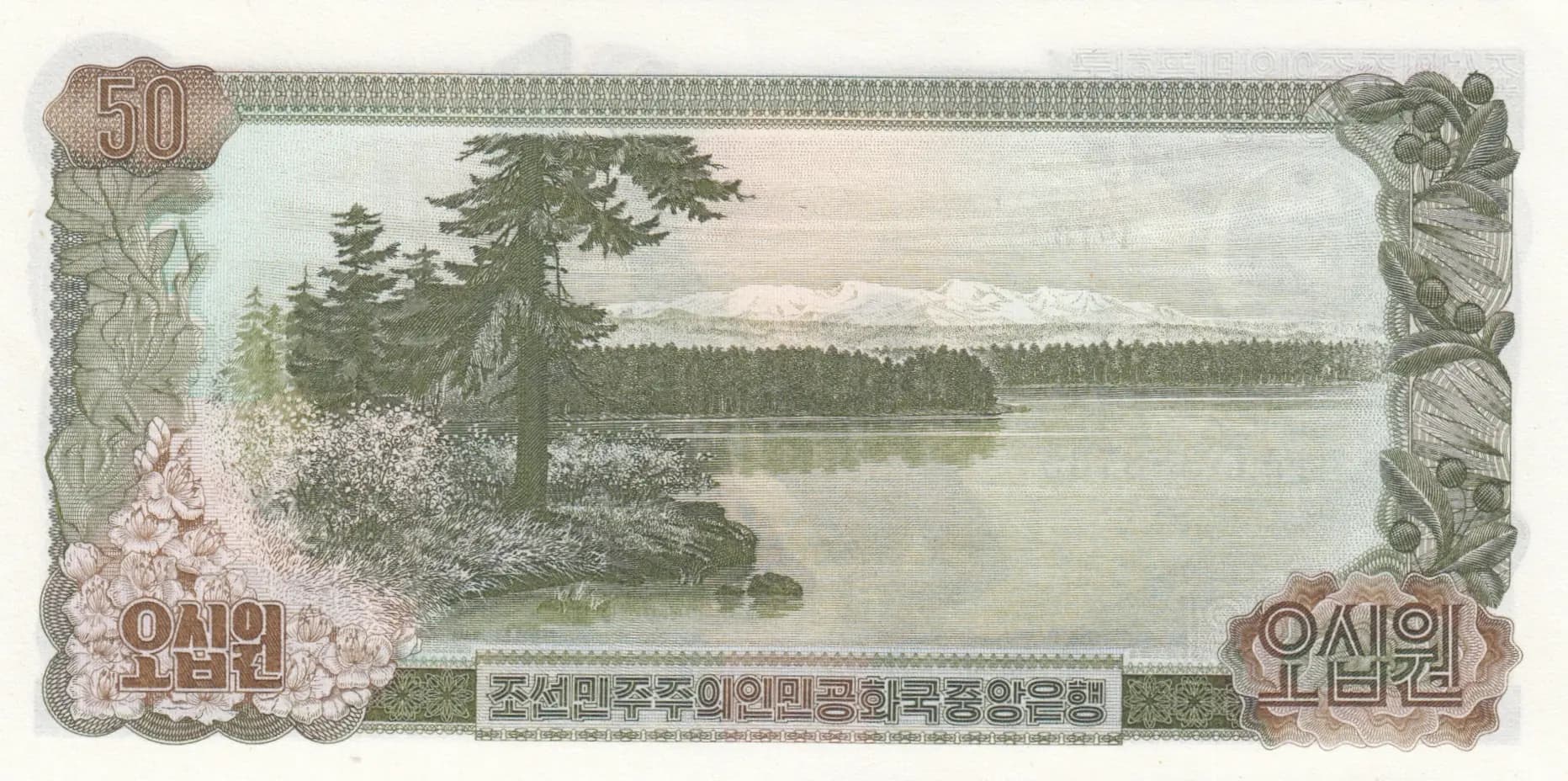
This is a striking 1978 North Korean 50 won banknote (Pick P-21a) in uncirculated condition, featuring revolutionary iconography on the obverse with four figures in military dress centered on the note, and a serene natural landscape on the reverse depicting a snow-capped mountain range with evergreen forest and alpine lake. The vibrant multi-color printing with tan, pink, and green hues, combined with the exceptionally sharp detail and pristine condition, makes this an excellent example of North Korean currency design from the immediate post-war era.
Common. The 50 won denomination from 1978 (Pick P-21a) is a standard circulation issue from North Korea's post-war currency series. While North Korean banknotes have limited international circulation and may appear scarce in Western collections, this note was produced in substantial quantities for domestic use and remains readily available on the numismatic market. The uncirculated condition grade is relatively achievable for this issue, as North Korean notes of this era were printed on durable paper stock and many examples have survived in excellent condition.
Issued in 1978 by the North Korea Central Bank, this note reflects the nation's revolutionary socialist ideology through its prominent depiction of four figures in military/revolutionary attire on the obverse, symbolizing the collective struggle and militarization of North Korean society under Kim Il-sung's regime. The reverse landscape—featuring snow-capped peaks and pristine forests—represents the idealized natural beauty of the Korean peninsula and the nation's emphasis on its mountainous terrain and resource wealth, common themes in North Korean propaganda and cultural imagery of this period.
The obverse features a central revolutionary composition with four figures in military and state dress with raised fist gestures, representing the unified revolutionary spirit of North Korea. On the left is a circular emblem containing a building or governmental structure topped with a star, dated 1978, serving as the state seal. The right side displays the denomination '50' in an ornamental circular cartouche. The background incorporates intricate geometric patterns, wave designs, and fine line work in multiple colors (pink, green, tan, beige, red, brown). The reverse presents a naturalistic landscape scene with a prominent tall coniferous tree in the foreground, an expansive evergreen forest along a rocky shoreline, and snow-capped mountain peaks rising in the distance across a blue-gray alpine lake or river. Pink flowers appear as decorative elements in the lower left corner, and the denomination '50' is repeated in ornamental cartouches in the upper left and lower right, with botanical leaf designs adorning the right edge.
Front side: '조선민주주의인민공화국' (Democratic People's Republic of Korea), '중앙은행' (Central Bank), '1978' (year of issue), '오십원' (50 won in Korean characters), and serial number 'ㄷㄱ 388735'. Back side: '조선민주주의인민공화국중앙은행' (Democratic People's Republic of Korea Central Bank), '오십원' (50 won), and '50' in Arabic numerals. The serial number appears twice on the obverse as a security measure.
This note was produced using multi-color intaglio printing, a sophisticated process evident from the fine parallel line shading, detailed engraving work, and complex color separation visible throughout both sides. The intricate geometric patterns, wave designs, and landscape details exhibit the characteristic sharpness and depth of intaglio printing. North Korean banknotes of this era were typically produced by the state security printing bureau, though attribution to a specific foreign security printer (if any was involved) cannot be definitively established from the visual analysis alone.
The observed specimen exhibits the serial number prefix 'ㄷㄱ' with the number 388735, printed twice on the obverse as a standard security feature for this issue. Pick P-21a represents the primary variety of the 1978 50 won note; no major varieties (such as significant overprints, color variations, or signature changes) are documented for this specific denomination and year combination, though serial number prefix variations may exist across the full print run.