10 shillings 1964
Market Prices
9 salesAbout This Note
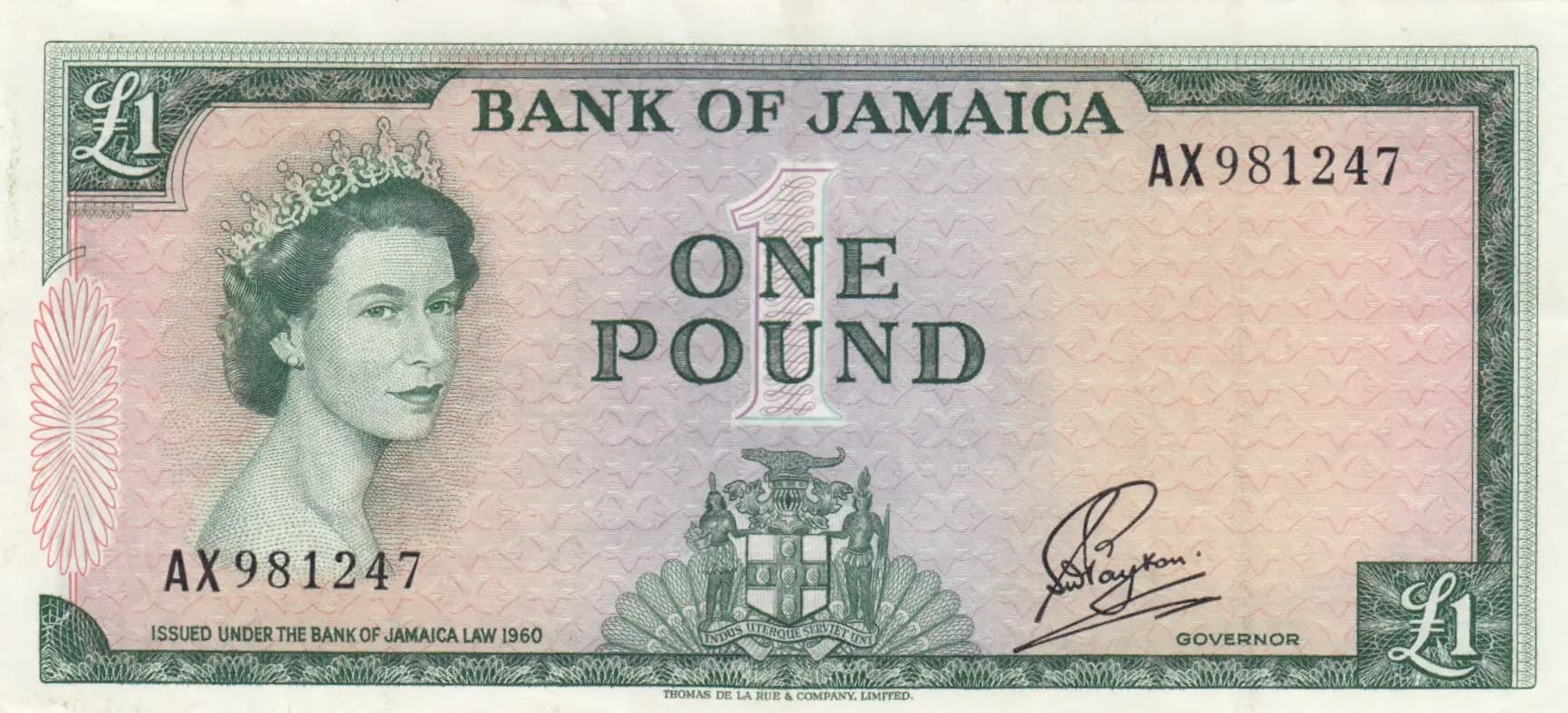
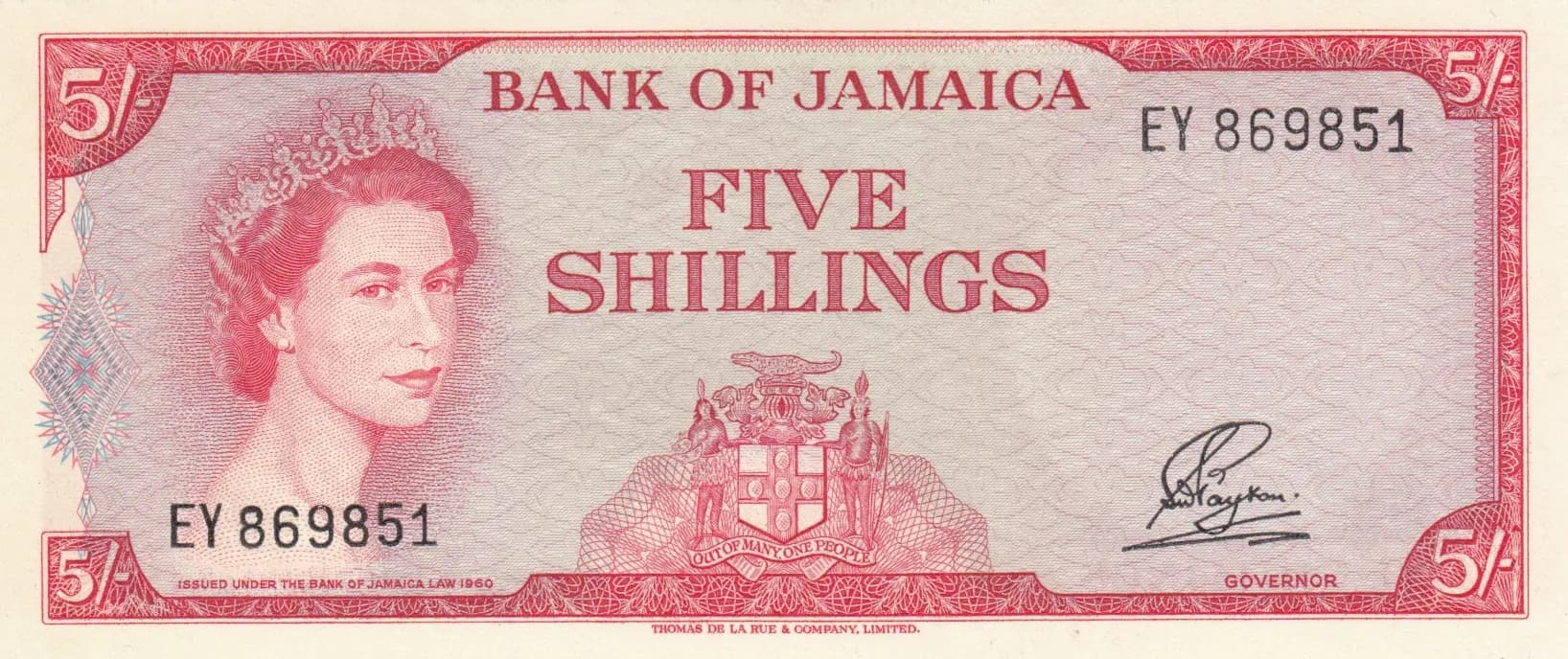
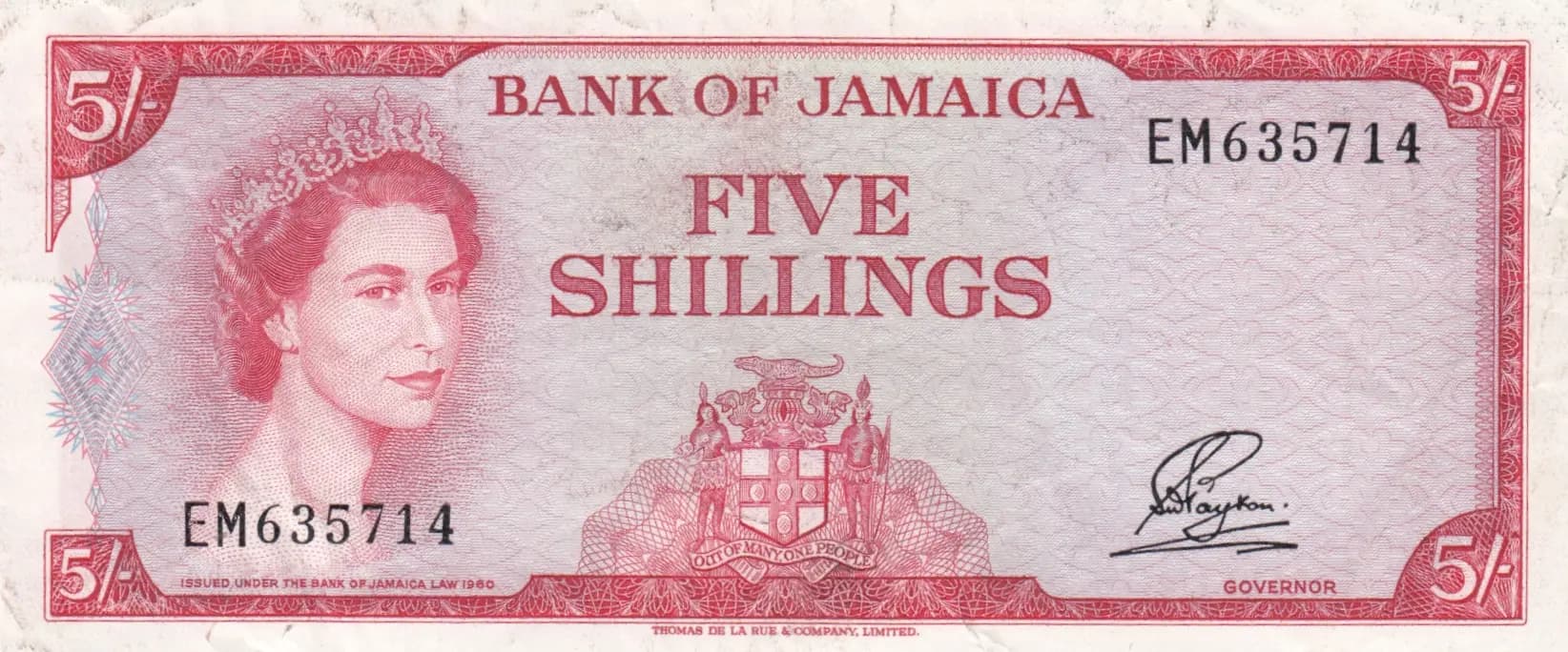
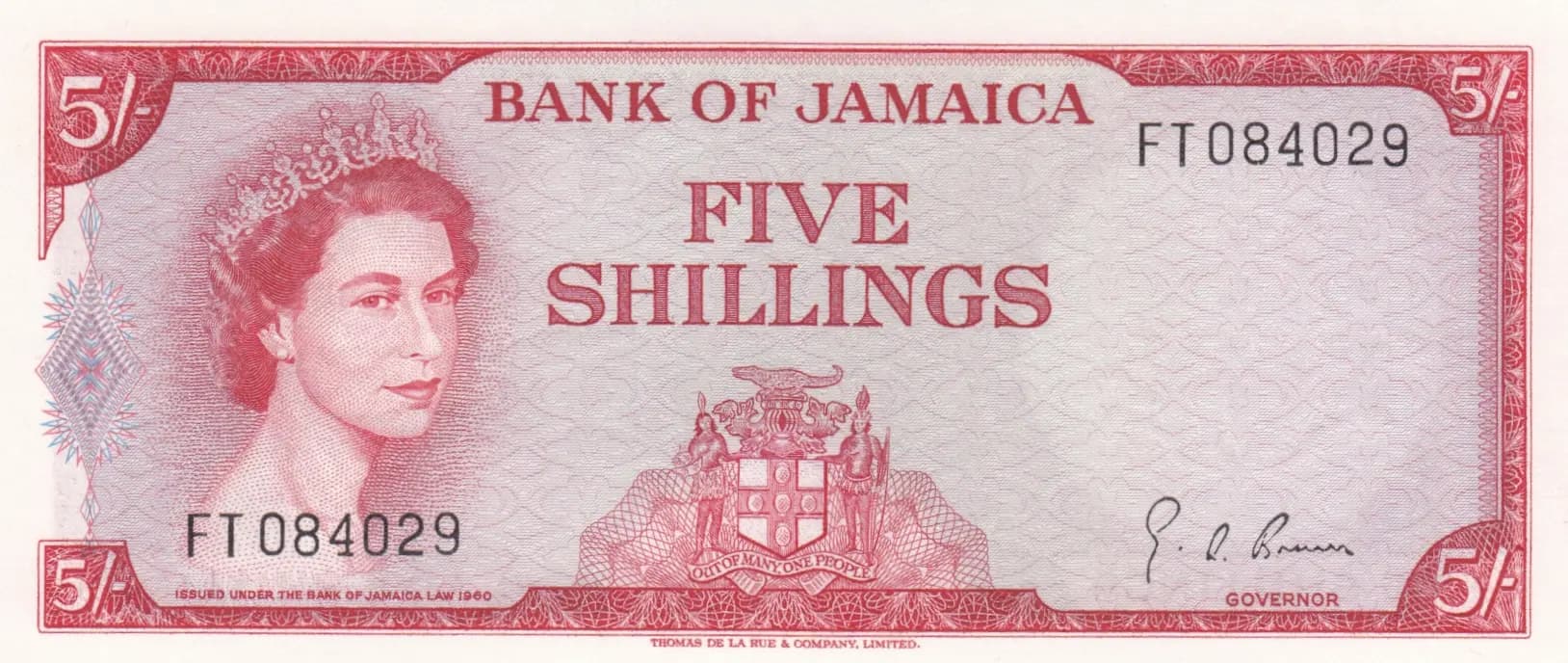
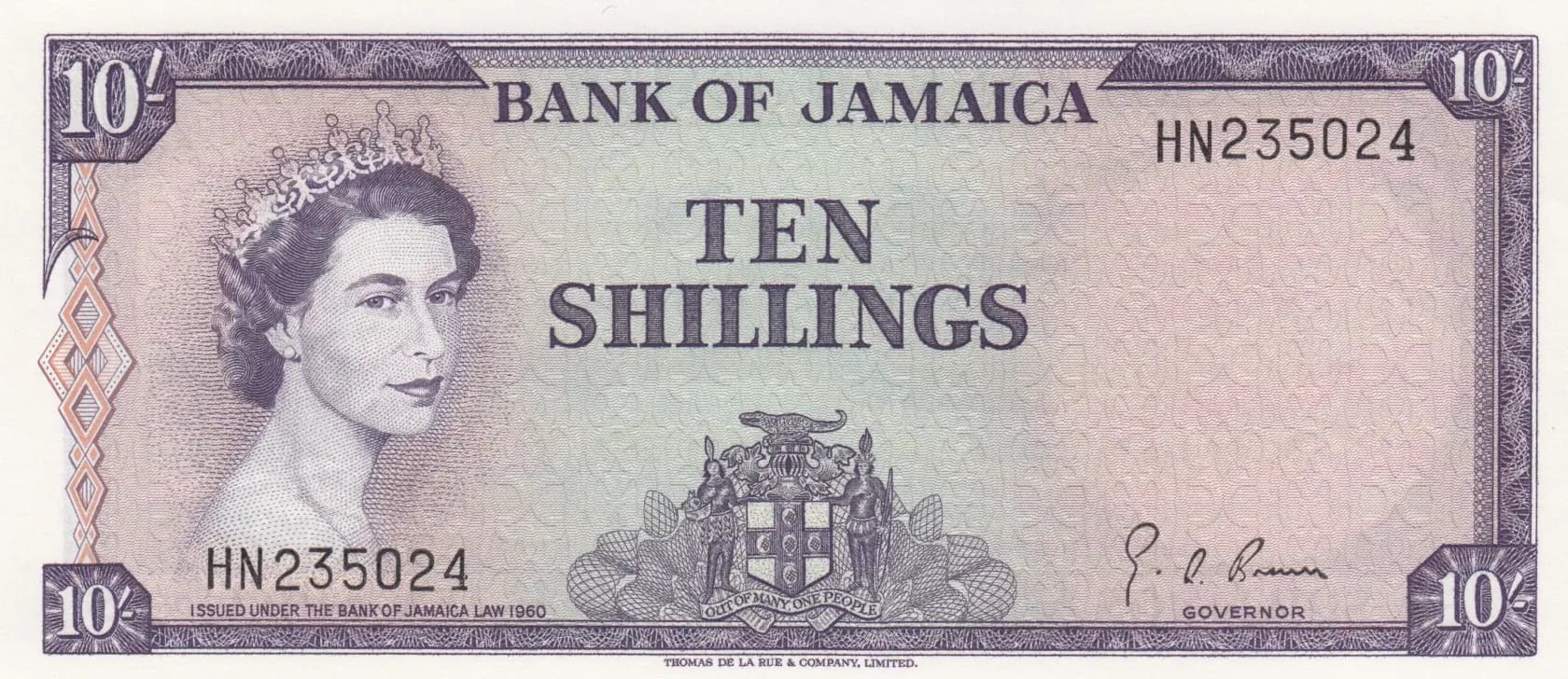
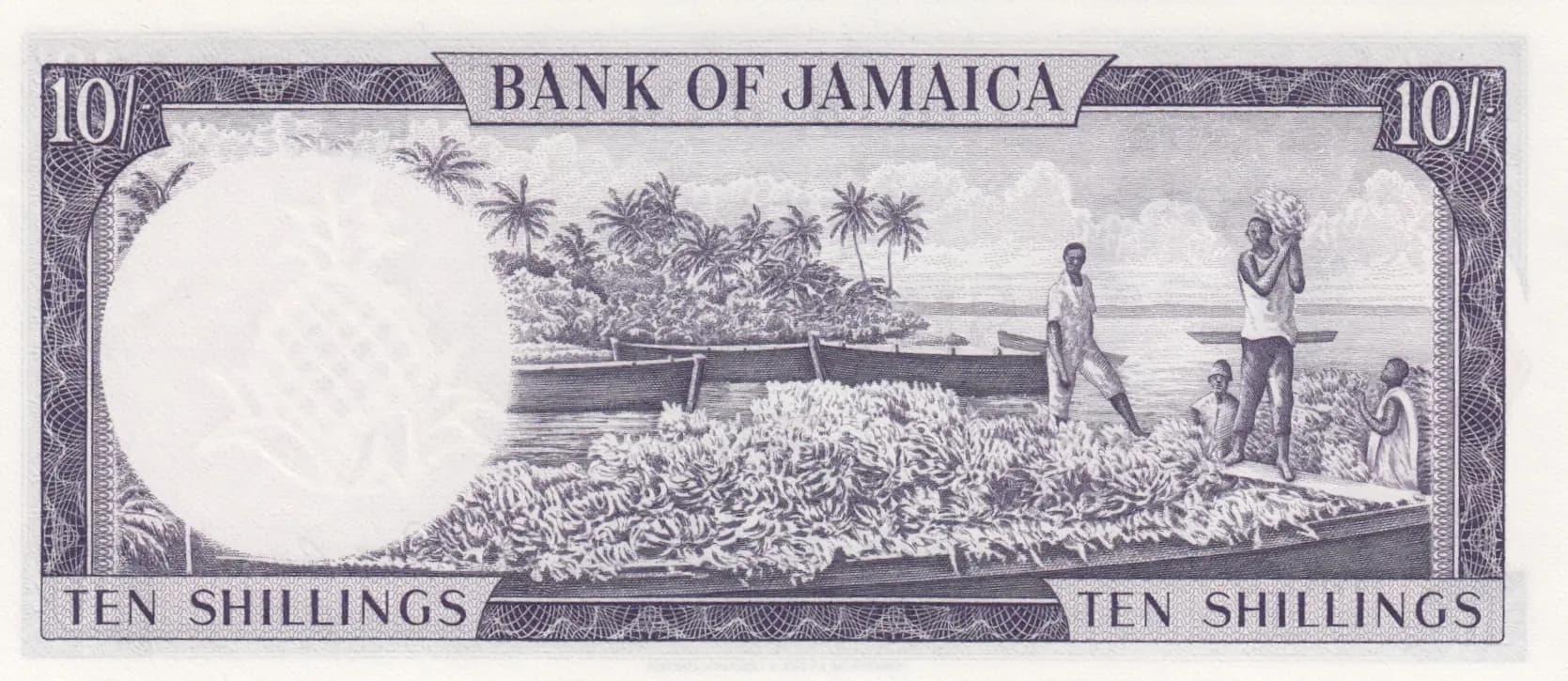
This is an exceptional uncirculated example of the Jamaica 10 Shillings P-51Be note from 1964, issued under the Bank of Jamaica Law of 1960. The note displays pristine condition with crisp colors—primarily purple with grey and tan accents—and sharp intaglio printing throughout, showing no creases, tears, or signs of handling. The obverse features a profile portrait of Queen Elizabeth II wearing a tiara, while the reverse depicts a detailed scene of Jamaican agricultural and maritime labor with workers, palm trees, and coastal vessels, making this a historically significant representation of post-independence Jamaica's economy.
Common. While this is a desirable early post-independence note in uncirculated condition, eBay market data shows UNC examples catalogued at $165 (2019) with actual recent sales ranging from $24-$62 for EF grades. The print run for Jamaica's early decimal currency was substantial, and P-51Be represents one of several variants within the P-51 series. The denomination (10 shillings) and early year (1964) make it historically interesting to collectors, but it is not scarce. Uncirculated examples command premium prices relative to circulated grades, but the note itself is not rare.
Issued in 1964, just two years after Jamaica's independence from Britain (1962), this note reflects the transitional period when the young nation was establishing its own monetary authority while still maintaining Commonwealth ties, evidenced by the portrait of Queen Elizabeth II. The reverse imagery of agricultural workers, banana harvesting, and maritime activity directly illustrates Jamaica's primary economic sectors during the early post-colonial period. The Bank of Jamaica Law of 1960 provided the legal framework for the nation's central banking system as it prepared for and consolidated independence.
The obverse features a left-facing profile portrait of Queen Elizabeth II positioned on the left side of the note, rendered in classical intaglio style with fine detail in her tiara and facial features. The center displays the Bank of Jamaica coat of arms with a shield design featuring crossed horns at the top, surrounded by ornamental elements. The denomination '10 SHILLINGS' appears prominently, with the Bank's name and legal authorization statement clearly displayed. Fine geometric border patterns frame the left edge. The reverse depicts a rich vignette illustrating Jamaica's economic foundation: multiple laborers (approximately 4-5 figures) engaged in agricultural work—likely banana harvesting based on historical context—with palm trees, boats, and coastal landscape elements. Decorative geometric corner ornaments and intricate cross-hatching provide the background detail characteristic of British banknote engraving from this period.
FRONT: 'BANK OF JAMAICA' (issuer identification); 'TEN SHILLINGS' (denomination in words); '10' (denomination in numerals); 'ISSUED UNDER THE BANK OF JAMAICA LAW 1960' (legal basis for issuance); 'GOVERNOR' (title of signatory); 'P. L. Bowen' (Governor's signature); 'HN235024' (serial number). BACK: 'BANK OF JAMAICA' (issuer identification); 'TEN SHILLINGS' (denomination, appears twice); '10' (denomination numeral). All inscriptions are in English, reflecting Jamaica's colonial heritage and post-independence continuation of English as the official language.
Intaglio engraving (line engraving and recess printing), executed by Thomas de la Rue & Company, London, one of the world's premier security printers. The visual analysis confirms the fine line engraving throughout both the portrait and the reverse agricultural vignette, with complex background cross-hatching and ornamental patterns that are hallmarks of De la Rue's production. The sharp, crisp detail visible in the uncirculated example is typical of this printing method's capability to produce highly detailed and difficult-to-counterfeit imagery.
This note is catalogued as P-51Be, identifying it as the 10 Shillings variant within the P-51 series. According to the PMG population report, P-51 encompasses 16 identified varieties across three denominations (5 Shillings, 10 Shillings, and £1), differentiated by suffix letters (Aa through Ce, plus variants marked 's'). The distinguishing feature of P-51Be versus other 10 Shilling varieties (P-51Ba, P-51Bb, P-51Bc) likely relates to signature varieties (P. L. Bowen as Governor), overprint differences, or subtle design changes. The visual analysis confirms the English motto below the coat of arms (consistent with later issuance dates), distinguishing this from the P-51A varieties with Latin mottos. All variants were printed by Thomas de la Rue & Company, London.