5 shillings 1964
Market Prices
7 salesAbout This Note
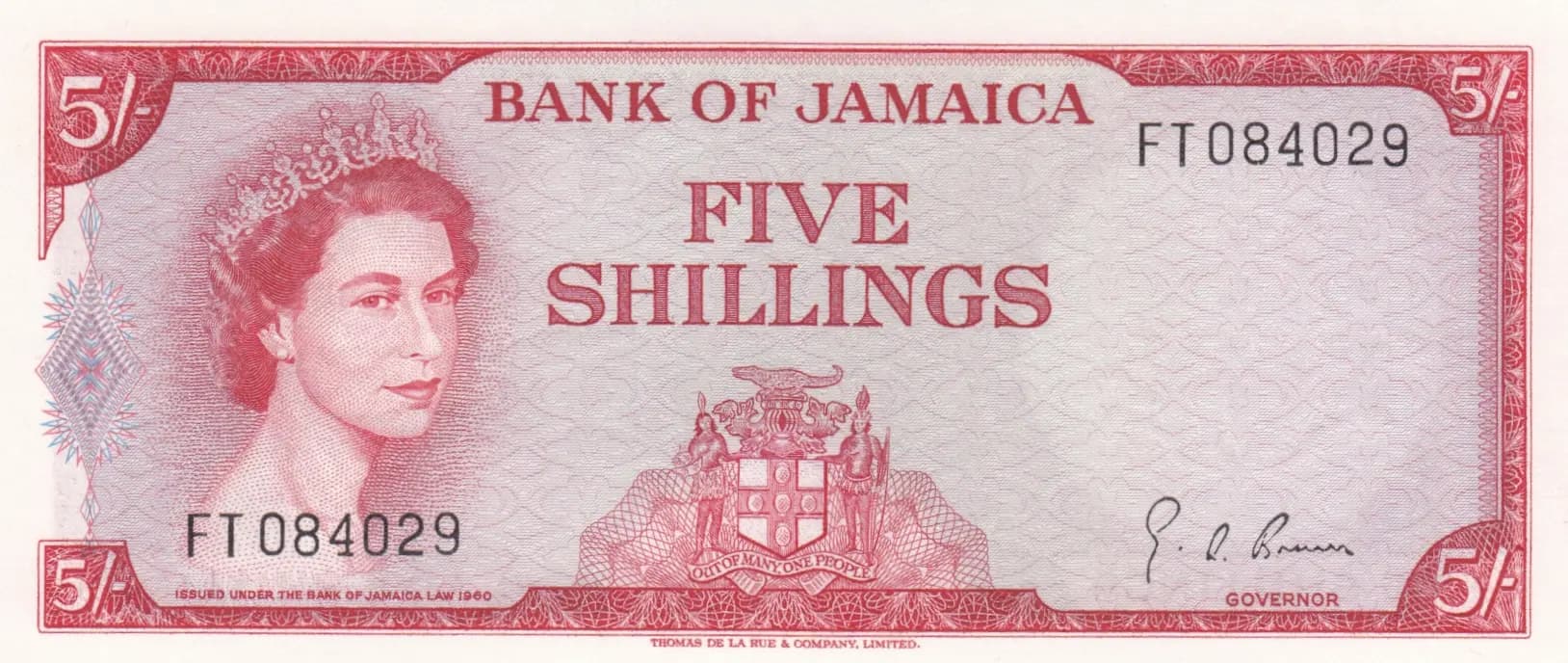
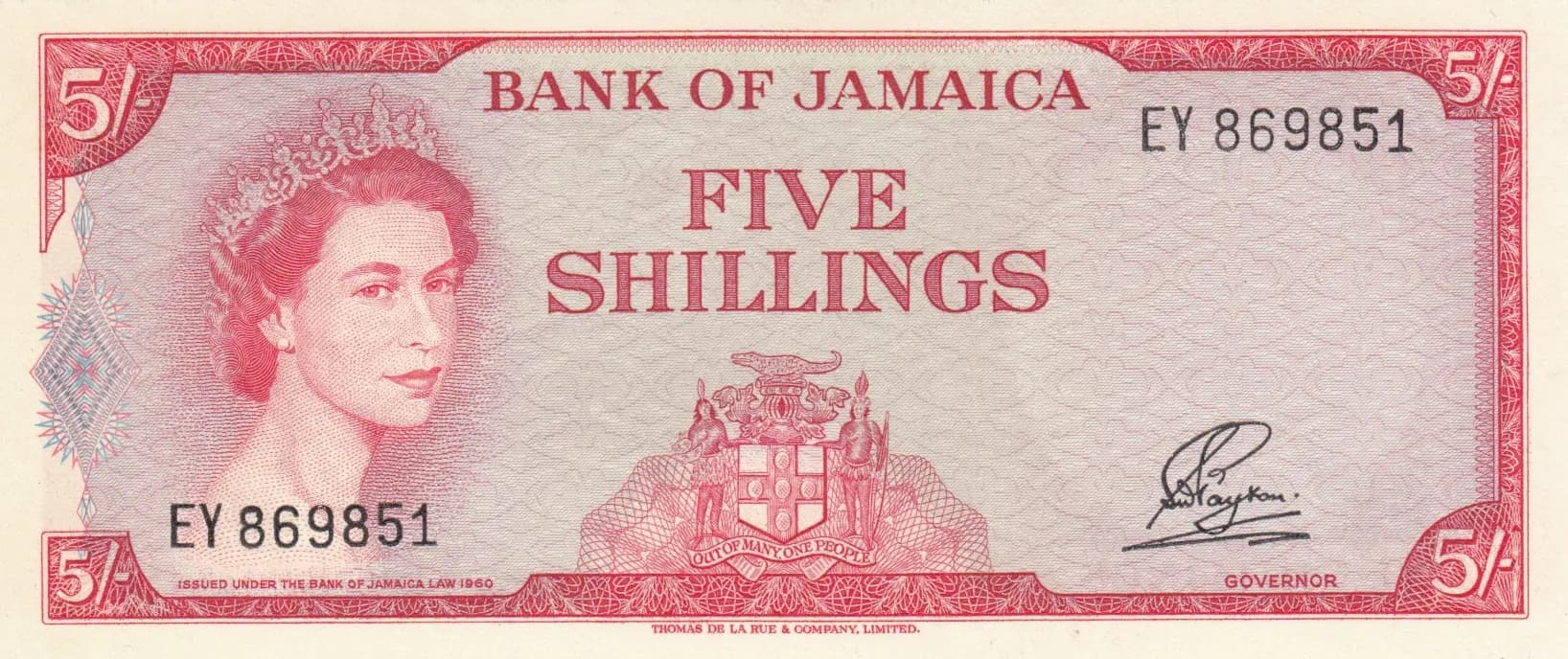
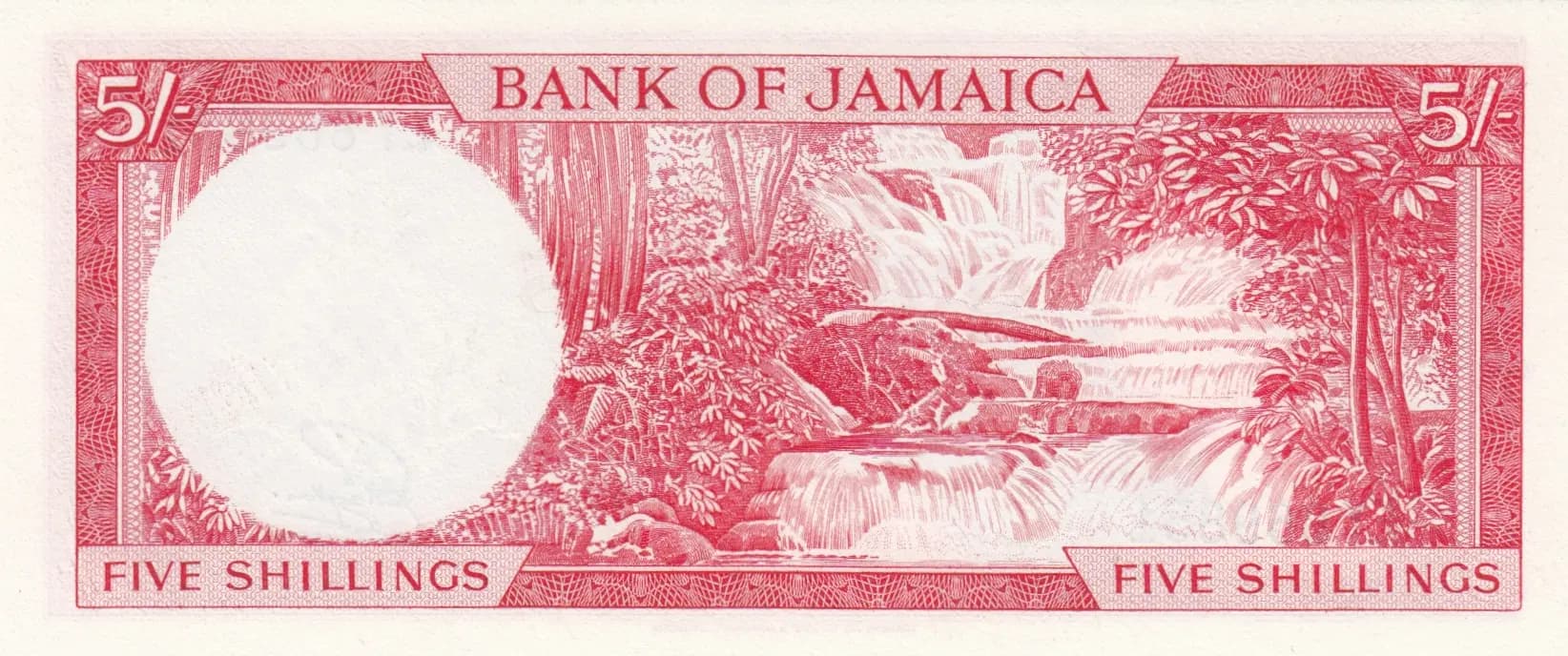
A stunning example of Jamaica's 1964 Five Shillings banknote (Pick P-51Aa) in Uncirculated condition, featuring the iconic portrait of Queen Elizabeth II on the obverse and a beautifully engraved tropical waterfall scene on the reverse. The note displays the characteristic red and multicolored printing by Thomas de la Rue with pristine paper quality and no evidence of circulation, making it a desirable piece for collectors of Commonwealth currency from the early post-independence period.
Common. The 1964 Five Shillings banknote P-51Aa was issued in regular circulation quantities by the Bank of Jamaica and remained in circulation for an extended period. Market data from realbanknotes.com shows consistent sales at modest prices ($10-$40 range), with even AUNC examples selling below $40. Catalog values (2019) list UNC specimens at $100, but this reflects collector pricing rather than scarcity—the note is widely available and does not command premium prices relative to other Commonwealth notes from this era.
Issued under the Bank of Jamaica Law of 1960, this 1964 note reflects Jamaica's transition to independent currency management following the country's independence in 1962. The obverse features Queen Elizabeth II as head of state during this period, while the reverse depicts Jamaica's natural landscape with river rapids—imagery emphasizing the nation's tropical geography and natural resources during the early years of the Bank of Jamaica's autonomous note-issuing authority.
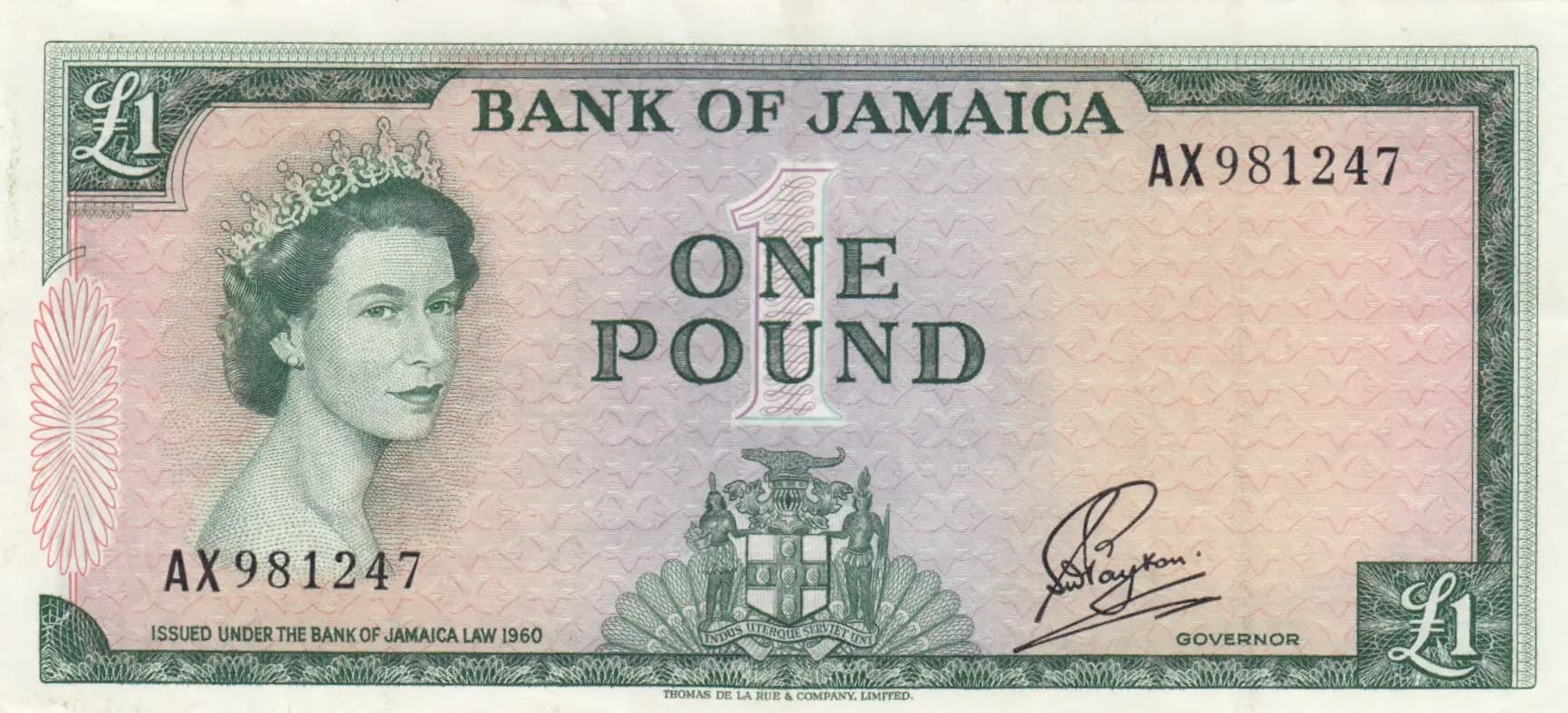
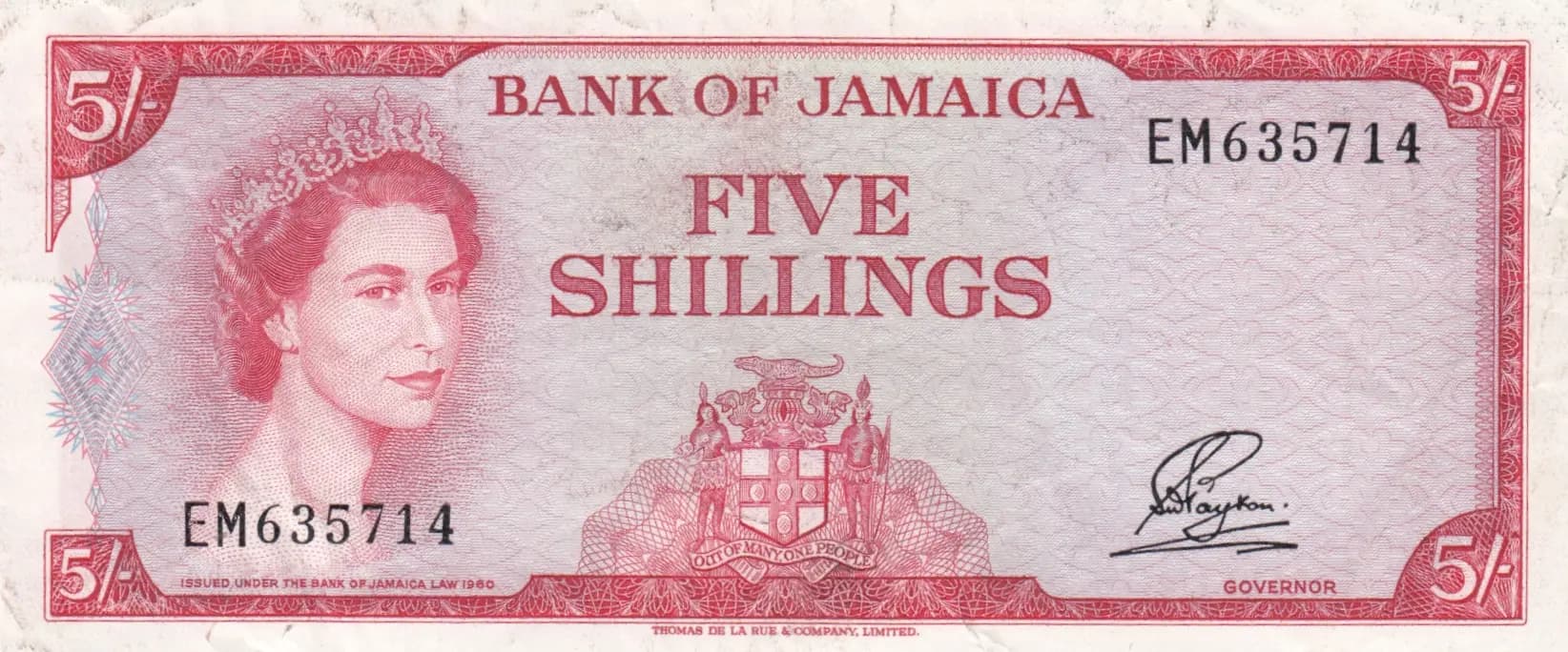
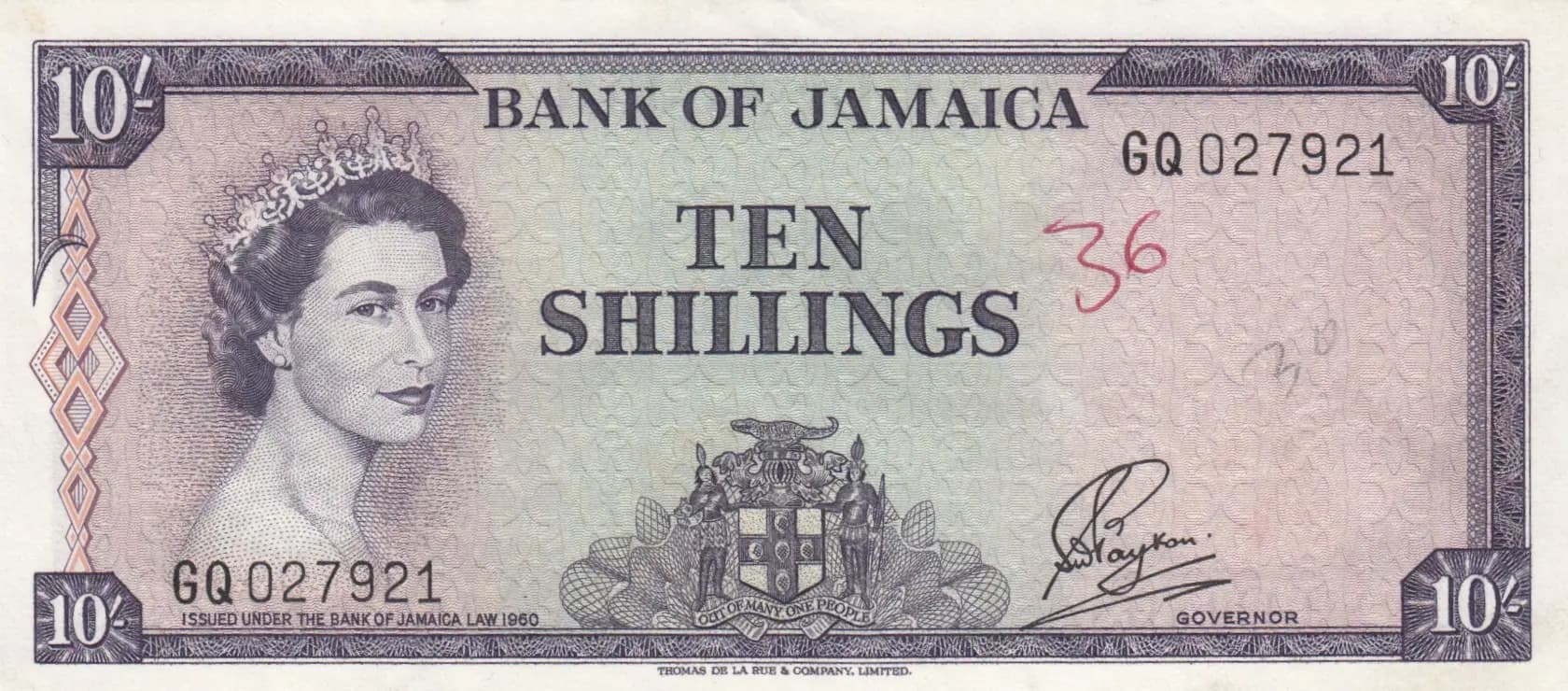
The obverse presents a right-facing profile portrait of Queen Elizabeth II wearing a tiara, rendered in the fine engraving style characteristic of Commonwealth currency. The Bank of Jamaica coat of arms is positioned in the center-bottom, featuring a shield with heraldic designs and supporters. The reverse showcases a detailed landscape engraving of tropical river rapids surrounded by dense vegetation and foliage, with rocky terrain creating the natural scenery. Both sides incorporate decorative ornamental borders and corner elements featuring the numeral '5' in decorative frames. The dominant color scheme combines red/crimson with pink and beige/cream underprints, creating the characteristic warm palette of this series. A large circular watermark area is visible on the reverse side.
FRONT: 'BANK OF JAMAICA' (issuing authority), 'FIVE SHILLINGS' (denomination in words), 'FIVE SHILLINGS' / '5/' (denomination markers), 'ISSUED UNDER THE BANK OF JAMAICA LAW 1960' (legal basis), 'GOVERNOR' (signature authority designation), 'THOMAS DE LA RUE & COMPANY, LIMITED' (printer attribution), 'EY 869851' (serial number). BACK: 'BANK OF JAMAICA' (issuing authority), 'FIVE SHILLINGS' / '5/' (denomination markers).
Intaglio engraving (line engraving and cross-hatching) by Thomas de la Rue & Company, Limited of London, the renowned security printer credited on the obverse. The fine line engraving throughout, intricate cross-hatching patterns, and detailed portrait rendering are hallmarks of the intaglio process, which provides superior anti-counterfeiting characteristics through its depth and precision.
This example is identified as Pick P-51Aa (Five Shillings denomination variant). The PMG population report indicates this Pick number encompasses multiple variants (P-51Aa through P-51Ad for the 5-shilling denomination), which differ primarily in signature combinations and minor design elements. The observed serial number 'EY 869851' features the Gothic-style numbering typical of this issue. The English motto below the arms (as noted in the visual analysis and external references) indicates this is NOT the Latin motto variant, distinguishing it from some later related issues referenced in the catalog data.