1 lira 1870
About This Note
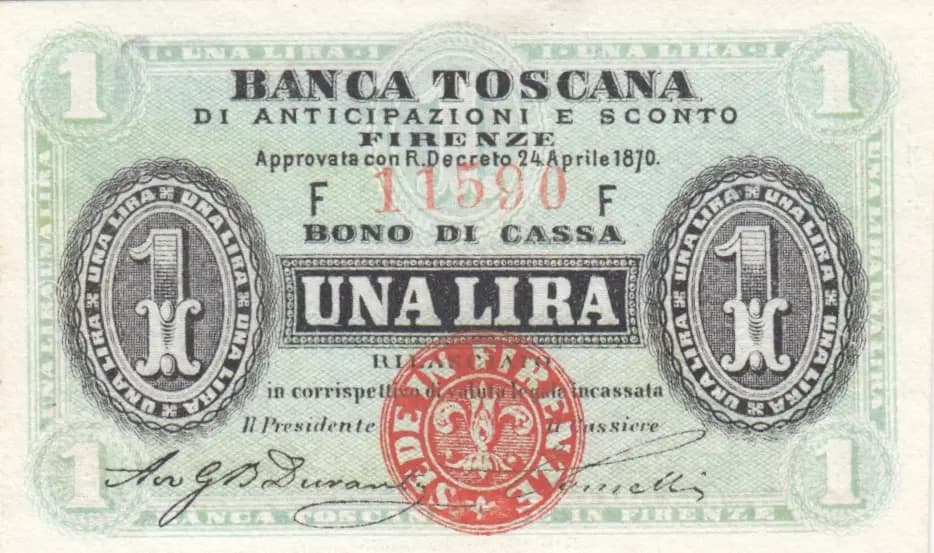
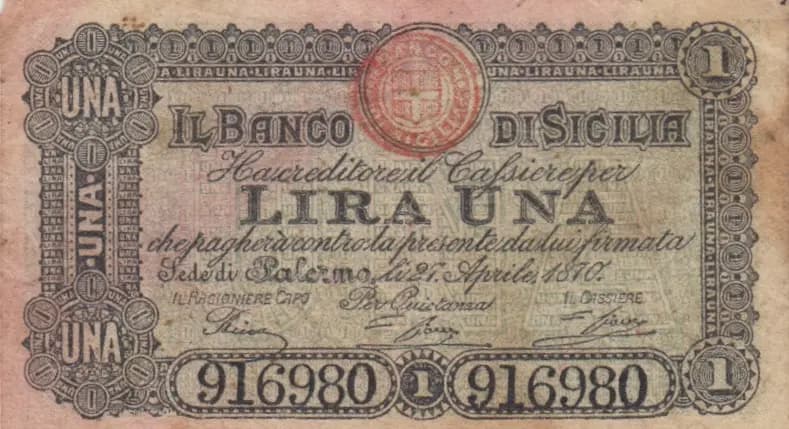
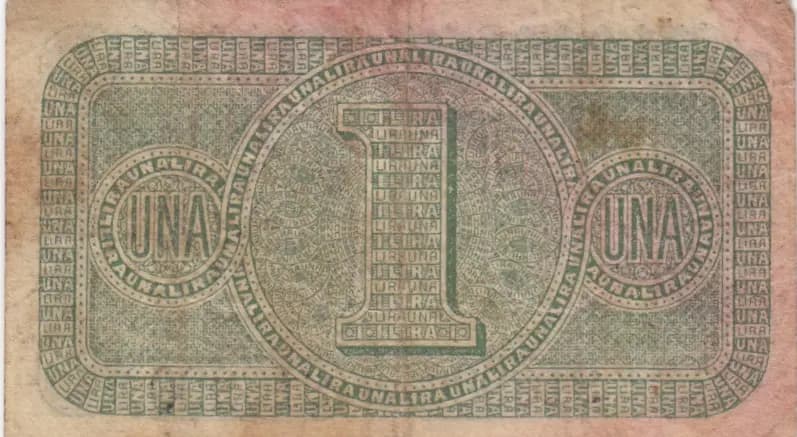
This is a 1 lira banknote issued by the Banco di Sicilia in 1870, represented in Fair condition with significant age-related wear. The note displays the characteristic ornate design typical of 19th-century Italian regional banking institutions, featuring a prominent red circular official seal on the front and a symmetric geometric reverse with large numeral '1' in decorative medallions. The extensive foxing, discoloration, and creasing visible throughout reflect over 150 years of age and circulation, making this an authentic period example of early Italian monetary instruments.
Common. The Banco di Sicilia issued substantial quantities of small-denomination notes during this period, and 1 lira notes in particular were produced in large numbers for everyday circulation. No historical evidence suggests this note type or serial number range was part of a limited issue or early withdrawal. The Fair condition grade and presence of typical circulation wear are consistent with notes that were produced abundantly and widely circulated throughout Sicily and Italy during the late 19th century.
The Banco di Sicilia issued this note during the early years following Italian unification, when regional banks still maintained significant autonomy in currency issuance. The dates visible on the note (1870 and 1862) reflect the transitional period of Sicilian banking integration into the broader Italian financial system. The ornate design and ceremonial red seal emphasized the official authority and legitimacy of this regional Sicilian institution during a period of significant political and economic reorganization.
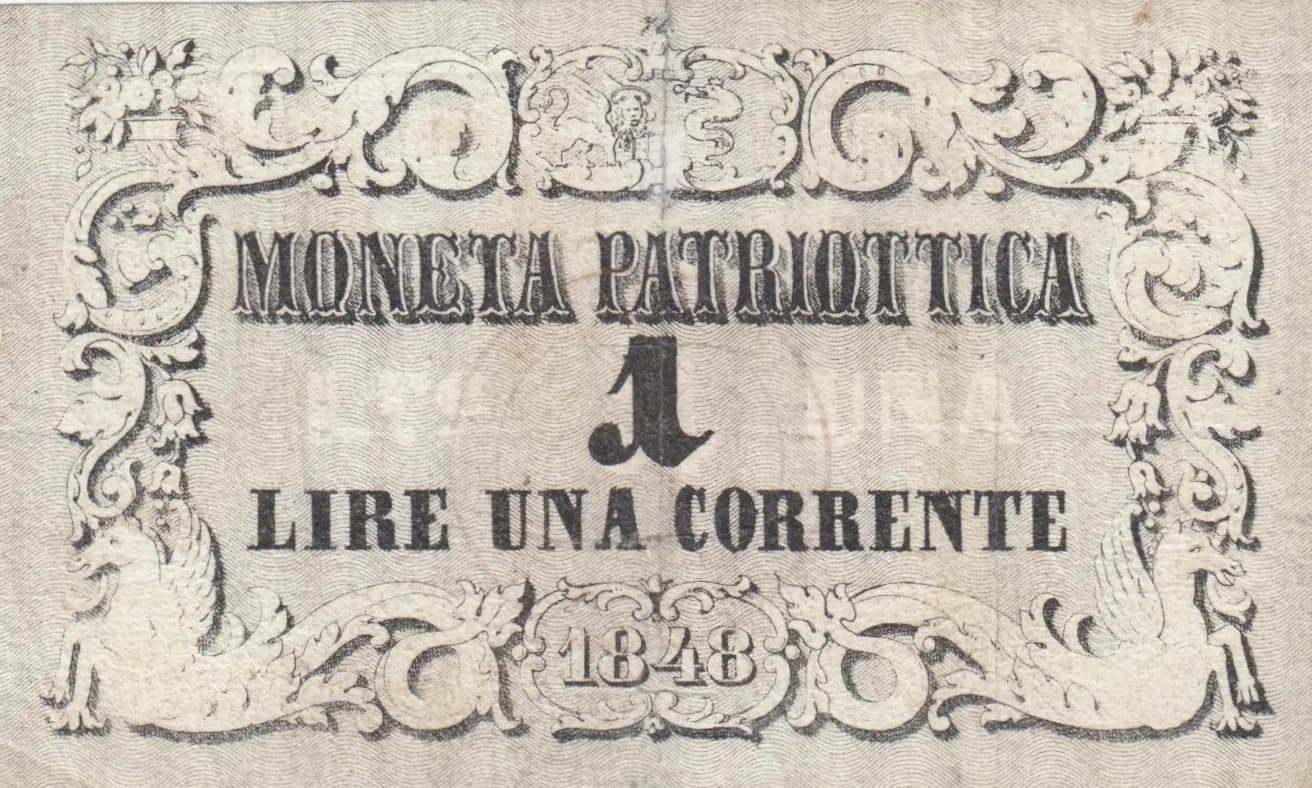
The front of this banknote features a classical banking document layout with an ornate decorative border containing repeated circular emblems displaying the numeral '1'. A large red circular official seal dominates the center-upper portion, serving as the primary security and authentication feature. The text is arranged formally across the note in multiple lines in the classical 19th-century style. The reverse presents a more geometric and symmetric design, with a large central numeral '1' enclosed in an ornate rectangular frame and flanked by two circular 'UNA' (One) medallions on either side. The entire reverse is framed by an intricate geometric border pattern with repeated text motifs. No portraits or identifiable landmarks appear on this note; instead, the design relies on numerals, textual authority inscriptions, and ornamental patterns typical of regional Italian bank notes of this era.
Front side: 'ILBANCO DISICILIA' (The Bank of Sicily); 'LIRA UNA' (One Lira); 'Avvalsitorenti Caispora' (Holders and authorized); 'dichiagarantucula presinte da lui firmata' (Declare guaranteed by him signed); 'Stato di Palermo 1870 Aprile 1862' (State of Palermo 1870 April 1862); Serial number '916980' (appears twice); 'UNA' (One) in corner ornaments. Back side: 'UNA' (One) in circular seals; 'LIRA' (Lira); repeated border text pattern (partially legible).
This note was produced using intaglio (copperplate) printing, the standard security printing method for banknotes of this period. The fine detail visible in the ornate borders, decorative medallions, and repeated patterns characteristic of intaglio work are evident in the visual analysis. The crisp impressions and dimensional quality of the design elements, despite the note's aged condition, confirm professional engraving techniques. The dual-color printing (red on front, green on back) required multiple passes through the press, consistent with 19th-century bank note production standards.
This specific note carries serial number 916980 and is dated 1870 (with reference date April 1862, likely indicating legislative authorization). The date range visible on the note (1862-1870) may indicate this was a reissue or continuing series authorized under earlier legislation. Varieties for Banco di Sicilia 1 lira notes of this period would primarily be distinguished by signature variations, serial number ranges, and minor date discrepancies. The specific serial number 916980 appearing twice on this note is consistent with contemporary printing practices for accountability and authentication purposes.