10 shillings 1961 specimen
Market Prices
10 salesAbout This Note
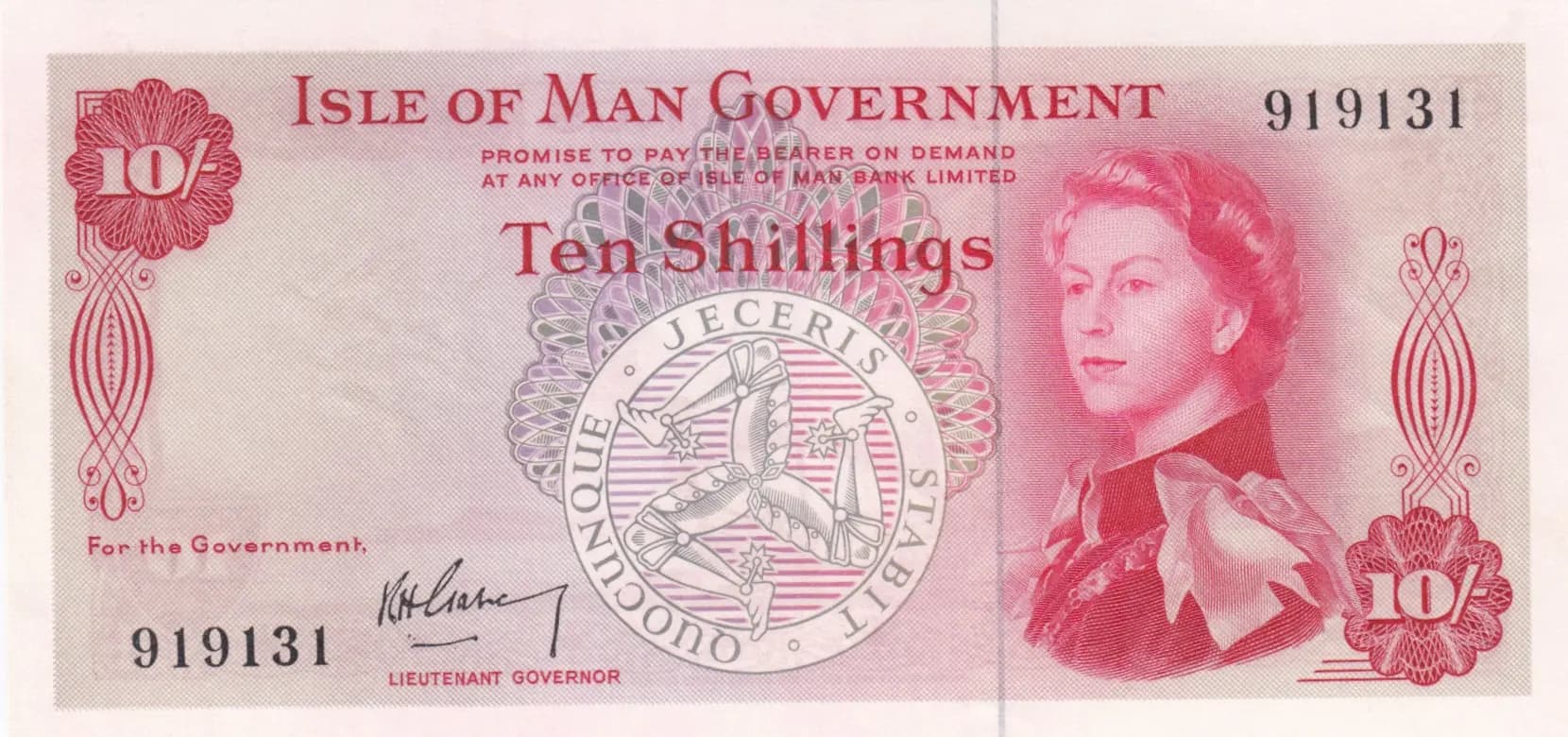
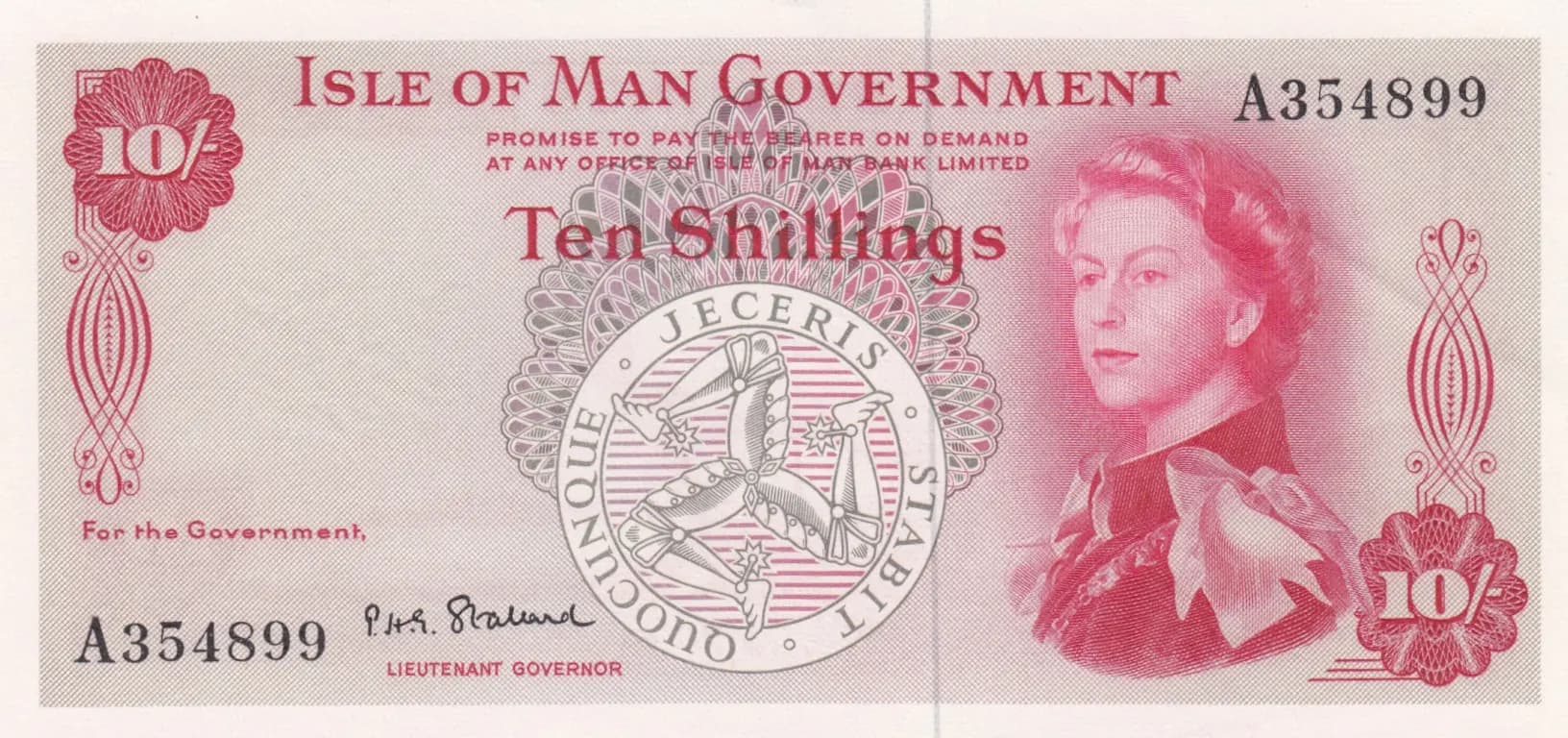
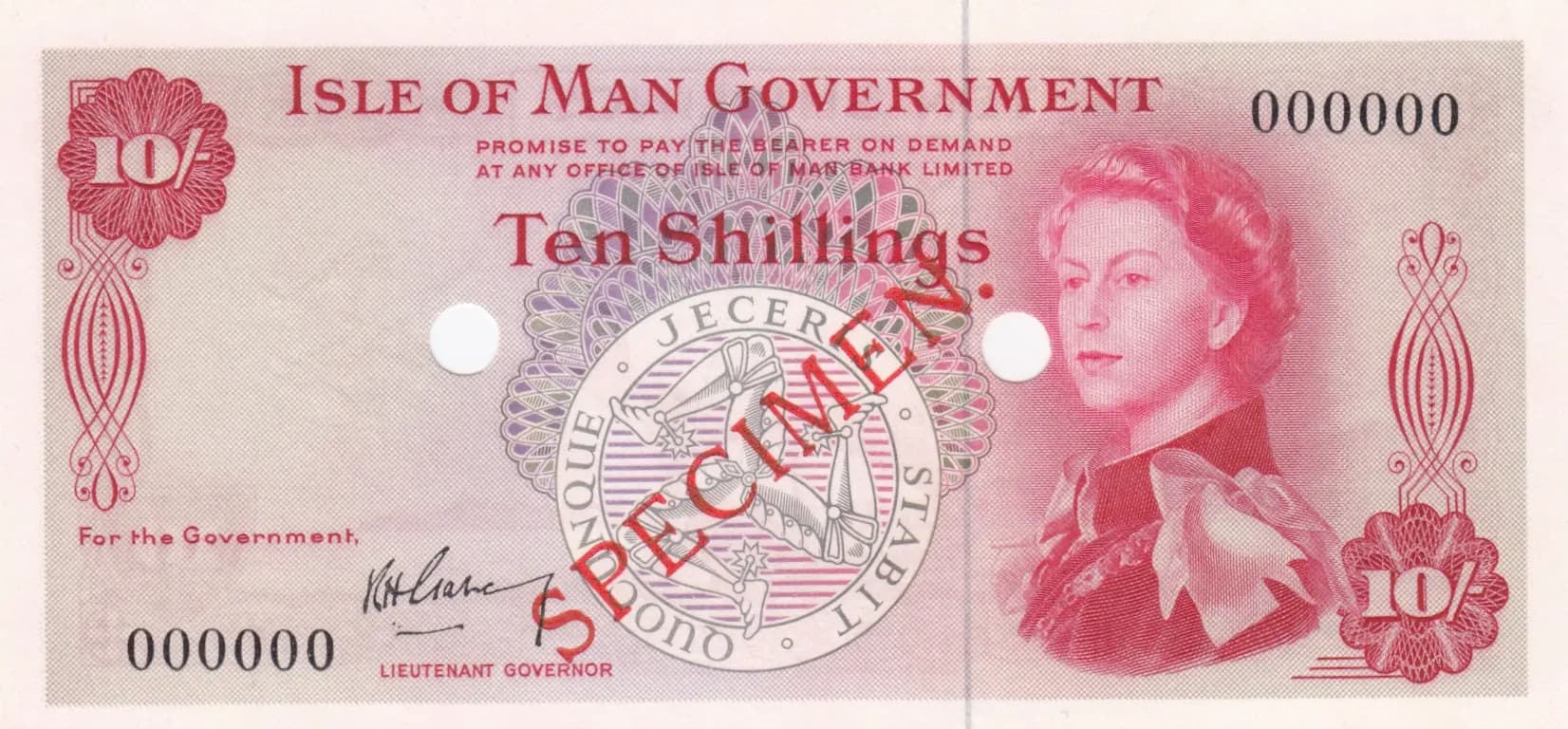
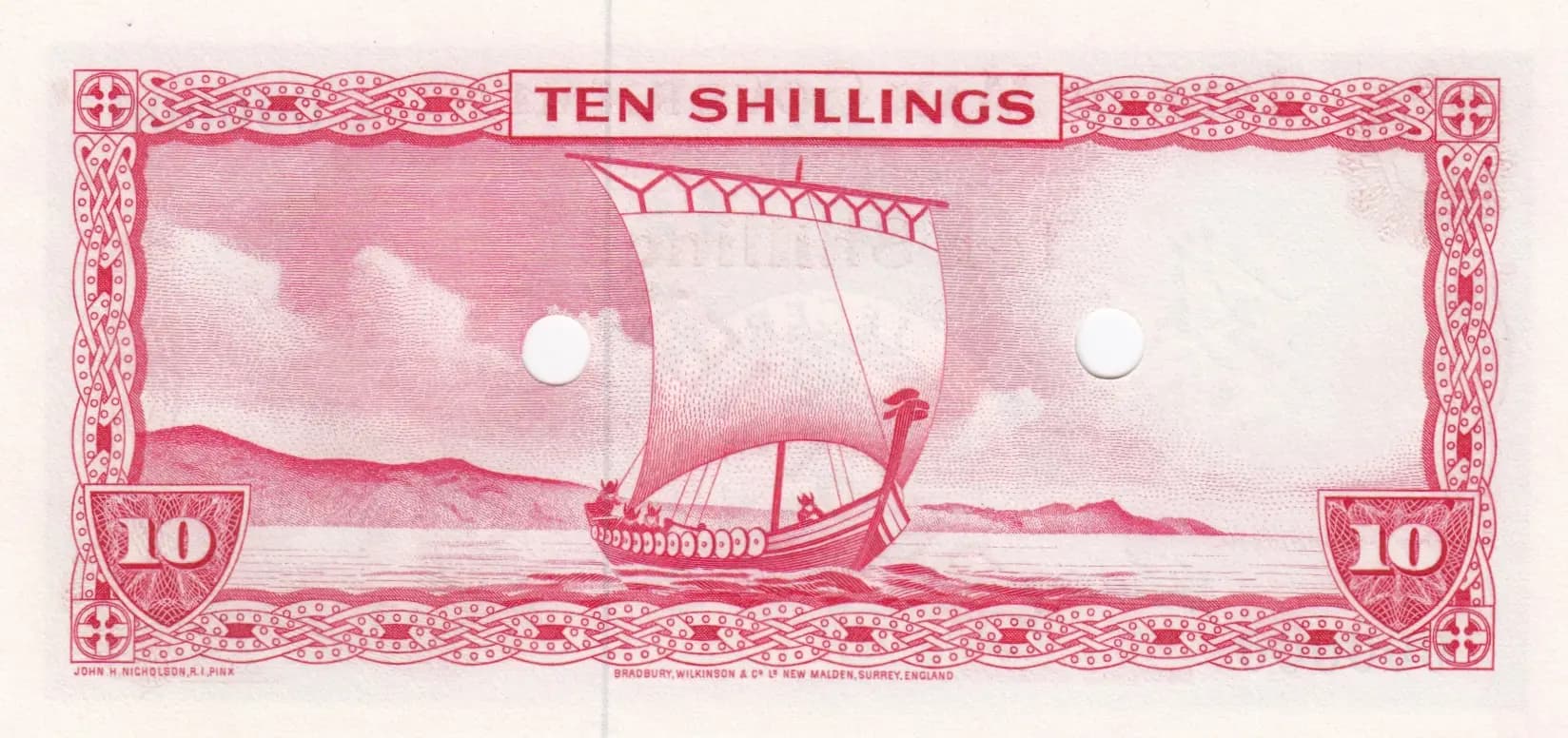
This is an uncirculated 1961 Isle of Man 10 Shillings specimen note featuring elegant red and multicolored engraving throughout. The obverse displays a young portrait of Queen Elizabeth II on the right with the Triskele arms symbol prominently positioned, while the reverse depicts a Viking-style sailing vessel on open water with mountainous backdrop. As a specimen note marked with diagonal red overprint and specimen serial numbers (000000), this represents an interesting institutional or collector piece from the early post-war period of Isle of Man's autonomous banking system.
Common. The eBay sales history shows regular circulation of this note type in various grades at modest prices, with uncirculated examples typically valued at $39-$100 in the 2010-2019 period and subsequently trading for lower amounts ($7-$46 range). Print runs for Isle of Man 10 Shillings notes from 1961 were substantial, and specimens, while less common than circulated notes, were produced in reasonable quantities for institutional distribution and collection purposes. The denomination and long period of circulation indicate this is a standard issue rather than a scarce or rare variety.
Issued in 1961 by the Isle of Man Government through the Isle of Man Bank Limited, this note reflects the island's re-establishment of its own currency and banking authority following World War II. The Victorian-era sailing ship depicted on the reverse symbolizes the Isle of Man's maritime heritage and historical seafaring traditions, connecting to the island's Viking heritage. The young portrait of Queen Elizabeth II on the obverse anchors this issue to the Commonwealth monetary system of the early 1960s, a period when many Crown Dependencies were asserting greater financial independence while maintaining constitutional ties to Britain.
The obverse features a left-aligned decorative composition with the Triskele (three-legged Celtic symbol) serving as both a central circular seal and watermark, flanked by ornate floral and scrollwork borders characteristic of high-security banknote engraving. Queen Elizabeth II's profile appears in the upper right in classical portrait style, typical of Commonwealth currency of this period. The reverse showcases a detailed maritime scene with a single-masted square-rigged sailing vessel (representative of Viking or medieval trading ships) centered on open water with distant hills or coastline, all framed by an ornate geometric border with interlocking diamond and cross motifs reflecting Celtic design traditions. Decorative rosette and square corner devices frame the denomination '10' in multiple locations. The overall design was engraved by John H. Nicholson and printed by Bradbury, Wilkinson & Co., the premier British security printer of the era.
FRONT: 'ISLE OF MAN GOVERNMENT' (issuing authority); 'PROMISE TO PAY THE BEARER ON DEMAND AT ANY OFFICE OF ISLE OF MAN BANK LIMITED' (standard banknote promise); 'Ten Shillings' (denomination in words); 'For the Government,' / 'LIEUTENANT GOVERNOR' (authorization); 'SPECIMEN' (specimen designation); '000000' (specimen serial number). BACK: 'TEN SHILLINGS' (denomination); 'JOHN H. NICHOLSON K.I.PRDA' (engraver/designer credit); 'BRADBURY, WILKINSON & Co Ltd NEW MALDEN, SURREY, ENGLAND' (printer identification).
Intaglio (line engraving) printing by Bradbury, Wilkinson & Co Ltd of New Malden, Surrey, executed with fine-line engraving throughout. The visual analysis confirms the characteristic deep, precise line work, intricate scrollwork patterns, and fine detail reproduction typical of classical intaglio security printing. The multicolored effect is achieved through careful registration of engraved plates with color separation printing, evident in the red-dominant palette with white/cream highlights and subtle color variations in the background areas.
This note is catalogued as P-24as (specimen variant) by Pick. The 'as' designation indicates this is a specimen overprint of the P-24a base variety. According to PMG population data, multiple variants exist within the P-24 base number (P-24a, P-24b, P-24cts, P-24s1), though all appear to be printed by BWC (Bradbury, Wilkinson & Co). The specimen overprint in red diagonal text and the 000000 serial number confirm the specimen designation. The visual analysis shows two circular white binding holes typical of specimen sheets, further confirming this specimen attribution.