10 shillings 1967
Market Prices
7 salesAbout This Note
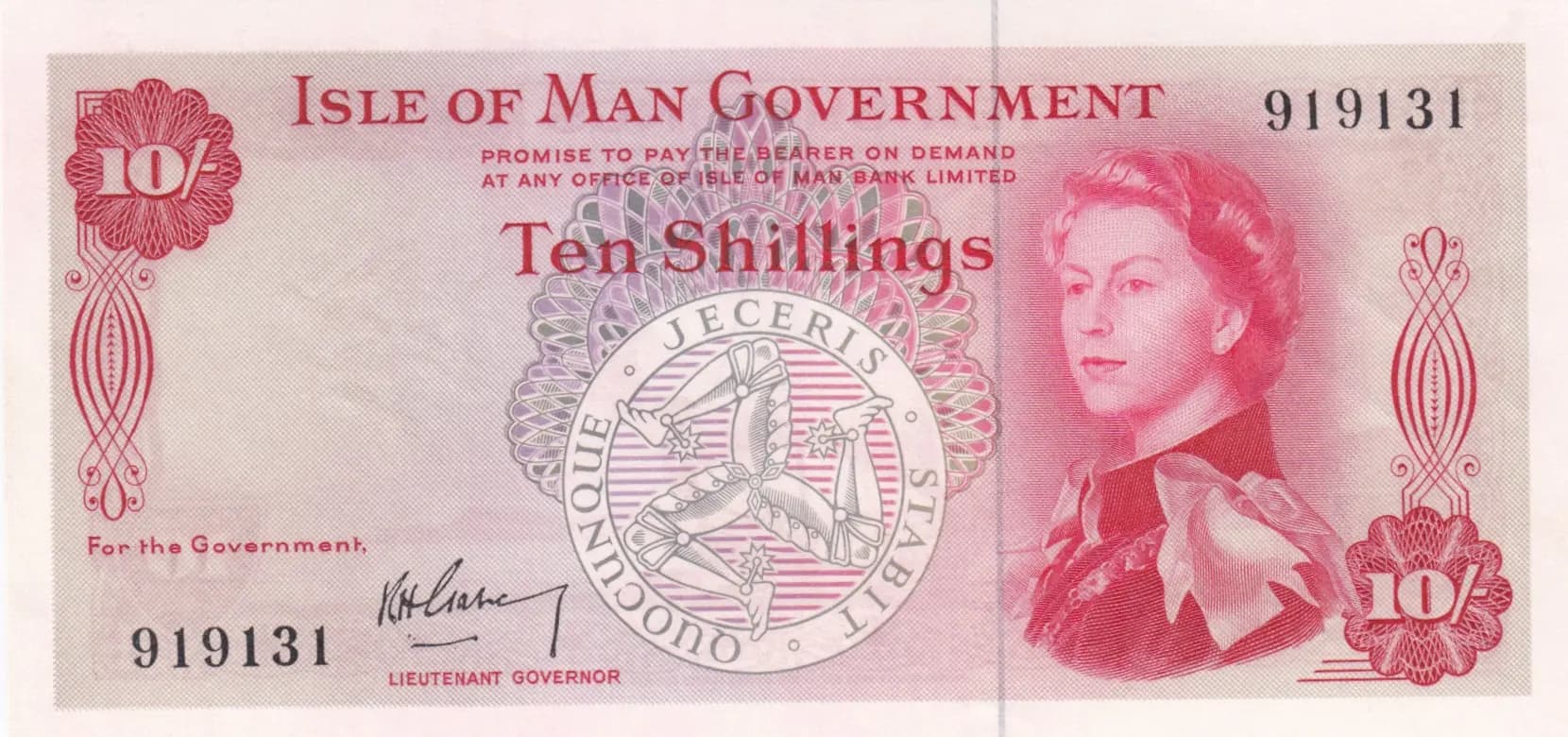
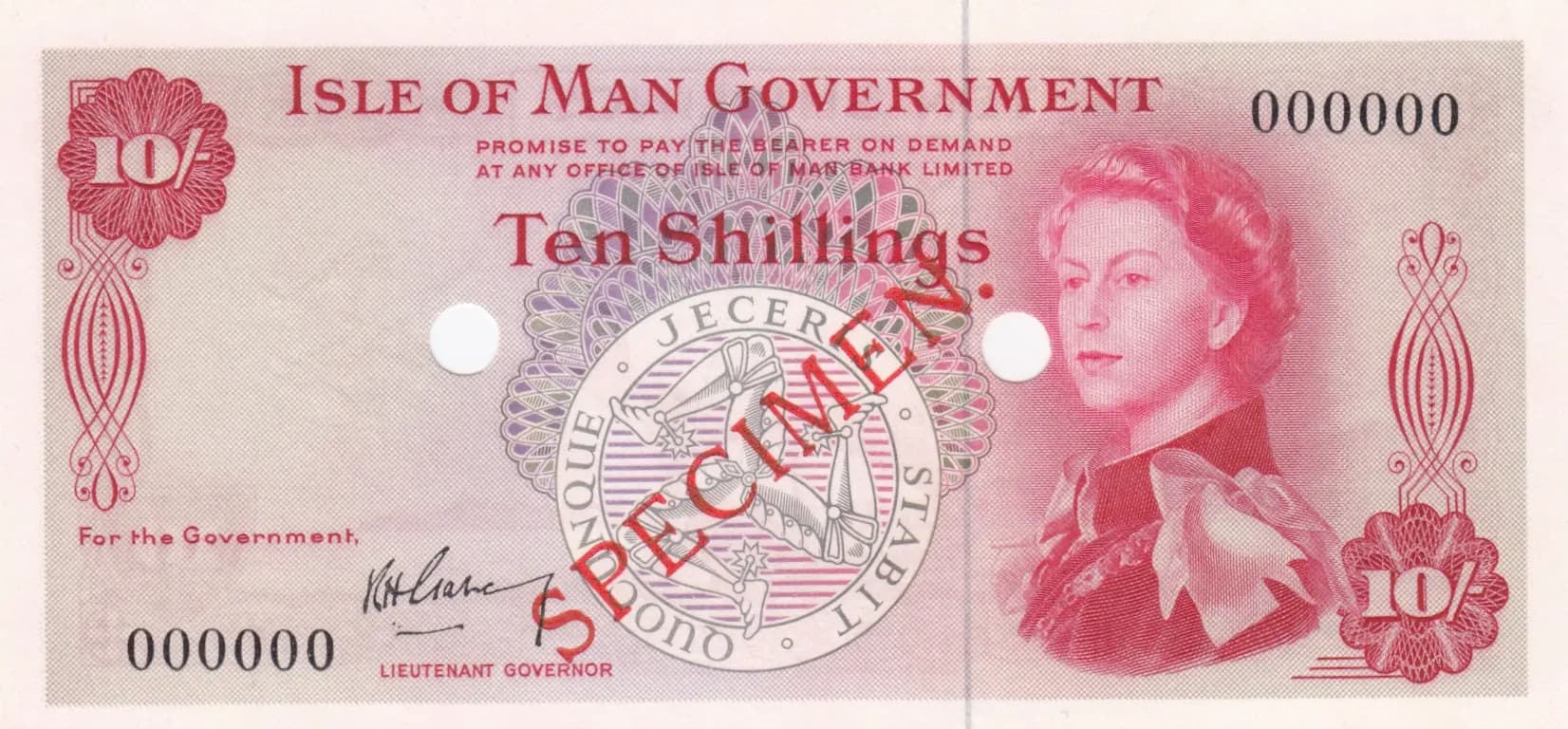
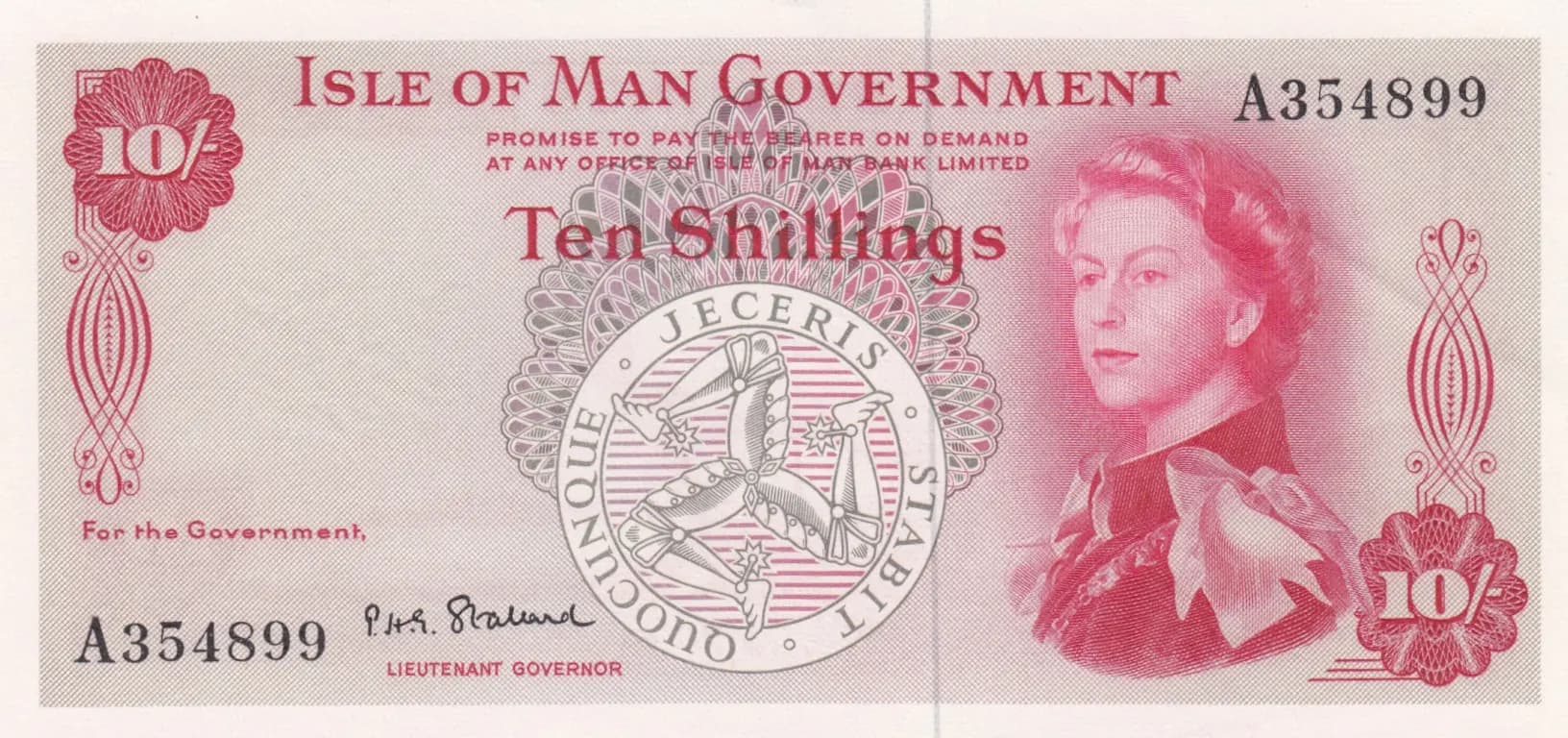
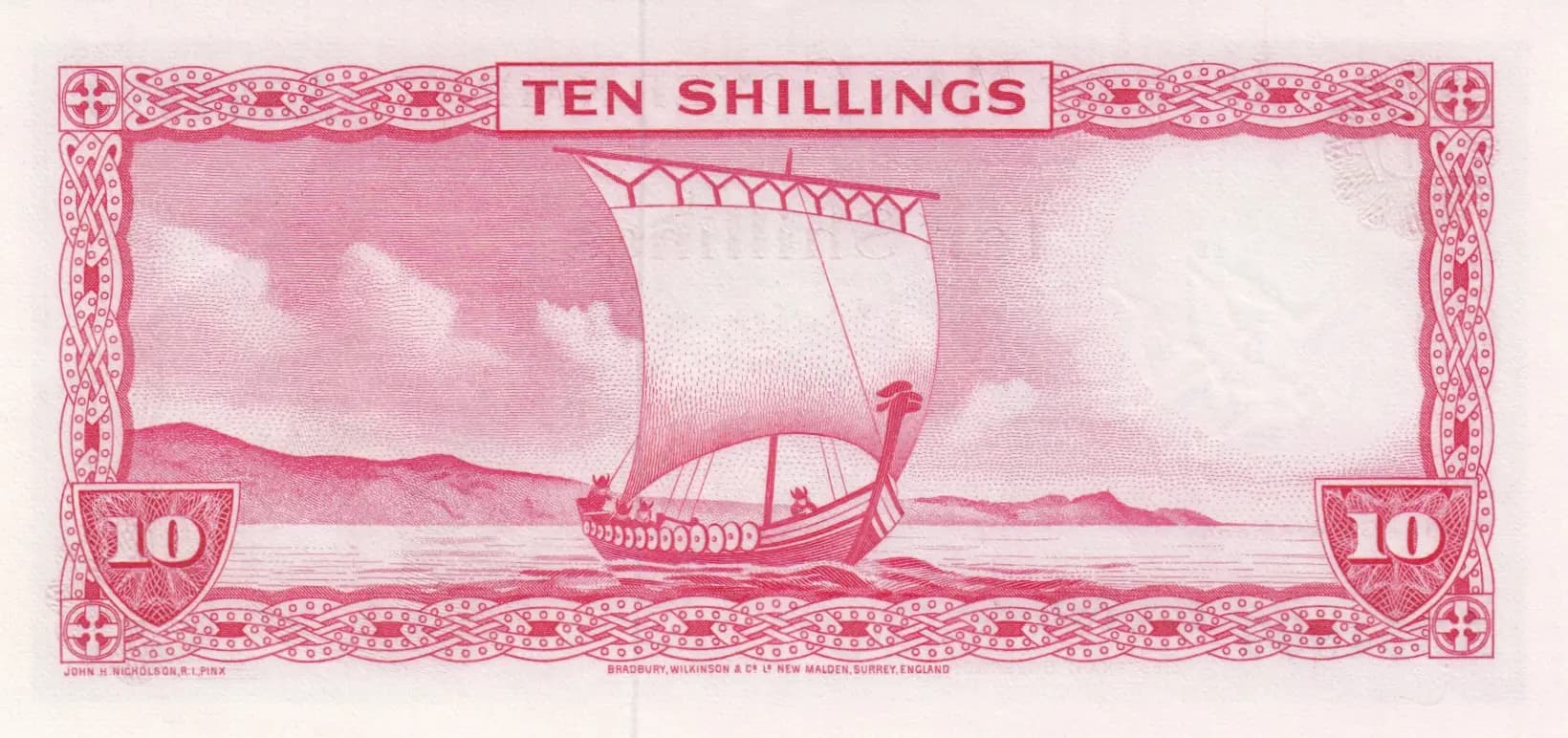
This is an uncirculated Isle of Man 10 Shillings note from 1967 (Pick 24b), featuring the classic pink/red design characteristic of this series. The obverse displays a young portrait of Queen Elizabeth II in profile, flanked by ornate decorative elements and the distinctive Manx triskele arms in a central circular seal. The reverse showcases a detailed Viking longship under sail with mountainous backdrop, reflecting the Isle of Man's Norse heritage. The note exhibits pristine condition with sharp engraving and no visible wear, consistent with its UNC grade.
Common. This note remains relatively common in the collector market, as evidenced by modest eBay realized prices ($29–$455 depending on grade and sale timing). In UNC condition, the catalog value of $80 (2019) and recent sales in the $35–$42 range for uncirculated examples indicate steady but not exceptional demand. The note was part of a standard government currency series with substantial print runs, and examples remain readily available to collectors without significant premium.
This note was issued during the reign of Queen Elizabeth II and reflects the Isle of Man's semi-autonomous status within the British Crown Dependencies. The Viking ship depicted on the reverse references the Isle of Man's historical settlement by Norse traders and settlers, while the triskele symbol represents ancient Celtic and Manx cultural identity. The note's promise to pay through the Isle of Man Bank Limited illustrates the island's separate financial authority despite its British connection during the post-war period.
The obverse features a right-facing profile portrait of a young Queen Elizabeth II, rendered in the formal style typical of Commonwealth currency from this era. The portrait is positioned on the right side with elegant draped period clothing. Dominating the center is an ornate circular heraldic seal containing the triskele arms of the Isle of Man, surrounded by intricate engraved detail work. The left margin displays decorative floral and foliate patterns with shield-shaped numeral '10' indicators in rounded squares. Ornamental corner elements featuring shell or fan-like motifs frame the design. The reverse depicts a detailed Viking longship (Norse-style vessel) with a prominent square sail, sailing on stylized water with mountainous or cliff terrain in the background. Ornate Celtic-style interlacing patterns form decorative borders on all sides. Shield-shaped numeral indicators displaying '10' appear in the bottom corners. The entire design employs pink/red as the dominant color with white/cream and gray accents.
Front: 'ISLE OF MAN GOVERNMENT' (issuing authority); 'PROMISE TO PAY THE BEARER ON DEMAND AT ANY OFFICE OF ISLE OF MAN BANK LIMITED' (redeemability clause); 'Ten Shillings' (denomination in words); 'For the Government,' 'LIEUTENANT GOVERNOR' (official authorization); 'P.M. Stainnel' (signature); Serial number 'A354899' (appears twice); 'JECERNIS' (Latin inscription, likely decorative or ceremonial). Back: 'TEN SHILLINGS' (denomination); '10' (numeral denomination, appears in shield elements); 'JOHN H. NICHOLSON, N.T. PNRA' (engraver/designer signature); 'BRADBURY, WILKINSON & CO LTD NEW MALDEN, SURREY, ENGLAND' (printer identification).
Intaglio engraving (recess printing) executed by Bradbury, Wilkinson & Co Ltd, the renowned British security printer located in New Malden, Surrey. This technique is evidenced by the sharp, fine-line detail work visible throughout the design, the precise circular seal work, and the complex decorative border patterns. The intricate engraved patterns and consistent line work demonstrate professional-grade intaglio production typical of high-security currency printing of the 1960s era.
This note is specifically cataloged as Pick 24b, one of four known variants for the base Pick 24 number (24a, 24b, 24cts, and 24s1 are documented by PMG). All documented variants share Bradbury, Wilkinson & Co as the printer. The serial number 'A354899' with the 'A' prefix indicates this particular specimen. Minor variations in signatures, serial number prefixes, or printing dates may distinguish it from other Pick 24 varieties, though the visual analysis confirms standard design elements consistent with the 1967 issuance.