10 shillings 1959
Market Prices
About This Note
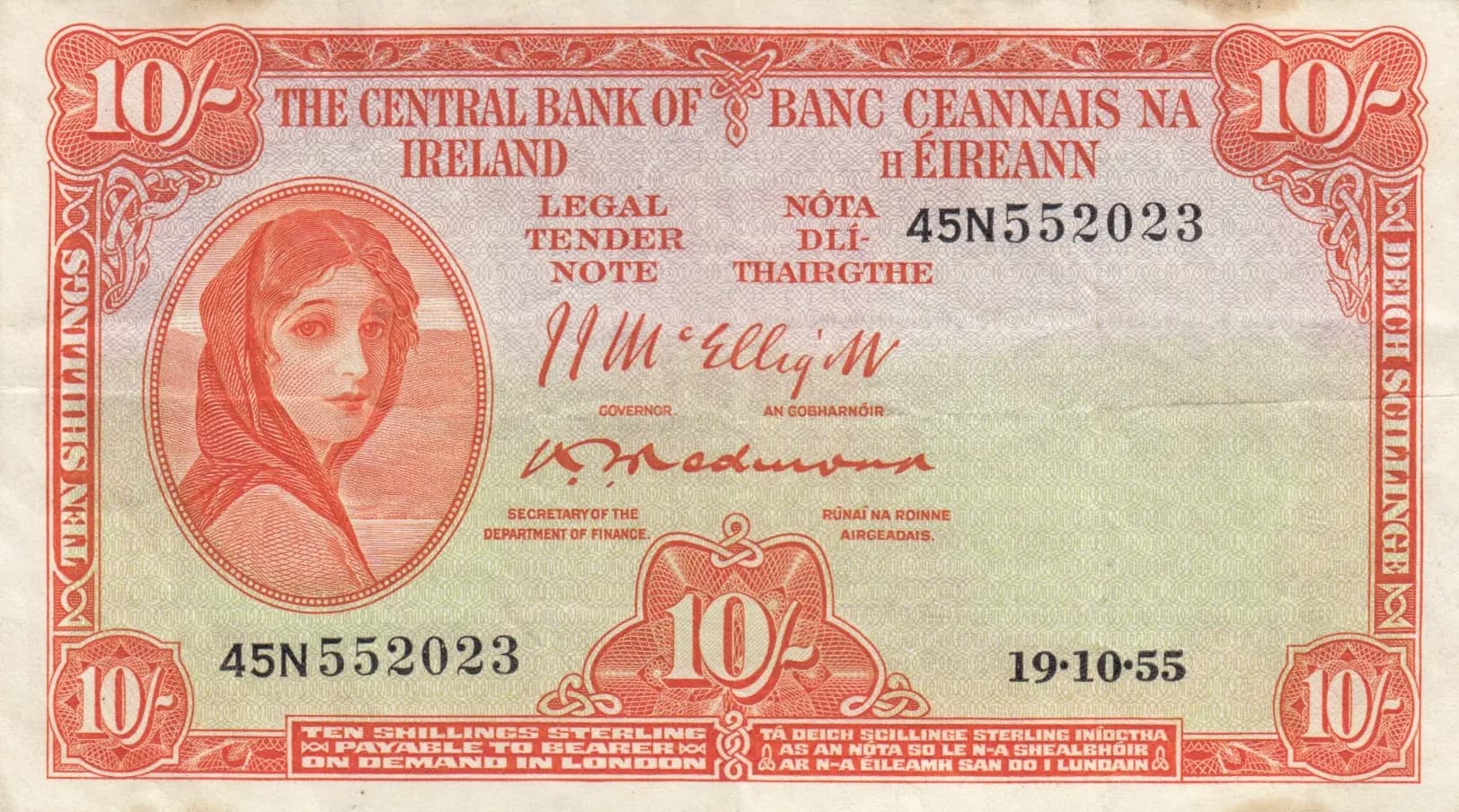
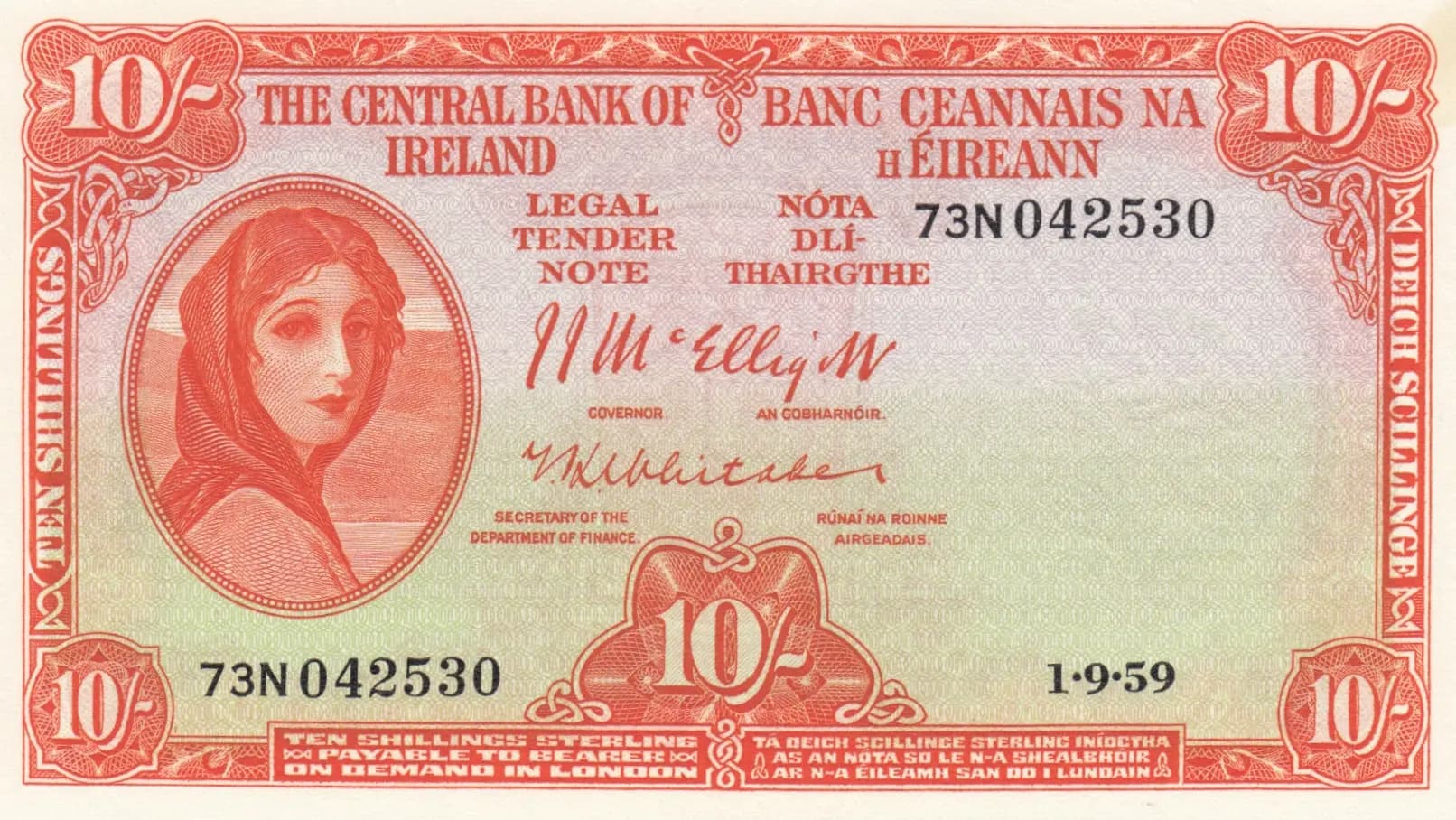
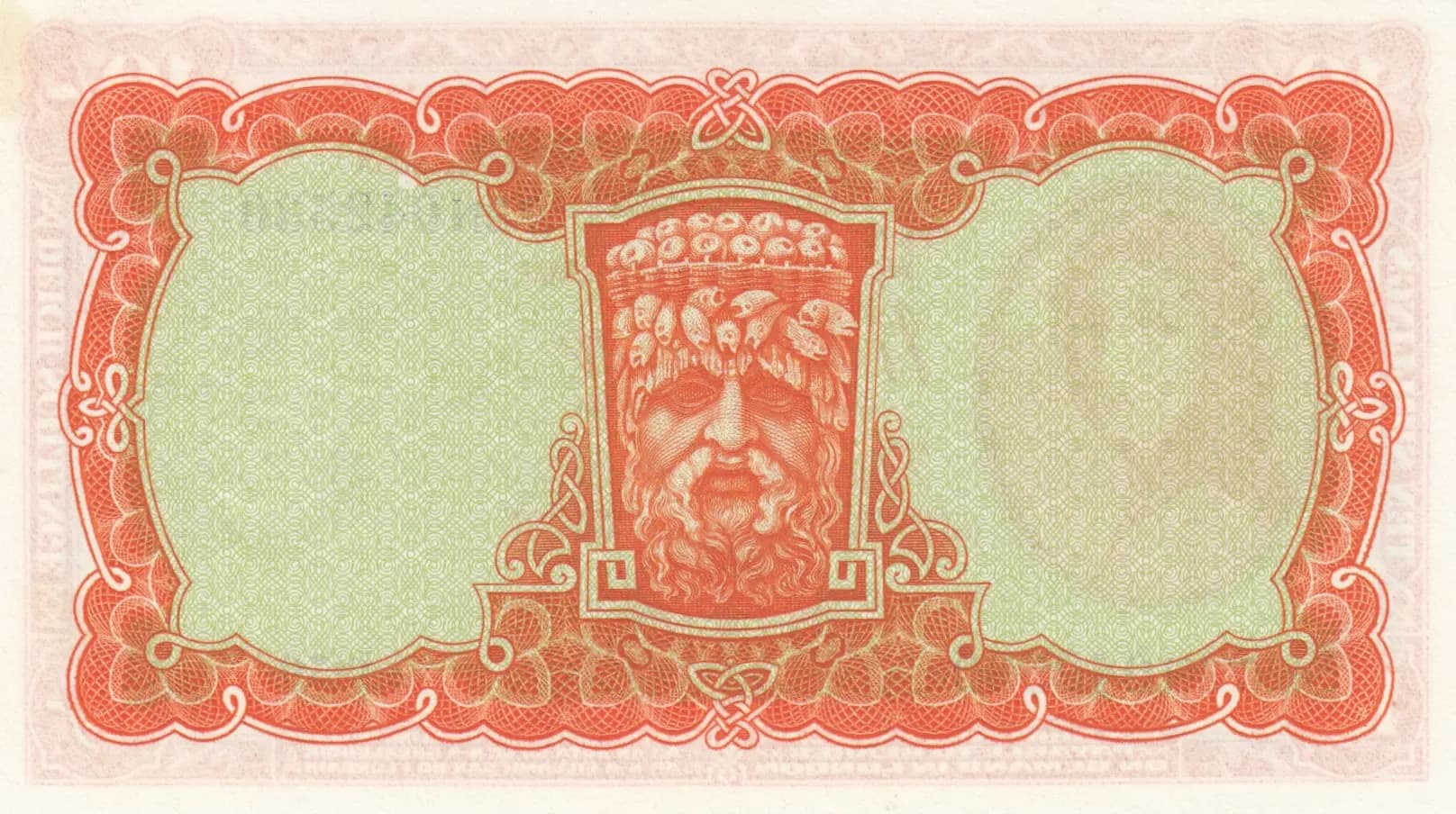
An exceptional example of the Central Bank of Ireland's 1959 10 shillings note (Pick P-56d) in uncirculated condition. The note displays the classical portrait of Lady Hazel Lavery in profile on the obverse, rendered in red/coral tones with intricate ornamental borders and bilingual (English/Irish) inscriptions throughout. The reverse features a crowned male bust on a pale green background with fine security line work, and the overall pristine preservation with no visible wear, creases, or foxing makes this a desirable specimen for collectors of Irish currency or Commonwealth banknotes.
Common. While the 10 shillings denomination was withdrawn from circulation in 1959, this Pick number (P-56d) represents a regular issue with substantial print runs during its 14-year circulation period (1945-1959). eBay market data shows UNC examples trading in the $180-$230 range, with numerous examples available at varying price points, indicating consistent collector demand but no scarcity premium. The existence of a PMG population report confirms multiple graded examples exist. Notes of this type remain accessible to collectors and are not considered scarce or rare.
Issued during the final year of the 10 shillings denomination in Ireland (1945-1959), this note represents the transitional period between the Irish pound sterling system and the decimal currency reform that would follow. The prominent use of Irish (Gaelic) alongside English reflects the post-independence identity of the Irish state and the Central Bank's commitment to cultural preservation. The note's date of September 1, 1959, places it at the twilight of the shillings era, making it historically significant as one of the final regular issues before currency modernization.
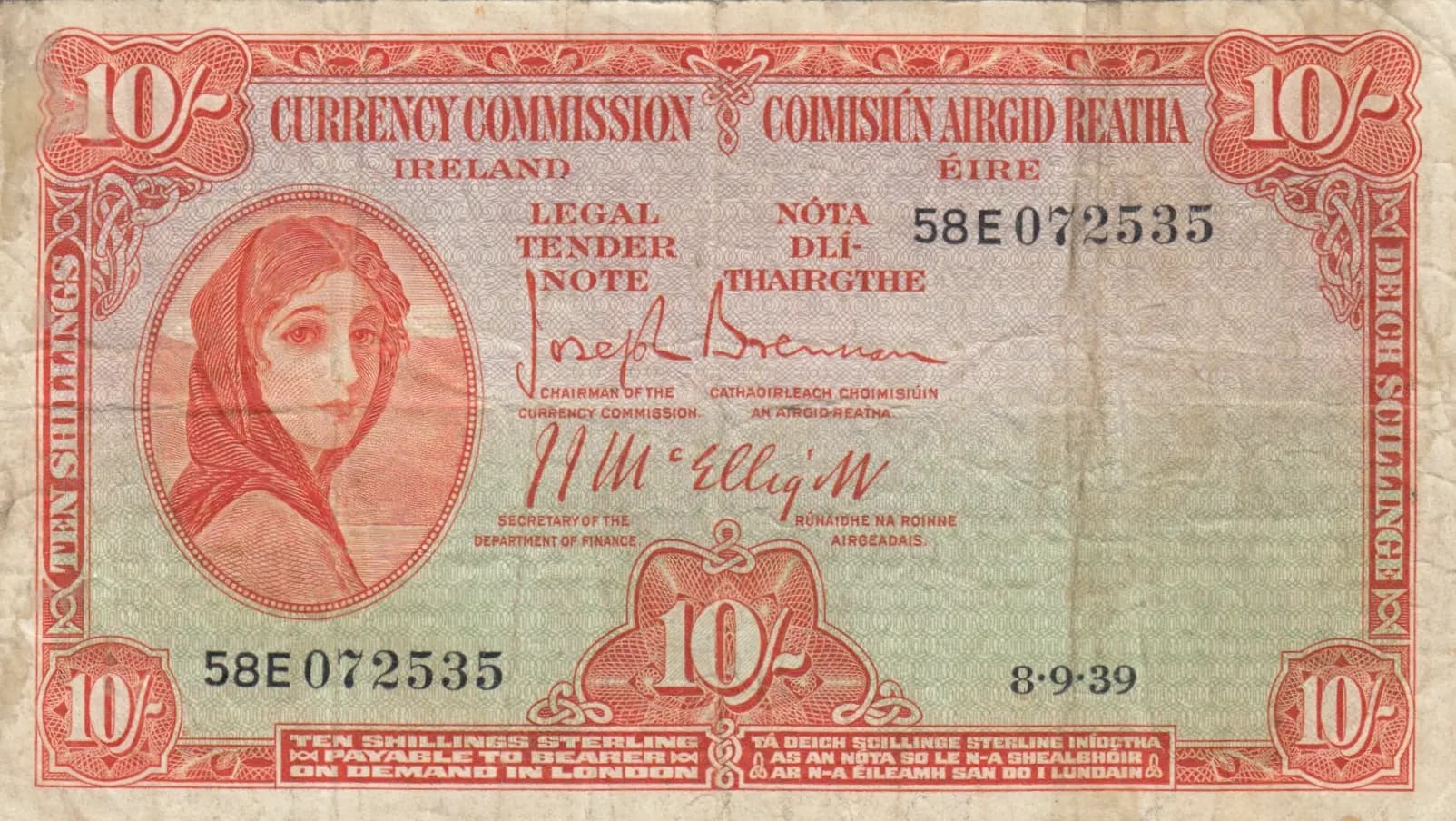
The obverse features Lady Hazel Lavery, an important cultural icon in Irish currency design, depicted in classical profile facing left within an ornate oval frame. She wears a head covering or veil, executed in the refined engraving style characteristic of mid-20th century banknote production. The ornamental framework includes Celtic knot designs at the corners, scrollwork flourishes, and a heraldic emblem (likely the Central Bank seal or Irish coat of arms) positioned centrally at the top. The reverse displays a crowned male bust in relief style, interpreted as representing authority and sovereignty, surrounded by an elaborate double-lined rectangular frame with Celtic interlace patterns. Dense micro-pattern line work covers the background of both sides, serving as an anti-counterfeiting measure. The color scheme of red/coral on the obverse and red/coral with pale green on the reverse is distinctive to this denomination and series.
FRONT SIDE: '10/-' (10 shillings); 'THE CENTRAL BANK OF IRELAND' / 'BANC CEANNAIS NA hEIREANN' (Central Bank of Ireland); 'LEGAL TENDER NOTE' / 'NOTA DLI-THAIRGTHE' (Legal Tender Note); 'GOVERNOR' / 'AN GOBHARNÓIR' (The Governor); 'SECRETARY OF THE DEPARTMENT OF FINANCE' / 'RÚNAÍ NA ROINNE AIRGEADAIS' (Secretary of the Department of Finance); '1·9·59' (1st September 1959); 'TEN SHILLINGS STERLING PAYABLE IN LONDON' / 'TA DEICH SCILLINGE STERLING INDÉITHE AS AN NOTA SO LE N-A SHEALCHOÍR AR N-A EILEAMH SAN SRO I LUNDAIN' (Ten shillings sterling payable as stated on this note in London); Serial number: '73N042530'; Official signature present. REVERSE SIDE: No text inscriptions visible; design-focused with heraldic imagery.
Intaglio engraving (recess printing), the standard security printing method for Central Bank of Ireland notes of this era. The fine line work, intricate portrait rendering, and complex border designs visible in the visual analysis are hallmarks of intaglio production. The note was likely produced by Thomas De La Rue & Company or a similar security printer contracted by the Central Bank, though definitive attribution for P-56d would require archival documentation. The security features, including repetitive background patterns and ornate engraved borders, reflect professional anti-counterfeiting design standards of the 1950s.
This note is dated 1·9·59 (1 September 1959), placing it in the final issue period of the 10 shillings denomination. The serial number visible is '73N042530' with prefix '73N', which may indicate a specific printing batch or numbering sequence. The signature visible appears to be that of the Central Bank Governor at the time. Variations within P-56d may include different signature combinations (as multiple governors served during the 1945-1959 period) and different serial number prefixes, though the catalog Pick number P-56d consolidates these as a single type. Collectors should note that signature varieties can affect premium, though market data suggests they remain common across all variants.