10 shillings 1939
About This Note
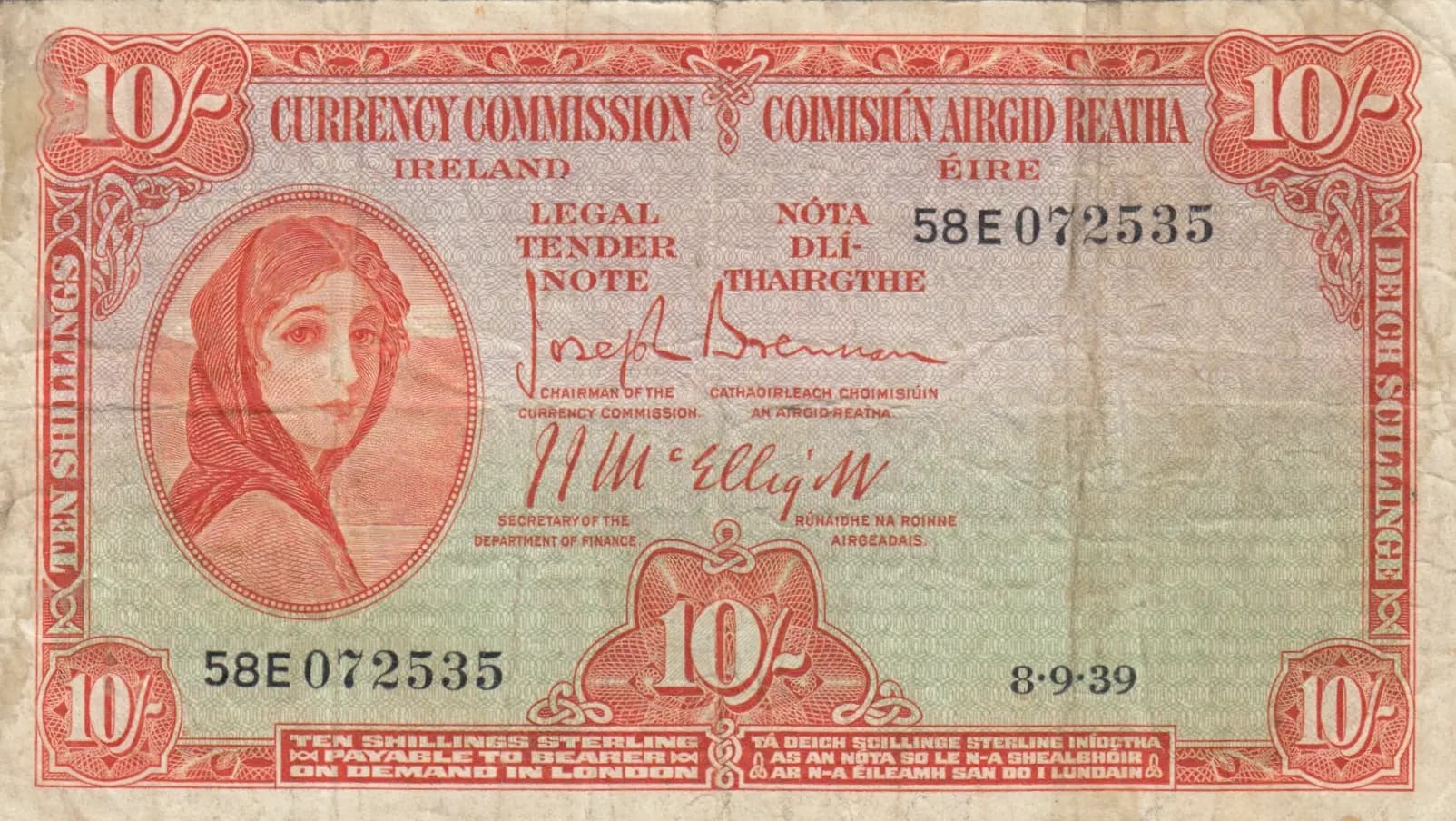
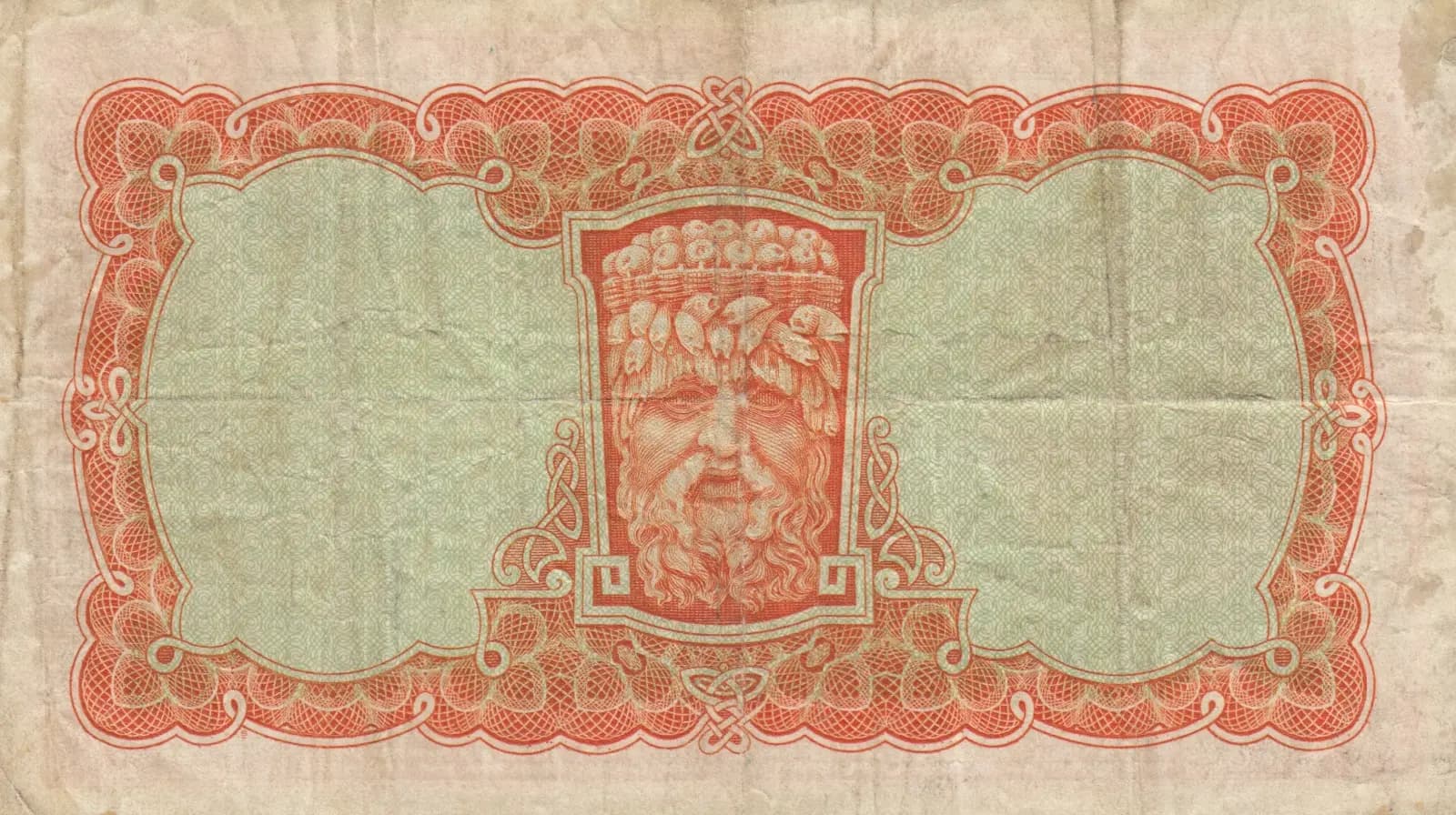
This is a scarce early issue 10 shillings banknote from the Currency Commission of Ireland, dated 8 September 1939 (Pick-1B). The note features a woman in profile on the obverse and a crowned bearded male head on the reverse, both rendered in the distinctive red-coral color scheme characteristic of this series. In Fine condition, the note shows extensive circulation wear with prominent creasing, foxing, and age-related discoloration typical of notes in active use since the 1930s, making it a historically significant example of early Irish currency.
Uncommon to Scarce. The 10 shillings denomination from the Currency Commission's 1939 issue represents an early and relatively short-lived denomination in the Irish currency system. Pick-1B specifically denotes an early variety of this issue. While not extremely rare, these notes are scarcer than later denominations and issues due to the limited circulation period and smaller print quantities associated with the 10 shillings denomination. The PMG population report indicates only three cataloged varieties of the base Pick-1 number (P-1A, P-1B, P-1C), suggesting limited survivor populations of professionally graded examples. Notes in Fine condition showing significant circulation wear are more commonly encountered than higher grades, making this piece moderately scarce rather than rare.
This note was issued during a pivotal moment in Irish history, just as World War II began in September 1939, when Ireland was establishing its independent currency system under the Currency Commission. The bilingual English-Irish inscriptions (including 'ÉIRE' and 'COMISSIÚN AIRGID BEATHA') reflect the young nation's commitment to the Irish language and cultural identity following independence. The formal styling with dual signatures from the Chairman of the Currency Commission (Noel Brennan) and the Secretary of the Department of Finance (William Magiligan) demonstrates the official state authority backing this early issue.
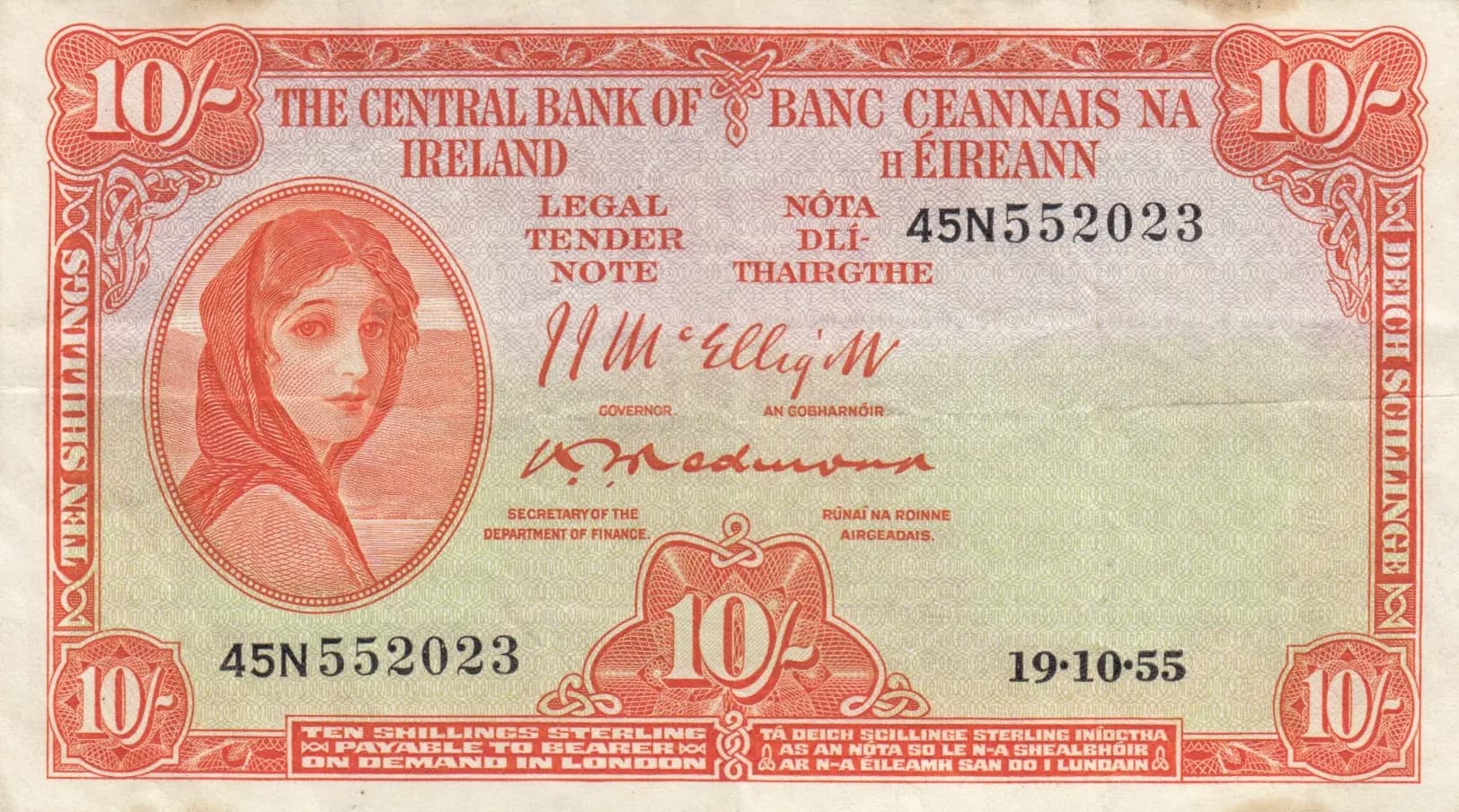
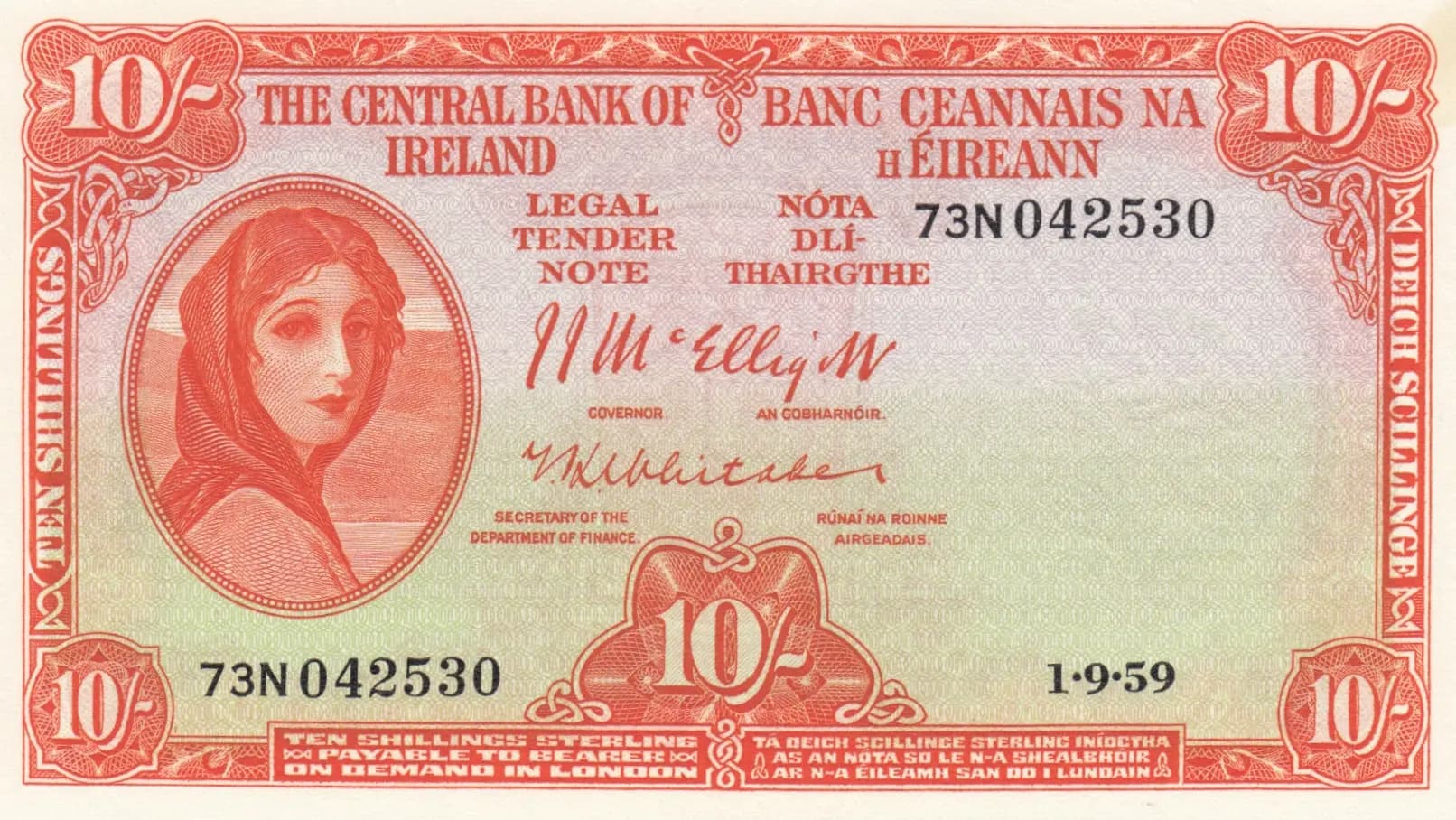
The obverse features a portrait of a woman wearing a headscarf, shown in left-facing profile within an oval frame on the left side of the note. This portrait likely represents Hibernia or a personification of Ireland, a common iconographic choice for newly independent nations' currency. The reverse displays a crowned bearded male head in right-facing profile, enclosed in an elaborate rectangular frame with Celtic-inspired geometric ornamentation. The entire design is framed by ornate Celtic knot patterns and decorative borders in the corners, featuring shields bearing the denomination '10/-'. The predominant red-coral coloring with cream and gray accents was characteristic of the Currency Commission's early note designs, reflecting both classical engraving traditions and early 20th-century aesthetic preferences. The bilingual presentation of all text reflects the official status of both English and Irish in the newly independent Irish state.
FRONT SIDE: '10/-' (10 Shillings); 'CURRENCY COMMISSION' / 'COMISSIÚN AIRGID BEATHA' (Currency Commission); 'IRELAND' / 'ÉIRE' (Ireland); 'LEGAL TENDER' / 'NOTA DLÍ' (Legal Tender); 'NOTE' / 'THAIRGTHE' (Note); Serial number '58E072535'; Signatures of 'Noel Brennan' as 'CHAIRMAN OF THE CURRENCY COMMISSION' / 'CATHAOIRLEACH CHOIMISIÚIN AN AIRGID-BEATHA' and 'William Magiligan' as 'SECRETARY OF THE DEPARTMENT OF FINANCE' / 'RUNAIDHE NA ROINNE AIRGEADAIS'; Date '8.9.39' (8 September 1939); Payee clause: 'TEN SHILLINGS STERLING PAYABLE TO BEARER ON DEMAND AT THE CURRENCY COMMISSION ON DUBLIN' with Irish equivalent text. REVERSE SIDE: No inscriptions visible in the visual analysis; design consists primarily of the central crowned portrait within ornate decorative framing.
This note was produced using traditional intaglio engraving and letterpress printing methods, as evidenced by the fine line patterns, complex decorative border work, and intricate portrait engraving visible throughout. The security features include fine line anti-counterfeiting patterns and exceptionally detailed engraving work characteristic of high-security currency printing of the period. The specific printer for Pick-1B issues is not definitively recorded in standard catalogs, though early Currency Commission notes were typically produced by established security printers such as Waterlow & Sons or De La Rue. The quality and style of engraving suggests professional currency production standards of the late 1930s.
This note is identified as Pick-1B, which represents a specific catalogued variety of the 1939 Currency Commission 10 shillings issue. The serial number '58E072535' with the '58E' prefix indicates this particular note's production batch. The signatures of Noel Brennan and William Magiligan, combined with the date of 8 September 1939, are consistent with the earliest issues of this denomination. Related varieties documented in the PMG population include P-1A and P-1C, suggesting variations in signatures, dates, or serial number prefixes exist within this series. This Fine condition example represents standard mid-range wear for notes from this era and issue.