500 rials 1971
Market Prices
4 salesAbout This Note
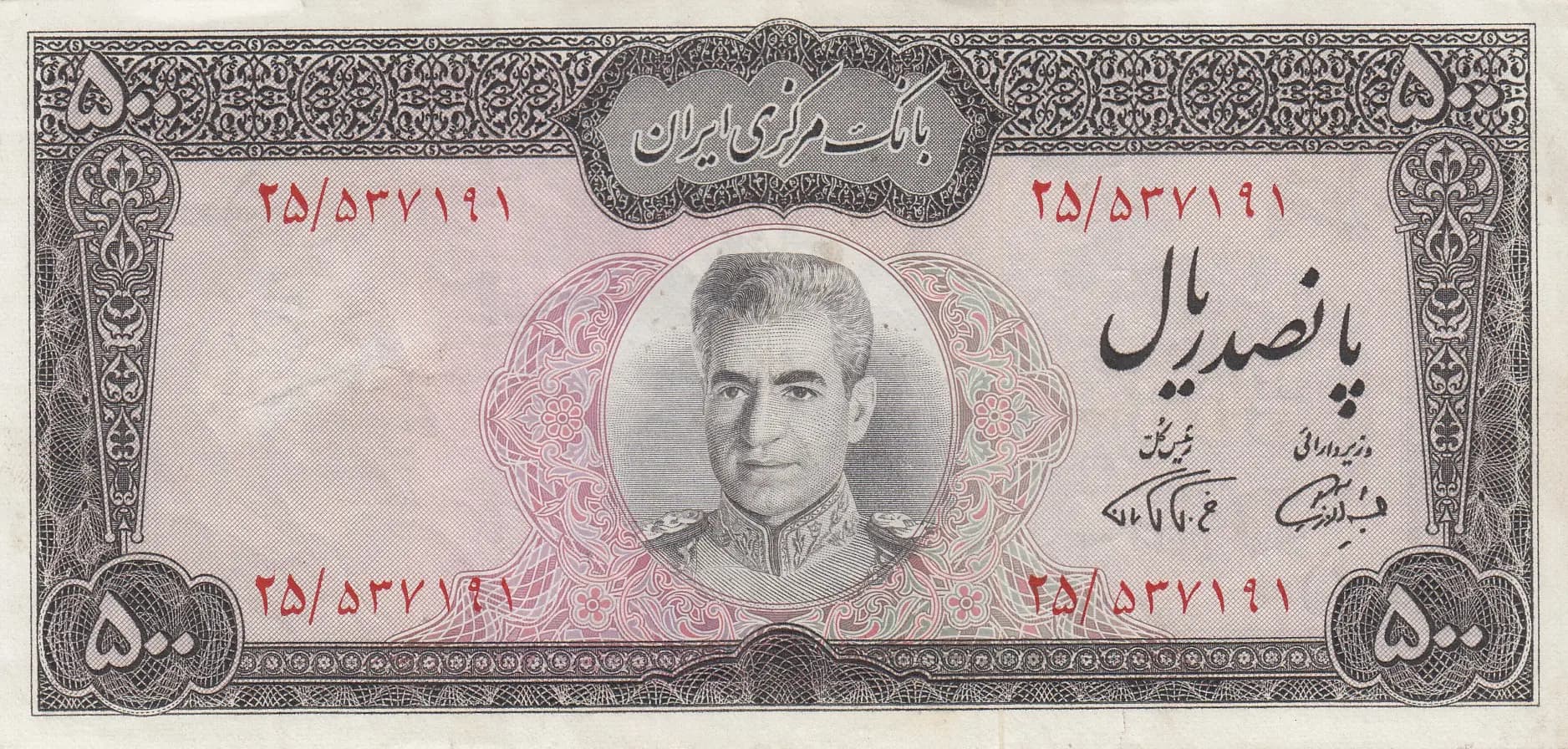
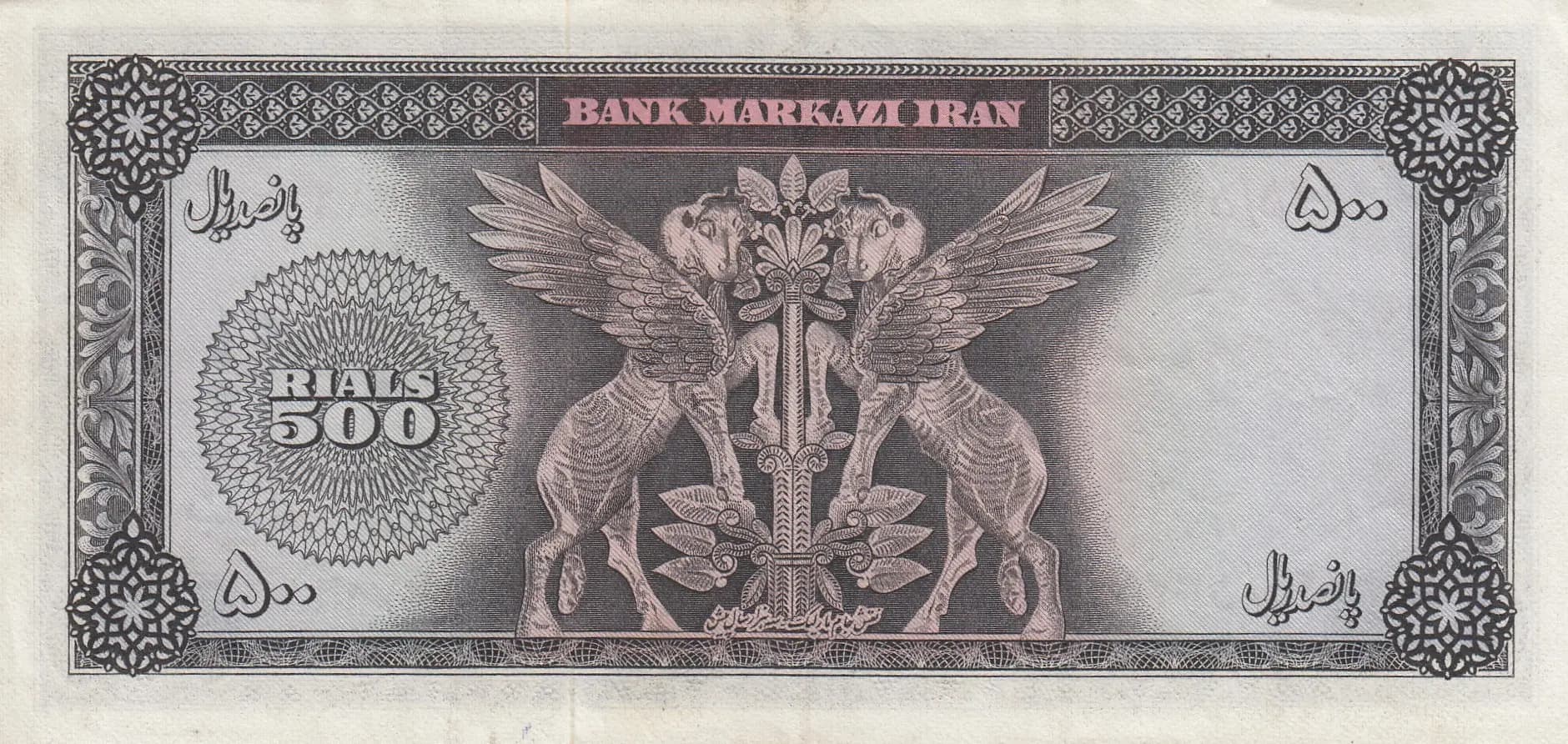
This is a VF-grade 500 Rials note from Iran's 1971-1973 issue, featuring the distinctive 'Light Panel' design with Shah Mohammad Reza Pahlavi's portrait in military dress on the obverse. The note exhibits sharp, crisp printing characteristic of uncirculated or lightly circulated examples, with vibrant black, pink, and multicolored inks on ornate Islamic geometric backgrounds. The reverse displays the iconic winged horses (Pegasus-like mythological creatures) flanking an ornamental staff, representing classical Persian artistic traditions.
Common. The 500 Rials P-93b from the 1971-1973 issue is a standard circulation note from the final years of Shah-era currency production. eBay market data supports this assessment: VF examples have sold for as low as $6.39 (2012), with 2019 catalog values listing VF at only $40. Large print runs were typical for this denomination during this period, and these notes remain readily available in the numismatic market. No evidence of scarcity, short print runs, or recall status exists for this particular Pick number.
This note was issued during the reign of Shah Mohammad Reza Pahlavi (r. 1941-1979), a period of modernization and oil-wealth expansion in Iran. The 1971-1973 series represents the final major banknote designs issued under the Shah's rule before the 1979 Islamic Revolution fundamentally altered Iranian currency iconography. The classical Persian imagery—particularly the winged horses on the reverse—deliberately evokes Iran's pre-Islamic Achaemenid heritage, reflecting the Shah's nationalist policies and efforts to connect Pahlavi-era Iran to ancient Persian glory.
The obverse features a formal three-quarter portrait of Shah Mohammad Reza Pahlavi in full military regalia with dress uniform, medals, and decorative shoulder insignia, positioned within an elaborate pink filigree oval frame. The portrait is surrounded by ornate Islamic geometric and floral border patterns with fine-line engraving throughout. Heart-shaped cartouches in the corners contain denomination numerals. The reverse displays two symmetrical winged mythological creatures (likely representations of Pegasus or similar classical Persian winged lions/sphinxes) in profile facing inward toward a central ornamental ceremonial staff adorned with elaborate floral and leaf designs. A prominent circular medallion on the left contains radiating guilloche patterns. The overall design employs traditional Persian artistic conventions combined with modern security features typical of 1970s-era intaglio printing.
Front: 'بانک مرکزی ایران' (Bank Markazi Iran / Central Bank of Iran); 'پانصد ریال' (Five Hundred Rials); Persian numeral serial numbers visible. Back: 'BANK MARKAZI IRAN' (Bank Markazi Iran in English); 'RIALS' (denomination in English); '500' (Arabic numerals); 'پانصد' (Five Hundred in Persian/Farsi). All inscriptions are bilingual, reflecting Iran's modernist orientation during this period.
Intaglio/recess printing (primarily rotogravure or steel engraving) evidenced by the fine-line detail, sharp crisp printing, intricate guilloche patterns, and the dimensional quality visible in the ornamental borders and portrait area. The exceptional clarity of micro-patterns in the geometric borders and the precise rendering of the Shah's military medals indicate high-quality security printing. The PMG population data indicates H&S (Heraclio Fournier or similar European security printer) was involved in some variants; this appears to be consistent with the professional security printing standards of the period.
This note is catalogued as P-93b, the 'Light Panel' variant, distinguished from P-93a ('Dark Panel' variant) by the contrasting light ornamental panel containing the Bank Markazi Iran name on the front. PMG records indicate variant P-93s exists (printed by H&S). The observed serial numbers in this example (۲۵/۵۲۷۱۴۱ and ۲۵/۵۲۷۱۶۴) appear to use Persian numerals with what may be a date prefix. Without access to comprehensive serial number range documentation, the exact series cannot be definitively identified, but the red serial number printing and 'Light Panel' design confirm this is the P-93b variety as catalogued.