500 rials 1974
Market Prices
10 salesAbout This Note
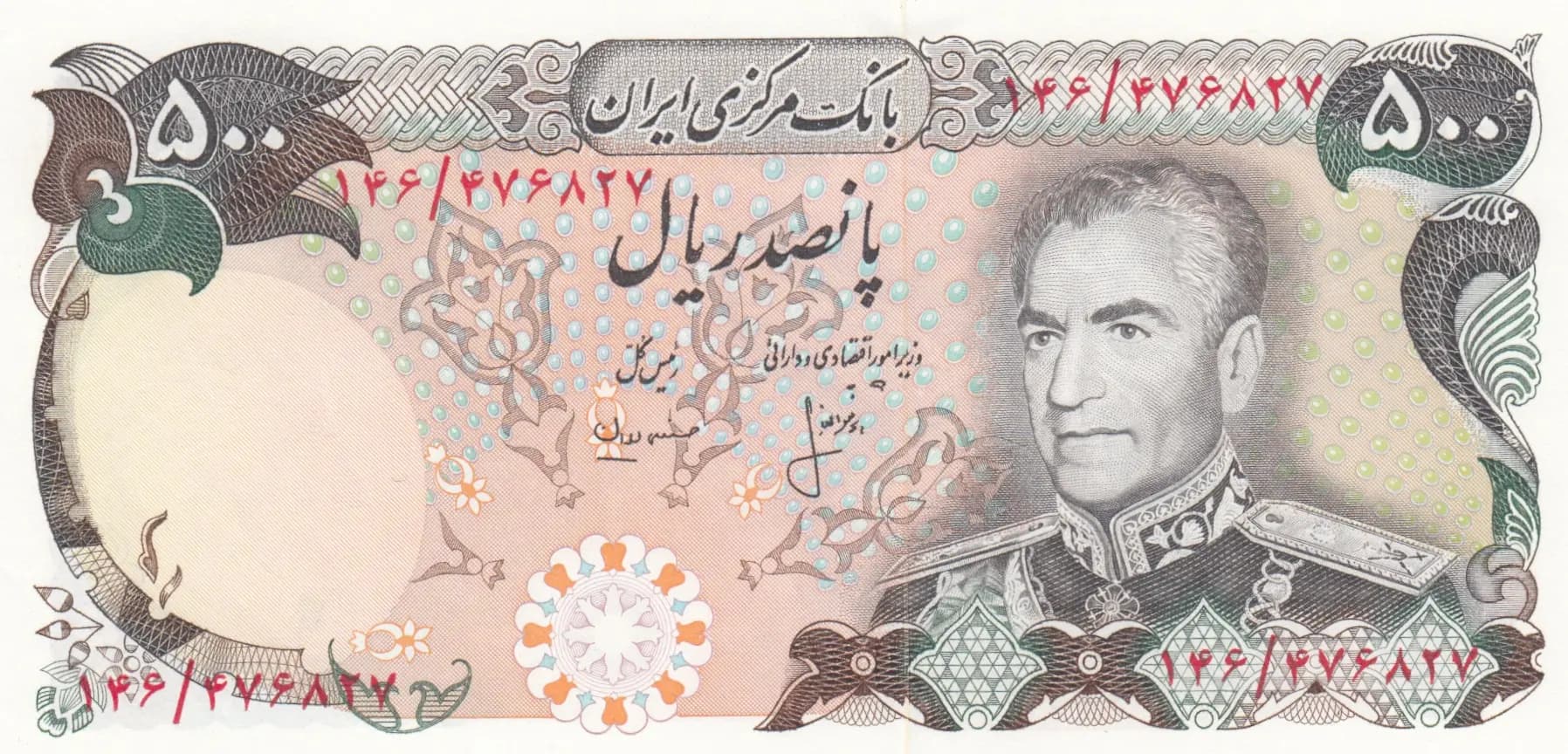
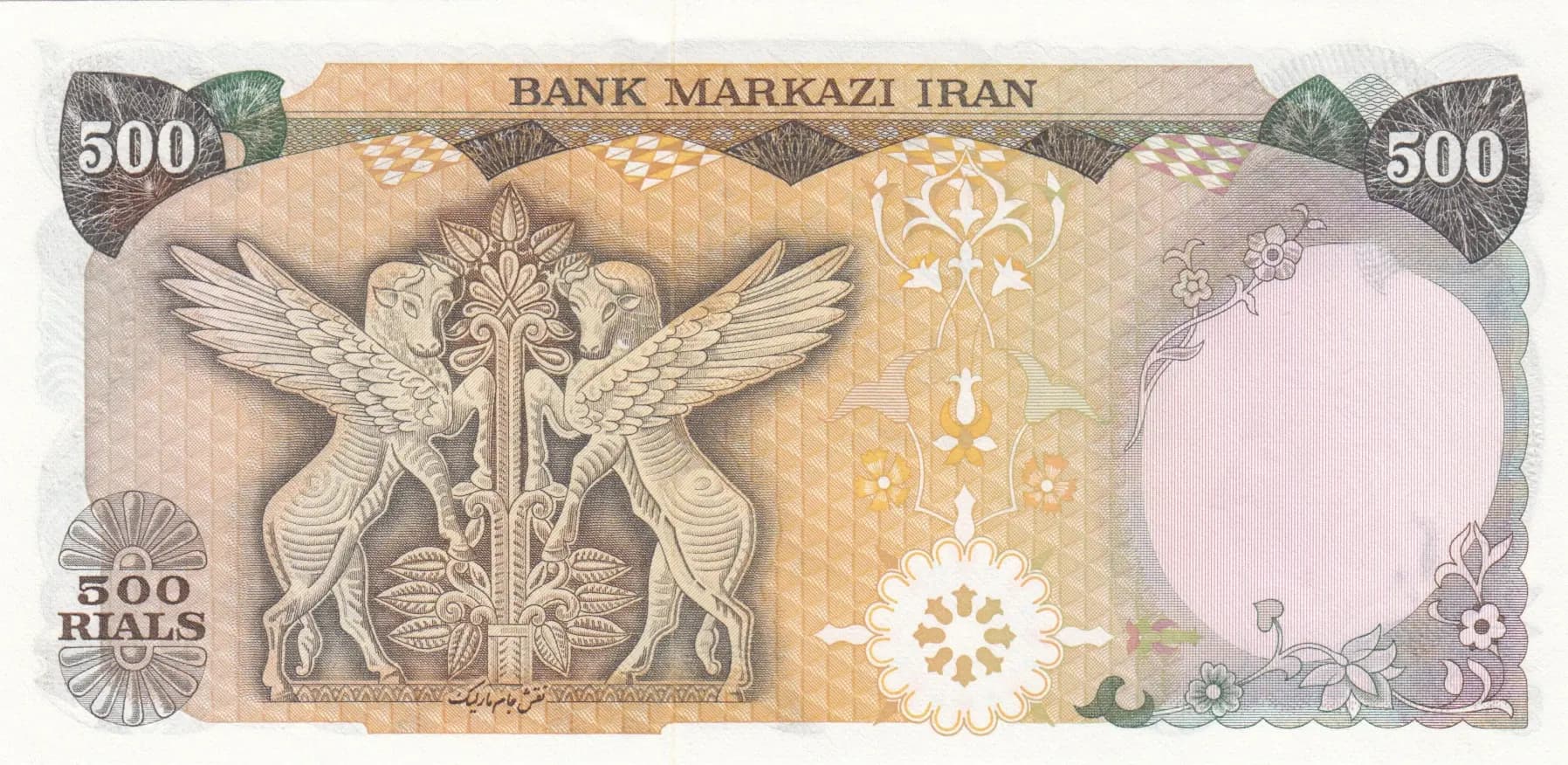
This is an exceptional example of Iran's 500 Rials note from 1974 (Pick P-104b), presented in pristine uncirculated condition with no signs of wear, creasing, or handling. The note features a striking portrait of Shah Mohammad Reza Pahlavi in military dress on the obverse, complemented by intricate Persian decorative patterns, while the reverse displays a magnificent heraldic emblem of winged mythical creatures flanking a central ornament. The combination of fine line engraving, multiple color separations, and sophisticated security features demonstrates the high production standards of Bank Markazi Iran during this period.
Common. eBay market data shows recent sales ranging from $4.25 to $21, with UNC examples consistently under $30 (2019 catalog value). The note's regular production status, documented circulation from 1974-1979, substantial print run typical of a standard 500 Rial denomination, and availability in the secondary market all indicate this is a common note despite its aesthetic appeal. No evidence of limited mintage, recall status, or exceptional scarcity factors.
Issued during the reign of Shah Mohammad Reza Pahlavi in 1974, this note represents the monetary system of Iran at the height of the Pahlavi dynasty's modernization efforts. The portrait of the Shah in full military regalia emphasizes the military and nationalist themes of the era, while the heraldic reverse design—featuring winged mythical creatures and ornamental motifs—reflects Iran's connection to ancient Persian artistic traditions and Zoroastrian symbolism. This note was in circulation during a period of significant economic development driven by oil revenues, prior to the 1979 Iranian Revolution.
The obverse features a formal three-quarter portrait of Shah Mohammad Reza Pahlavi positioned on the right side, depicted in dress military uniform with visible shoulder insignia and military decorations, projecting authority and national leadership. The left side displays an elaborate Persian carpet design with ornate floral motifs, geometric patterns, and arabesque scrollwork characteristic of classical Iranian textile arts. The reverse showcases a symmetrical heraldic composition at center: two winged mythical creatures (chimeras or divine beasts derived from ancient Persian art traditions) flanking a decorated central element, likely representing the Marlik goblet or similar archaeological artifact referenced in catalog sources. The entire design is framed by ornamental Persian floral medallions in the corners and intricate geometric borders, with denomination indicators in both Persian and Western numerals strategically placed throughout.
Front Side: Persian numerals (۵۰۰) and English text reading 'FIVE HUNDRED' for denomination; 'بانک مرکزی ایران' (Bank Markazi Iran/Central Bank of Iran); additional Persian inscriptions including date notation '۱۴۶۲/۵/۲۸' (Persian calendar date) and serial/reference number '۱۲۷۶۲۱۲'; ornamental Persian calligraphy throughout. Back Side: English text '500 RIALS' and 'BANK MARKAZI IRAN' in corners; Persian numerals '۵۰۰' (500) and 'ریال' (Rials); bilingual denomination presentation typical of Pahlavi-era currency design.
Intaglio (line engraving) printing method is evident from the fine, sharp detail visible throughout both sides and the characteristic depth of impression in the designs. Multiple color separations are visible—primarily pink/beige, brown, green, gray, and white—indicating sophisticated multi-plate production. The printer is identified as TDLR (Taha Dalir/De La Rue subsidiary printing for Iran). Security features include fine line engraving patterns, complex ornamental designs providing visual security depth, watermark areas, and likely a yellow security thread as documented in catalog references.
Pick P-104b designation indicates this is a documented variant within the 500 Rials 1974 series. PMG population records note P-104ar as catalogued by professional graders, with printer TDLR confirmed. The visual analysis shows a specimen with clear serial numbering and standard design elements consistent with regular issue production. No overprints, special markings, or signature variations are evident that would distinguish this as a rare printing variety; this appears to be a standard issue example of the base type.