50 rials 1971
Market Prices
8 salesAbout This Note
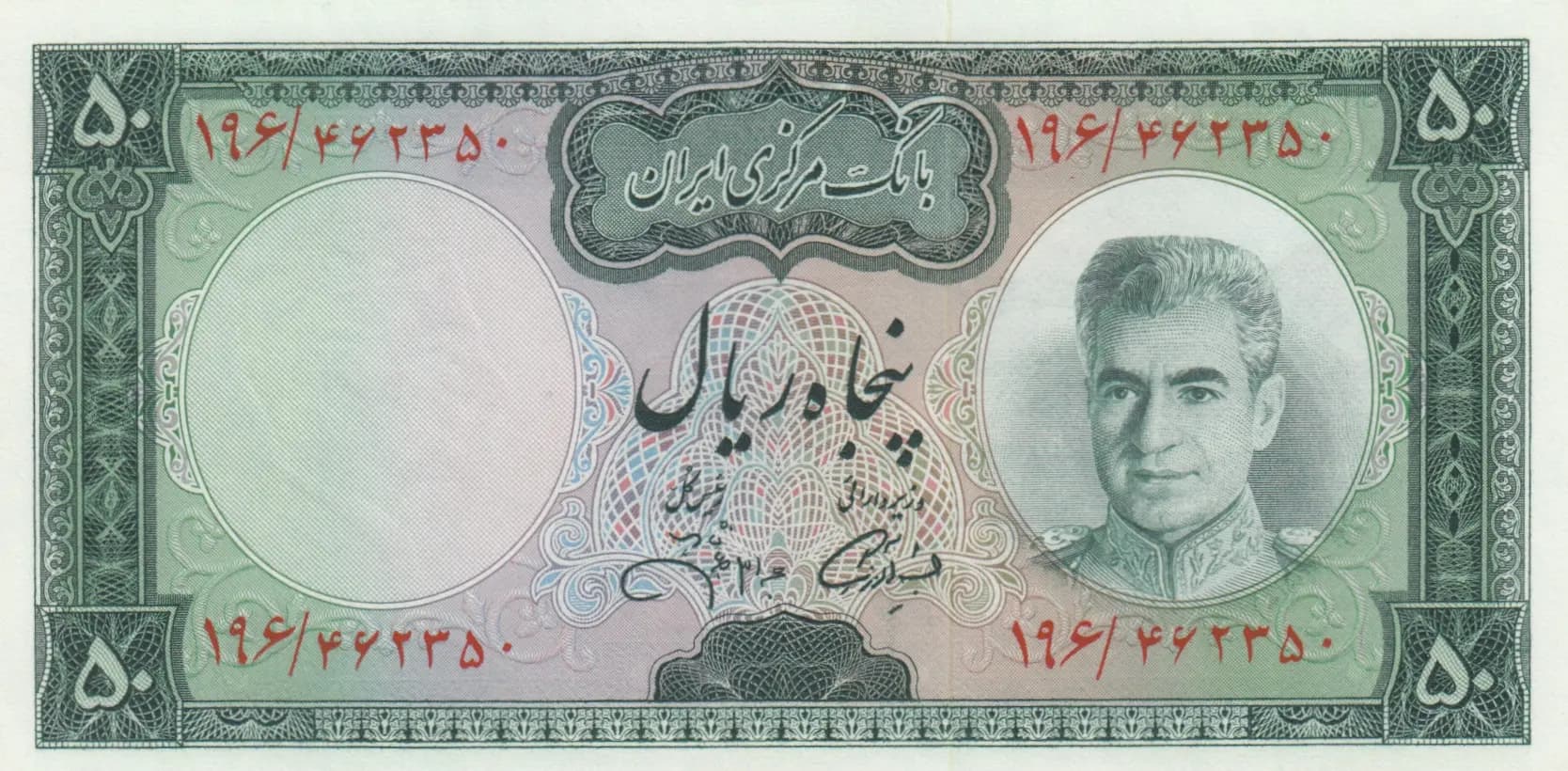
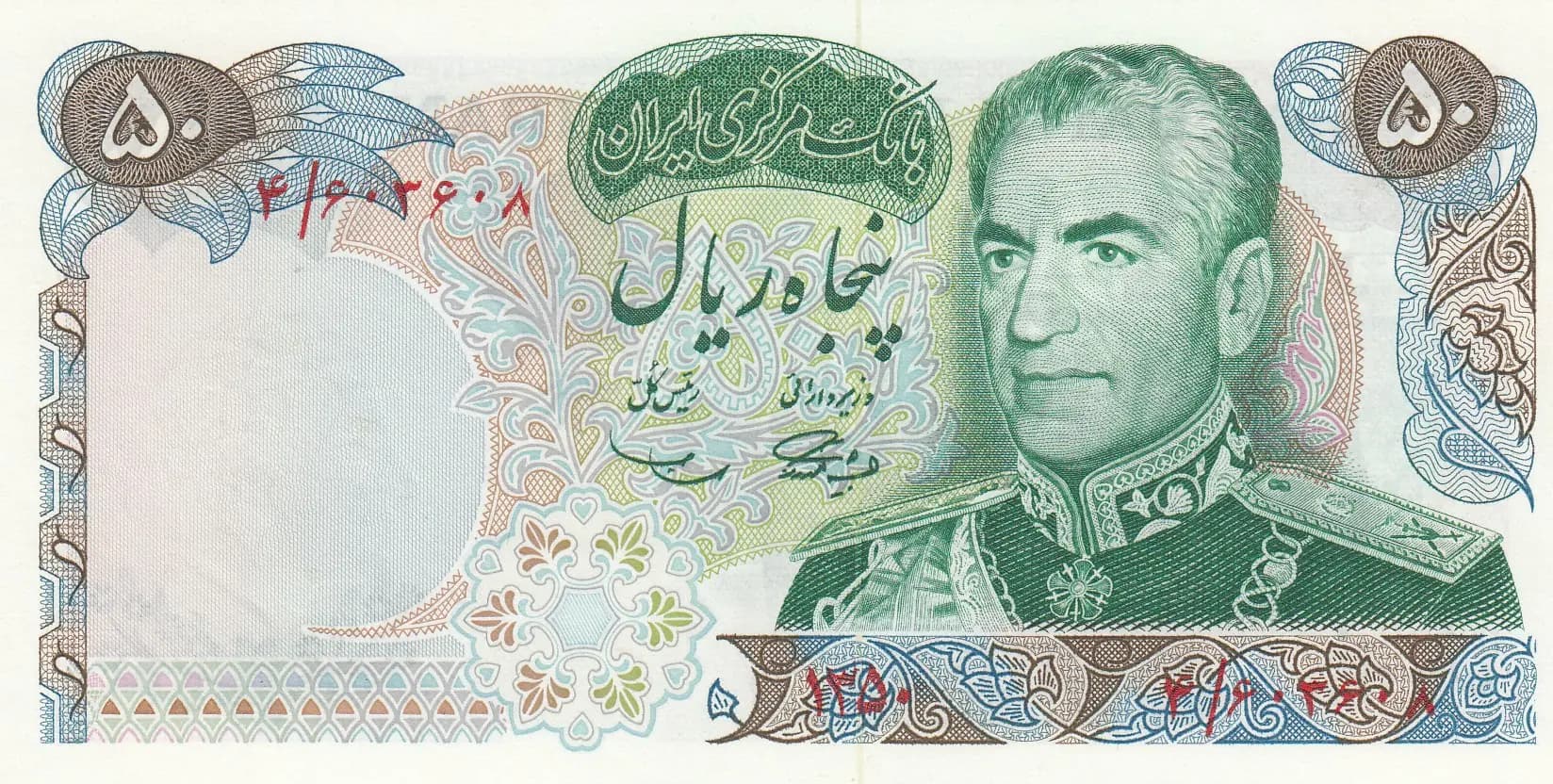
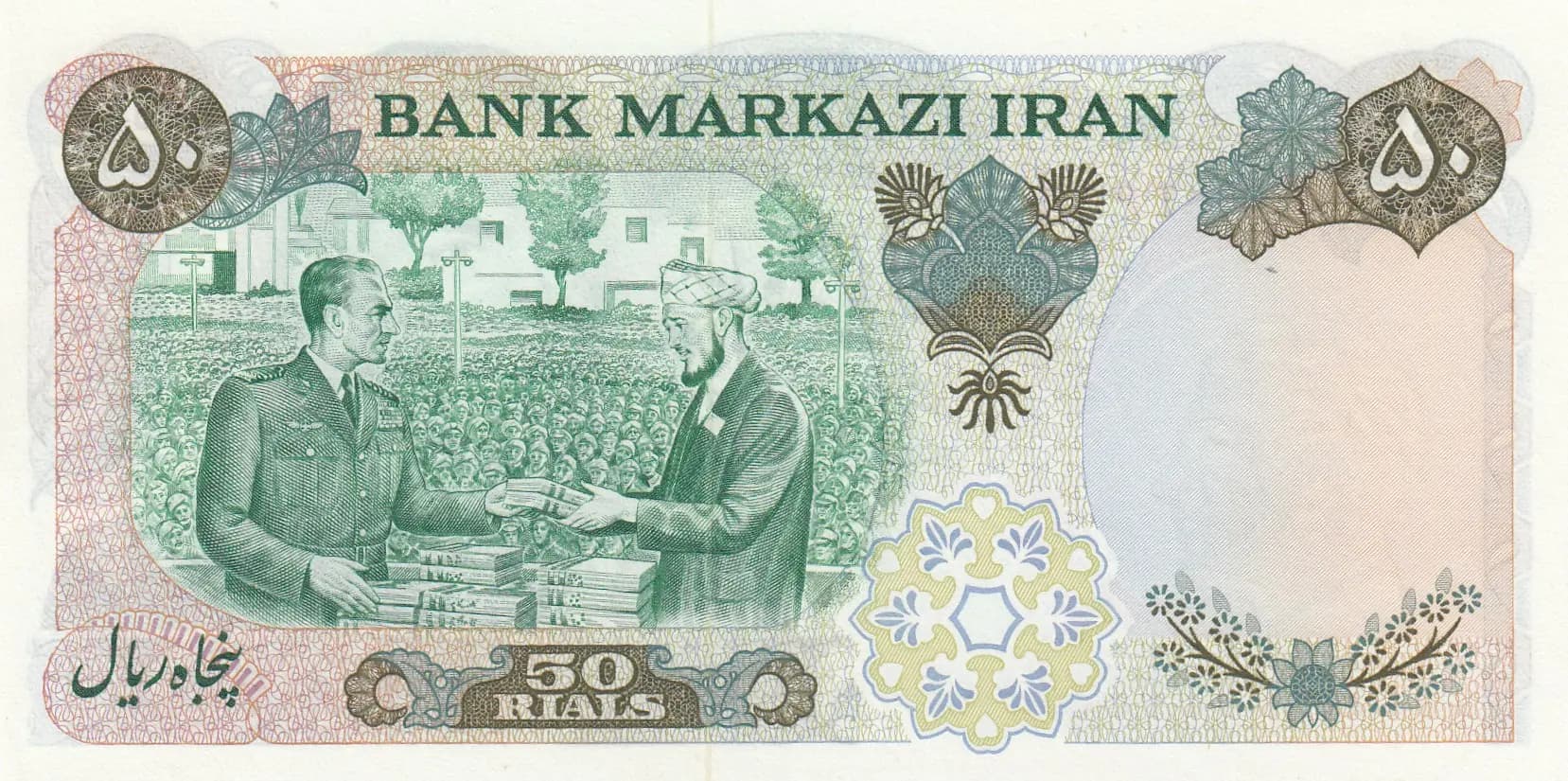
This is an uncirculated 1971 Iranian 50 Rials commemorative note (Pick P-97a) issued by Bank Markazi Iran to celebrate the 2500th Anniversary of the Persian Empire. The note displays pristine condition with vibrant green, blue, and brown multicolored printing, featuring a striking portrait of Shah Mohammad Reza Pahlavi in military dress uniform on the obverse and a significant historical scene on the reverse depicting the Shah presenting land deeds to villagers. The fine engraving quality and ornate guilloché patterns throughout make this a visually impressive example of Persian numismatic artistry from the Pahlavi era.
Common. This is a widely issued commemorative note from 1971 with significant print quantities. eBay market data shows consistent sales at modest prices ($6-$18 for UNC examples), with 2019 catalog values at $15 UNC, indicating ready availability in the collector market. No evidence of limited print runs, recall, or scarcity exists for this Pick number. The note remains abundant in both circulated and uncirculated grades.
Issued in 1971 (SH1350) during the height of Mohammad Reza Pahlavi's reign, this commemorative note celebrates the purported 2500th anniversary of the Persian Empire, a centerpiece of the Shah's nationalist ideology. The obverse portrait shows Pahlavi in his role as Commander in Chief of the Iranian armed forces, emphasizing his military authority, while the reverse depicts a state ceremony at the National Council of Ministries in Tehran, illustrating the Shah's paternalistic governance through the symbolic distribution of land deeds to villagers. This imagery reflects the Shah's development agenda and modernization efforts that defined Iran during the 1960s-1970s.
The obverse features a dignified three-quarter profile portrait of Shah Mohammad Reza Pahlavi positioned at right, dressed in his full military dress uniform as Commander in Chief, complete with shoulder insignia and formal regalia. The portrait is executed in fine detail against a backdrop of ornate decorative elements including geometric and floral arabesques in the borders. Spade symbols (♠) appear in decorative circular frames at the top corners, a heraldic device common in Persian currency design. The reverse depicts a formal state ceremony scene set at the National Council of Ministries building in Tehran, showing two prominent figures (likely the Shah and a minister) in the foreground conducting the symbolic presentation of land deeds to assembled villagers, with the multi-story ministry building and landscaped grounds visible in the background. The composition emphasizes the Shah's role as benevolent modernizer and administrator.
Front side: 'بانک مرکزی ایران' (Bank Markazi Iran / Central Bank of Iran), 'پنجاه ریال' (Fifty Rials), and Persian text referencing the historical commemoration. Back side: 'BANK MARKAZI IRAN' (in English), '50 RIALS' (English), with additional Persian/Farsi inscriptions including denomination reference. The bilingual presentation reflects Iran's engagement with both traditional Persian and modern international banking conventions.
This note was produced using intaglio (line engraving) printing methods by TDLR (Thomasan-Dill Lithograph Rials), a security printer specializing in high-quality banknote production. The fine line engraving patterns, ornate guilloché borders, and intricate background detail work visible throughout both sides are characteristic of intaglio production. Security features include a Young Pahlavi watermark and a yellow security thread embedded in the paper stock. The multicolor printing (green, blue, brown, cream, and accent colors) suggests careful multi-pass printing coordination typical of mid-20th century central bank note production.
This specific example is cataloged as Pick P-97a. The PMG population report indicates a P-97b variant also exists for this base Pick number, likely differing in printer or minor design characteristics. The TDLR printer attribution and the specific color palette (green on blue, brown, and multicolor underprint) are consistent with the P-97a variety. Serial numbers, signatures, and any date variants would require examination of the note's margins and signature block, which are not fully detailed in the visual analysis provided.