50 rials 1964
Market Prices
12 salesAbout This Note
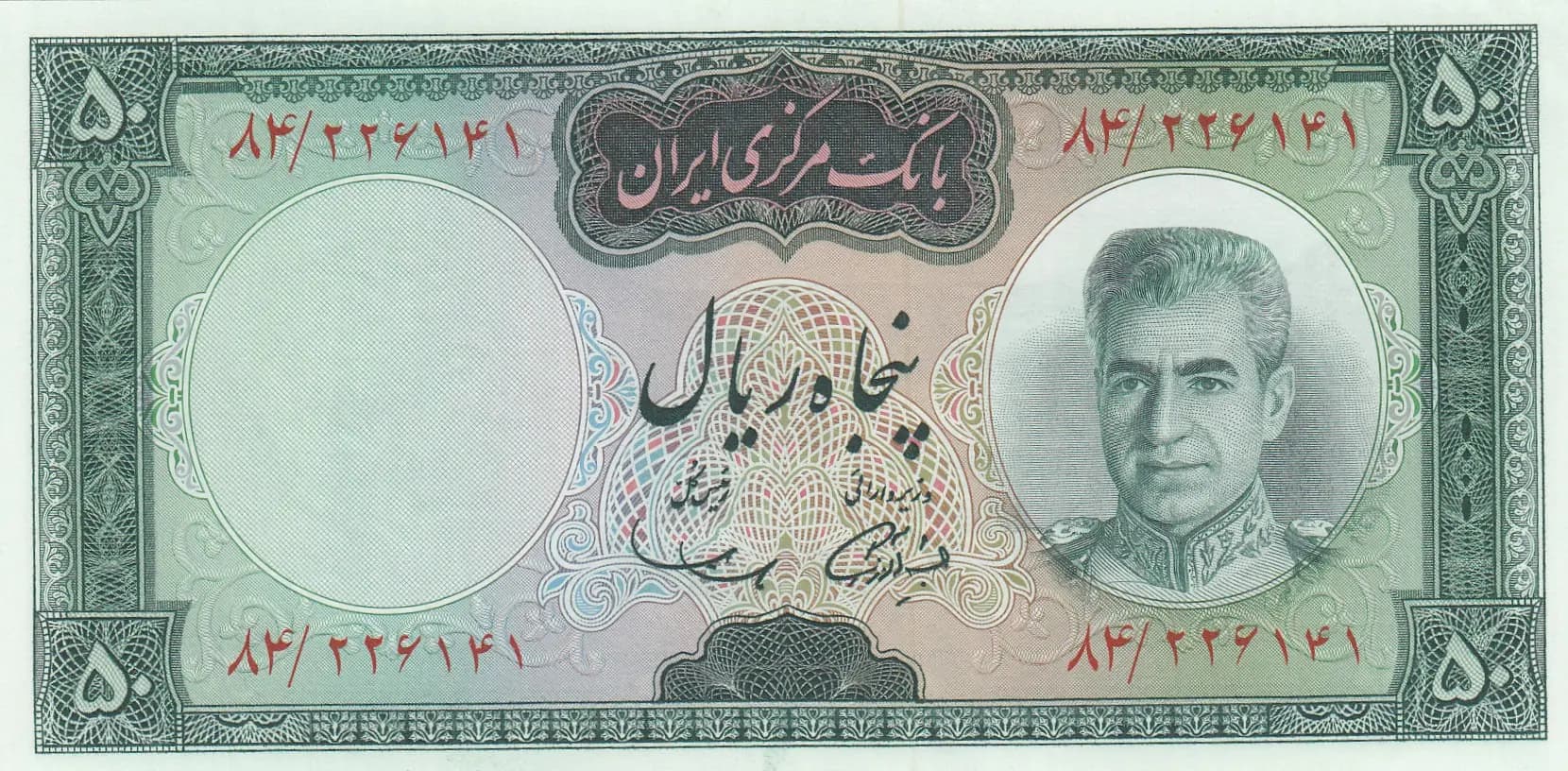
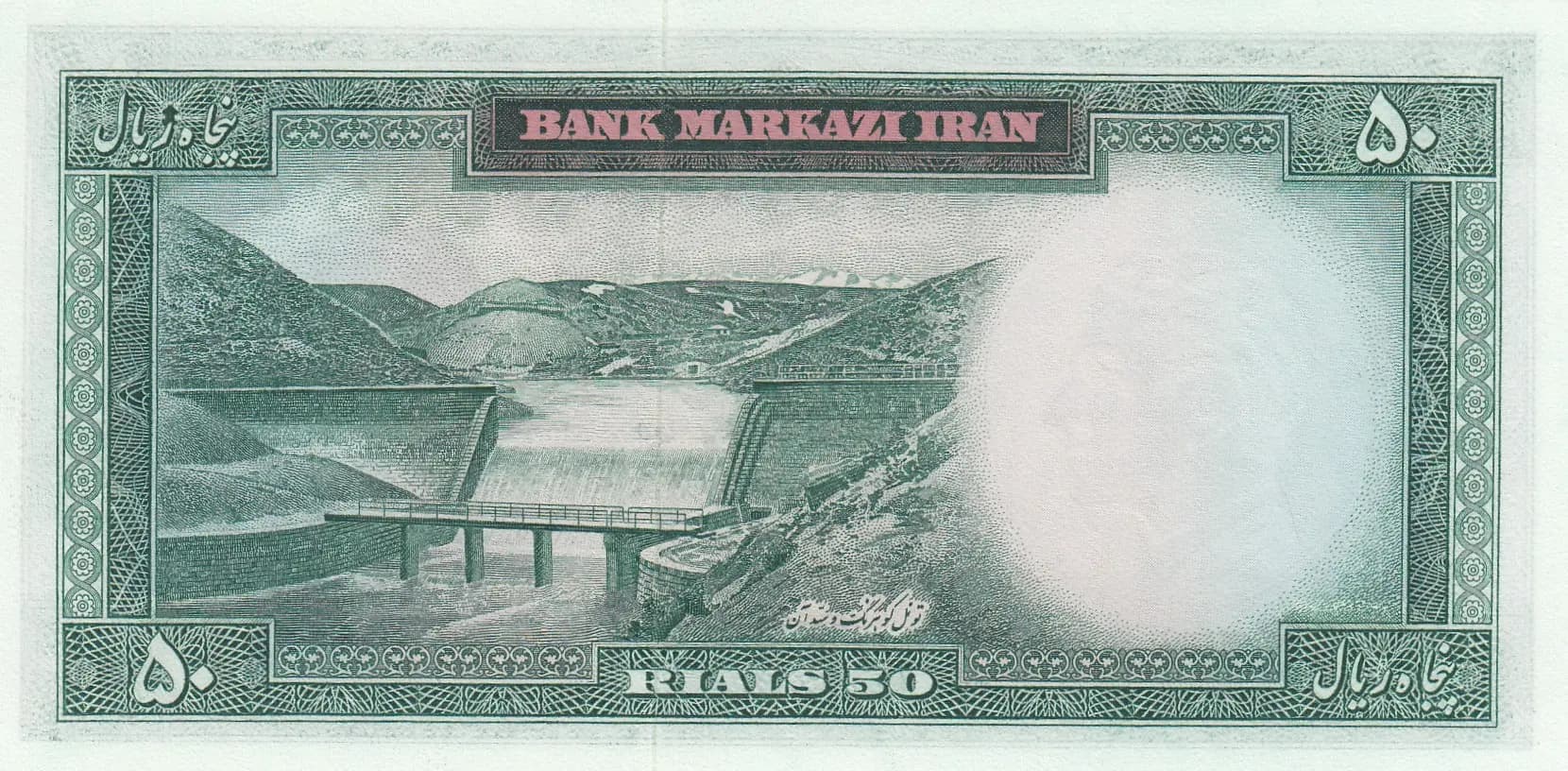
This is an exceptional example of Iran's 50 Rials note (Pick 85a) from 1964, presented in uncirculated condition with crisp, vibrant colors and pristine paper quality. The note features a striking green and mauve color scheme with an ornate portrait of Shah Mohammad Reza Pahlavi in military dress uniform on the obverse, complemented by the reverse's detailed engraving of the Koohrang Dam set against a mountainous landscape. The fine line work, symmetrical ornamental borders with spade corner symbols, and exceptional preservation make this a desirable example for collectors of mid-20th century Iranian currency.
Common. eBay market data shows consistent sales of this note in various grades from 2009-2022, with UNC examples typically selling in the $9-$10 range and VF examples at $4-$10. The 2019 catalogue value of $10 for UNC confirms moderate collector interest without scarcity premium. The note appears in multiple sales records across a 13-year span, indicating adequate supply in the secondary market. No evidence suggests limited print runs or recall status that would elevate rarity.
Issued during the reign of Mohammad Reza Pahlavi (1941-1979), this 50 Rials note represents a period of modernization and infrastructure development under the Shah's regime. The reverse depicts the Koohrang Dam, reflecting Iran's mid-century investments in hydroelectric power and water management projects as symbols of national progress. The portrait of the Shah in military uniform underscores the military's prominent role in the nation's governance and development during this era of the Pahlavi dynasty.
The obverse features a formal three-quarter view portrait of Shah Mohammad Reza Pahlavi positioned on the right side, depicted in full military dress uniform with visible medals and insignia, the symbol of state authority. The center showcases an ornate heraldic shield or state emblem with geometric cross-hatching patterns, flanked by a large circular frame on the left (likely designed for watermark visibility). The entire composition is framed by elaborate decorative borders incorporating fine floral and geometric patterns with spade symbols placed symmetrically in all four corners, executed in dark green/black against a light green background with pale mauve/pink undertones. The reverse presents the Koohrang Dam as the central landscape feature—a large concrete structure with spillways rendered in fine engraving detail, set within a mountainous terrain with rolling hills and water/reservoir visible. The dam scene maintains the same ornamental border treatment with spade symbols and is rendered predominantly in dark and light green tones against pale sky and water.
Front: 'بانک مرکزی ایران' (Bank Markazi Iran / Central Bank of Iran); Serial numbers in Persian numerals '۱۳/۲۲۹۱۴۱' appear in multiple locations with official signature marks in the center area. Back: 'BANK MARKAZI IRAN' (English inscription); '۵۰ ریال' (50 Rials in Persian); 'RIALS 50' (English denomination); Reference text to the dam structure in Persian. The bilingual presentation (Persian and English) reflects Iran's international banking practices of the period.
Intaglio (engraved line printing), characteristic of high-security banknote production. The note exhibits fine line engraving throughout borders and decorative elements, detailed architectural rendering visible in the dam structure, and precision cross-hatching in the central shield. The security features include a watermark area (Young Shah Pahlavi) visible as the outlined circular frame on the obverse, and a yellow security thread. This production quality is consistent with the work of established European security printers contracted by Bank Markazi Iran during this period.
This example is identified as Pick 85a, the 'Dark Panel' variety, characterized by the Bank name (بانک مرکزی ایران) appearing on the front within a contrasting dark ornamental panel. The Pick catalogue distinguishes this from Pick 90, the 'Light Panel' variety of the same denomination. The visual analysis confirms the dark panel treatment visible in the front design. Serial number variety noted as '۱۳/۲۲۹۱۴۱' with repeating patterns typical of this issue. The catalogue reference indicates an issue date range of 1969-1971, though the submitted catalog data lists 1964—the 1969-1971 range from banknote.ws appears more consistent with the 'Dark Panel' variant characteristics.