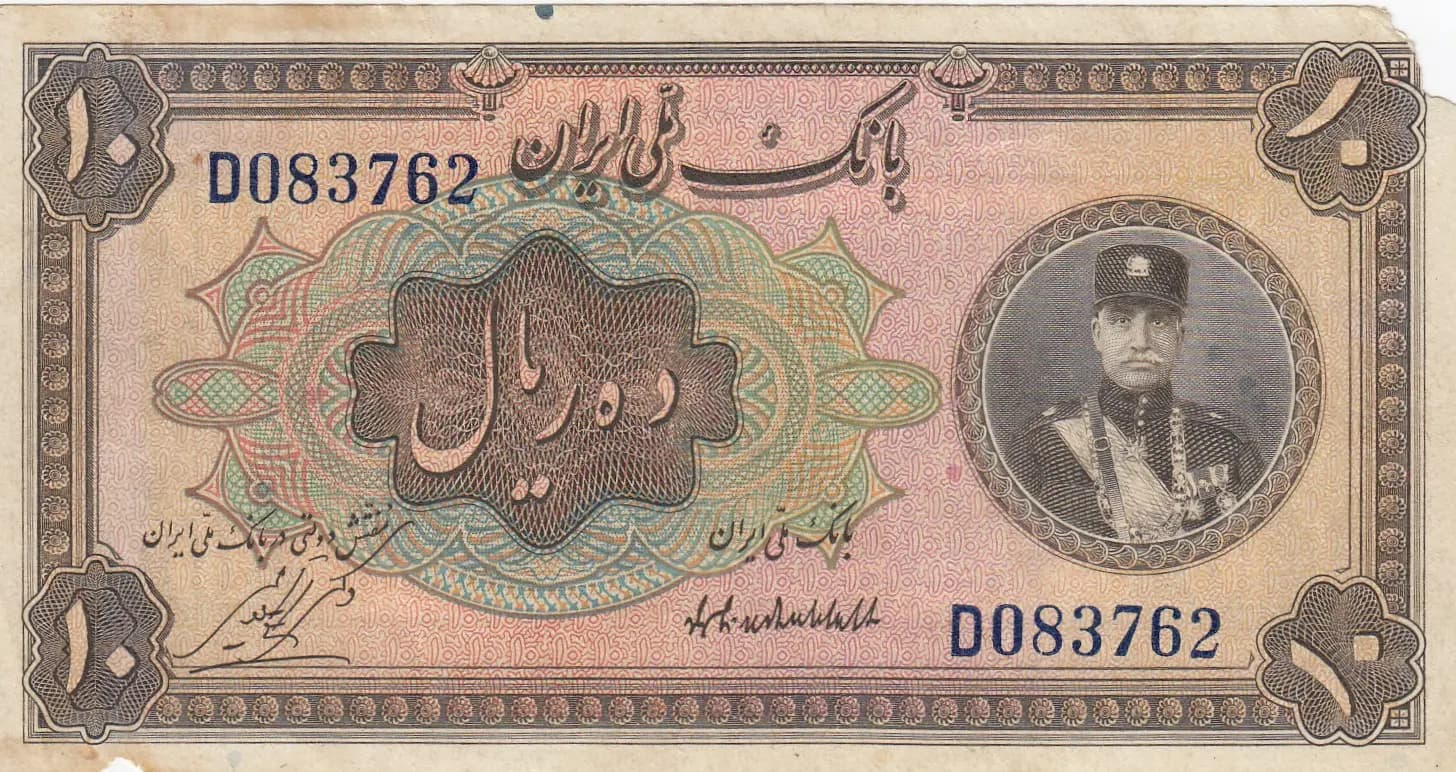
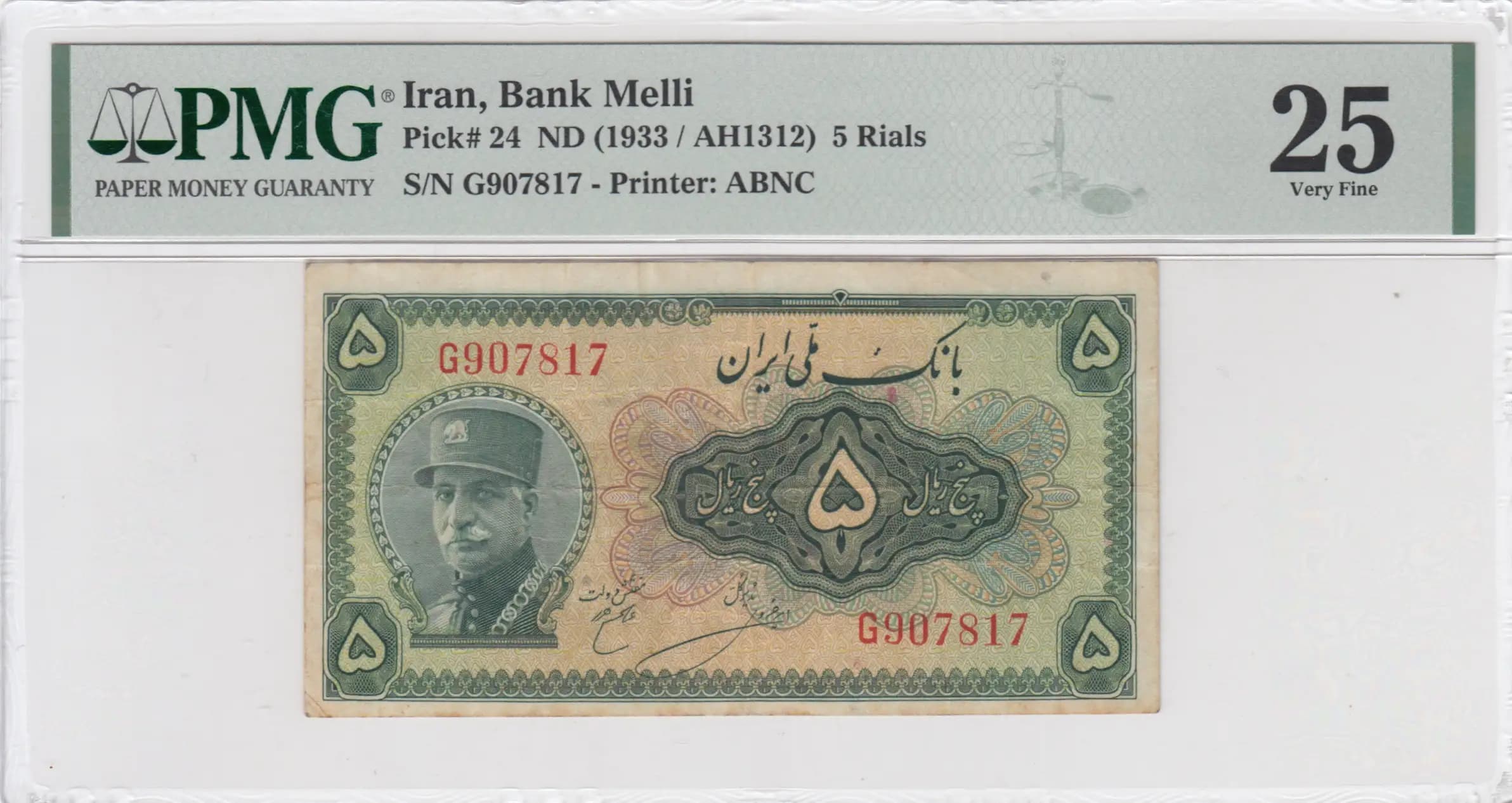
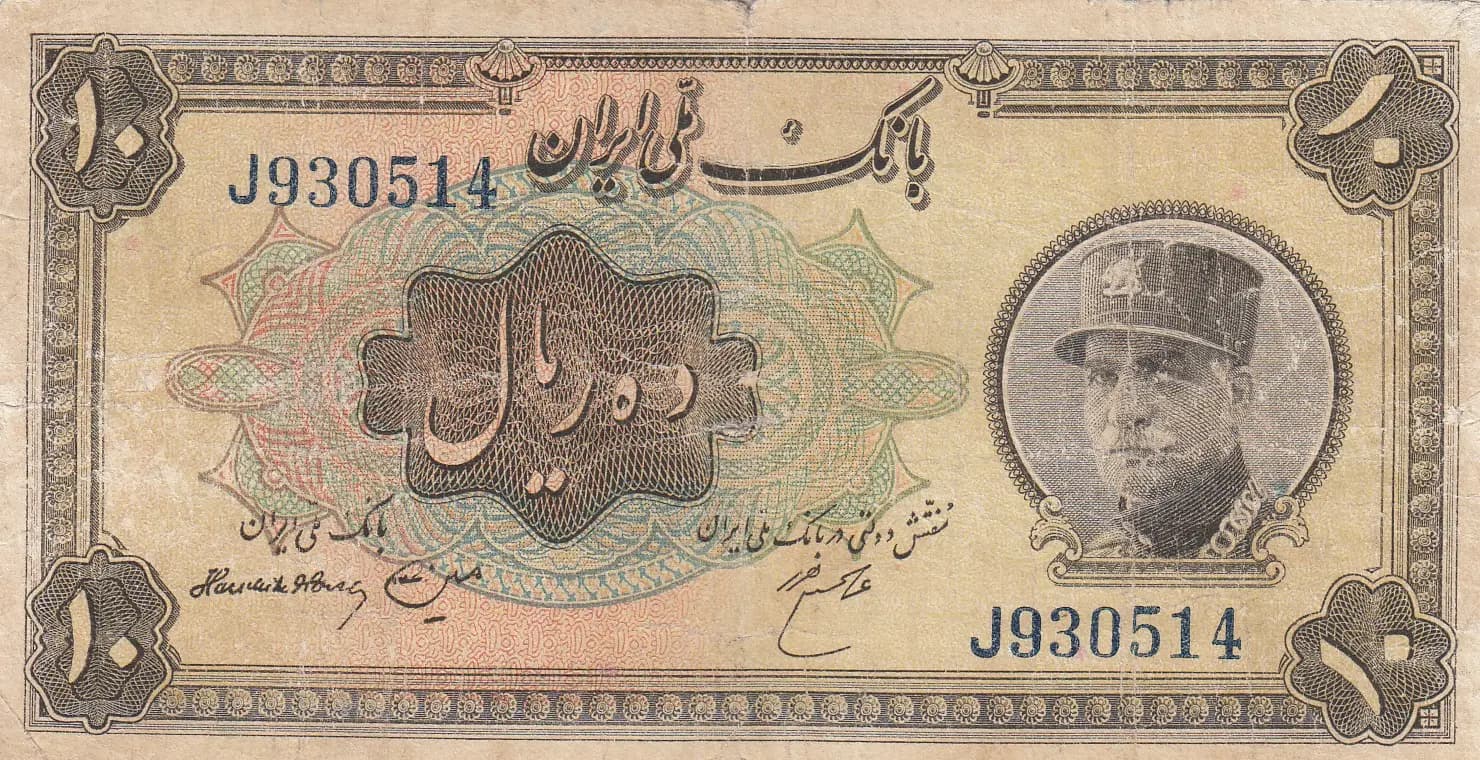
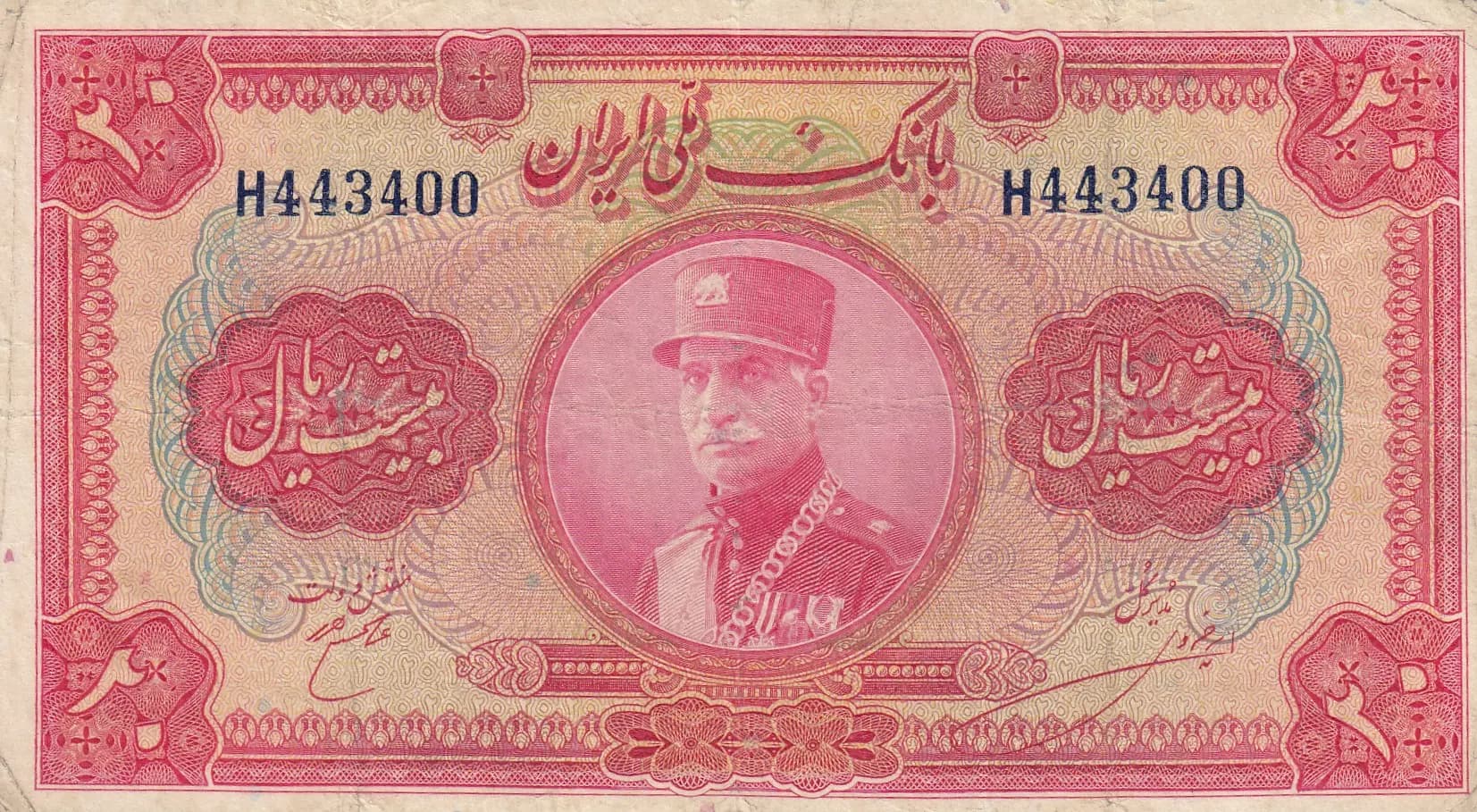
50 rials 1938
Market Prices
1 saleAbout This Note
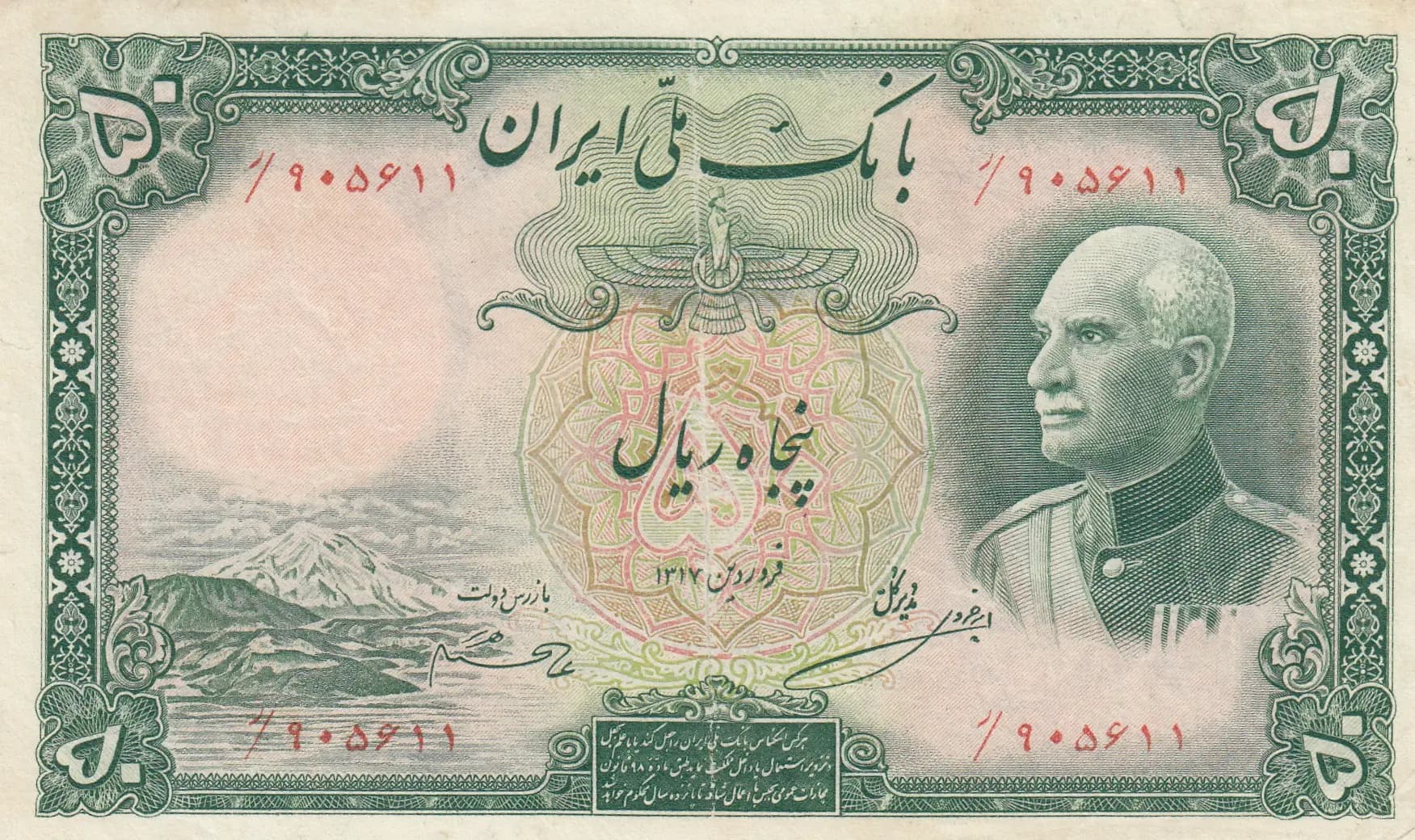
This Iranian 50 Rials banknote from 1938 (SH 1316/AH 1317) issued by Bank Melli Iran represents a significant piece of Pahlavi-era currency featuring the iconic portrait of Reza Shah Pahlavi in military uniform and the majestic snow-capped Mount Damavand. The note displays characteristic period engraving with intricate geometric and floral Persian patterns in green and pink tones, though the observed foxing, discoloration, and creasing indicate circulated VF condition consistent with its age and historical use.
common. The catalog reference data shows eBay market values for VF condition at $110 (2016 pricing), with a recorded EF sale at $143.94 in 2011. These moderate price points, combined with the fact that this is a regular issue from a major denomination produced by the central bank during a 13-year reign, indicate this note circulated widely and survives in reasonable quantities. No print run restriction, recall notice, or short-lived issuance is documented. The existence of five identified Pick catalog varieties (P-35Aa through P-35Af) further supports common circulation status.
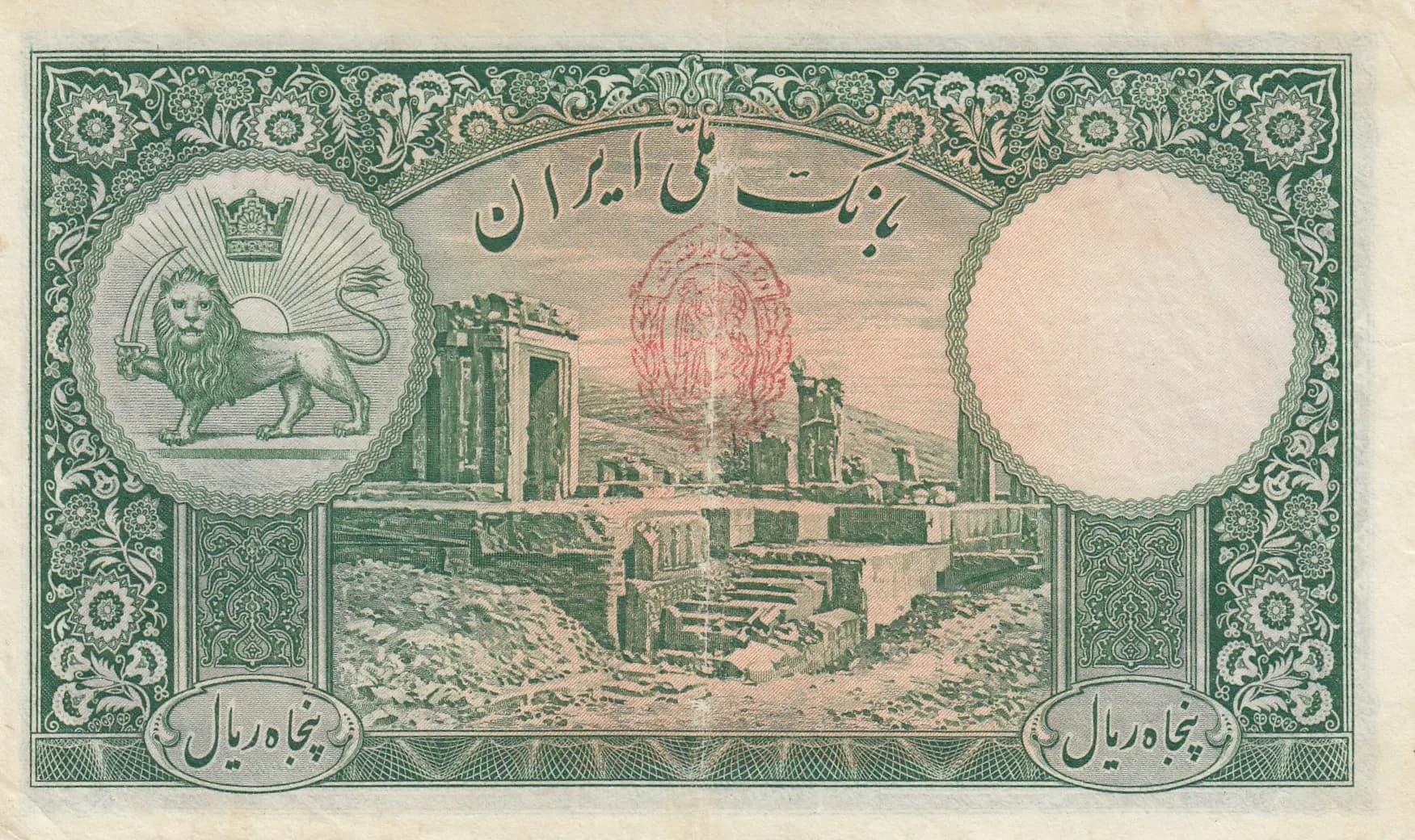
This note was issued during the reign of Reza Shah Pahlavi (r. 1925-1941), a transformative period in Iranian history when modernization efforts included comprehensive currency reform and the establishment of Bank Melli Iran as the nation's central bank. The imagery deliberately celebrates Persian national identity and heritage: Mount Damavand on the obverse symbolizes Iran's natural grandeur and sovereignty, while the reverse depicts Tachara Palace from the ancient Achaemenid city of Persepolis, connecting the Pahlavi state to pre-Islamic Persian imperial glory. This nationalist iconography reflects Reza Shah's ideology of modernization rooted in historical Persian greatness.
The obverse (front) features Reza Shah Pahlavi depicted in three-quarter military profile facing left, wearing a high-collared military dress uniform, rendered bald and dignified. This portrait occupies the right portion of the note. The left side displays Mount Damavand, Iran's highest peak, rendered as a snow-capped mountain landscape symbolizing national pride. A central ornate geometric medallion in pink and gold serves as the compositional anchor. The Lion and Sun emblem (Shir-o-Khorshid), symbol of the Persian monarchy, appears at the top center. The reverse depicts the Tachara Palace at Persepolis—the monumental ceremonial palace of Darius I featuring classical columns and archways—emphasizing the connection between the Pahlavi dynasty and ancient Persian imperial tradition. The note is bordered throughout with elaborate Persian geometric and floral patterns characteristic of traditional Persian art. The color scheme predominantly employs green and pink with cream/beige and brown accents, typical of Bank Melli notes from this period.
FRONT SIDE: بانک ملی ایران (Bank Melli Iran / National Bank of Iran); پنجاه ریال (Fifty Rials); فروردین 1317 (Farvardin 1317 - first month of Persian calendar year 1317 [1938]); Serial number: 11905611 (displayed twice); Additional text: بازنشست (appears in lower portion - meaning 'retired' or 'withdrawn'). BACK SIDE: بانک ملی ایران (Bank Melli Iran); پنجاه ریال (Fifty Rials - in cartouches at bottom). Note: This variant (P-35Ad) includes French text on the back distinguishing it from P-35A variant.
Intaglio engraving (line engraving), evidenced by the fine, detailed line work, intricate geometric patterns, elaborate borders, and the precision visible in both portraiture and architectural rendering. This security printing technique was standard for Bank Melli Iran during this period. The note was produced by Bank Melli Iran's printing facilities; specific security printers for Iranian currency of this era often included contracts with European firms, though documentation for this specific note's production origin requires specialist numismatic research.
This note is cataloged as Pick P-35Ad, one of five known varieties of the 50 Rials 1938 issue. The P-35Ad variant is distinguished by the presence of French text on the back (per the external catalog reference noting 'with French text on back'). Other varieties in the series lack this French inscription or have other distinguishing features. The observed date in Persian calendar reads Farvardin 1317 (corresponding to March/April 1938 in the Gregorian calendar). Serial number observed: 11905611. The note represents the standard post-1925 Pahlavi-era currency design established under Reza Shah's monetary reforms.