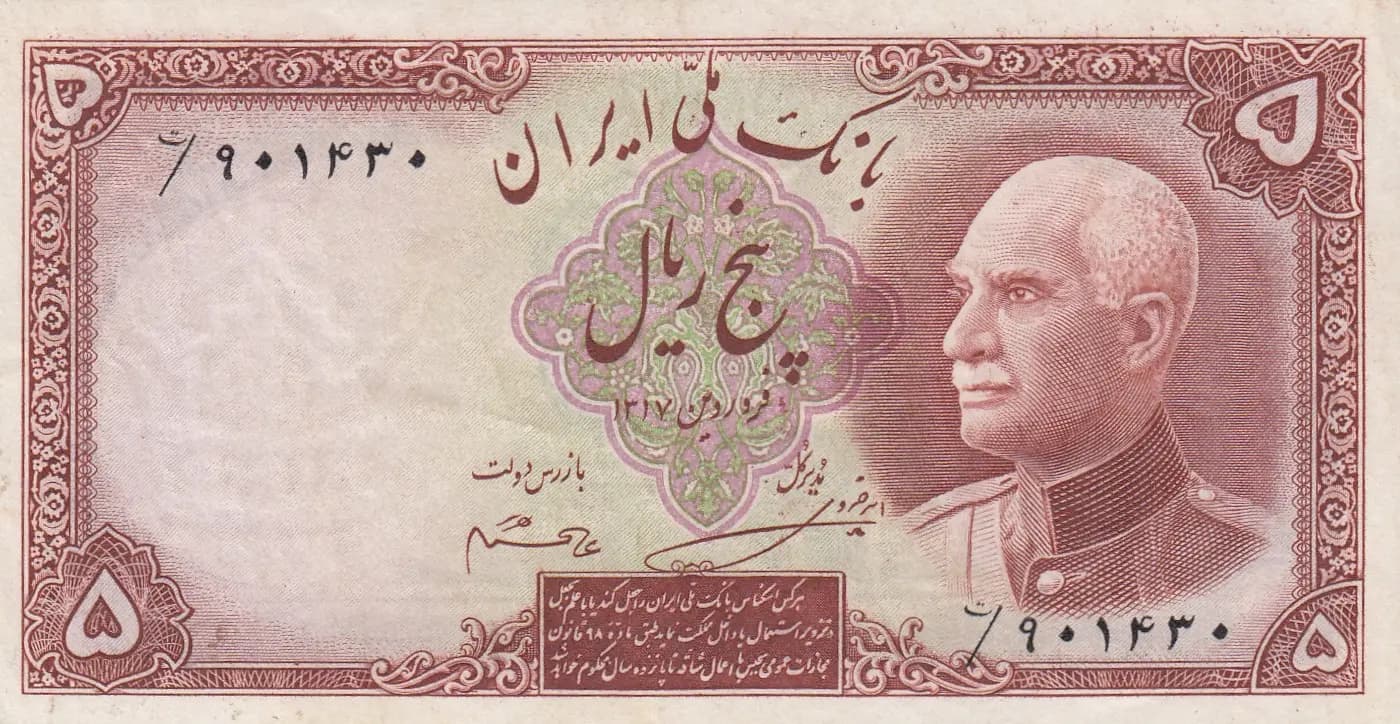
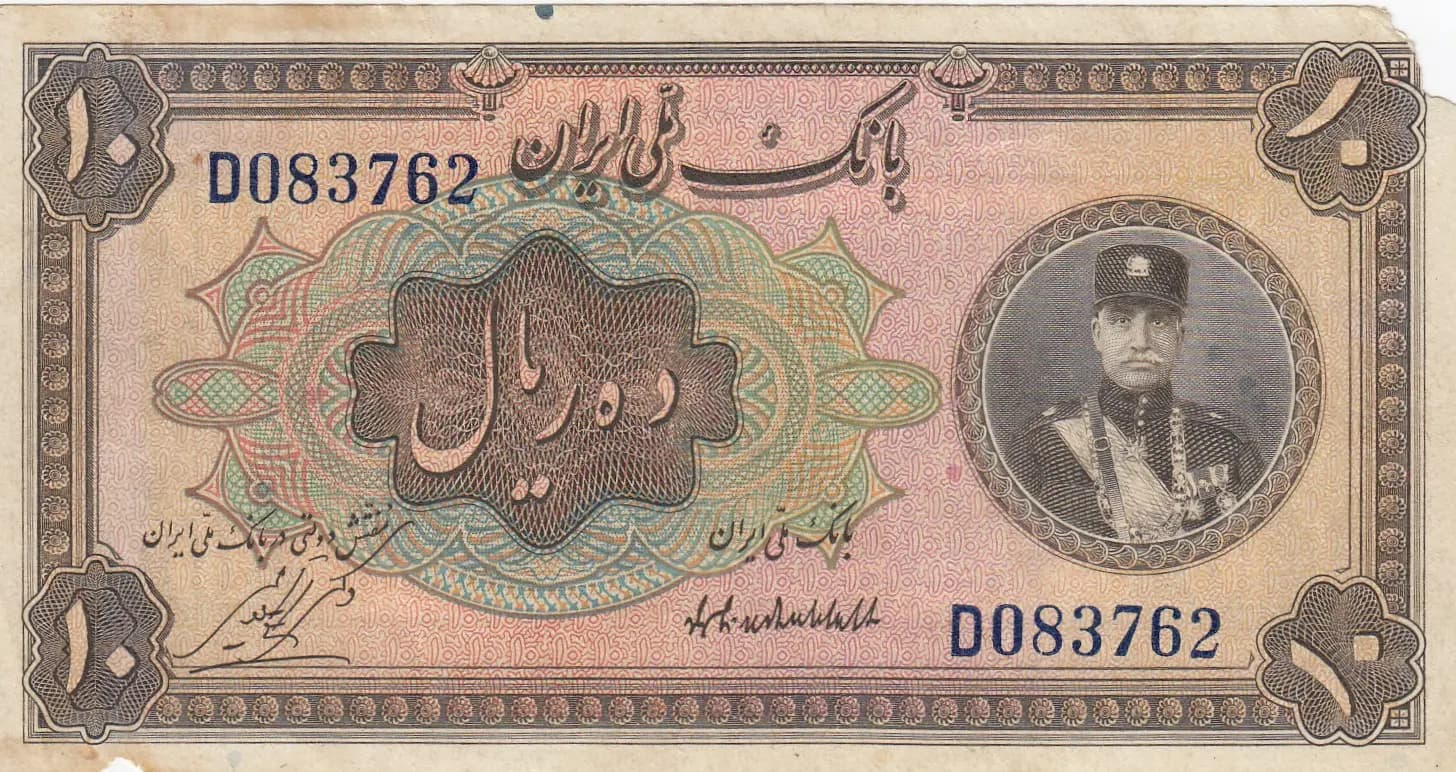
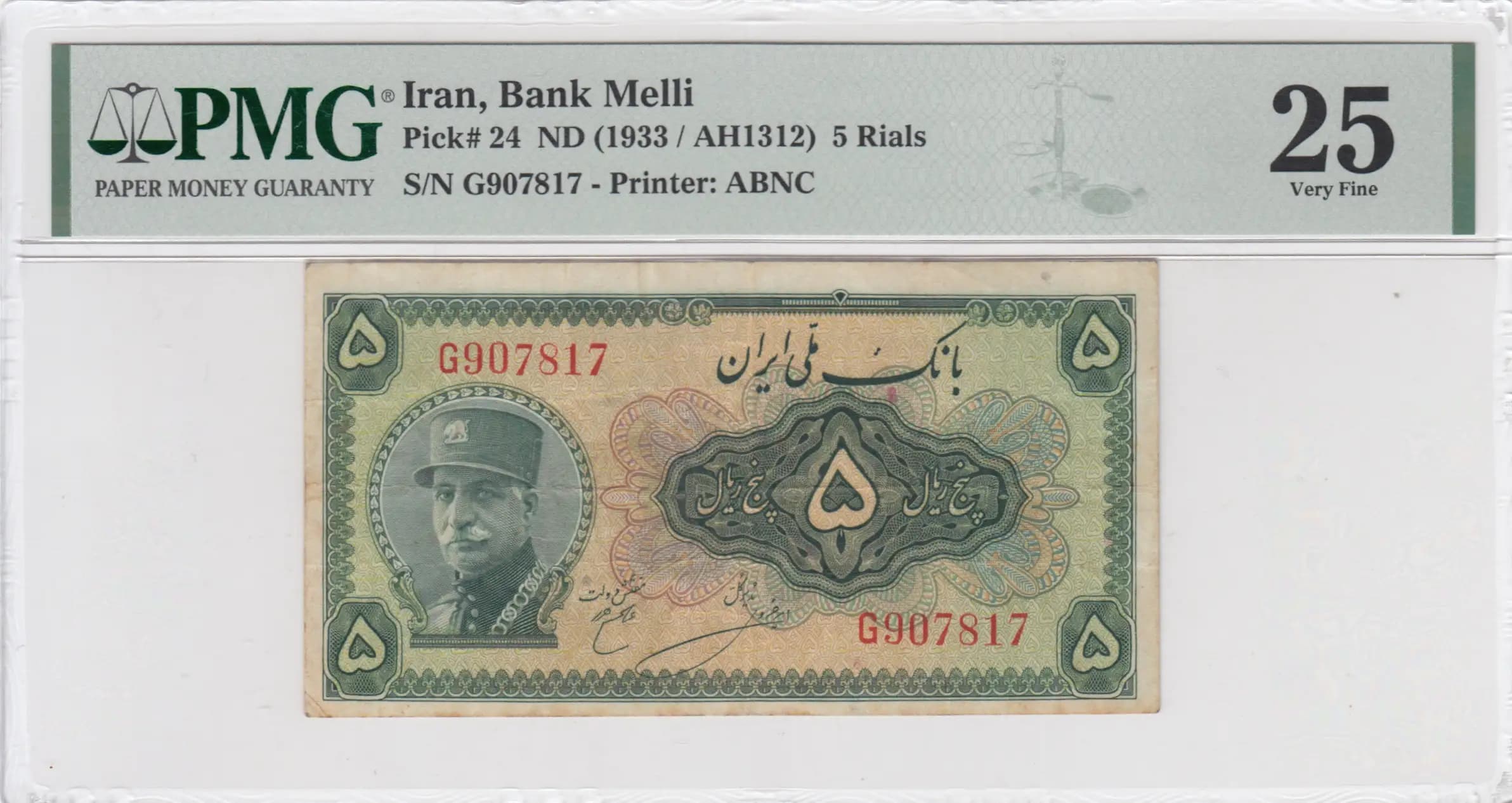
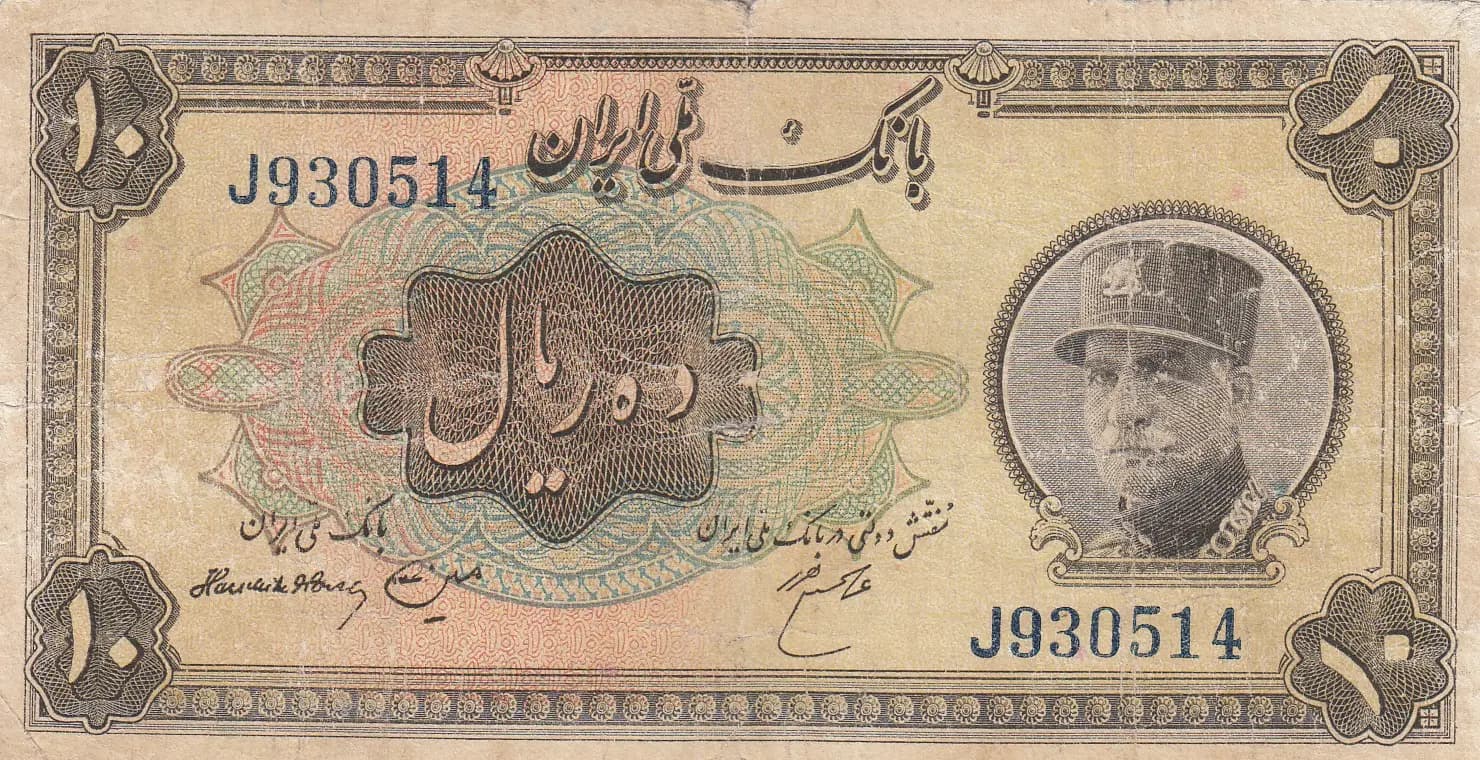
5 rials 1938
Market Prices
5 salesAbout This Note
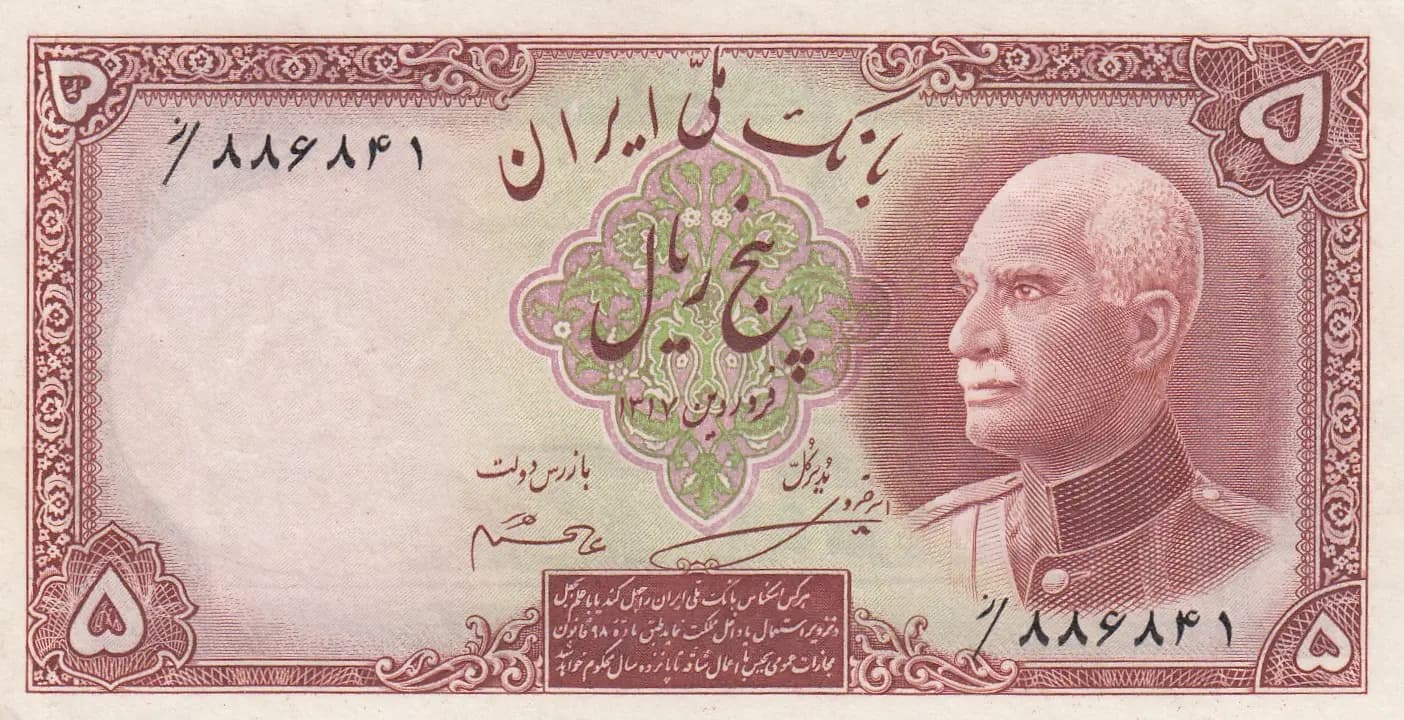
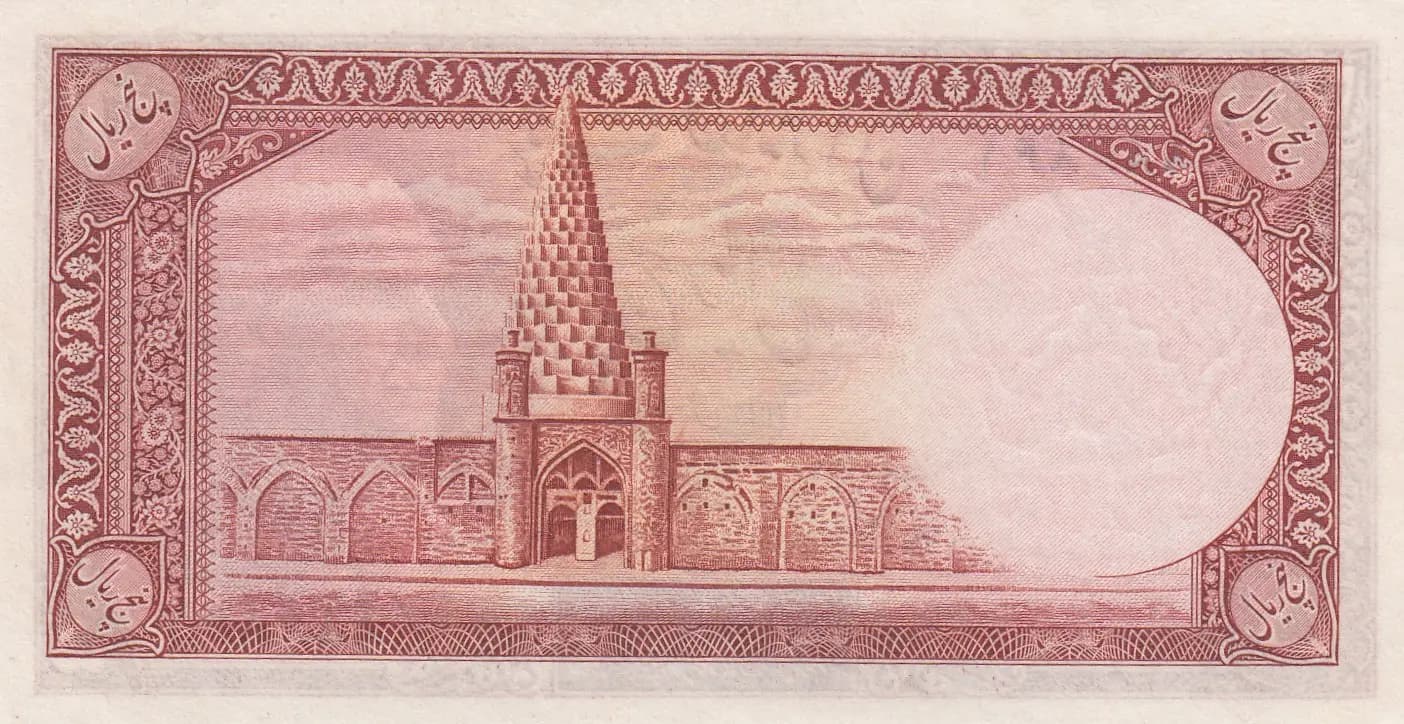
An exceptional uncirculated example of Iran's 1938 5 Rials note issued by Bank Melli Iran, featuring a striking portrait of Reza Shah Pahlavi rendered in fine stippled engraving style and backed by an intricate architectural vignette of the Tomb of Daniel at Susa. The note displays pristine condition with no visible circulation wear, creases, or damage, presenting brilliant mauve, pink, and green coloration with crisp margins throughout. This early Pahlavi-era currency represents a significant period in modern Iranian numismatic history and remains highly collectible, particularly in uncirculated grades where market values consistently exceed $150.
Common. While this note is desirable and collectible, the 5 Rials P-32Aa is not rare or scarce. Evidence supporting this assessment: (1) eBay market data shows regular sales at modest prices ($7-$72 across various grades), with UNC examples selling for approximately $73 in 2015, well below the threshold suggesting true rarity; (2) 2016 catalog values place UNC at $150, reflecting a moderately priced collectible rather than a scarce issue; (3) Bank Melli Iran issued substantial quantities of this denomination during the 1938 period; (4) PMG population data indicates the base Pick number (P-32A) exists in multiple variants, suggesting adequate surviving examples. This note is collectible and sought-after in the Iranian numismatic market, particularly in superior grades, but represents a standard regular issue rather than a scarce or rare variety.
This 5 Rials note was issued during the reign of Reza Shah Pahlavi (r. 1925-1941), a transformative period in Iranian history marked by modernization and centralization under the newly established Pahlavi dynasty. The obverse portrait commemorates the Shah's leadership, while the reverse's depiction of the Tomb of Daniel in Susa—one of Iran's most significant archaeological and religious sites—reflects the regime's emphasis on Persian cultural heritage and national pride. The note's issuance by Bank Melli Iran (established 1928) demonstrates the modernization of Iranian financial institutions during this era of rapid institutional reform.
The obverse features a three-quarter profile portrait of Reza Shah Pahlavi facing right, depicted without his characteristic military cap, rendered in fine stippled engraving technique characteristic of early 20th-century security currency. The portrait is framed by an ornate decorative medallion in the center featuring intricate Persian floral and geometric patterns with Islamic calligraphic elements. Heart-shaped corner ornaments in all four corners and an elaborate scrollwork border with geometric designs frame the entire composition. The reverse presents a detailed architectural engraving of the Tomb of Daniel (Qabr-e Danyal) at Susa, Iran's ancient capital, showing a distinctive minaret tower with stepped geometric brickwork pattern, arched gateway entrance, and fortified stone walls typical of Persian Islamic architectural heritage. The matching decorative border and corner ornaments maintain visual continuity with the obverse. Denomination numerals appear in circular corner cartouches on the reverse.
Front: 'بانک ملی ایران' (Bank Melli Iran / National Bank of Iran); 'پنج ریال' (Five Rials); 'رئیس جمهور' (President); 'پارس دوست' (Lover of Persia); 'رضاشاه' (Reza Shah); Serial numbers in Western numerals (14168847 and 13468847). Additional Persian text referencing a famous Iranian Islamic calligrapher and artist. Back: '۵' (5 in Persian numerals, denomination markers in corner circles). The obverse text 'پارس دوست' (Patriot of Persia/Lover of Persia) was an honorific title associated with Reza Shah's nationalist policies.
This note was produced using intaglio line engraving, the predominant security printing method for Bank Melli Iran notes of this period. The characteristic fine line work visible throughout both obverse and reverse, particularly in the portrait stippling, architectural detailing, and ornamental borders, is consistent with steel plate engraving. The multi-color underprint (mauve, pink, green, cream) indicates separate engraved plates for color separation, a standard practice for this era. Bank Melli Iran's currency printing during the 1930s-1940s was typically handled by the British American Bank Note Company (BABN) or similar security printers, though specific attribution for this particular issue would require archival verification.
This specimen is cataloged as Pick P-32Aa. The catalog reference notes that similar notes exist as P-32A (without French text on back), with this variant (P-32Aa) including French text on the reverse. The visual analysis indicates Persian text dominates with no French text visible on the back in this image, which may indicate this is actually P-32A rather than P-32Aa, though the distinction between variants may involve subtle design elements not clearly discernible from the images. Serial numbers in this example appear to be in Western numerals (14168847 / 13468847); notes exist with Persian numeral serial numbers as alternative varieties. The dating on the obverse corresponds to SH 1316 / AH 1317 (Islamic calendar), equivalent to 1938 CE. Additional varieties within this denomination may exist based on signature variants or printer marks, though these cannot be definitively identified from the provided images.