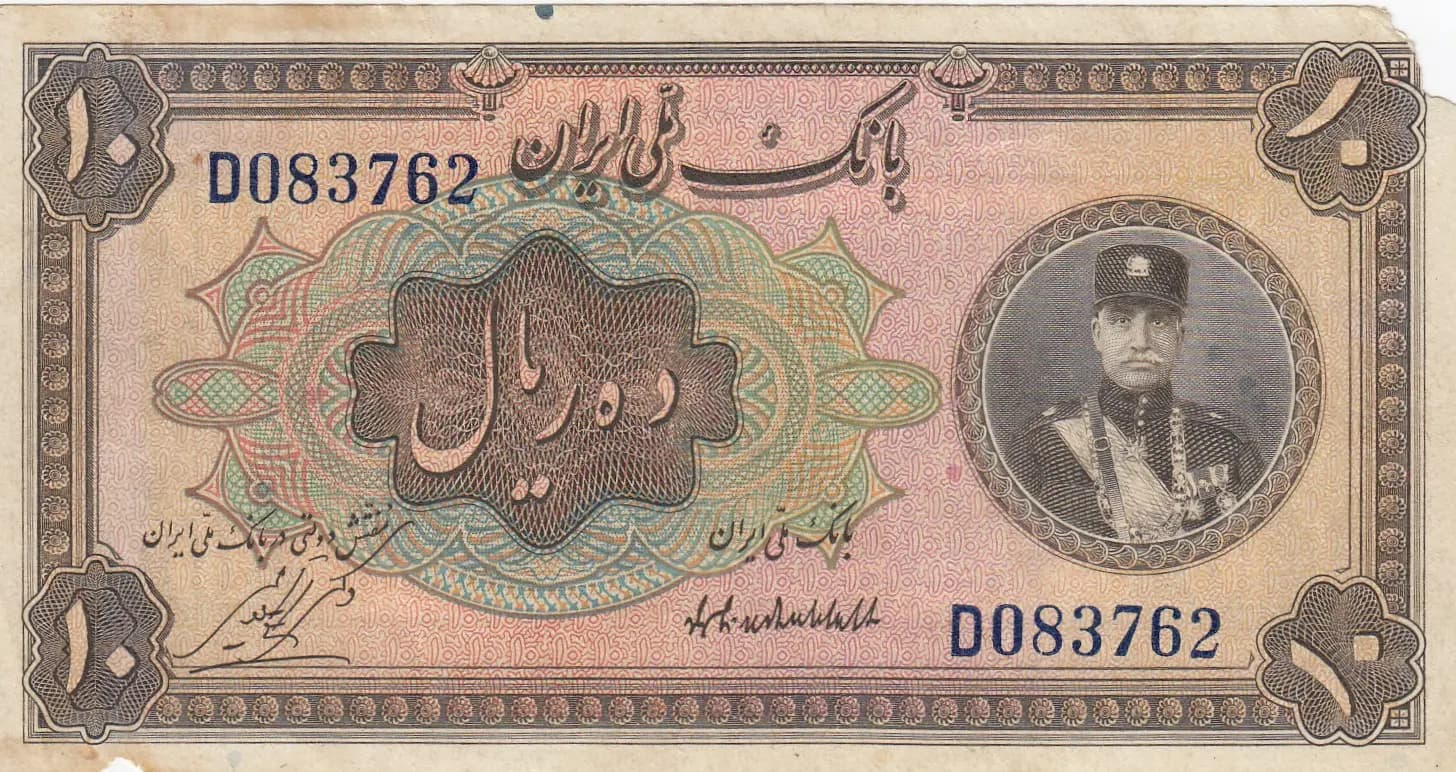
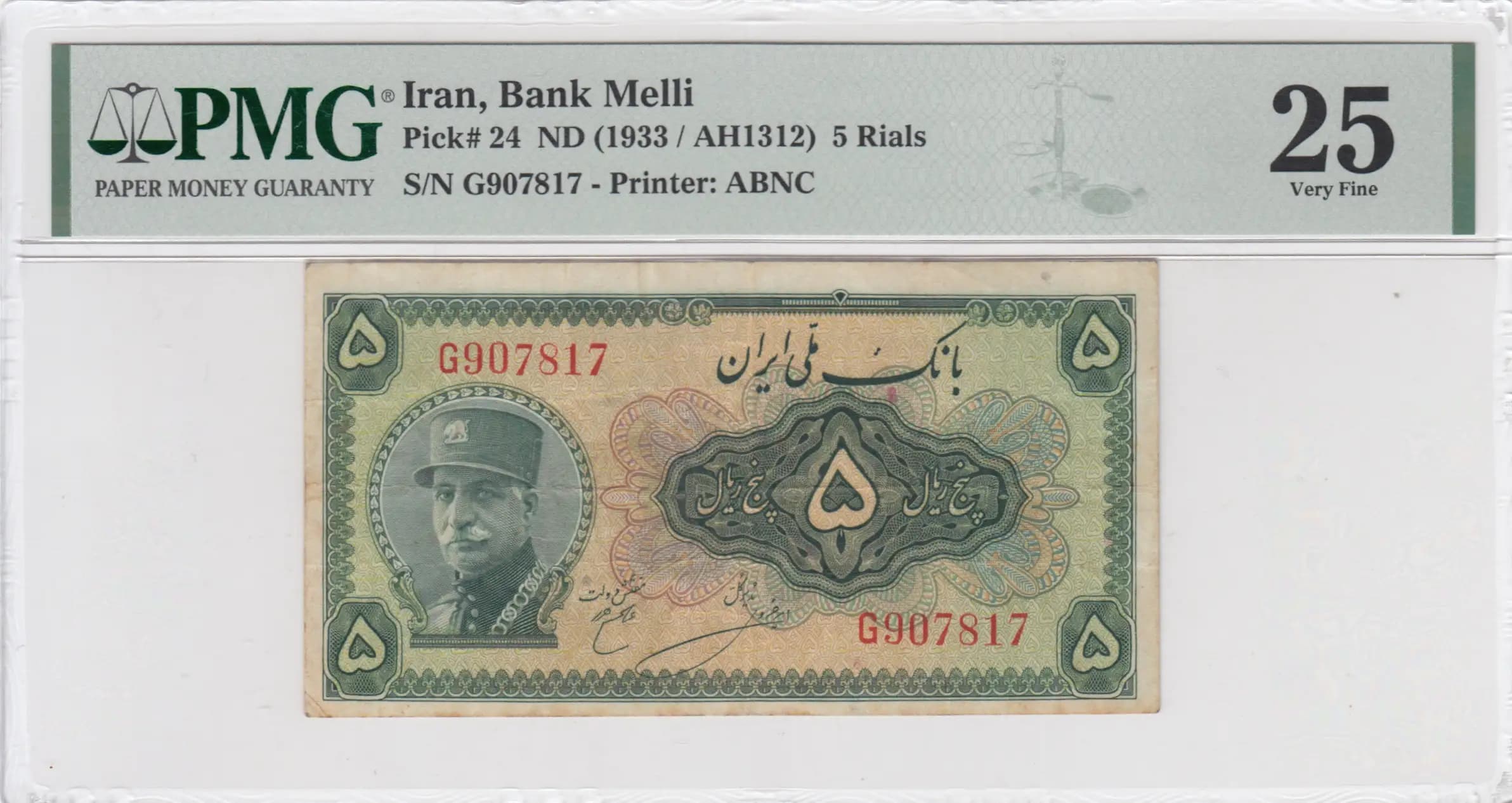
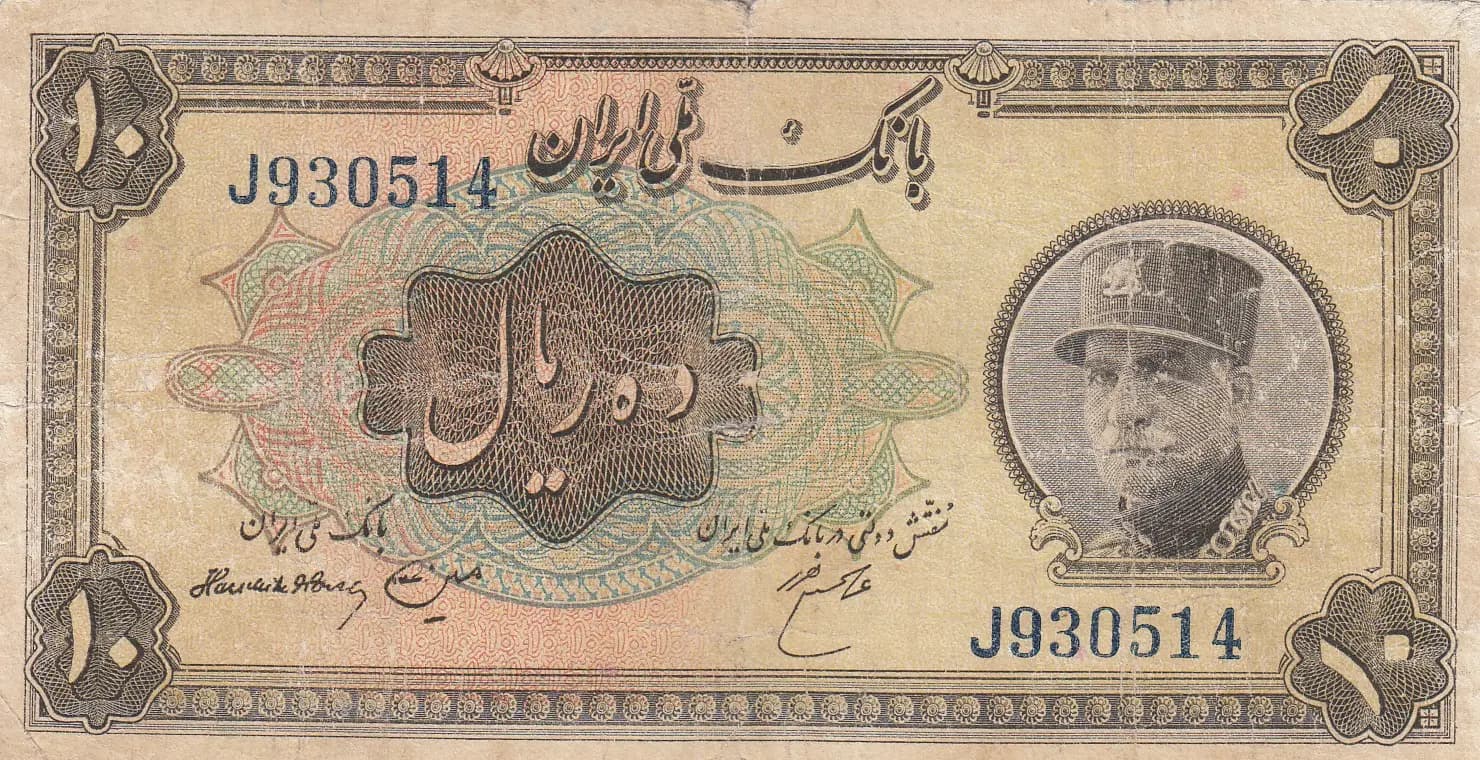
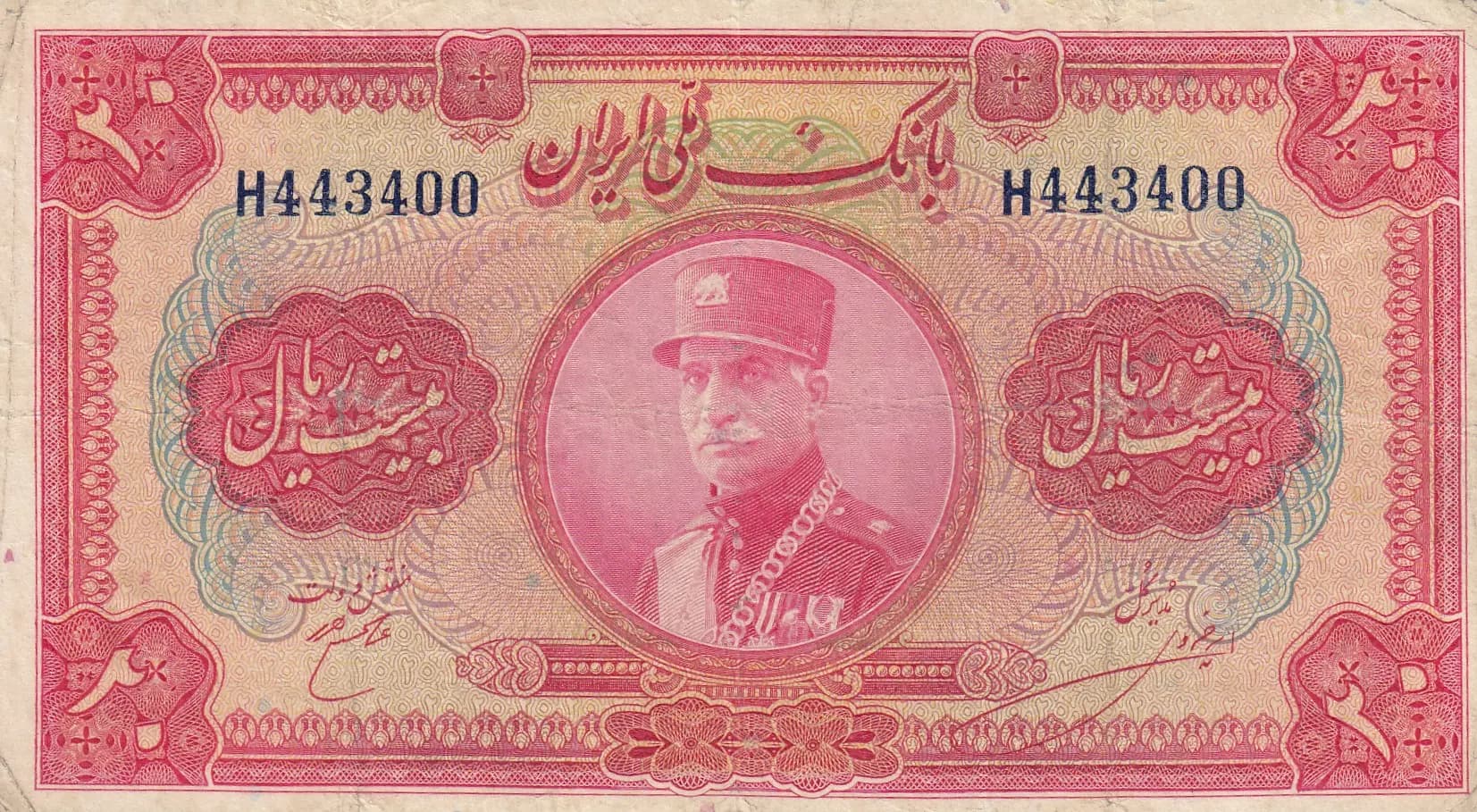
20 rials 1953
Market Prices
11 salesAbout This Note
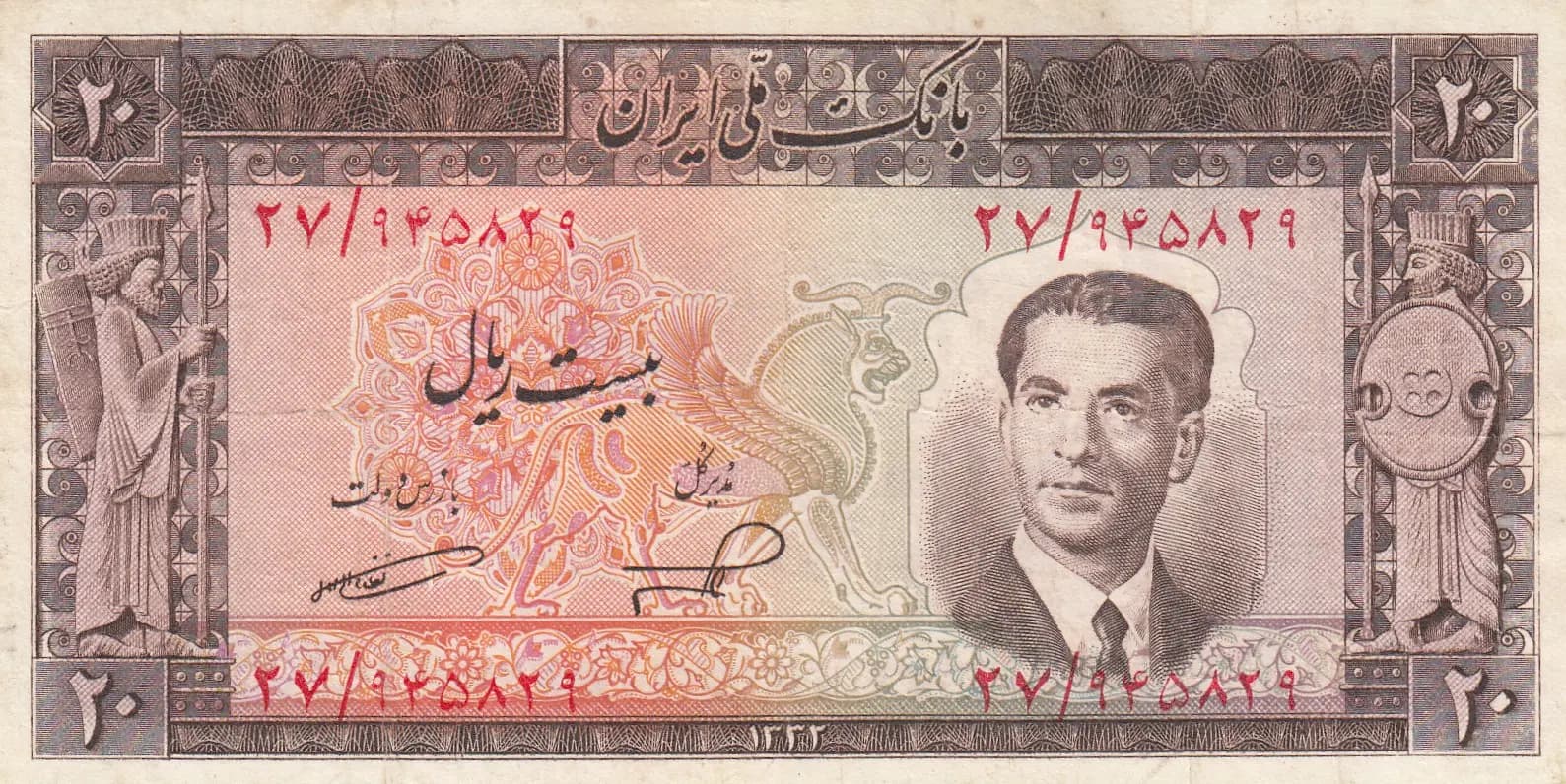
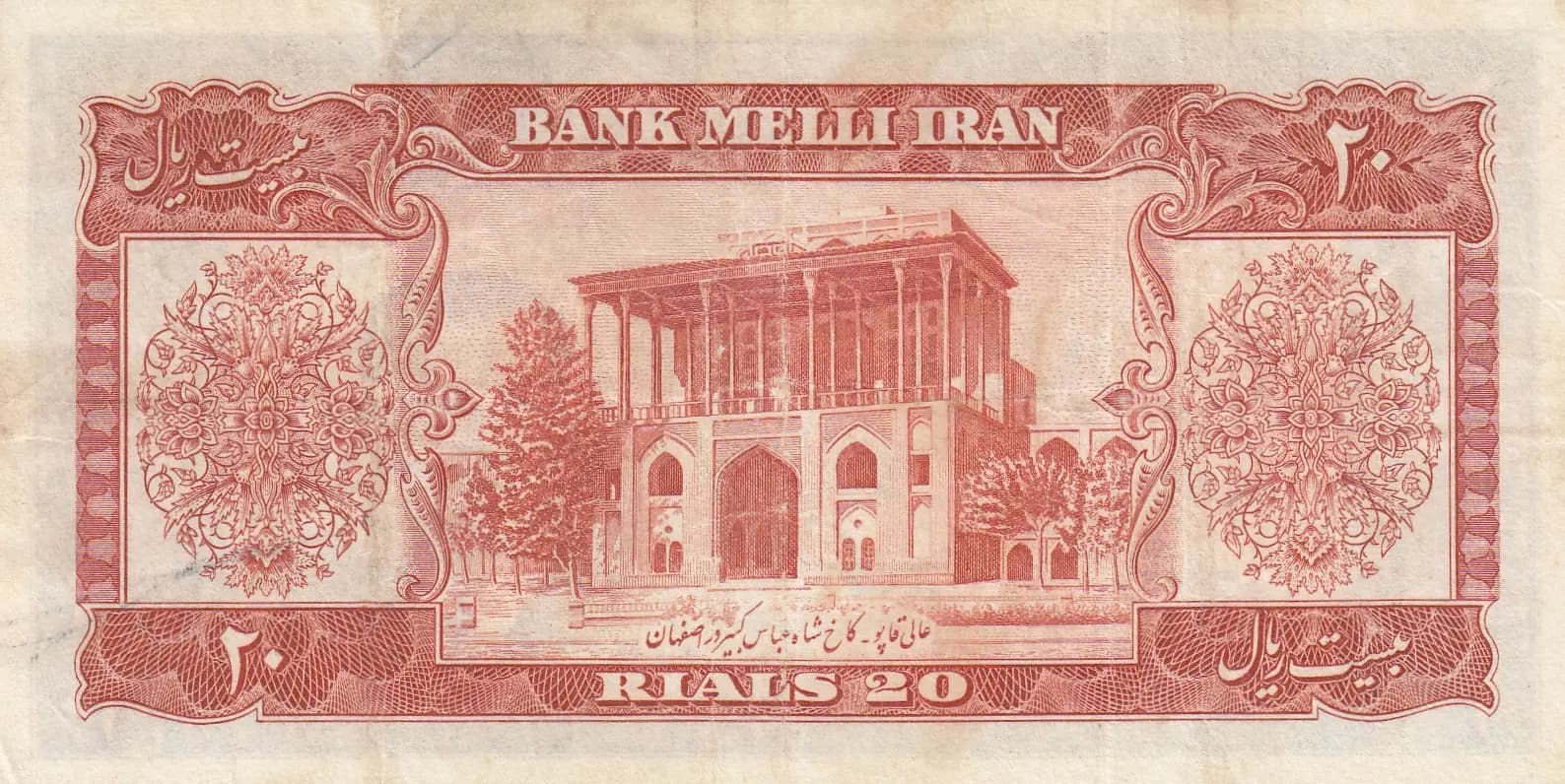
This is a VF-grade 20 Rials banknote from Iran, issued by Bank Melli Iran in 1953 (SH 1332), featuring a striking portrait of Shah Mohammad Reza Pahlavi in Western business attire on the obverse. The note displays the characteristic dark brown on orange and multicolor underprint typical of this issue, with elaborate Persian decorative medallions and fine engraving throughout. Despite visible circulation wear including fold marks and authentication stamps, the note retains sharp detail in its architectural reverse design depicting the Ali Ghapoo palace in Isfahan, making it a solid example of mid-20th century Iranian currency.
Common. This is a regular issue of the 20 Rials P-60 from the well-documented 1953 Bank Melli Iran series. Market evidence from eBay sales demonstrates consistent availability across multiple condition grades from 2013-2022, with VF examples regularly selling between $9.50 and $15.50, well below the threshold that would indicate scarcity. Catalogue values (2016) place VF at $12, confirming this as a standard, readily available note in the secondary market.
This banknote was issued during the reign of Mohammad Reza Pahlavi (r. 1941-1979), reflecting Iran's modernization period in the early 1950s. The portrait of the Shah in Western business dress symbolizes Iran's attempted integration into the Western-aligned international economic order during this era. The reverse features the Ali Ghapoo (Ali Qapu Palace), a masterpiece of Safavid-era Persian architecture in Isfahan, connecting modern Iran to its imperial historical heritage and cultural pride.
The obverse features a formal portrait of Mohammad Reza Pahlavi, the reigning Shah of Iran, positioned in the center-right wearing a Western-style suit and tie—symbolizing modernization and Westernization policies. The left side displays an ornate Persian/Islamic floral medallion in orange and red tones with intricate geometric patterns characteristic of Safavid decorative arts. Vertical panels on both left and right borders contain classical standing figures in period dress. The reverse depicts the Ali Qapu (Ali Qapu Palace) in Isfahan, a renowned two-story gateway structure with multiple arches, columns, and a crenellated roof, flanked by trees and framed by symmetrical corner medallions with Persian floral patterns. Decorative borders throughout employ baroque-influenced ornamental flourishes.
Front: 'بانک ملی ایران' (Bank Melli Iran); Serial numbers in mixed Arabic and Persian numerals appear in red in upper corners. Back: 'BANK MELLI IRAN' (English); 'RIALS 20' (English denomination); Persian text referencing Ali Qapu Palace. The note bears handwritten marks and stamps suggesting authentication or cancellation processing.
Intaglio engraving (line engraving), evidenced by the fine-line patterns, intricate border designs with multiple layers, detailed architectural rendering, and the characteristic sharp detail visible throughout the design. The complexity of the floral medallions and the precision of the portrait work are consistent with high-security intaglio production methods used by major European security printers of the 1950s era. Bank Melli Iran contracted with established Western security printers for this series; detailed archival records would confirm the specific printer.
This note is identified as Pick P-60 (20 Rials, 1953, SH 1332). The serial numbers visible in the image appear to be standard red-printed numerals without significant variation. PMG has catalogued 1 variant for this base Pick number. Without exceptional overprints, signatures, or date variants visible, this represents the standard variety of this denomination and year.