1000 rials 1974
Market Prices
2 salesAbout This Note
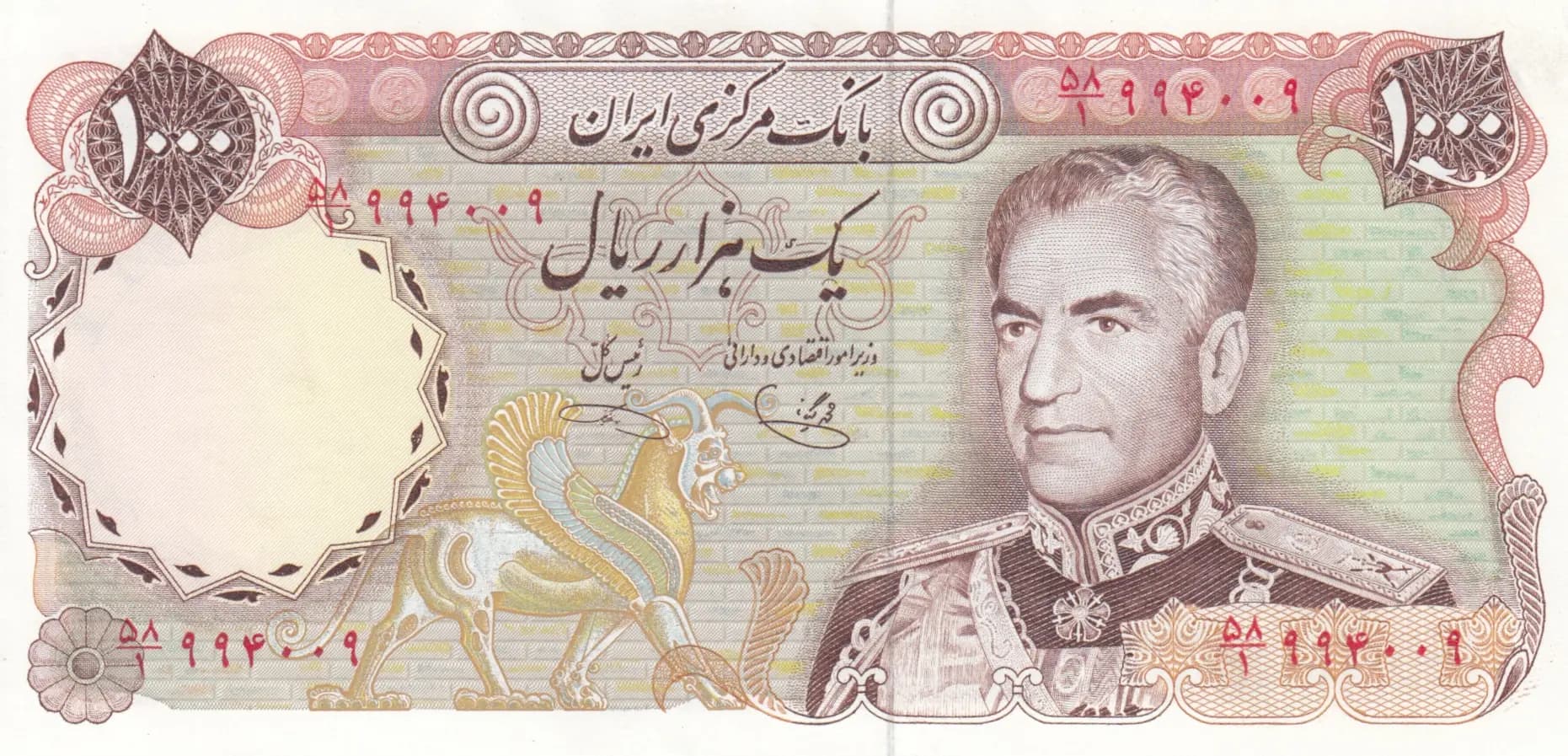
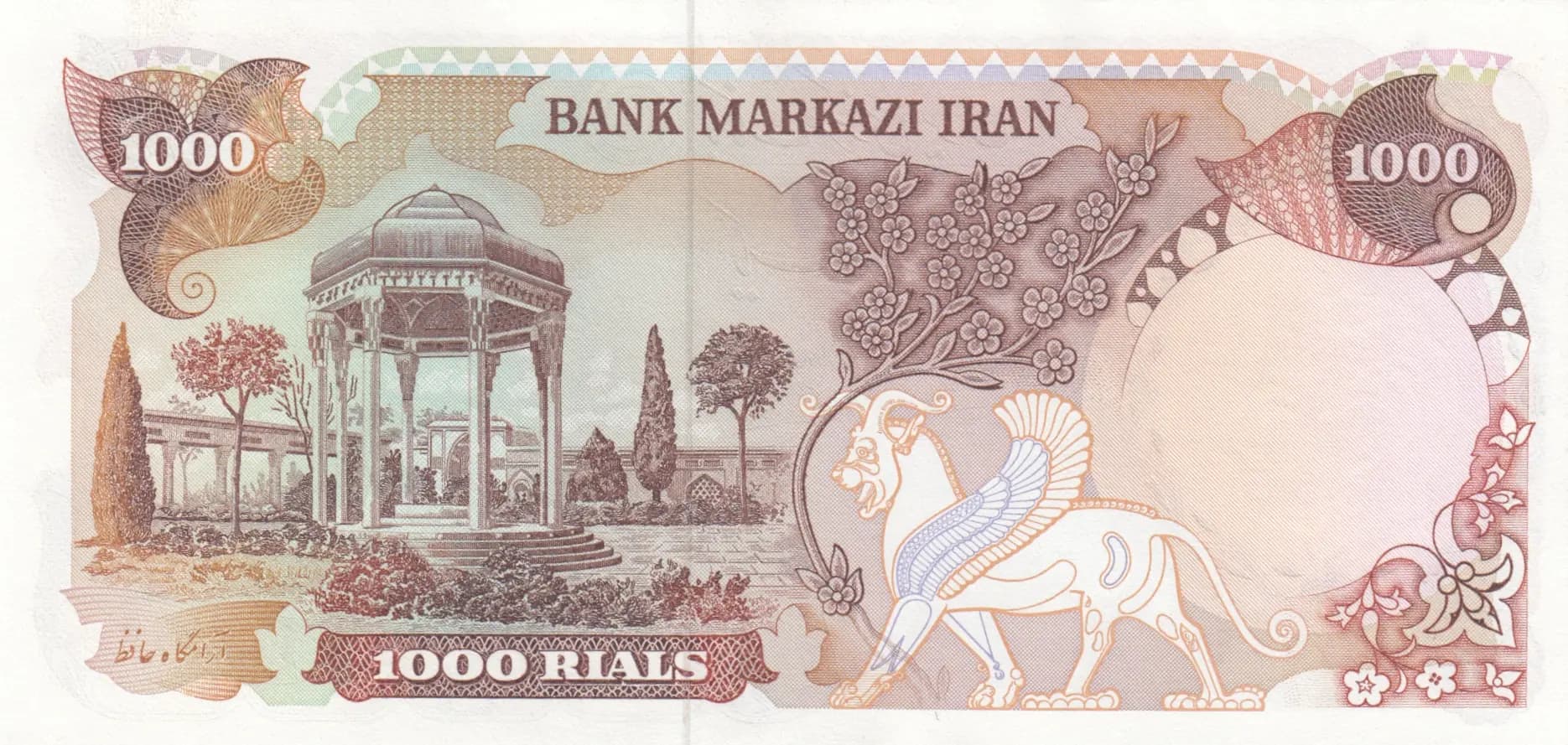
An exceptional uncirculated example of Iran's 1000 Rial note from 1974, featuring the iconic portrait of Shah Mohammad Reza Pahlavi in formal military dress on the obverse, complemented by the revered Tomb of Hafez in Shiraz on the reverse. This Pick-105d specimen displays pristine condition with vibrant multi-colored printing (pink, brown, green, cream, and gold accents), sharp engraving details, and no visible wear, making it an attractive example for collectors of Persian numismatics or Middle Eastern currency.
Common. While catalog values for UNC specimens reach approximately $35 USD (2019 valuations), the relatively modest secondary market prices and the note's status as a regular issue from a major printing house indicate broad production and circulation. eBay historical sales data shows EF and AUNC examples selling in the $2.84–$5.56 range over a decade ago, consistent with common-grade collector inventory. The Pick-105 series is well-represented in graded populations, supporting a common classification despite age and aesthetic appeal.
Issued during the reign of Shah Mohammad Reza Pahlavi (reigning 1941-1979), this note represents Iran's monetary production in the mid-1970s under Bank Markazi Iran. The obverse prominently features the Shah's portrait in military regalia, reflecting the state's emphasis on his authority, while the reverse celebrates Persian cultural heritage through the depiction of the Tomb of Hafez, the 14th-century poet's mausoleum in Shiraz—a symbol of Iran's literary and cultural significance during this period of modernization.
The obverse features a formal portrait of Shah Mohammad Reza Pahlavi positioned on the right side, depicted in military dress uniform with decorative collar details, shown in right-facing profile. The composition includes ornate decorative borders in pink and mauve tones, with the Lion and Sun symbol (winged lion figure) positioned in the center-left area—a traditional emblem of Iranian sovereignty. Decorative circular rosette patterns appear in the top corners, framed by intricate engraved guilloche work. The reverse showcases the Tomb of Hafez in Shiraz on the left portion, a domed pavilion (mausoleum) with cupola flanked by characteristic cypress trees and formal garden landscaping. The right side features the winged Lion and Sun symbol among elaborate floral arabesques, botanical designs, and shell or fan motifs in the corners. Both sides employ fine line engraving and multiple color layers creating depth and security features.
Front side: بانک مرکزی ایران (Bank Markazi Iran / Central Bank of Iran), ریال (Rial), هزار ریال (One Thousand Rials), with Persian numeral serial number ۴۹۴۲/۹. Back side: BANK MARKAZI IRAN, 1000 (appearing in multiple corner locations), 1000 RIALS.
Intaglio/engraved printing method with multiple color lithographic underprints. The note exhibits characteristic fine line guilloche patterns, intricate engraved details throughout (borders, architectural elements, portraiture), and layered color separation typical of high-security currency production. Printer: TDLR (Thomas De La Rue), as identified in catalog references for this Pick number variant.
Identified as Pick-105d variant. Catalog references indicate Pick-105a and Pick-105b variants exist for this base denomination and issue date, all produced by TDLR. Serial number observed: ۴۹۴۲/۹ (Persian numerals). Specific variety differentiation (a/b/d designation) typically reflects subtle design changes, signature variations, or sequential printing batches. Without access to detailed Pick variety specifications distinguishing 105a, 105b, and 105d, the presence of this note as a 105d suggests it may represent a later printing batch or incorporate minor design refinements relative to earlier variants, though all remain common issues.