100 rials 1969
Market Prices
10 salesAbout This Note
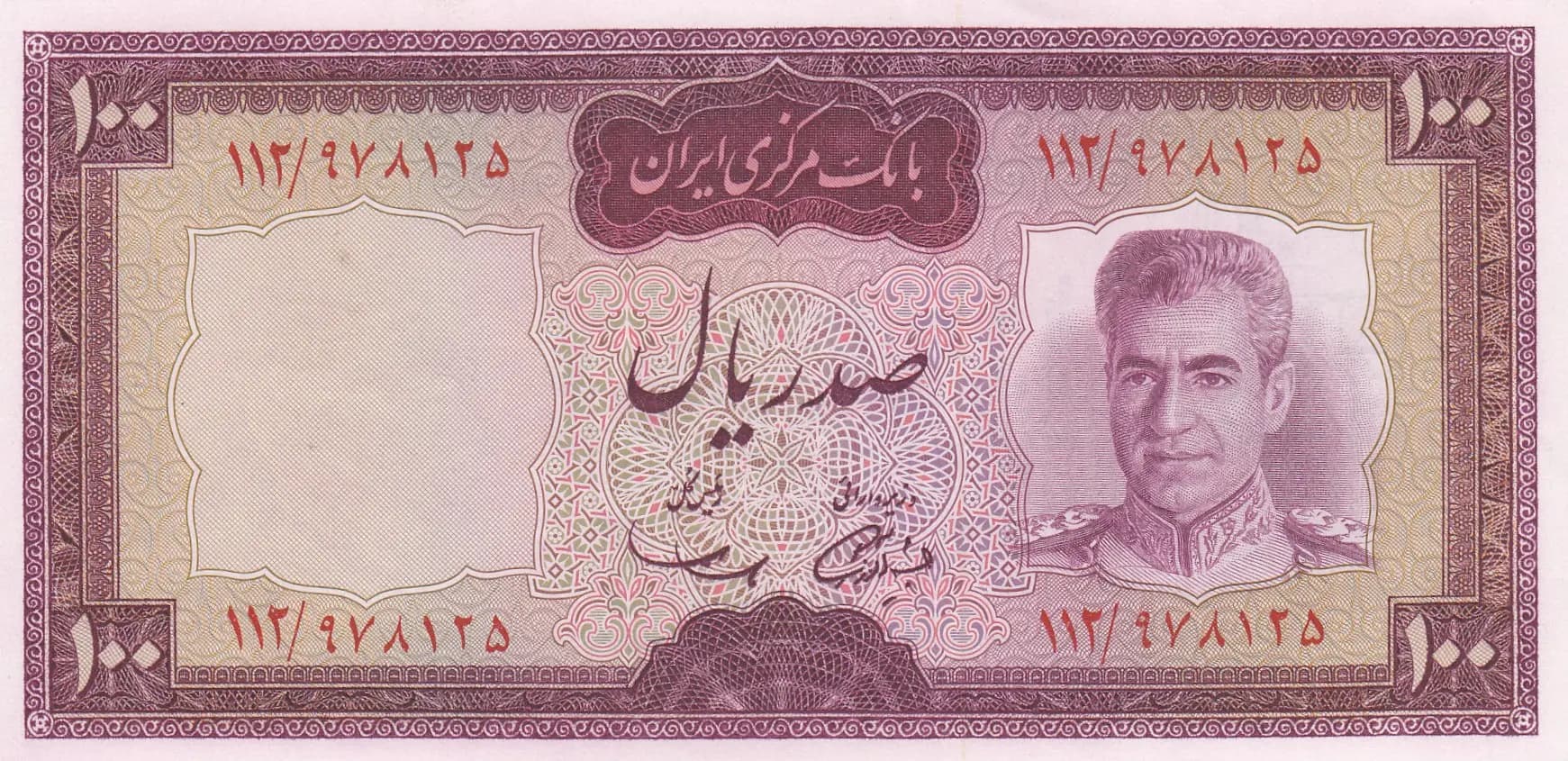
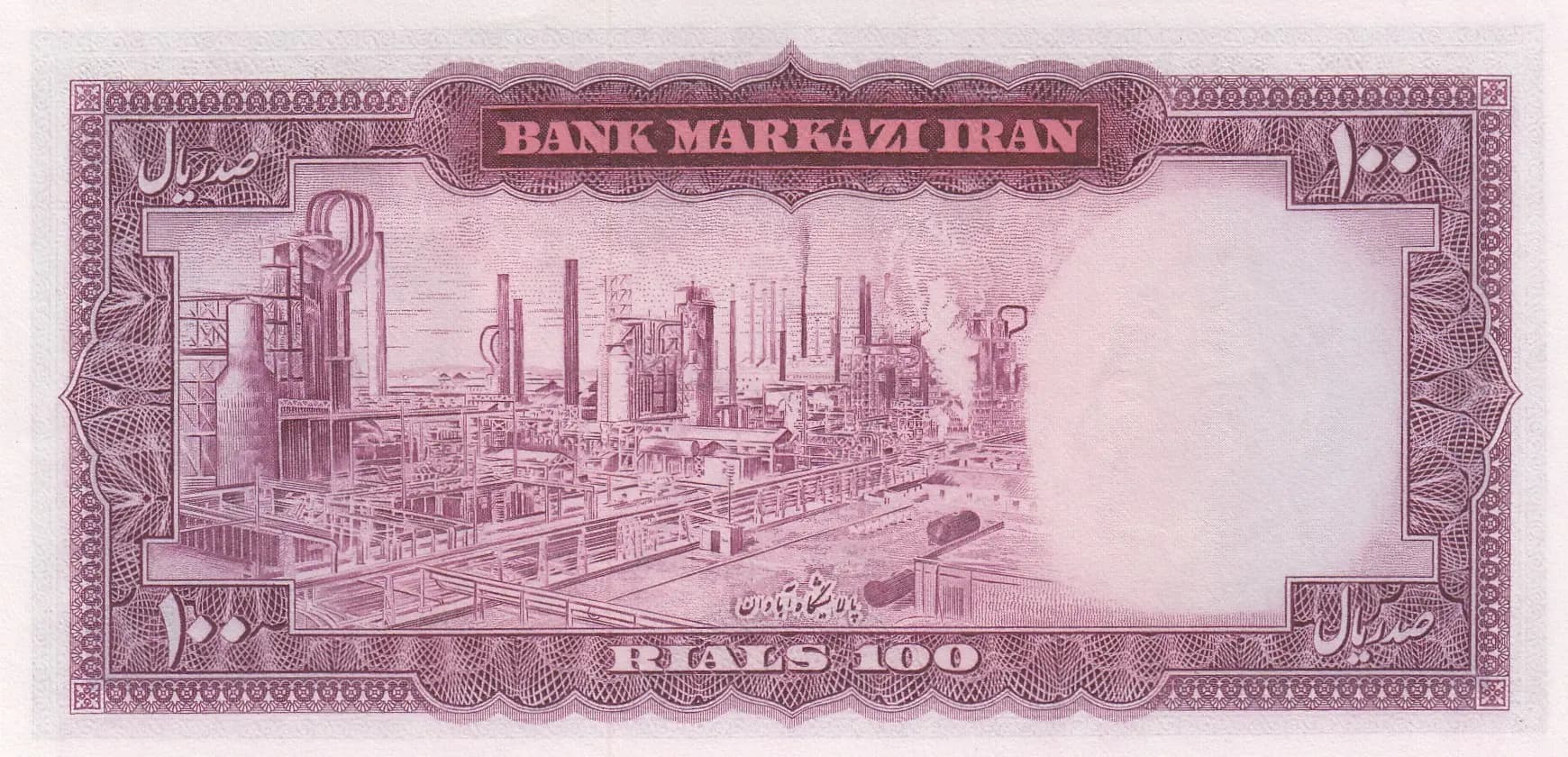
This is a stunning example of Iran's 100 Rials note from 1969 (Pick P-86), graded UNC and featuring the iconic 'Dark Panel' variant with the Bank Markazi Iran name displayed on a contrasting dark ornamental panel across the front. The note showcases exceptional printing quality with a portrait of Shah Mohammad Reza Pahlavi in military dress uniform on the right, complemented by intricate Islamic geometric patterns and arabesques in green and cream tones, while the reverse depicts the industrial pride of the nation—the oil refinery complex at Abadan rendered in fine detail. In uncirculated condition, this note exhibits pristine paper quality with sharp, clear printing throughout and no visible wear, making it a desirable example for collectors interested in late Pahlavi-era Iranian currency.
Common. The 100 Rials P-86 from 1969 is a standard circulation issue with no documented print run limitations or recall circumstances. eBay market data consistently shows examples selling in the $10-27 range across multiple condition grades (with UNC specimens averaging $15-27), indicating robust supply in the collector market. The note remained in production through 1971 and was never withdrawn from circulation due to rarity considerations. No significant die varieties or short-lived production periods are documented for this Pick number. The denomination and timeframe make it a readily obtainable note for collectors of Iranian currency.
Issued during the height of the Shah's reign in 1969, this note reflects Iran's modernization and economic ambitions under Mohammad Reza Pahlavi. The prominent depiction of the Abadan oil refinery on the reverse symbolizes Iran's petroleum wealth and industrial development—the refinery was a cornerstone of the nation's economy and a source of national pride during this period. The military-uniformed portrait of the Shah on the obverse reinforces the authoritarian nationalism characteristic of his rule, while the Islamic geometric designs acknowledge Persian cultural heritage alongside modernist iconography.
The obverse features a formal portrait of Mohammad Reza Shah Pahlavi positioned on the right side, depicted in full military dress uniform with visible rank insignia and medals—a deliberate choice emphasizing his role as military leader and commander-in-chief. The left side is dominated by an elaborate ornamental panel in contrasting dark tones containing the Bank Markazi Iran inscription, characteristic of the P-86 'Dark Panel' variant (distinct from the later P-91 'Light Panel' issue). The center field displays intricate Islamic geometric patterns and arabesque scrollwork in green and cream colors, featuring lozenges and repeated motifs that frame the entire composition. The reverse showcases a detailed engraved depiction of the Abadan oil refinery complex, rendered with fine line work showing multiple tall smokestacks, industrial processing units, pipelines, and infrastructure spread across multiple elevation levels—symbolizing Iran's petrochemical and economic strength. Both sides are enclosed in elaborate decorative borders featuring geometric and floral corner ornaments consistent with Iranian banknote design aesthetics of the period.
Front side: 'بانک مرکزی ایران' (Bank Markazi Iran / Central Bank of Iran) displayed on the dark ornamental panel; serial numbers in Persian numerals. Back side: 'BANK MARKAZI IRAN' (English text); 'RIALS 100' (denomination in English); '۱۰۰' (100 in Persian numerals); 'ریال' (Rials in Persian/Farsi). The bilingual presentation reflects Iran's dual cultural orientation during the Pahlavi modernization period.
This note was produced using traditional intaglio (relief engraving) printing, evident from the fine line work, sharp detail reproduction, and complex security features observable throughout both sides. The multi-color printing in mauve, purple, cream, green, and brown tones was achieved through successive intaglio passes, a standard technique for banknote production of this era. Bank Markazi Iran employed world-class security printers for this issue, consistent with the sophisticated design and execution visible in the intricate geometric patterns and industrial scene rendering. The fine engraving quality and absence of photolithographic characteristics suggest contract printing by a major international security printer, though specific attribution would require archival documentation.
This specific example represents the 'Dark Panel' variant of the P-86 issue, characterized by the contrasting dark ornamental panel containing the Bank Markazi Iran inscription on the front—distinguishing it from the subsequent 'Light Panel' P-91 variant issued later in the series. Production dates span 1969-1971 with no specific date printed on the note itself (ND designation). Serial number prefixes and variations may exist among examples from different production runs, but no major catalogued varieties with significant numismatic significance are documented for this Pick number. The note's design remained consistent throughout its production period.