100 rials 1965
Market Prices
8 salesAbout This Note
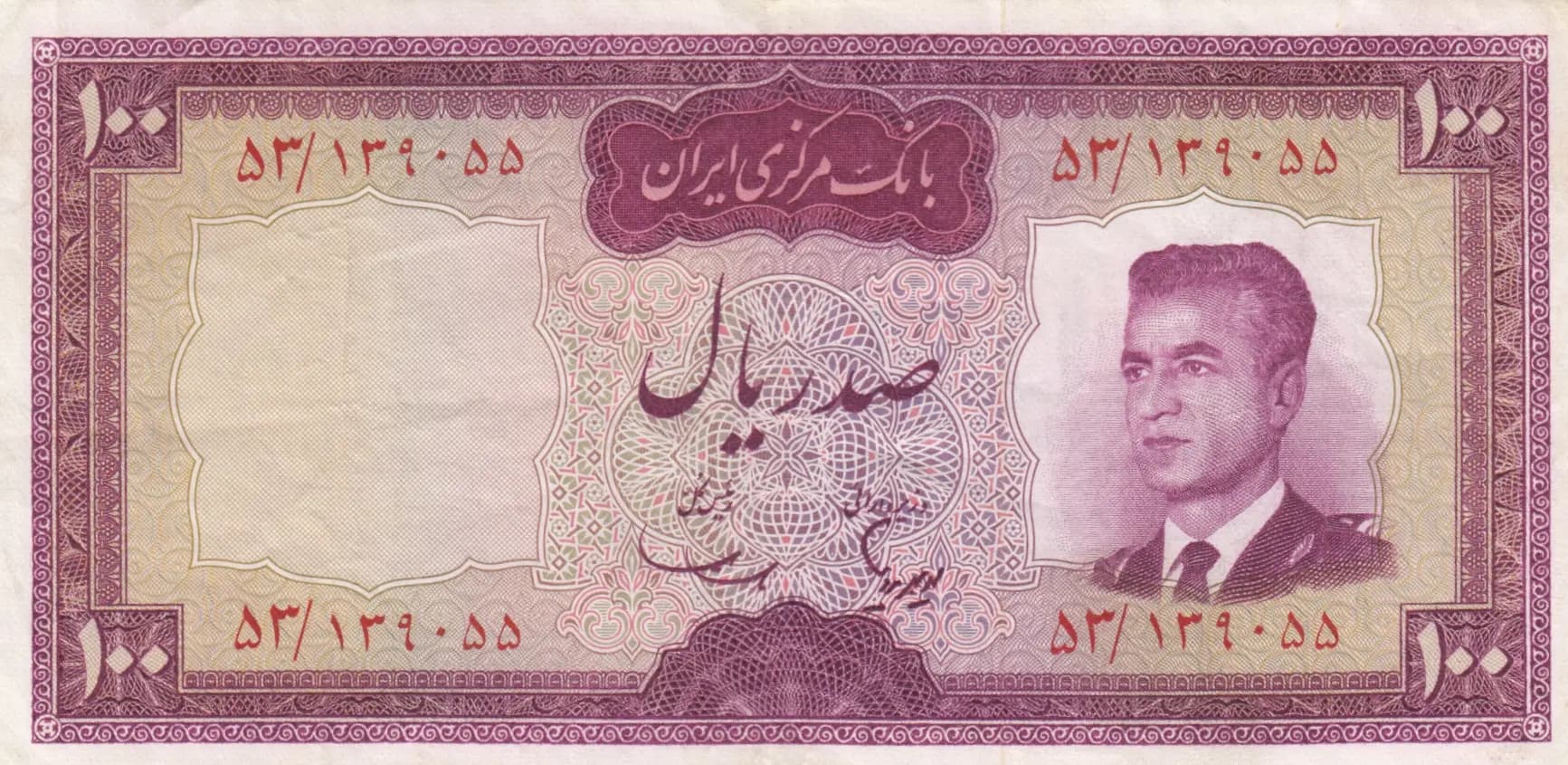
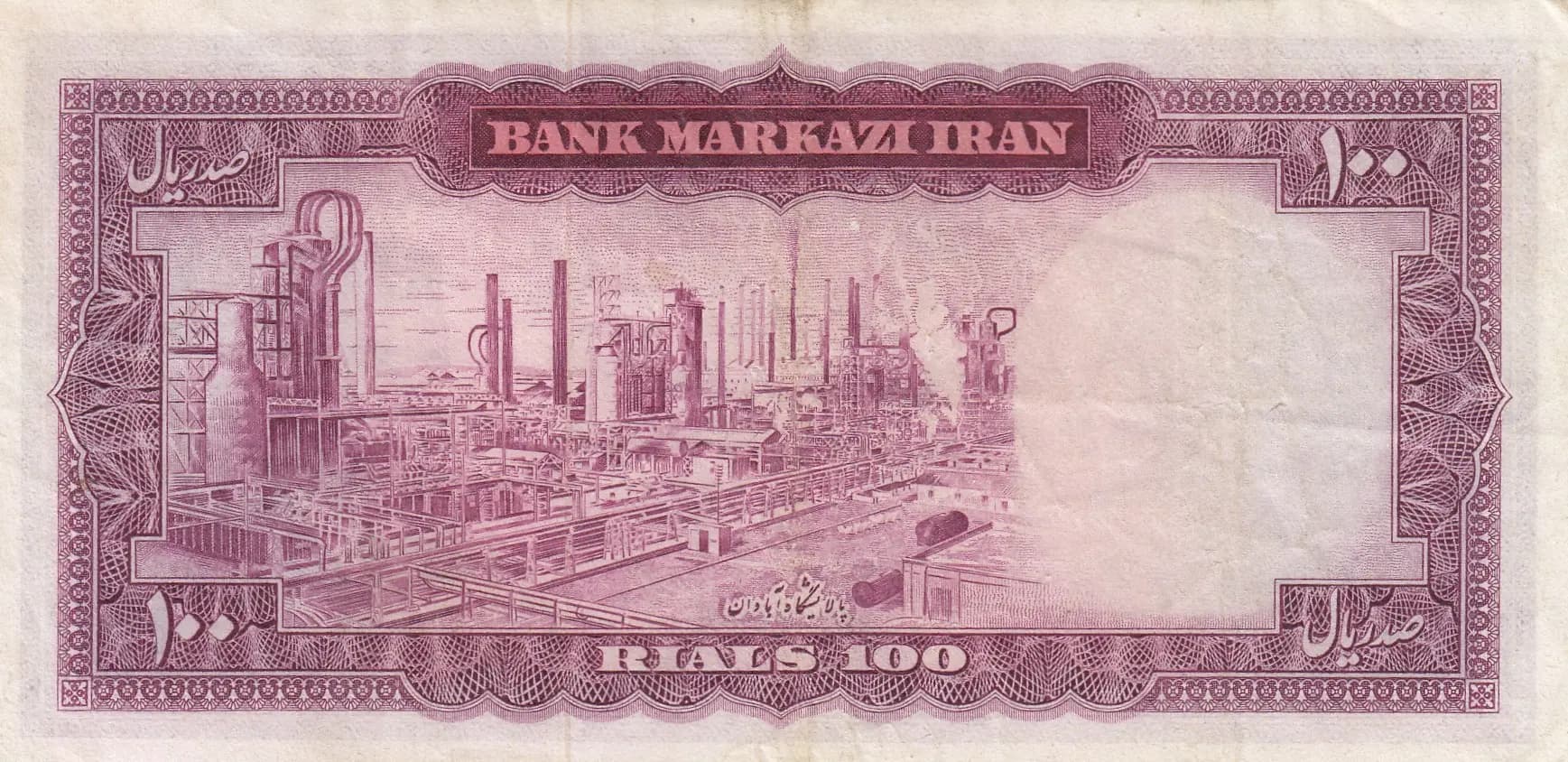
This is a VF-grade 100 Rials note from Iran dated 1965, issued by Bank Markazi Iran (Pick P-80). The note displays the characteristic purple/mauve color scheme with cream accents typical of this issue, featuring Shah Mohammad Reza Pahlavi in formal business attire on the obverse and a detailed engraving of the Abadan oil refinery on the reverse. The note shows honest circulation wear including visible creasing, fold marks, and age-related discoloration consistent with its VF grade, making it a representative example of this important mid-20th century Iranian currency.
Common. Market data from realbanknotes.com shows VF examples selling consistently in the $10-15 range across multiple transactions from 2009-2014, with 2019 catalog value at $9 VF. The consistent availability in circulation grades and modest prices indicate substantial print runs with no evidence of scarcity or collector premium. This is a standard, regularly encountered note in the Iranian 1965 series.
This 1965 issue commemorates Iran's oil industry during the height of the Shah's modernization program, with the Abadan refinery depicted on the reverse representing the country's petroleum wealth and industrial development. The portrait of Shah Mohammad Reza Pahlavi in military uniform reflects the authoritarian nature of his regime during this period. Bank Markazi Iran's issuance of this note coincides with Iran's economic expansion driven by oil revenues in the 1960s, before the 1979 Islamic Revolution transformed the nation's currency and governance.
The obverse features a formal portrait of Mohammad Reza Shah Pahlavi positioned at right, depicted in a dark business suit and tie with composed expression, a common representation emphasizing his modern, Western-aligned image. The center showcases an elaborate circular decorative medallion with intricate Islamic geometric and floral patterns, characteristic of Persian design traditions. Ornate borders with Persian/Islamic geometric elements frame the composition, with eagle emblems visible in the top corners representing Iranian sovereignty. The reverse depicts the sprawling Abadan oil refinery complex with its distinctive array of tall cylindrical processing towers, smokestacks, pipelines, and industrial infrastructure—a landmark facility representing Iran's vital petroleum industry. The color palette of purple/mauve with cream, dark burgundy, and pink tones creates visual distinction across the denomination.
Front: 'بانک ملی ایران' (Bank Melli Iran - though the issuer is actually Bank Markazi Iran); Persian numerals in corners showing date/serial references '۵۲/۱۲۹ - ۵۵'. Back: 'BANK MARKAZI IRAN' (Central Bank of Iran); 'RIALS 100' (100 Rials in English); '۱۰۰ ریال' (100 Rials in Persian); Persian numeral '۱۲' (12, likely representing printing series or similar identifier).
This note was produced using intaglio/engraving printing techniques, evident from the fine line work, intricate geometric patterns, and detailed shading visible throughout both sides. The security features include complex decorative borders and fine-detail engraving in both the portrait and industrial scene. While specific printer information for P-80 is not universally documented, Iranian banknotes of this era were typically produced by established security printers such as Giesecke+Devrient or De La Rue, though confirmation would require additional documentation.
The visual analysis identifies Persian numeral date references '۵۲/۱۲۹ - ۵۵' on the front and the numeral '۱۲' on the reverse, which may represent printing series indicators or other technical identifiers. Without access to comprehensive variety cataloging for this specific Pick number, no definitive variety designation can be confirmed from the observed details. Collectors should note potential variations in signature combinations, serial number prefixes, or printing series, though these would require comparison with known documented varieties in specialized Iranian banknote catalogs.