100 rials 1951
“#55555”
Market Prices
2 salesAbout This Note
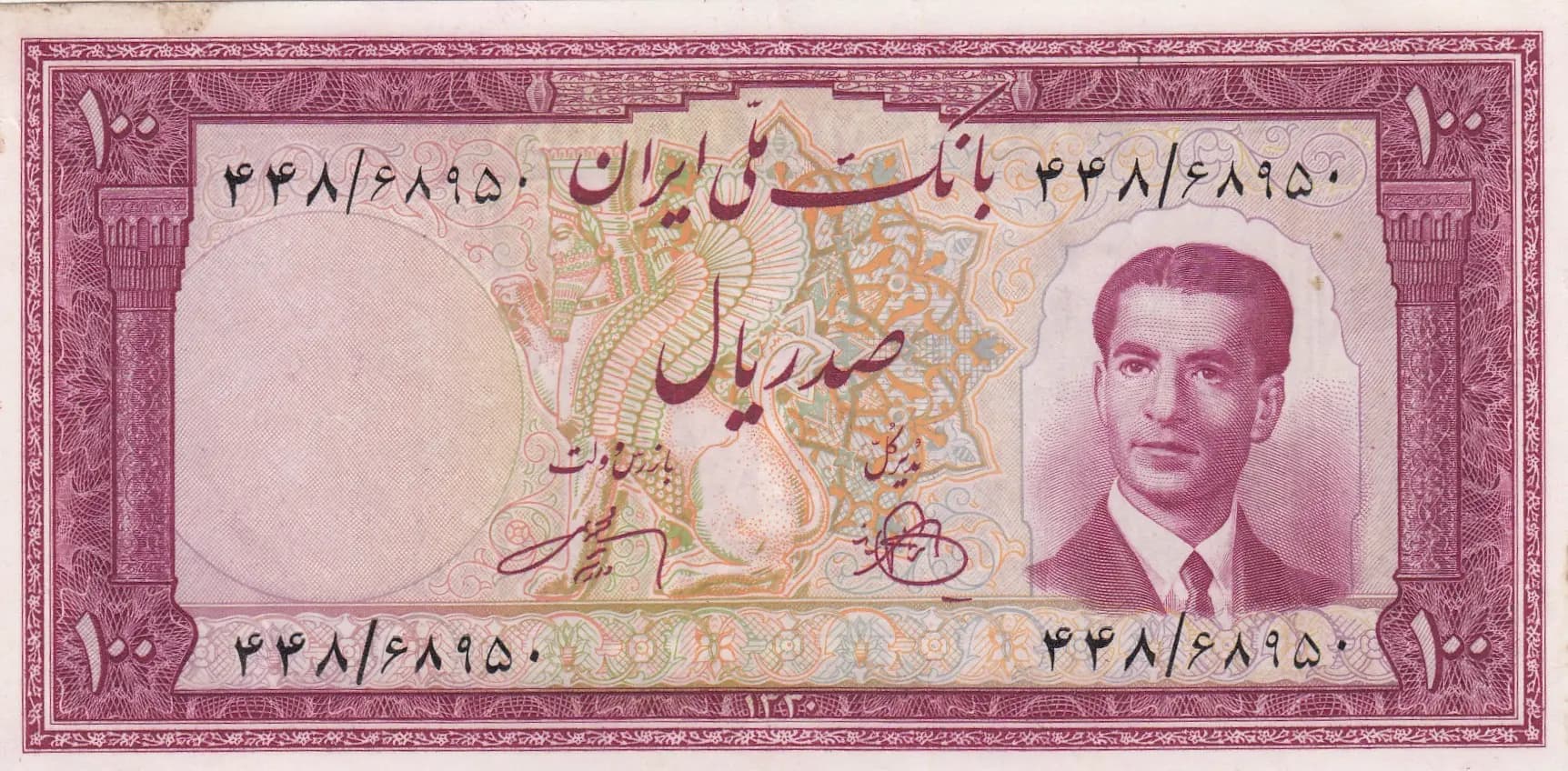
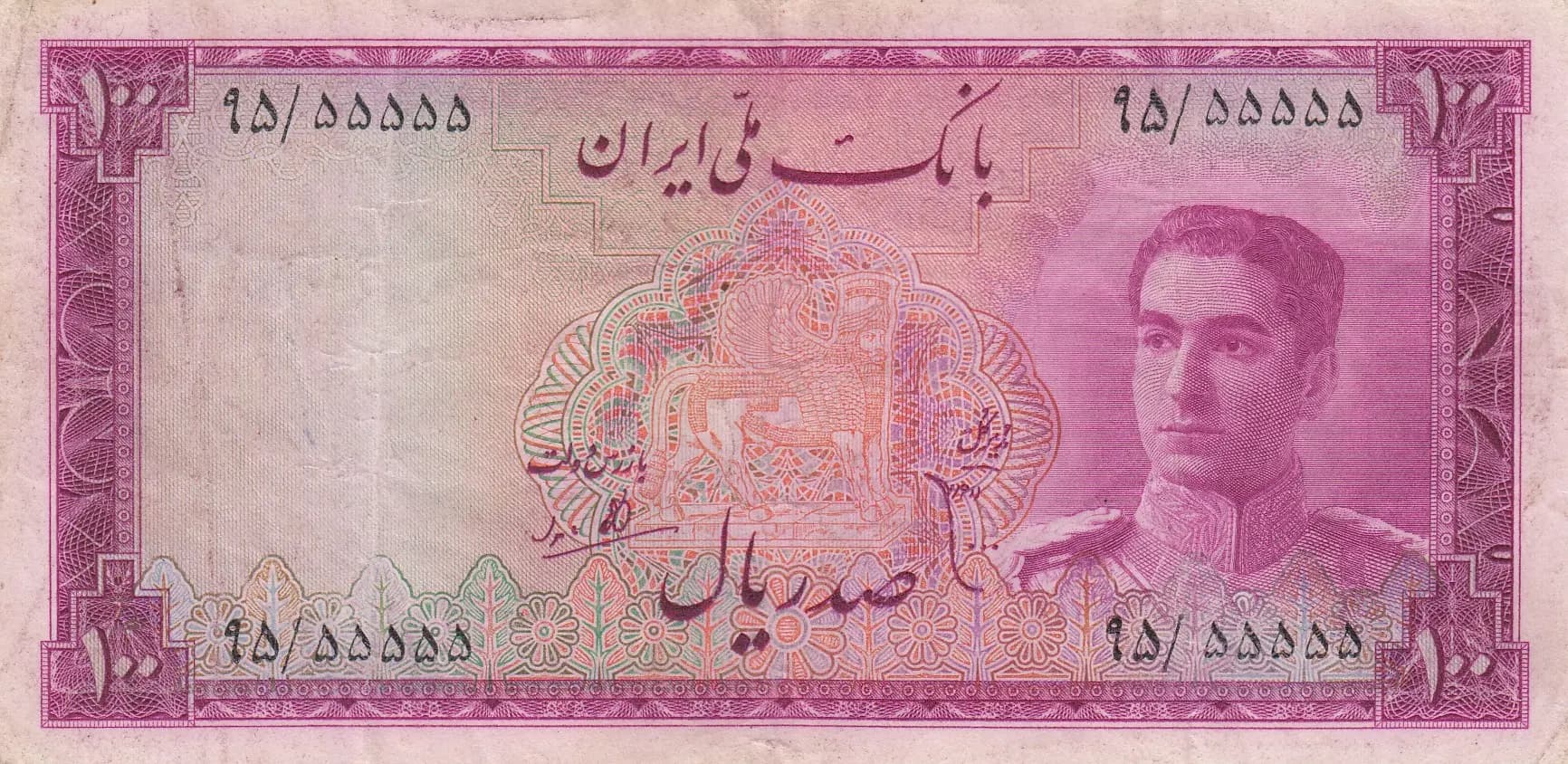
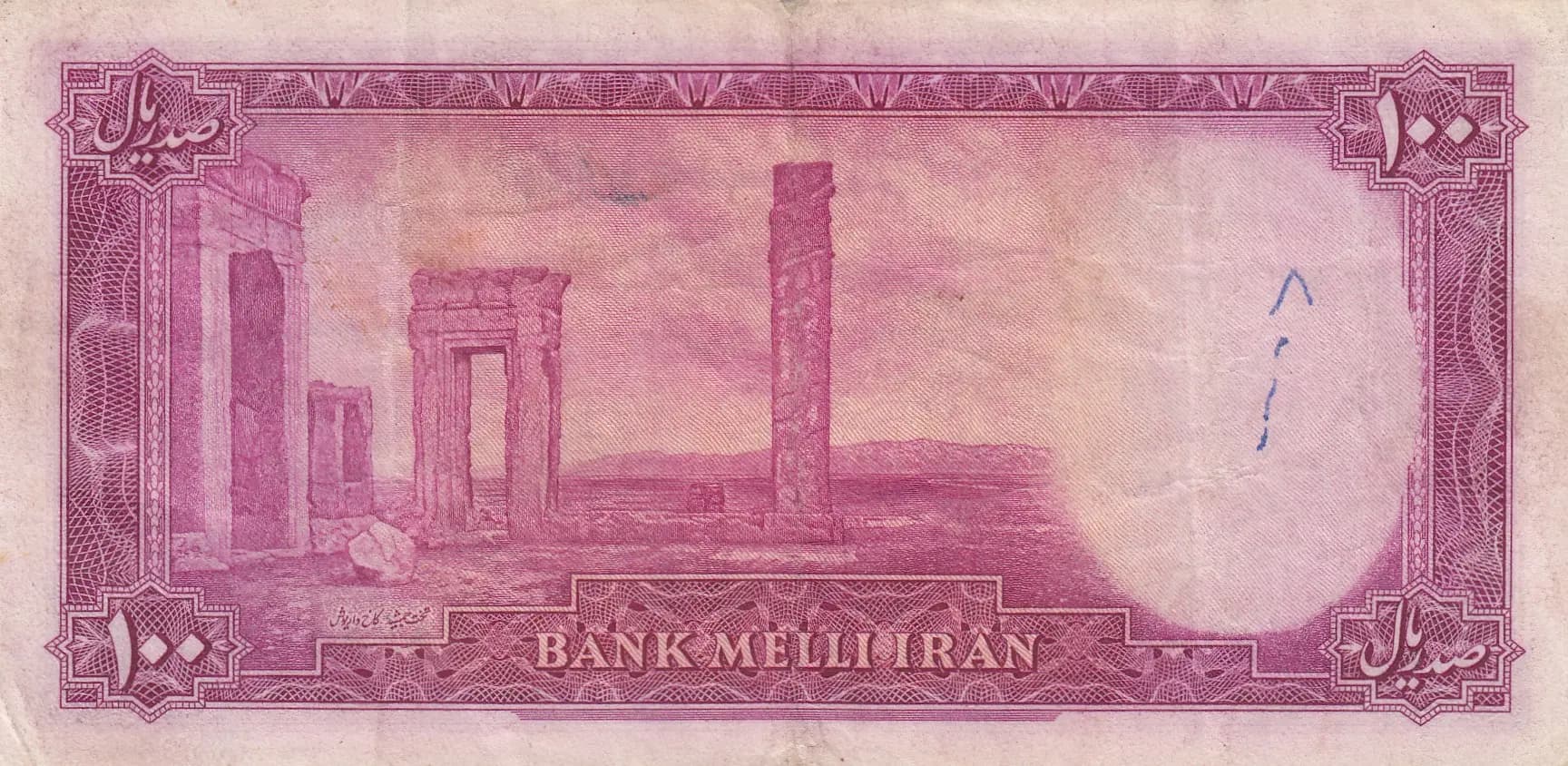
This is a VF-graded 100 Rials note from 1951, issued by Bank Melli Iran during the early Pahlavi period. The note displays the characteristic magenta-pink color scheme with fine line engraving throughout, featuring Shah Mohammad Reza Pahlavi in military uniform on the obverse and the ruins of Persepolis on the reverse. The note shows appropriate aging with foxing and creasing consistent with VF grade, and includes a collector's mark (#55555), making it a documented example of this historically significant Iranian currency.
Common. While this is a cataloged issue from 1951, the eBay market data shows consistent sales activity with VF examples selling for approximately $45, and even lower-grade notes (F) reaching only $18. These prices and the regular circulation evidence (foxing, creasing) indicate substantial print runs. The 2016 catalogue value of $50 for VF also suggests this is a regularly-traded note without scarcity premium. No historical evidence of recalls, short-lived issuance, or restricted print runs applies to this Pick number.
Issued in 1951 by Bank Melli Iran, this note commemorates Iran's rich imperial heritage by depicting both the ruling Shah and the ancient Achaemenid architectural legacy through Persepolis. The military-uniformed portrait of Mohammad Reza Pahlavi reflects the Shah's consolidation of power during a pivotal period in Iranian history, while the reverse's Tachara Palace of Darius I symbolized Iran's connection to its pre-Islamic dynastic past—a key theme in Pahlavi-era propaganda and national identity.
The obverse features a right-facing profile portrait of Mohammad Reza Pahlavi wearing a formal military dress uniform with distinctive collar insignia, rendered in the fine detail characteristic of security engraving. The central element is an elaborate heraldic emblem featuring a winged lion (the ancient Persian symbol), surrounded by ornate decorative borders with geometric and floral patterns typical of Persian design traditions. The reverse depicts the ruins of the Tachara (Palace of Darius I) at Persepolis, showing the characteristic standing columns and deteriorated stone structures of this 5th-century BCE Achaemenid palace complex, framed by matching geometric and decorative borders with star or cross-like ornamental elements at the corners.
FRONT: 'بانک ملی ایران' (Bank Melli Iran / National Bank of Iran) appears at top; '۱۰۰/۰۰۰۰۰' (100 Rials) appears in multiple locations in Persian numerals. BACK: 'BANK MELLI IRAN' in English at top; '۱۰۰' (100) in Persian numerals at multiple corners; 'بانک ملی ایران' (Bank Melli Iran) in Persian script. The dual-language format reflects the cosmopolitan aspirations of mid-20th century Iran.
Intaglio line engraving, produced by Harrison & Sons (noted as printed without imprint mark on the note itself). The fine line work visible throughout both obverse and reverse, combined with the detailed portrait rendering and complex geometric borders, confirms traditional intaglio security printing methods typical of high-quality currency production of this era. The detailed architectural rendering of Persepolis and the intricate heraldic emblem demonstrate the sophisticated engraving techniques employed.
This is a small-format regular issue from the 1951 series. The visual analysis does not reveal signature varieties, specific date variants, or notable overprints that would distinguish this as a particular sub-variety. The collector marking '#55555' appears to be a personal catalog number rather than a note variety indicator. The note's lack of a printer imprint (Harrison printing without imprint notation) is consistent with the standard production method for this Pick number, not a variety marker.