100 rials 1974
Market Prices
5 salesAbout This Note
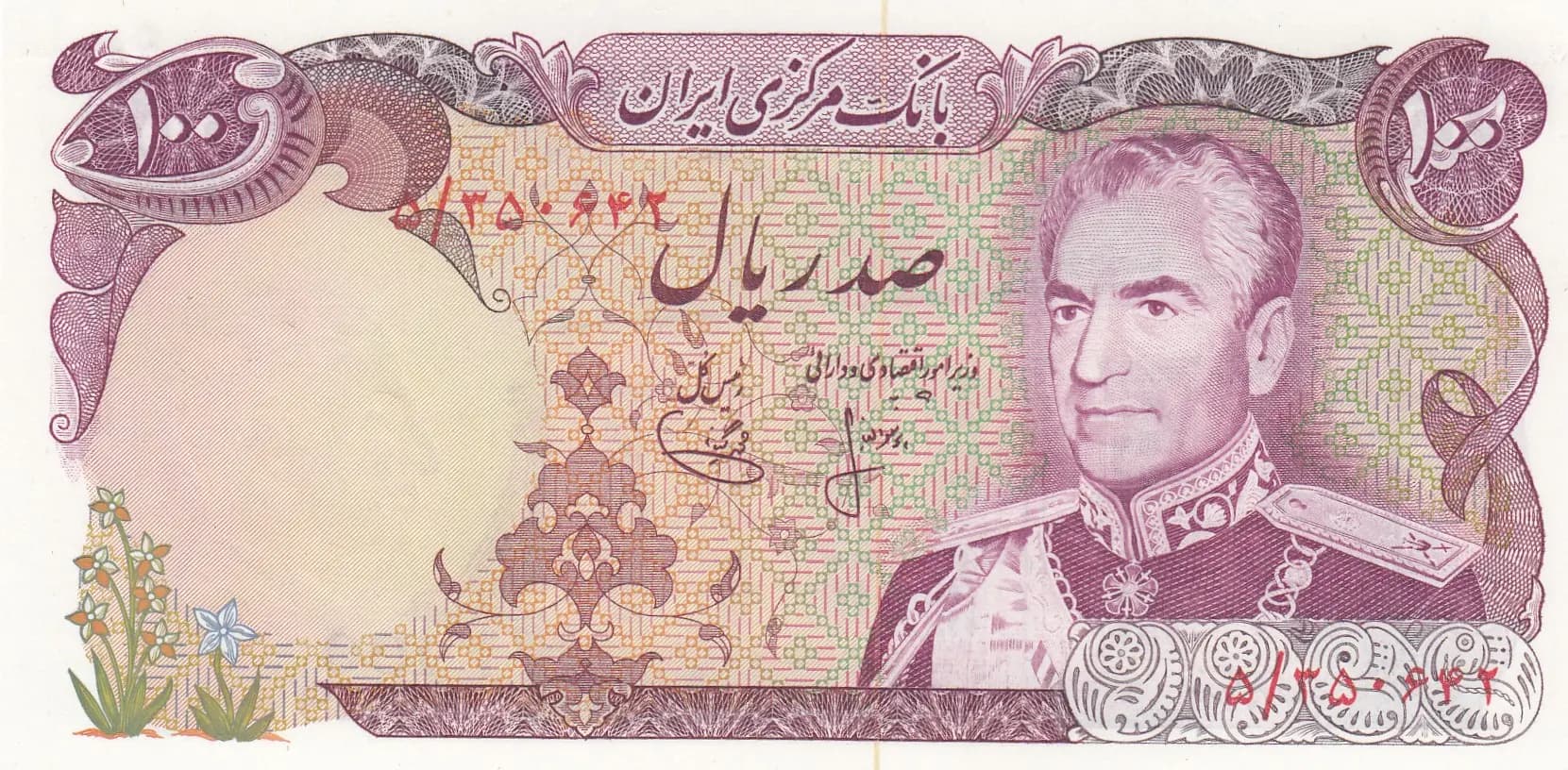
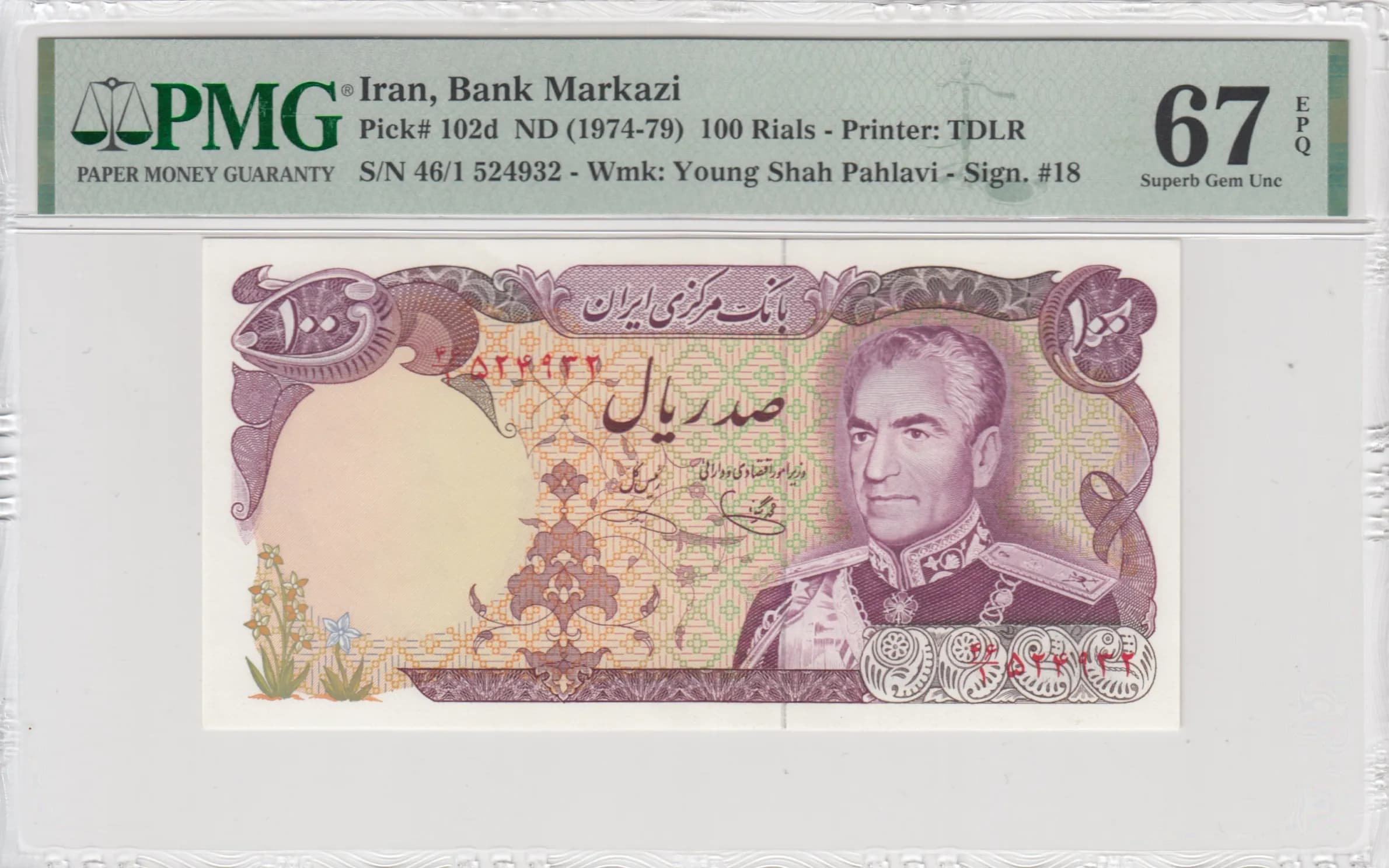
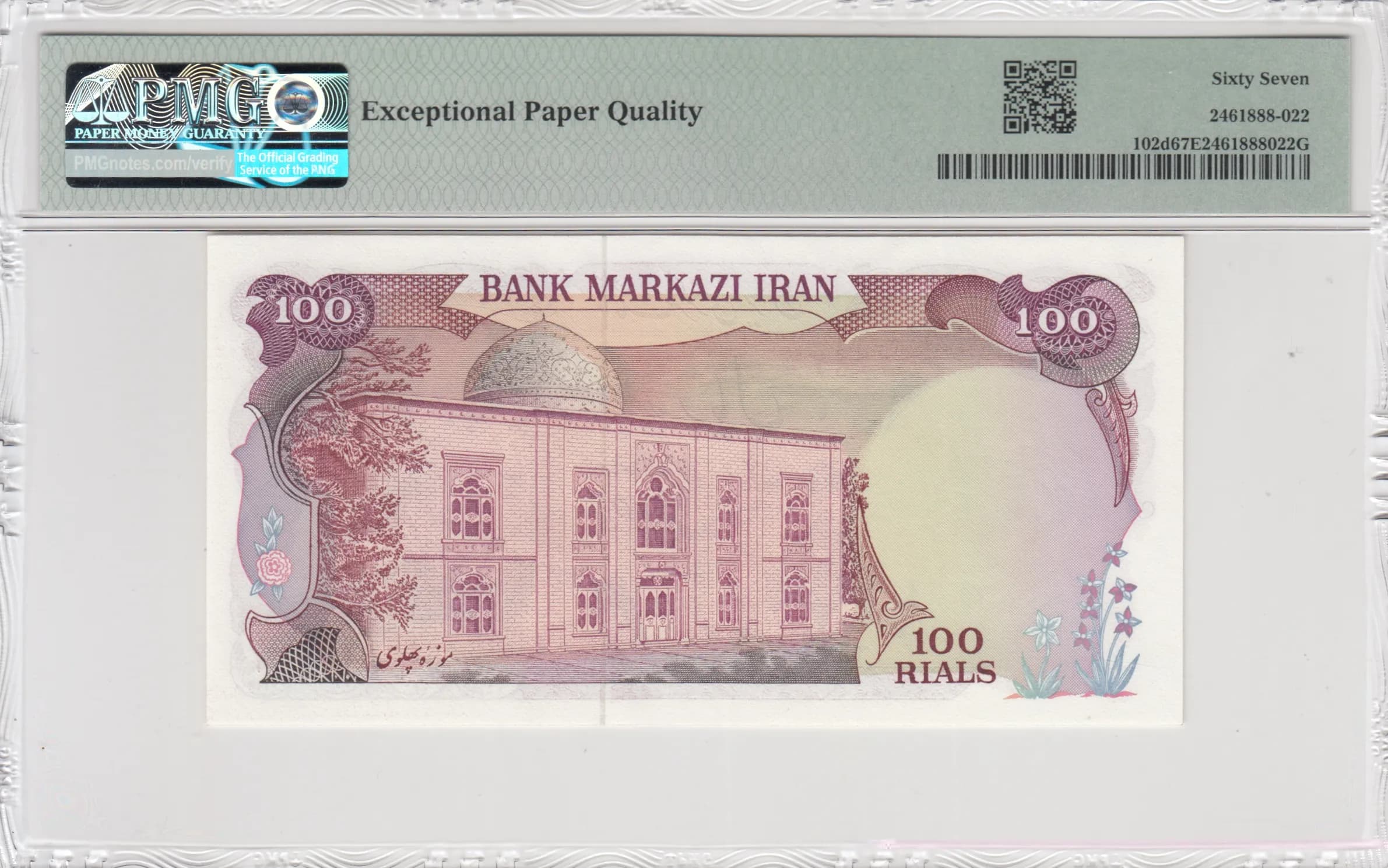
This PMG 67 EPQ example of the 1974 Iranian 100 Rials (Pick P-102d) presents a stunning near-gem uncirculated specimen with exceptional eye appeal. The note exhibits crisp, sharp printing throughout with clean margins, no visible creasing or wear, and vibrant purple/mauve and cream coloring characteristic of this issue. The fine engraved details of both the Shah's military portrait and the architectural reverse are preserved with museum-quality clarity, making this a choice example of this mid-Pahlavi era denomination.
Common. The eBay price data provided shows typical market values for this note ranging from approximately $2–$40 across various conditions, with uncirculated examples consistently valued under $20 in standard market listings. The 1974-1979 issue period represents a regular, high-volume circulation issue, and PMG 67 EPQ examples, while premium-graded, remain within the normal collector market range. The note was part of standard currency circulation during a period of stable currency demand in Iran.
Issued during Mohammad Reza Pahlavi's reign in the mid-1970s, this note represents Iran's modern currency era under the Shah's administration. The obverse features a formal military portrait of Shah Pahlavi himself, while the reverse depicts the Pahlavi Museum in Tehran, symbolizing the regime's cultural and institutional achievements during this period of petroleum-driven economic expansion and modernization initiatives.
The obverse displays a formal right-facing profile portrait of Shah Mohammad Reza Pahlavi in full military dress uniform with visible shoulder insignia and decorations, positioned on the right side of the note. The left side features elaborate floral and botanical ornamental designs with plants and flowers in earth tones. The reverse showcases the Pahlavi Museum in Tehran, rendered as a symmetrical multi-story institutional building with a prominent Islamic dome, arched windows arranged in a grid pattern, and decorative minarets or towers flanking the central dome. Both sides are framed with intricate engraved ornamental border patterns. The dominant color palette of purple/mauve against cream and off-white backgrounds with accents of green, brown, and rose creates a sophisticated, formal aesthetic appropriate to the high denomination and the Shah's status.
Front side: 'بانک مرکزی ایران' (Bank Markazi Iran / Central Bank of Iran), 'صد ریال' (One Hundred Rials), '۱۰۰' (100 in Persian numerals). Back side: 'BANK MARKAZI IRAN' (Bank Markazi Iran in English), '100 RIALS' (English denomination), '۱۰۰' (100 in Persian numerals). Both sides feature the denomination in decorative circular frames.
Intaglio engraving (recess printing) as evidenced by the fine line work, cross-hatching patterns, and intricate detail visible throughout the engraved borders, portrait, and architectural elements. The precision of the security features including the black security thread and watermark areas indicate professional currency-grade production. The printer is identified as TDLR (Topography, Design, and Lithography/Recess printing facility), consistent with Iranian Central Bank production standards of the period.
Pick P-102d designation indicates this is a documented variety within the 100 Rials 1974 issue series. The visual analysis confirms alignment with catalog descriptions: maroon on orange, green, and multicolored underprint; Shah Pahlavi portrait at right; Persian carpet design elements at left; Pahlavi Museum depicted at left-center on reverse; and black security thread present. No visible date overprints or signature variants are apparent from the images provided. The TDLR printer attribution is consistent with this Pick number classification.