10 rials 1938
Market Prices
12 salesAbout This Note
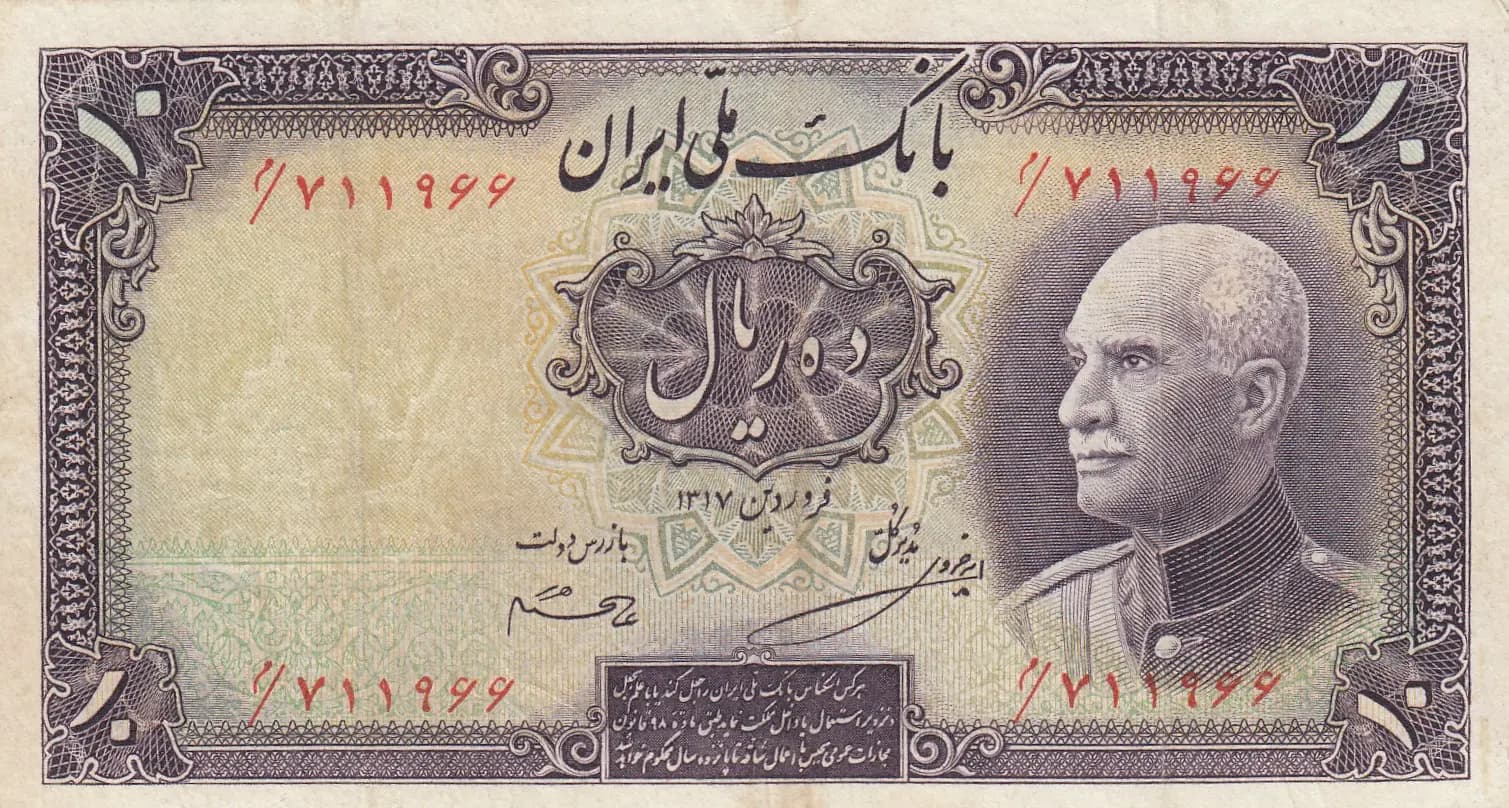
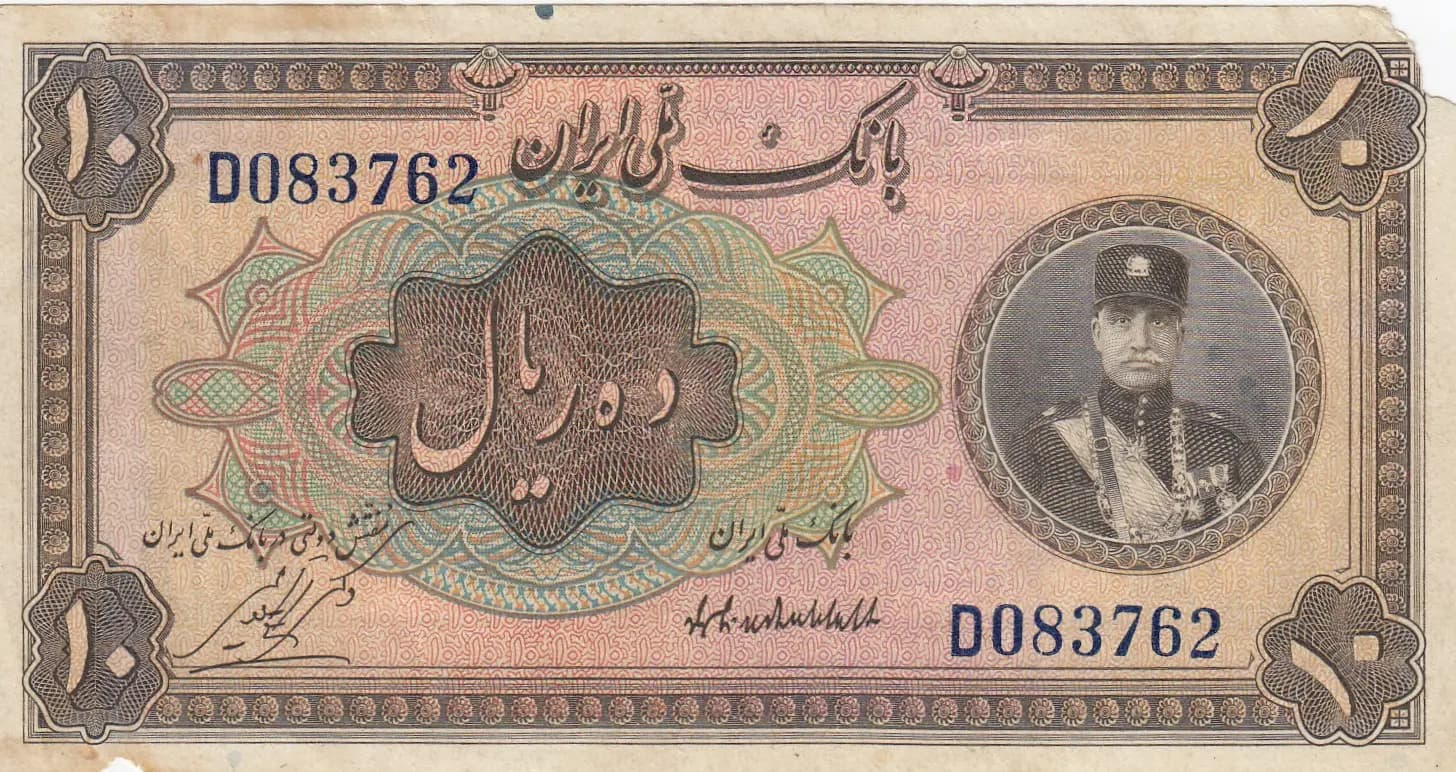
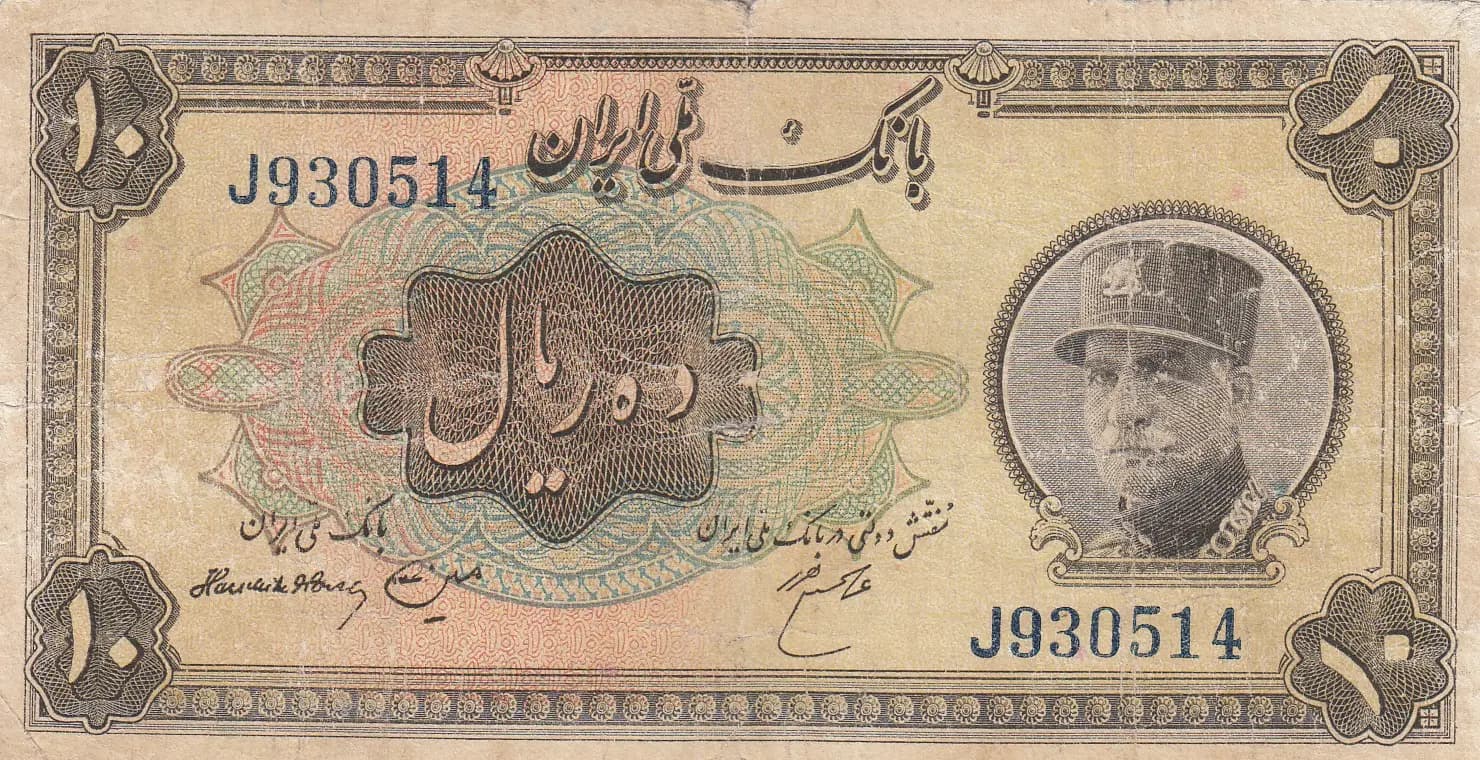
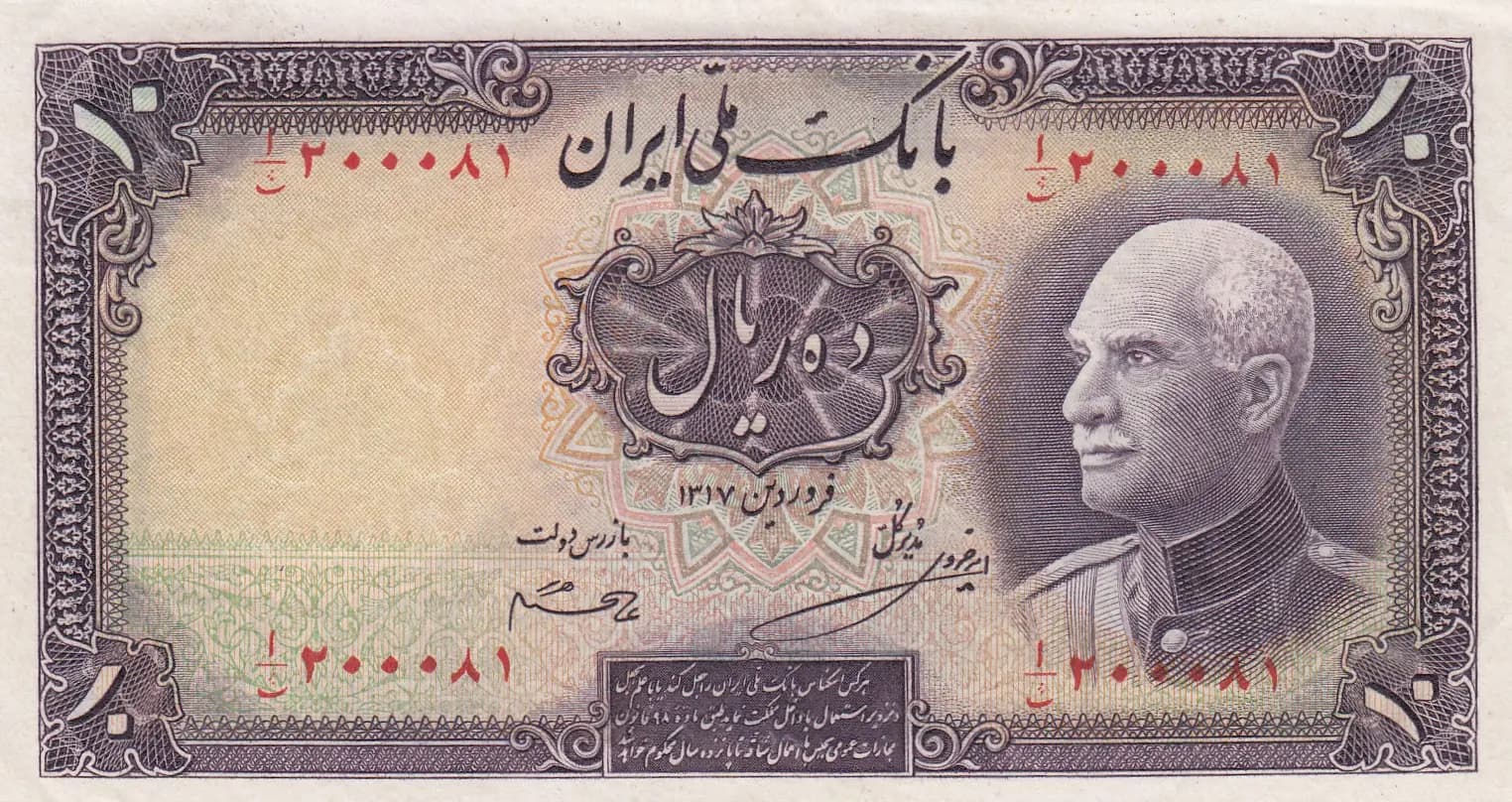
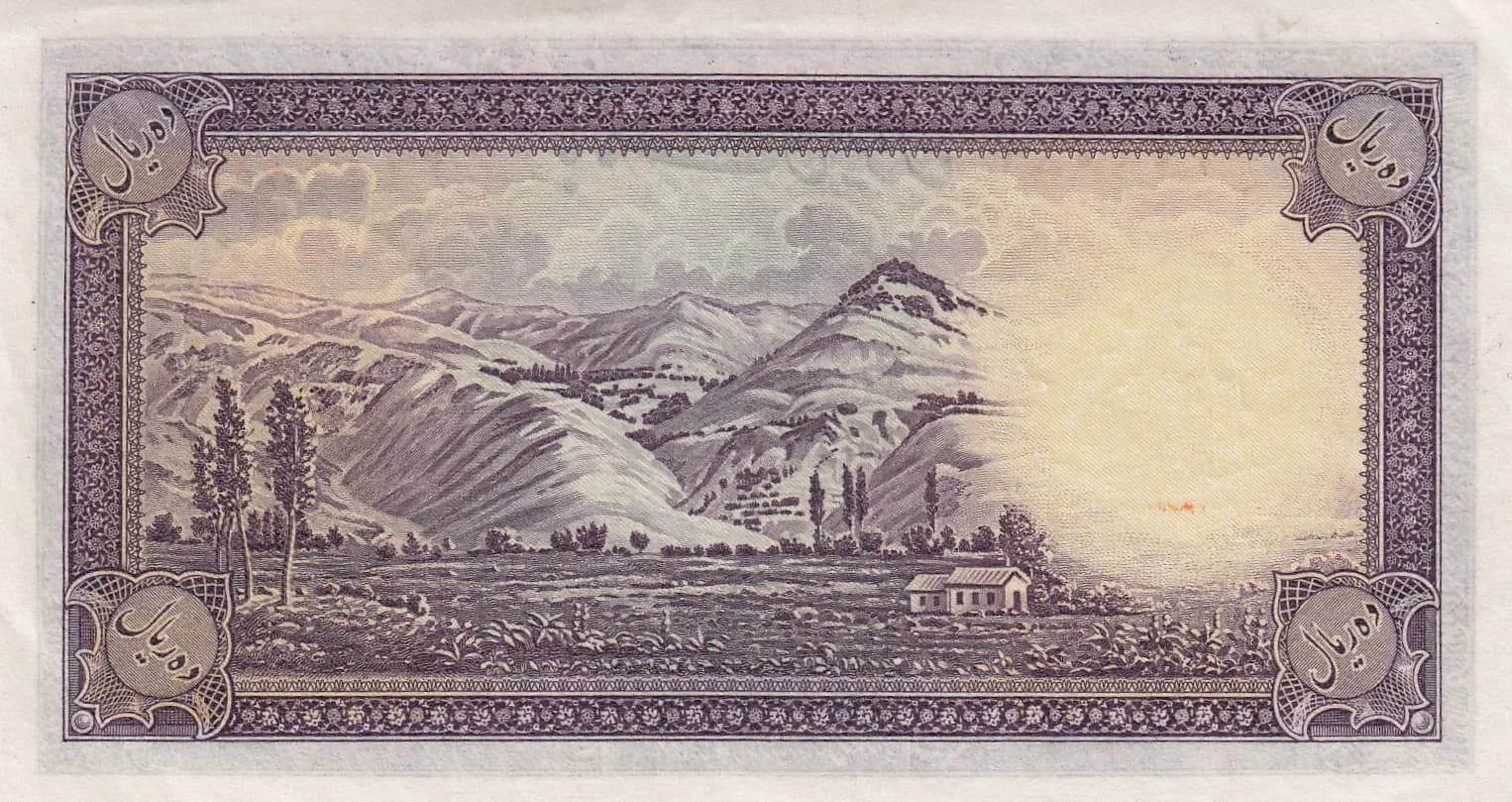
This is an exceptional AU-grade example of the iconic 1938 Iranian 10 Rials note issued by Bank Melli Iran, featuring a striking portrait of Reza Shah Pahlavi on the obverse and a beautifully engraved mountainous landscape on the reverse. The note displays crisp, sharp engraving throughout with excellent color preservation in purple and cream tones, showing minimal signs of circulation with no visible creases, tears, or significant wear. This classic early Pahlavi-era note represents an important piece of modern Iranian numismatic history with strong collector appeal.
Common. The eBay price tracking data shows consistent sales in the $15-35 range for VF-EF examples over more than a decade, with VF-graded notes regularly trading for $20-35 and even UNC examples not exceeding $30. The catalog value of $100 for VF and $200 for UNC likely represents dealer asking prices rather than realized market values. This note type had a substantial print run as a regular issue of Bank Melli Iran during the early Pahlavi period, and examples remain readily available in the collector market. AU-graded examples are desirable but not scarce.
This note was issued during the reign of Reza Shah Pahlavi (r. 1925-1941), founder of the Pahlavi dynasty, at a time of significant modernization and centralization of Iran's banking system under the newly established Bank Melli Iran. The reverse landscape, depicting the Alborz Mountains with cypress trees and rural architecture, symbolizes Iran's natural heritage and the nation-building agenda of Reza Shah's reforms. The deliberate choice to feature the Shah's portrait and iconic mountain scenery reflects the regime's nationalist and modernizing ideology during this pivotal period of Iranian history.
The obverse features a carefully executed three-quarter profile portrait of Reza Shah Pahlavi facing left, rendered without a cap and wearing formal attire with a high collar, positioned on the right side of the note. The portrait is surrounded by an intricate ornamental cartouche containing Persian calligraphy and geometric designs in the center-left area. The reverse showcases a detailed landscape engraving of the Alborz mountain range, depicting a natural valley with rolling hills, a river or water feature in the foreground, cypress trees characteristic of Persian landscape imagery, and a small rural building or cottage structure on the right. Both sides feature ornate decorative borders with scrollwork, geometric patterns, and corner flourishes typical of high-quality banknote engraving of the period. The color scheme throughout is purple/dark brown ink on a cream/beige background.
Front: 'بانک ملی ایران' (Bank Melli Iran / National Bank of Iran); '۱۰' (10 in Persian numerals); Serial numbers in both Western and Persian numerals (example shown: 200081 and 1200081). Back: '۱۰' (10 in Persian numerals, appearing in all four corner cartouches). The note is dated SH 1316 (Solar Hijri calendar, equivalent to 1937-1938 CE).
Intaglio engraving (line engraving), the dominant security printing method for banknotes of this era. The note exhibits characteristic fine line engraving with varying line densities throughout, particularly evident in the landscape rendering on the reverse where shading and depth are achieved through careful engraving technique. Serial numbers appear in contrasting red/pink ink, applied separately from the primary intaglio impression. The intricate border patterns and portrait detail are consistent with high-quality banknote production standards of Bank Melli Iran in the 1930s.
This note is cataloged as Pick P-33Aa, one of five documented variants for the base P-33 number. Other variants include P-33Ad, P-33a, P-33b, and P-33c. The 'Aa' designation indicates this is likely the first major variety (possibly distinguished by serial number format, signature variants, or other minor printing differences). The visual analysis shows serial numbers in both Western and Persian numerals, which may be a distinguishing feature of this particular variety. The absence of a date stamp on the reverse (as noted in the reference sources) is consistent with P-33A-series notes.