2 1/2 rupees 1961
Market Prices
76 salesAbout This Note
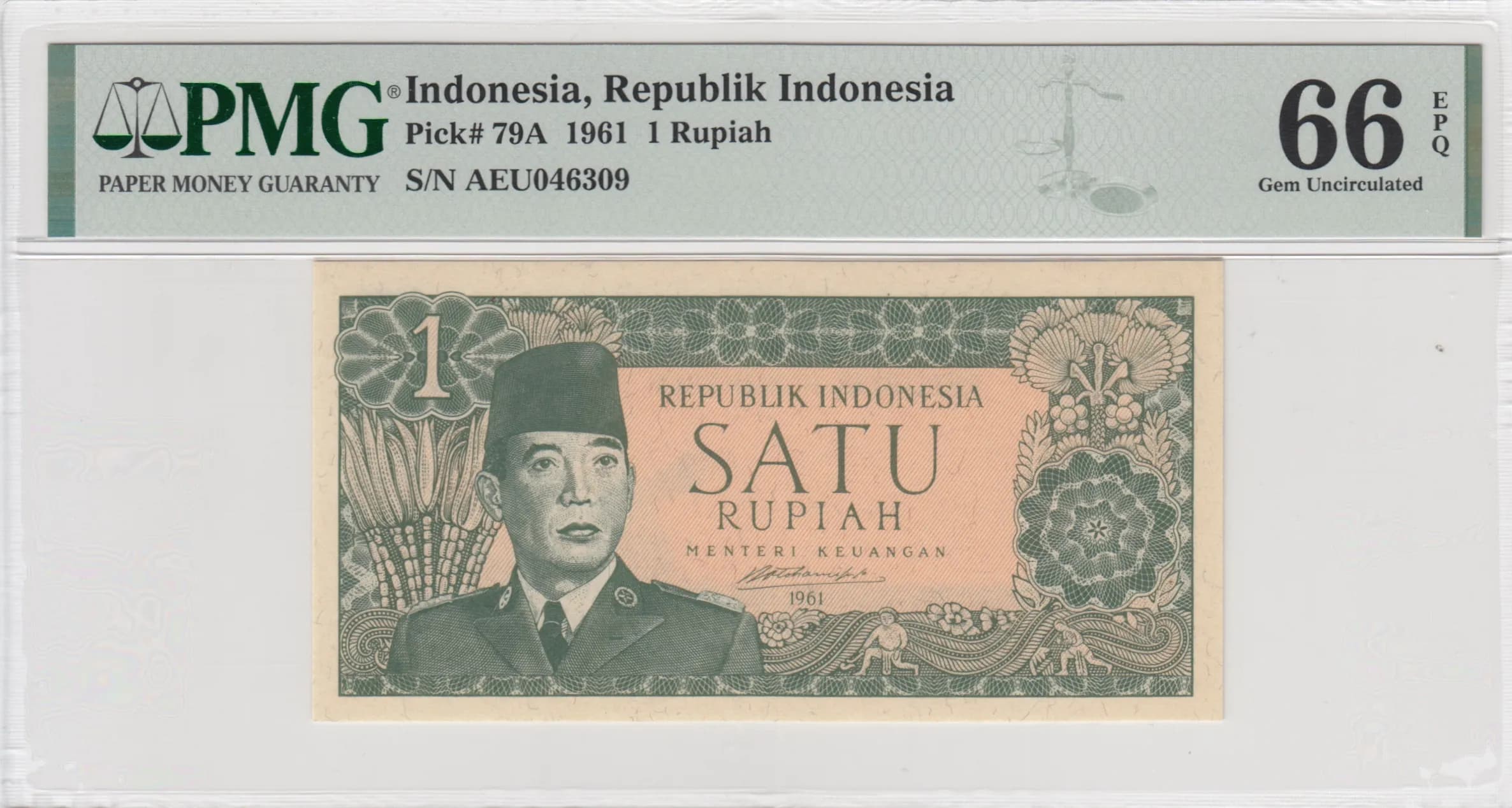
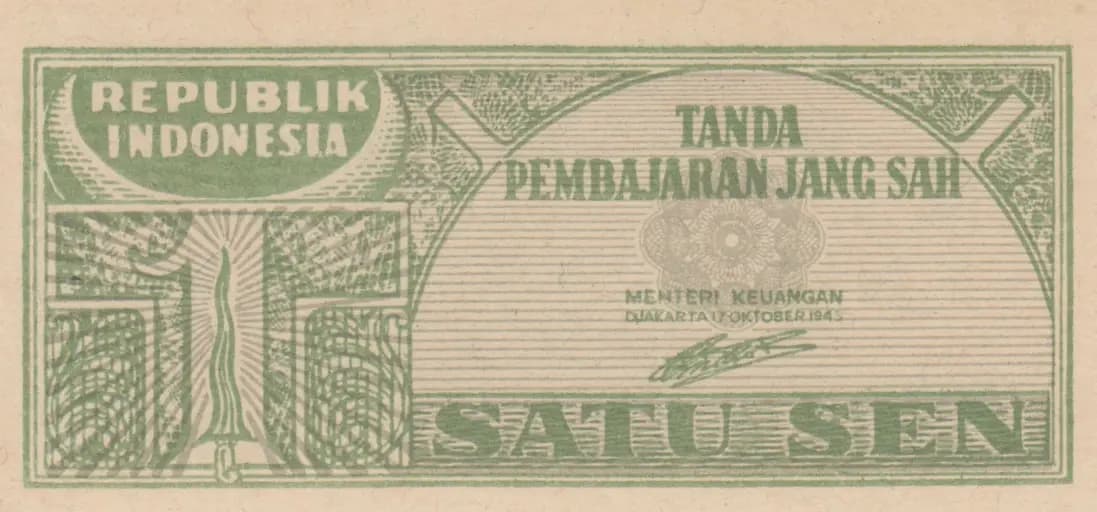
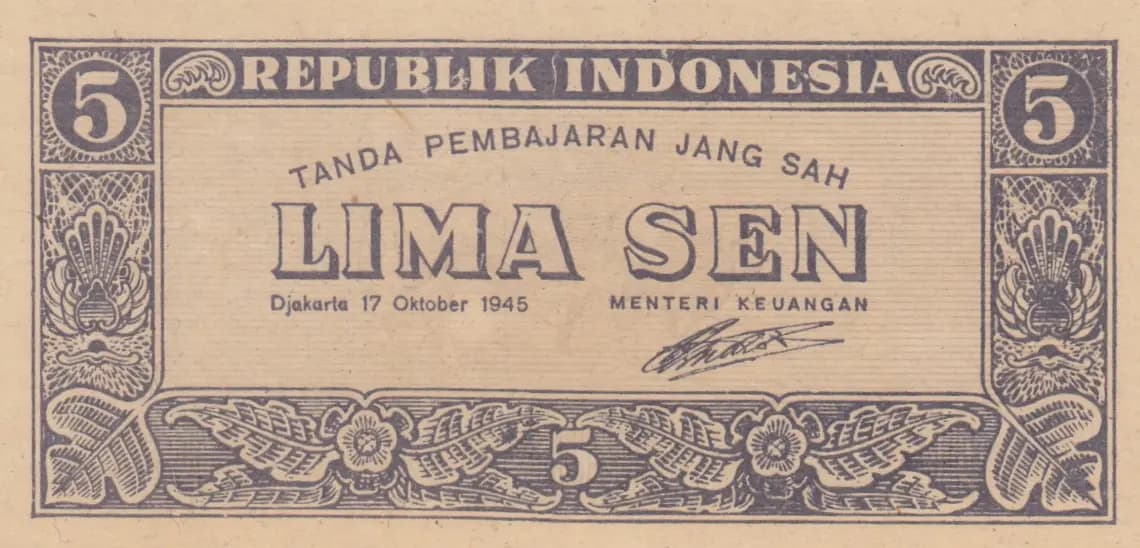
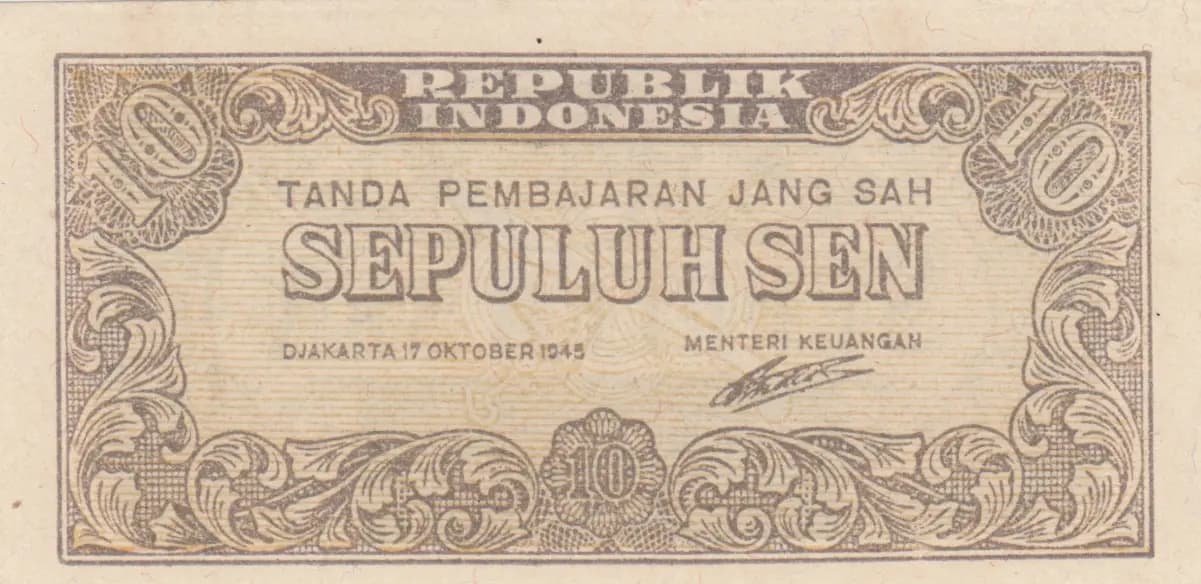
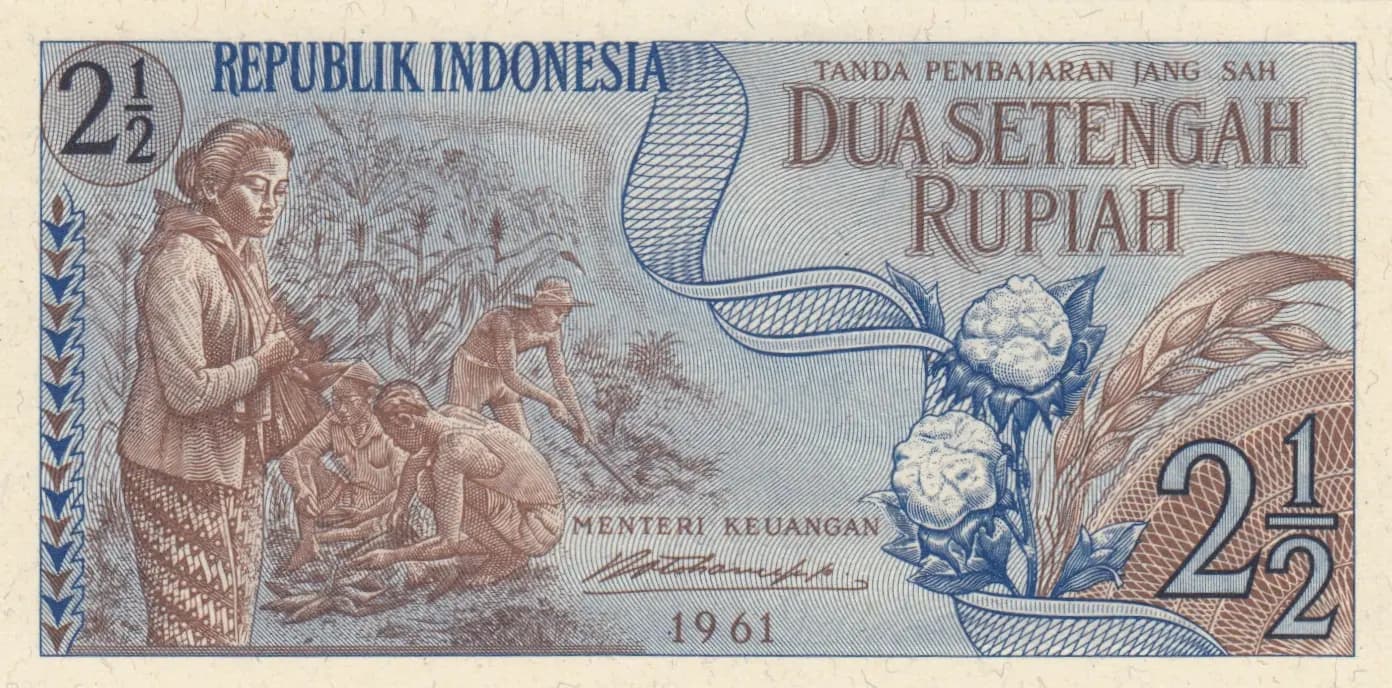
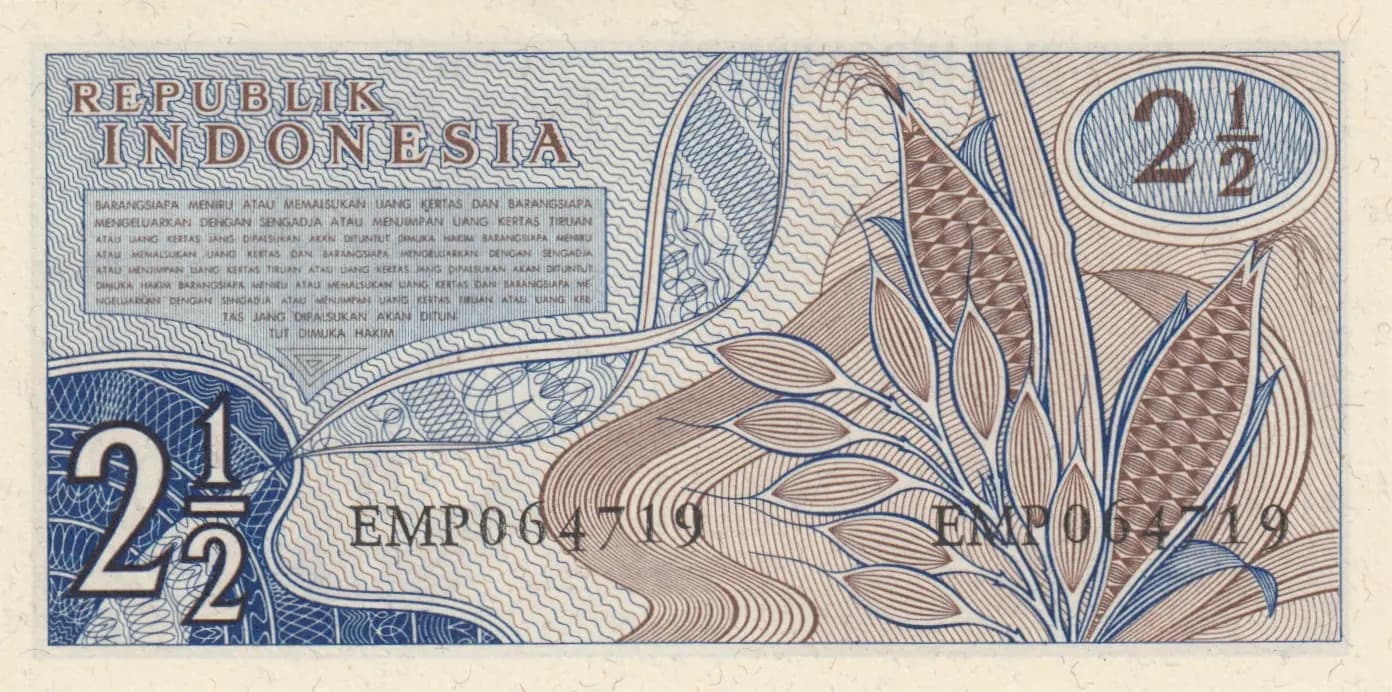
This is an Indonesia 2½ Rupiah note from 1961 (Pick P-79), presented in UNC condition. The note features fine line engraving throughout with brown/tan and blue coloring on a cream background, depicting a scene with multiple figures in traditional and colonial dress on the obverse, accompanied by agricultural motifs (rice/grain stalks) symbolizing Indonesia's economy. The reverse showcases elaborate botanical engraving with detailed floral and plant elements, characteristic of mid-20th century Indonesian currency design. Despite showing age-related foxing and toning consistent with a 63-year-old note, the design elements remain clearly legible and well-preserved.
Common. The extensive eBay sales history shows consistent pricing in the $0.99–$3.80 range for UNC specimens across multiple years (2009–2024), with an average UNC price around $1.50–$2.25. Even PMG-graded examples (65–68) typically sell in the $7–$25 range, with only exceptional grades (PMG 69) commanding premium prices ($215.50). The 2019 catalog value of $0.75 UNC further confirms this is a readily available note. High print run, sustained circulation, and continuous availability in the secondary market all point to a common issue with no special scarcity characteristics.
This note was issued during the early post-independence period of the Indonesian Republic, reflecting the nation's transition to monetary sovereignty following independence in 1945. The imagery emphasizing agricultural elements and traditional dress underscores Indonesia's agrarian economy and cultural heritage during Sukarno's nationalist era. The inclusion of multiple human figures in various contexts (working, administrative) represents the aspirational imagery common to newly independent nations establishing their own currency systems.
The obverse features a carefully composed scene depicting a woman in traditional Indonesian dress as the primary figure, accompanied by a smaller figure (child) and a man in colonial-style clothing in the background, suggesting themes of family, tradition, and colonial-era transition. Agricultural elements—specifically rice or grain stalks—are prominently positioned on the right edge, symbolizing Indonesia's agricultural foundation and economic base. A decorative blue scrollwork motif in the center-right area provides visual balance and security design elements. The reverse is dominated by an exceptionally detailed botanical composition featuring precisely engraved plant stems, leaves, and flowers in the right portion, with fine geometric and wave-pattern backgrounds covering the left section. The denomination appears in an oval cartouche in the upper right. Throughout both sides, fine line engraving serves both aesthetic and security functions, with careful multi-color registration creating depth and complexity.
OBVERSE: 'Republik Indonesia' (Republic of Indonesia) | 'Tanda Pembaiaran Jang Sah' (Legal Tender) | 'Dua Setengah Rupiah' (Two and a Half Rupiah) | 'Menteri Keuangan' (Minister of Finance) | '1961' (date) | '2½' (denomination in numeral form). REVERSE: 'Republik Indonesia' (Republic of Indonesia) | '2½' (denomination in oval cartouche) | 'Emporium' (marketplace/trade reference) | [Additional text block present on left side in Indonesian, too small to clearly transcribe from image].
Intaglio/Line Engraving. The note exhibits the characteristic fine line work, precise detail, and multi-color registration typical of high-security currency production from this era. The botanical elements and decorative patterns show the hallmark intricacy of engraved plates. The PMG population data references printer 'JEZ' for variants of this Pick number, indicating production by a specialized currency security printer, though specific printer attribution for this particular specimen would require examination of security features or archival documentation.
The PMG population report indicates three cataloged variants for this Pick number (P-79a, P-79b, P-79c), all designated as '10 Gulden' with printer JEZ, though this appears to be a data discrepancy in the reference source (the note is clearly denominated 2½ Rupiah, not 10 Gulden). Without clear signature examination, date variations, or serial number prefix visibility in the provided images, the specific variety of this specimen cannot be definitively determined. Collectors should consult the actual note for signature authorities, serial number prefixes, or plate varieties to identify the precise P-79 subvariety.