1000 rupiah 1958
Market Prices
26 salesAbout This Note
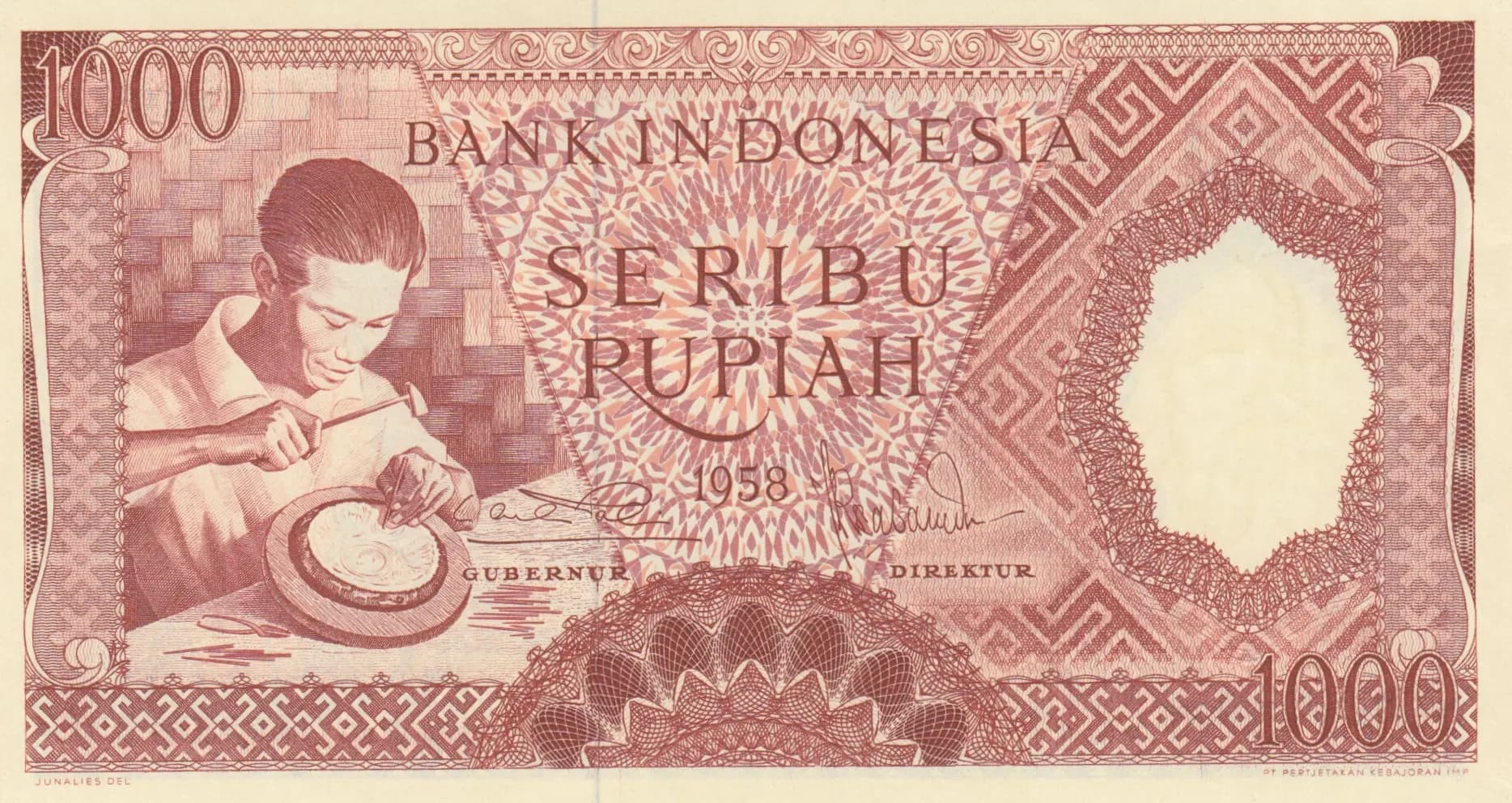
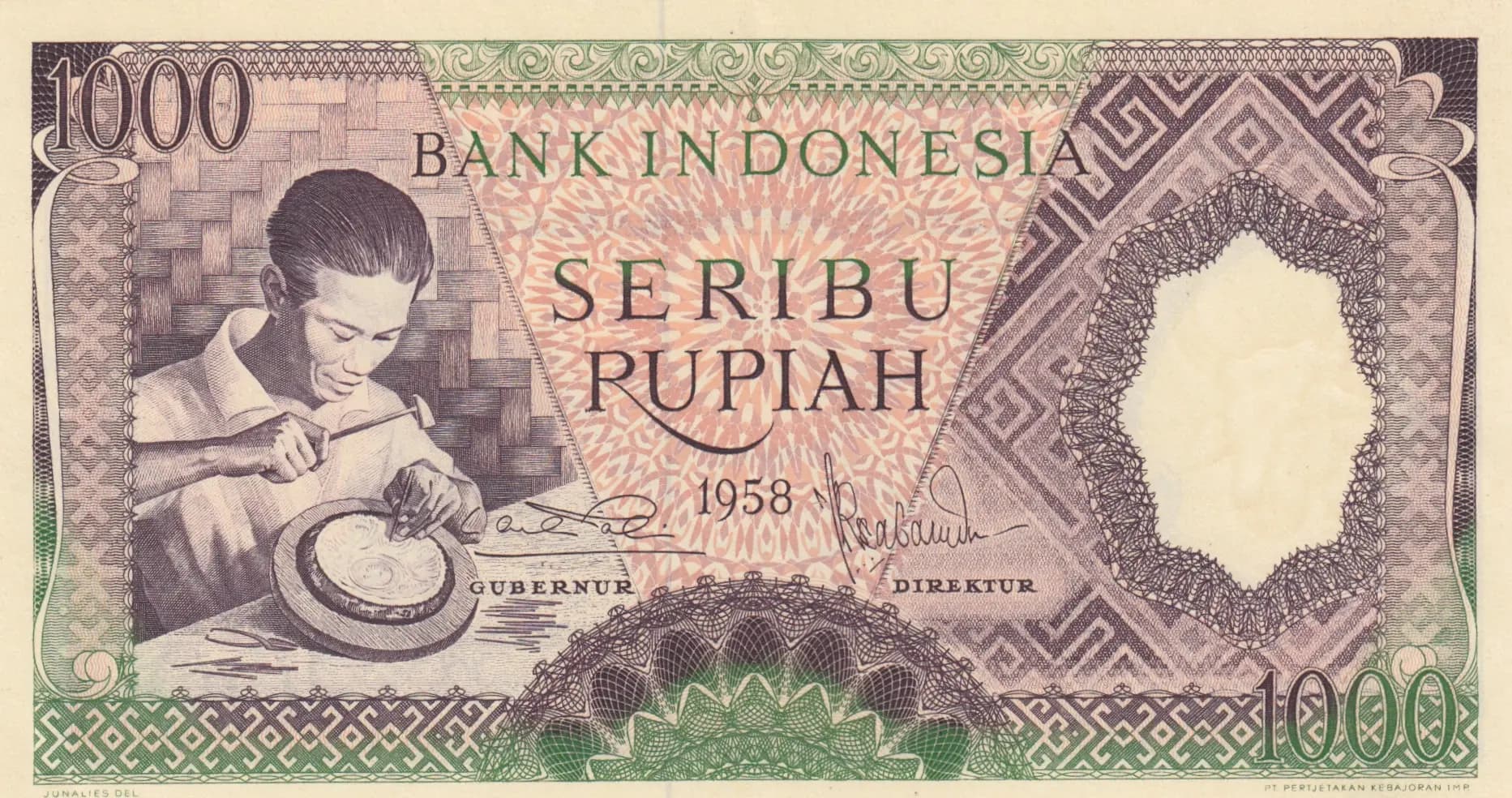
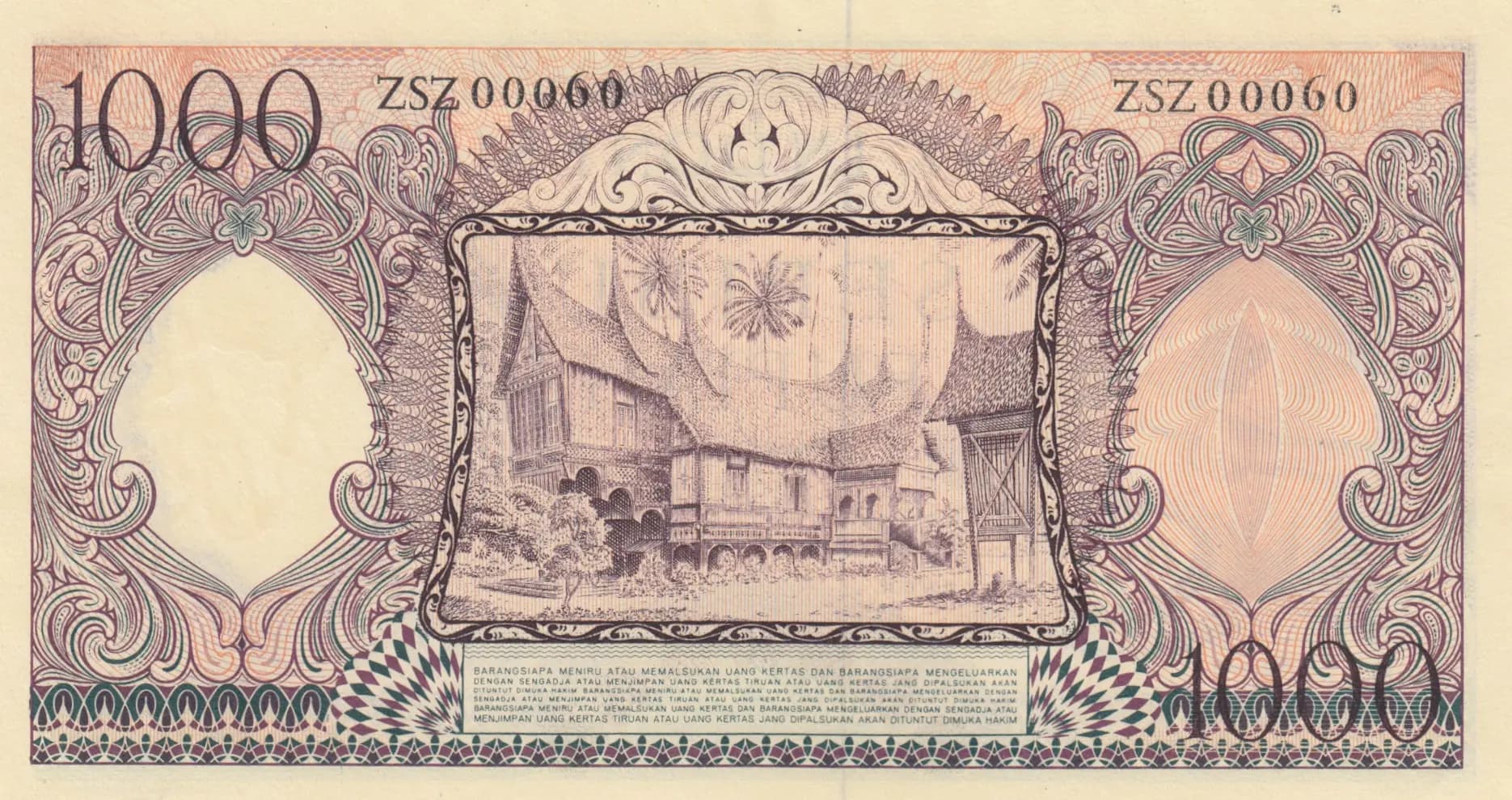
A beautifully preserved uncirculated example of Indonesia's 1958 1000 rupiah note, featuring vibrant purple and green printing with a portrait of a Minangkabau silversmith at left engaged in traditional metalwork. The reverse depicts a traditional Minangkabau house set within elaborate decorative frames, demonstrating the exceptional engraving quality characteristic of early Bank Indonesia issues. The note exhibits no signs of wear, with crisp margins and excellent color saturation throughout.
Common. Despite its attractive design and historical significance, the 1958 1000 rupiah note (Pick 62) remains common in the numismatic market. eBay price tracking data shows steady sales across a wide range of grades, from F-grade notes selling for under $10 to PMG-graded examples reaching $80+. The consistent availability of specimens in multiple grades and regular auction activity indicate substantial print runs. Even in UNC condition, the note trades modestly, with recent comparable sales in the $20-45 range, consistent with common-grade early Indonesian currency.
Issued in 1958, during Indonesia's early independence period, this note celebrates traditional crafts and architecture from Western Sumatra's Minangkabau region. The silversmith and traditional house depicted on the obverse and reverse represent Indonesia's cultural heritage and regional identity during the formative years of the newly independent nation. This design choice reflects Bank Indonesia's effort to establish national identity through currency imagery showcasing diverse regional cultures.
The obverse features a young Minangkabau silversmith portrayed in profile facing left, wearing light-colored traditional clothing while working at a circular crafting tool or wheel—depicting the traditional metalworking craft for which the region is renowned. The center of the note contains ornate floral medallions in pink and coral tones with geometric borders, flanked by decorative panels. Purple and green ornamental borders frame the entire design. The reverse depicts a traditional Minangkabau rumah gadang (ancestral house) rendered in detailed line work, complete with architectural details including windows, doors, and a veranda, surrounded by landscaping and palm trees. The building is set within an elaborate decorative frame with geometric and floral patterns, topped with a winged ornamental crest representing national authority.
Front side: '1000' (denomination in Arabic numerals), 'SERIBU RUPIAH' (One Thousand Rupiah in Indonesian), 'BANK INDONESIA' (Bank Indonesia), '1958' (year of issue), 'GUBERNUR' (Governor), 'DIREKTUR' (Director). Back side: '1000' (denomination), 'ZSZ00060' (serial number), and extensive legal text in Indonesian regarding penalties for counterfeiting currency, prescribing fines of up to 100,000 rupiah or imprisonment of up to twenty years, or both, for those who intentionally or unintentionally produce counterfeit currency or knowingly possess, distribute, or conceal counterfeit notes.
Intaglio engraving with multi-color printing, produced by Pertjetakan Kebajoran (Kebajoran Printing). The note exhibits fine line engraving throughout, with complex guilloche patterns providing security against counterfeiting. The precise registration of multiple colors (purple, green, pink, coral, black, and cream) and the intricate decorative borders demonstrate advanced bank note printing technology of the 1950s era.
The observed specimen displays serial number 'ZSZ00060', indicating this is part of the ZSZ prefix series. No distinctive overprints or signature varieties are evident in this example. The 1958 date distinguishes this from related issues; however, this appears to be a standard circulation variety of the regular 1958 emission rather than a noted printing variety or special issue.