5rupees 1957
About This Note
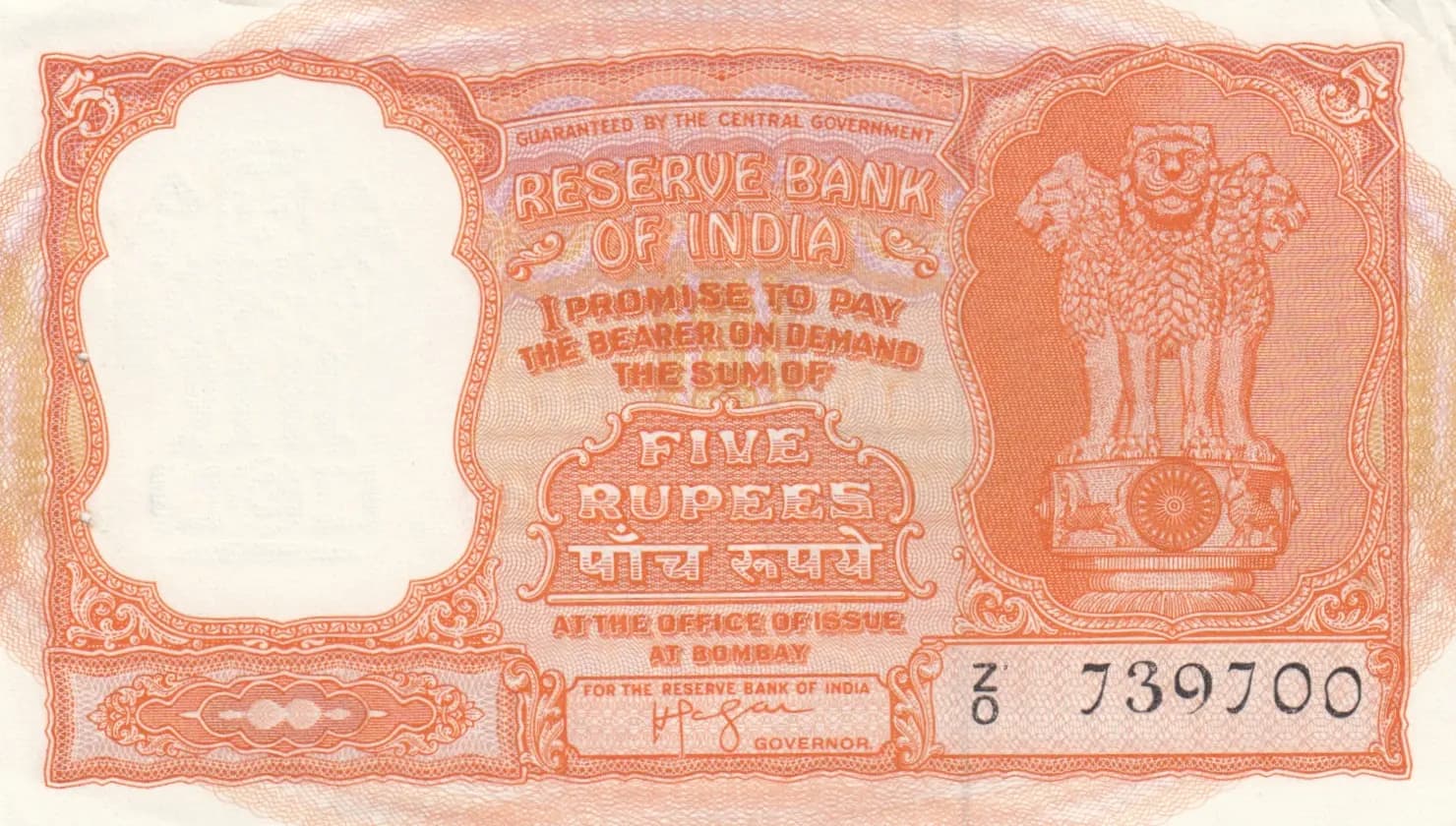
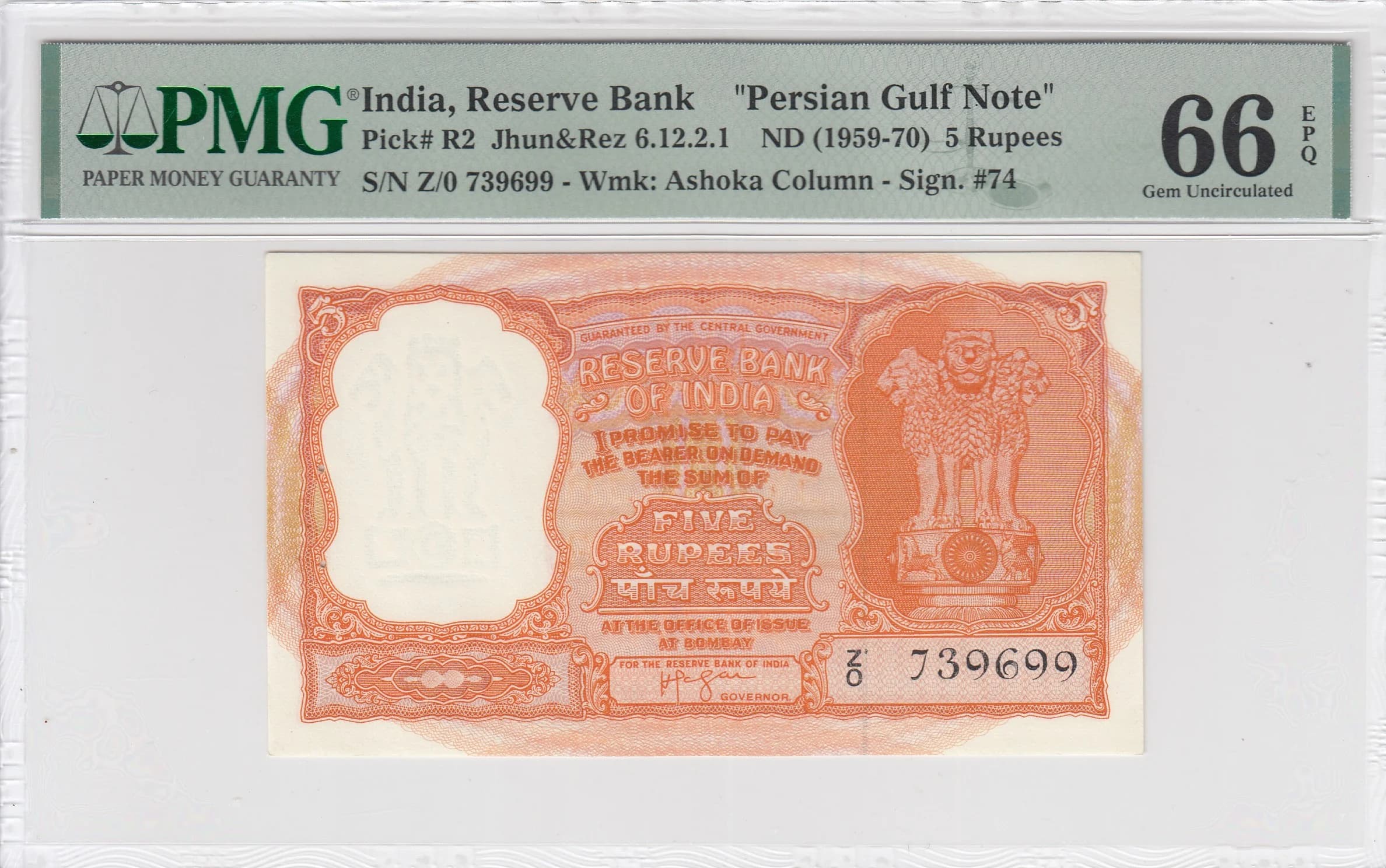
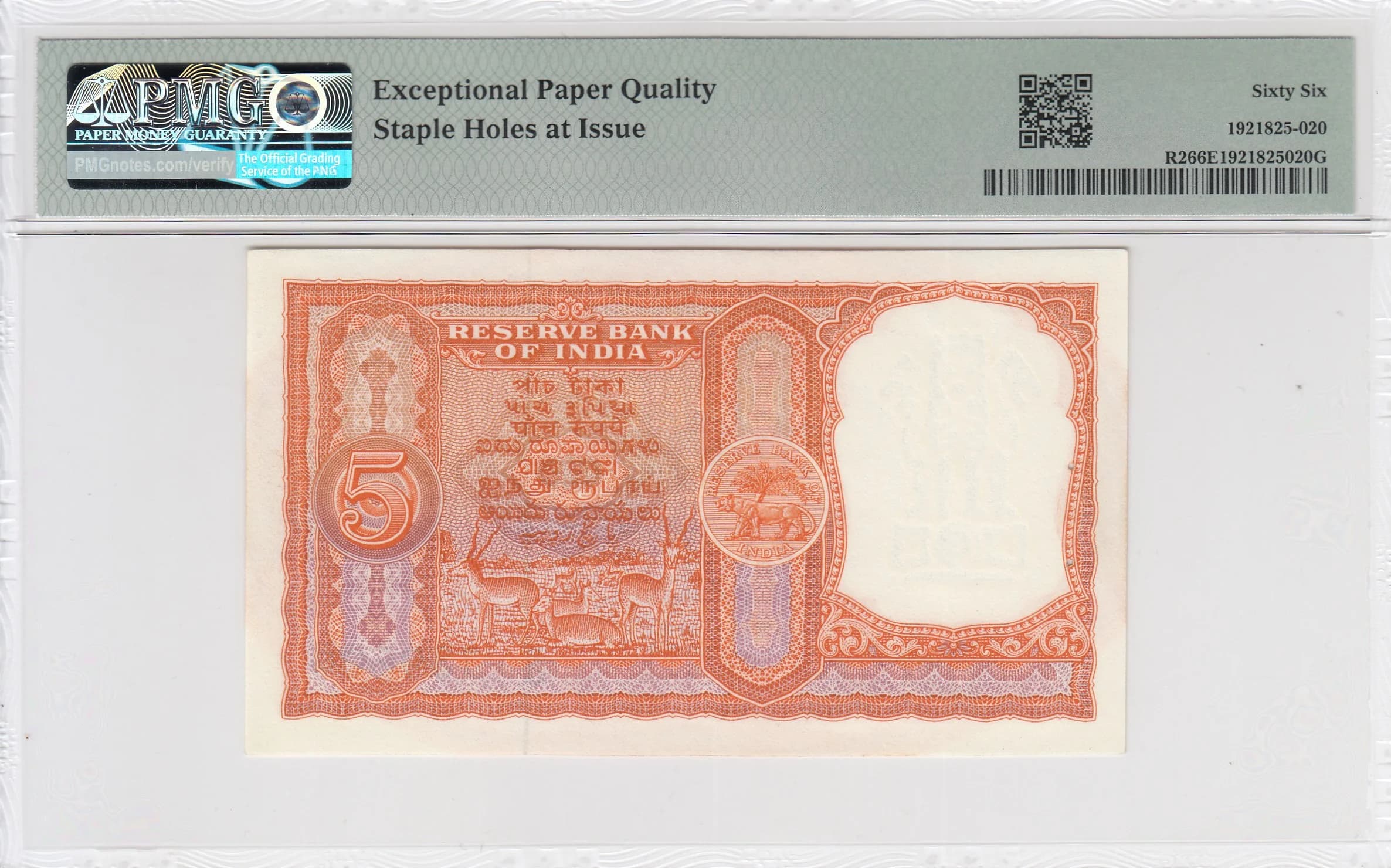
This is a PMG 66 Gem Uncirculated example of India's 1957 5 Rupees note (Pick R2), representing an early post-independence currency issue from the Reserve Bank of India. The note displays pristine condition with no wear, creases, or stains, featuring striking orange and coral decorative borders with intricate floral scrollwork framing a rural landscape scene on the obverse and the Lion Capital of Ashoka on the reverse. This early series note with visible staple holes at issue and exceptional intaglio printing quality exemplifies the high production standards of India's nascent monetary authority.
Common. The 1957 5 Rupees Pick R2 is a standard early-series note from the Reserve Bank of India's first circulation issue following independence. While early Indian banknotes are collected, the 5 Rupees denomination had substantial print runs to support the post-independence economy. PMG 66 Gem Uncirculated examples command modest premiums over lower grades due to the condition rarity of finding uncirculated notes from this era, but the note itself is not scarce or rare. The availability of this note in the collector market at reasonable prices confirms its common status, with value driven primarily by condition rather than scarcity.
Issued in 1957, this 5 Rupees note belongs to the first series of banknotes released after India's independence in 1947, representing the Reserve Bank of India's establishment of a distinctly Indian currency identity. The prominent use of the Lion Capital of Ashoka—the emblem of the Indian state adopted from the Mauryan Empire—and the inclusion of Hindi language inscriptions (पाँच रुपये) reflect India's commitment to honoring its ancient heritage while embracing multilingual modernity in the newly independent republic. The note's guarantee by the Central Government and the reference to the Bombay office underscore the administrative consolidation of India's financial institutions during this formative post-colonial period.
The obverse features an ornate orange and coral decorative border with elaborate floral and scrollwork patterns framing a central rural landscape vignette depicting natural scenery with vegetation. A large stylized numeral '5' in an ornamental cartouche appears on the left side. The reverse displays matching decorative borders with the Lion Capital of Ashoka (four lions standing back-to-back within a circular emblem) positioned on the right side, which serves as the official seal of the Indian state. The paper exhibits a cream or off-white base color with purple/violet security threading visible on the obverse left edge. Both sides demonstrate the classical aesthetic principles favored by early post-independence Indian currency design.
Front side: 'RESERVE BANK OF INDIA' (English); '5' (English denomination numeral). Reverse side: 'GUARANTEED BY THE CENTRAL GOVERNMENT' (English); 'RESERVE BANK OF INDIA' (English); 'I PROMISE TO PAY THE BEARER ON DEMAND THE SUM OF' (English promise clause); 'FIVE RUPEES' (English denomination); 'पाँच रुपये' (Hindi: Five Rupees); 'AT THE OFFICE OF ISSUE AT BOMBAY' (English); 'FOR THE RESERVE BANK OF INDIA' (English); 'GOVERNOR' (English); Serial number '739699' and plate marking 'Z/0' (alphanumeric identifiers).
This note was produced using intaglio (engraved) printing, evidenced by the fine line work, detailed scrollwork patterns, and raised printing visible throughout the design. The intricate floral borders and the precision of the Lion Capital emblem are characteristic of high-security intaglio production. The incorporation of security threading and watermarking (Ashoka Column watermark noted in PMG certification) indicates production by a security printer meeting Commonwealth standards of the period, likely by Thomas De La Rue or the Indian Security Press under RBI specifications.
Serial number observed: 739699 with plate marking Z/0. The Governor's signature would be a key variety identifier for this Pick number, though the specific governor name is not legible in the provided images. Early 1957 printings may display variations in signature authorities (likely C.D. Deshmukh or H.V.R. Iengar as RBI Governor during this period) and in staple hole positioning. The presence of visible staple holes at issue is characteristic of this early series before the switch to modern security features in later printings.