1 rupee 1957
About This Note
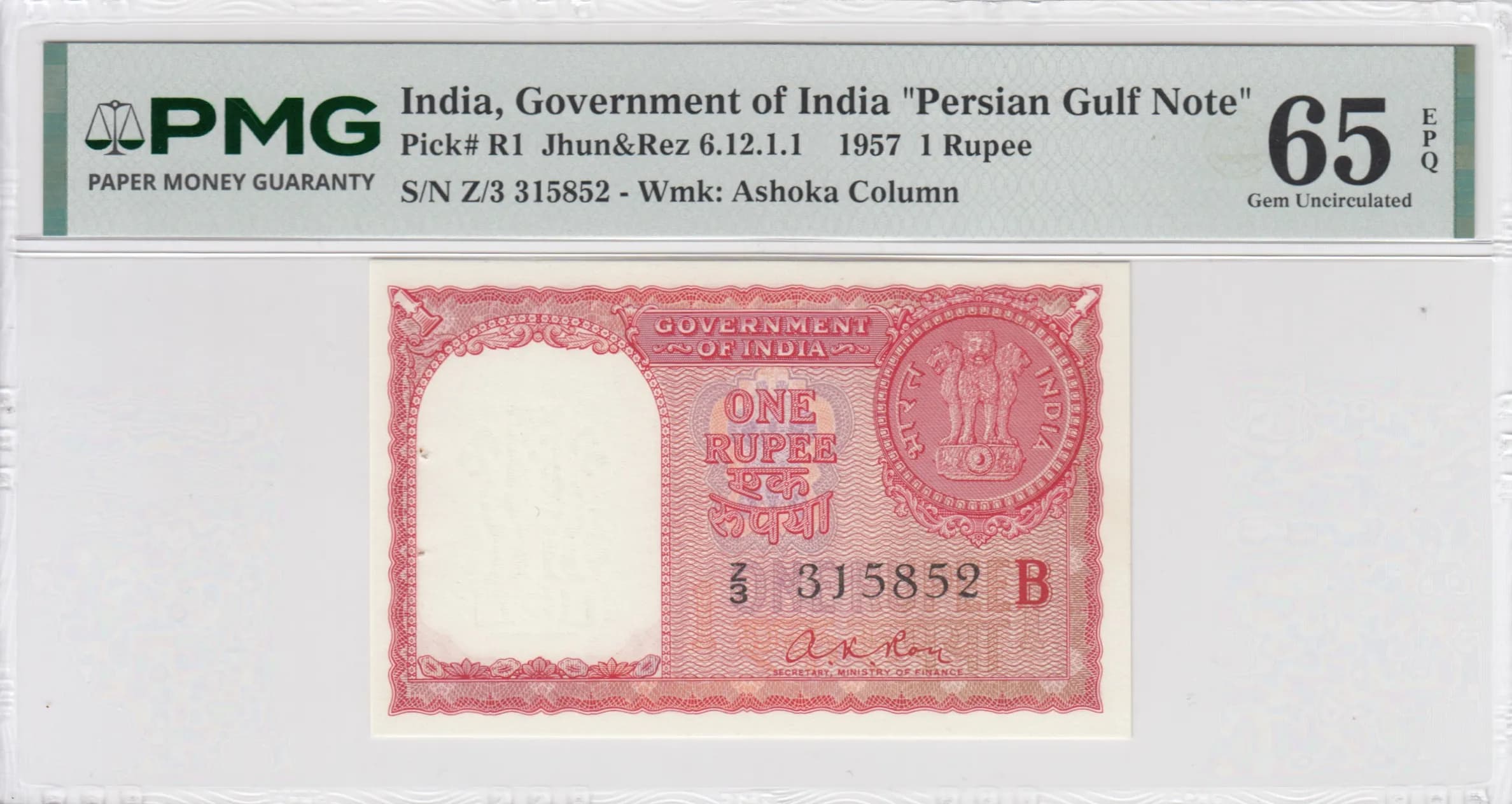
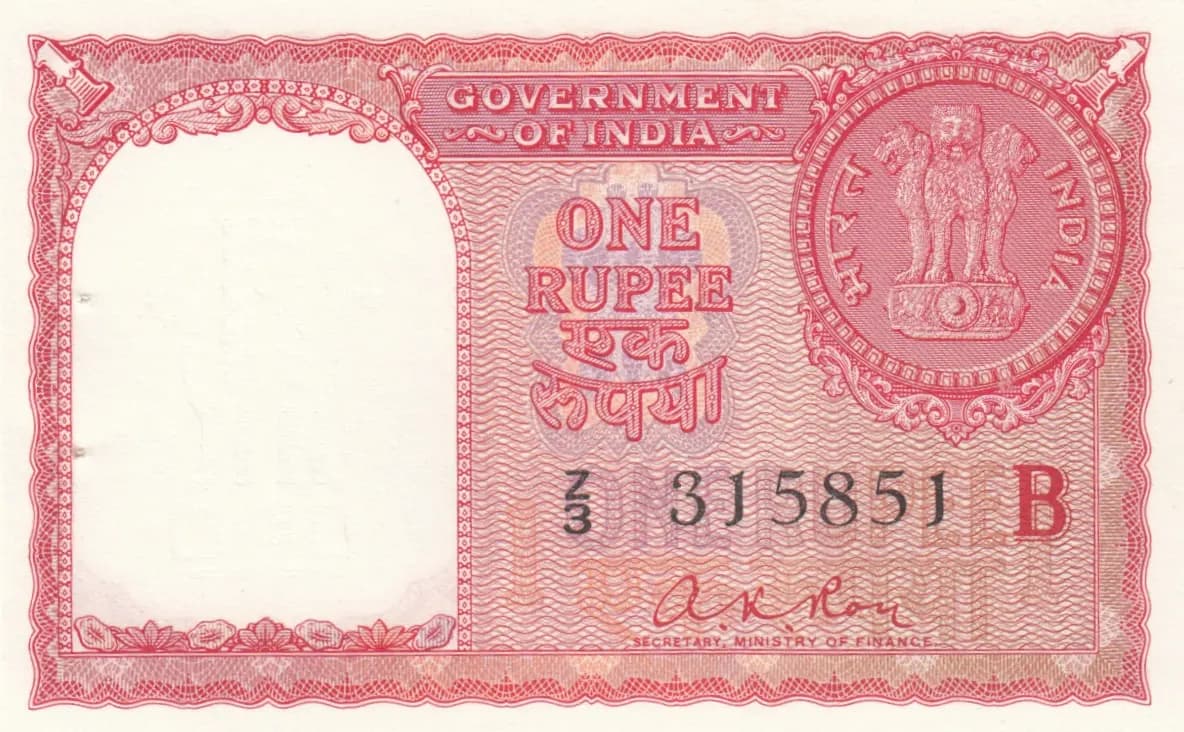
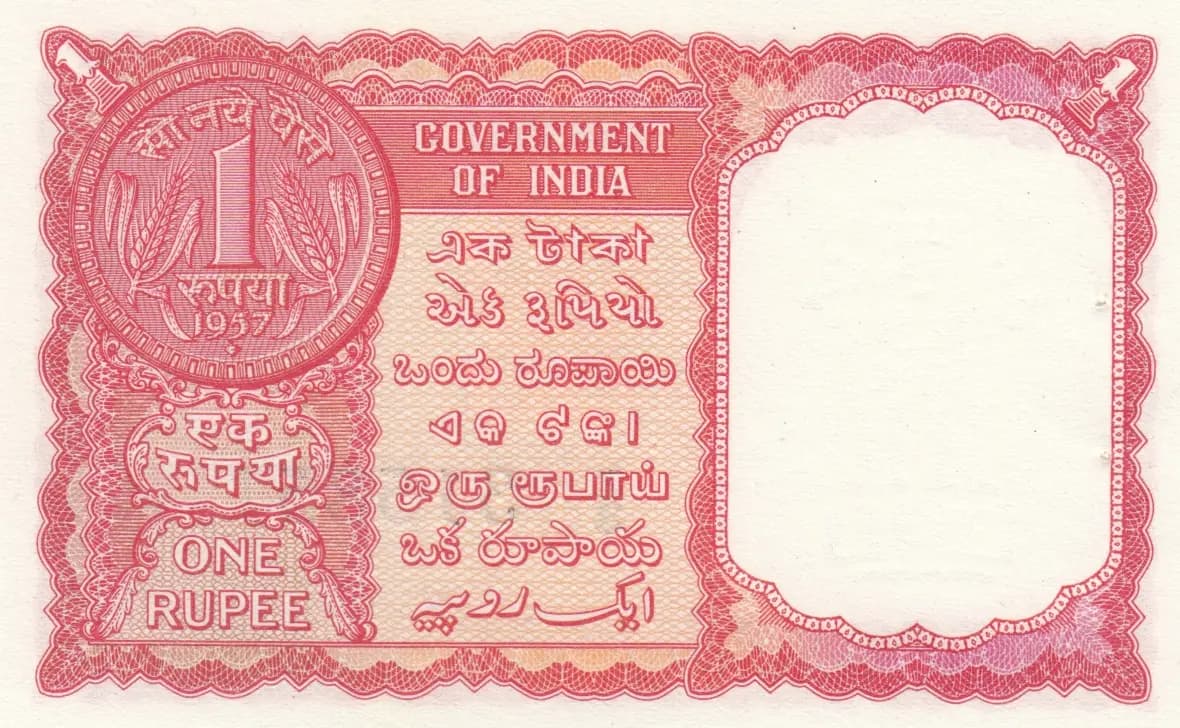
An exceptional uncirculated example of India's first independent rupee note from 1957, featuring the iconic Lion Capital of Ashoka prominently displayed on both sides. The note exhibits pristine condition with sharp printing, crisp paper stock, and no signs of wear—a true collector's specimen of this historically significant issue that marks India's early post-independence currency.
Common. The 1957 Government of India one rupee note (Pick R1) was issued in substantial quantities to serve as the primary circulating currency denomination during India's early independence period. While uncirculated examples in pristine condition are less frequently encountered than worn circulating specimens, this denomination and year combination remains readily available in the numismatic market at modest valuations, indicating large original print runs and no significant scarcity factors.
Issued in 1957, just a decade after India's independence from British rule, this one rupee note represents the newly sovereign nation's assertion of its own monetary identity. The prominent use of the Lion Capital of Ashoka—India's national emblem—and inscriptions in multiple Indian languages (Hindi/Devanagari, Bengali, Kannada, Tamil, Telugu, and Urdu) reflect the government's commitment to linguistic pluralism and the celebration of India's pre-colonial heritage during the early years of the Republic.
This note features the Lion Capital of Ashoka—India's national emblem taken from the top of the Mauryan Emperor Ashoka's pillar at Sarnath—as the central heraldic symbol, appearing within circular frames on both the obverse and reverse sides. The obverse displays the emblem on the left with the numeral '1' and 'ONE RUPEE' designation within the circular frame, surrounded by a large blank rectangular area on the right and denomination text in eight different Indian languages and scripts reflecting the multilingual nature of the Indian nation. The reverse side presents the same Lion Capital emblem in a circular seal on the right, with the denomination and text in English and Devanagari script in the center, and a blank rectangular area on the left. Both sides are enclosed within an ornate decorative border featuring intricate geometric patterns and fine line work. The dominant color palette consists of pink/rose, red, and cream/beige tones.
FRONT SIDE: 'GOVERNMENT OF INDIA' (English); 'ONE RUPEE' (English); 'एक टांका' (Hindi/Devanagari - One Rupee); 'এক টাকা' (Bengali - One Rupee); 'ಒಂದು ರೂಪಾಯಿ' and 'ಒಂದು ರೂಪಾಯ' (Kannada - One Rupee); 'ஒரு ரூபாய்' (Tamil - One Rupee); 'ఎక రూపాయ' (Telugu - One Rupee); 'ایک روپیہ' (Urdu - One Rupee); 'RUPAYA 1957' (English/Mixed - indicating year of issue). BACK SIDE: 'GOVERNMENT OF INDIA' (English); 'ONE RUPEE' (English); 'एक रुपया' (Hindi/Devanagari - One Rupee); 'SECRETARY, MINISTRY OF FINANCE' (English - indicates authorization); Serial Number '3J5851 B' (Alphanumeric identifier).
Intaglio (engraved) printing on banknote paper, evidenced by the fine line engraving details visible throughout, particularly in the decorative borders, the intricate circular emblem frames, and the sharp definition of the wavy background patterns. The security features including fine line patterns and detailed geometric designs are characteristic of currency-grade intaglio production. The printer was the Security Printing Press, Government of India, which was responsible for producing India's early independent currency notes.
This specimen bears the serial number prefix '3J' with the number '5851' and suffix 'B', indicating it is from a specific printing batch. Varieties of the 1957 one rupee note exist based on different signature combinations (signatures of the Secretary, Ministry of Finance changed over the note's production period) and serial number prefixes. The 'B' suffix may indicate a particular printing series. Collectors should note variations in signatures and serial number prefixes when building comprehensive collections of this issue, though detailed variety catalogs specific to this Pick number would be required for precise identification of all known varieties.