5 rupees 1970
Market Prices
28 salesAbout This Note
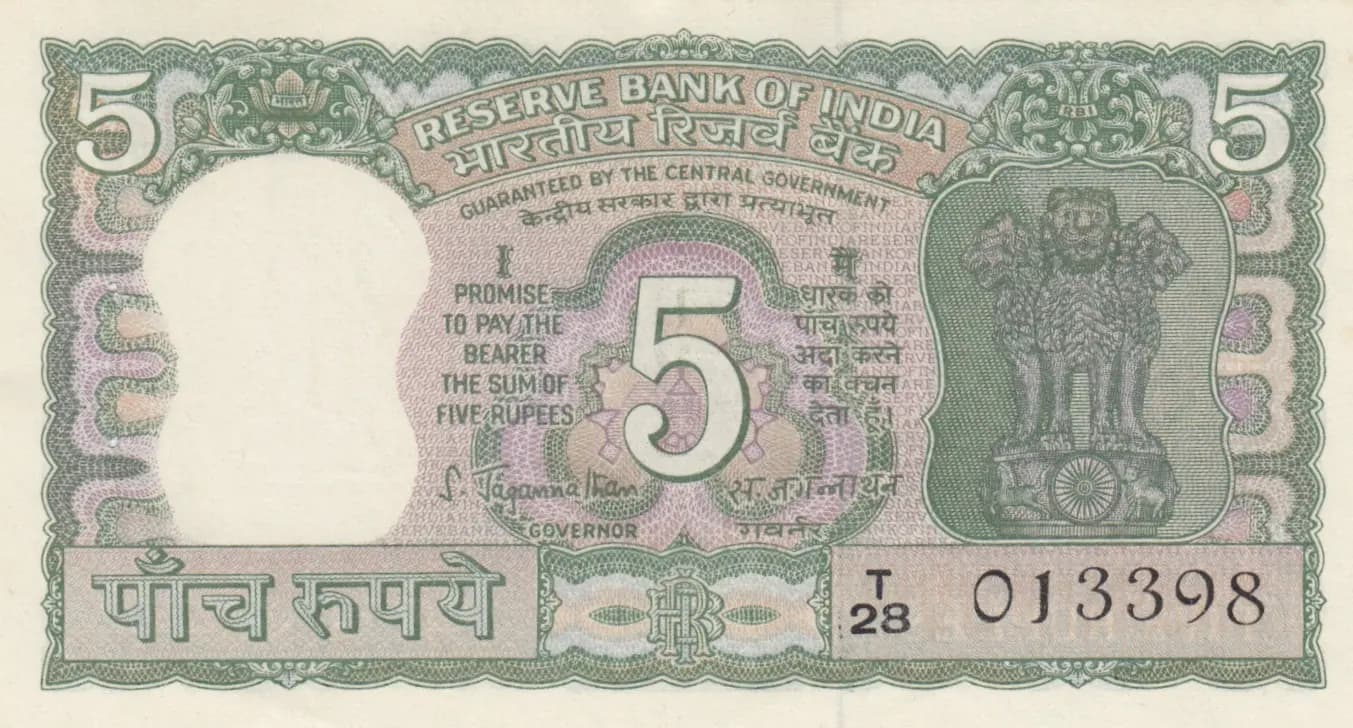
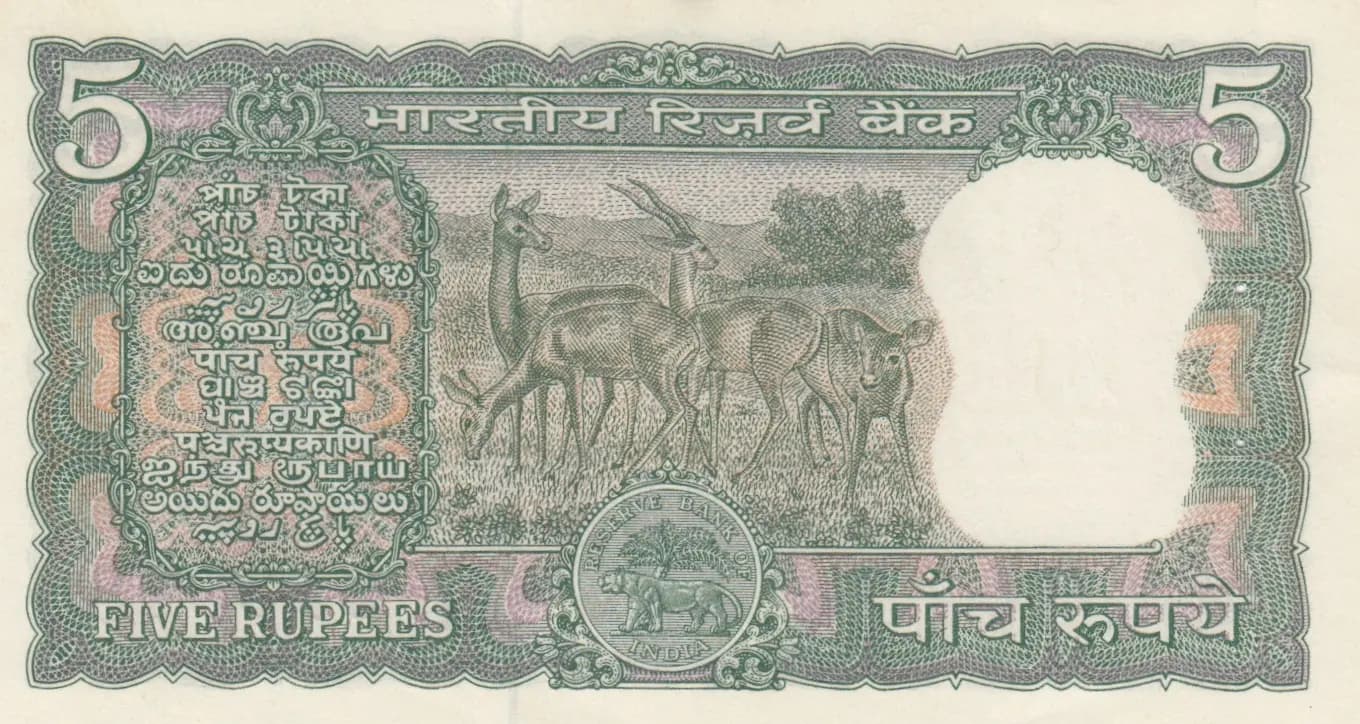
This is an uncirculated example of India's 5 Rupees note from 1970 (Pick P-55), featuring the distinctive green and pink color scheme characteristic of this series. The note displays sharp, crisp engraving throughout with no visible wear, creases, or deterioration, and showcases the intricate security printing and fine-line work typical of Reserve Bank of India currency of this era. Notable for its Ashoka Lion Capital on the obverse and rural agricultural scene with oxen on the reverse, this note represents an important period in post-independence Indian currency design.
Common. This Pick P-55 variety remains common in the numismatic market. eBay sales data shows consistent trading activity across multiple condition grades (from F to PMG 67) with prices ranging from under $1 to approximately $39 for premium graded examples, with UNC specimens typically selling in the $2-$25 range. The note was part of a regular circulation issue by the Reserve Bank of India with substantial print runs, and many examples remain available to collectors. The catalog value of $25 for UNC specimens further confirms this note's common status.
Issued during the early years of India's independent monetary policy under Reserve Bank of India governance, this 1970 note reflects the nation's focus on agricultural heritage and national symbols. The prominent Ashoka Lion Capital—derived from the ancient Mauryan Empire's emblem now housed in the Sarnath Museum—serves as a symbol of national continuity and sovereignty, while the reverse's depiction of oxen and rural laborers emphasizes India's agrarian economy during this post-independence period. The bilingual inscriptions in English and Hindi represent the linguistic pluralism enshrined in India's constitution.
The obverse features a portrait of a bearded man in traditional Indian attire rendered in profile on the right side, alongside the Ashoka Lion Capital—the majestic triple-lion emblem from the Sarnath Museum that serves as India's national emblem. The center displays a large oval watermark area on the left. The reverse depicts a pastoral agricultural scene with two oxen being led by rural laborers through a cultivated field with trees in the background, emphasizing India's agrarian foundation. A circular seal containing a heraldic lion or tiger emblem appears at the bottom center. The note is bordered by ornate decorative floral and geometric patterns in fine-line engraving, with the denomination '5' prominently displayed in corners on both sides.
FRONT SIDE: 'RESERVE BANK OF INDIA' (English) / 'भारतीय रिज़र्व बैंक' (Hindi: Reserve Bank of India) / 'GUARANTEED BY THE CENTRAL GOVERNMENT' (English) / 'केंद्रीय सरकार द्वारा गारंटीकृत' (Hindi: Guaranteed by the Central Government) / 'PROMISE TO PAY THE BEARER THE SUM OF FIVE RUPEES' (English) / 'पाँच रुपये' (Hindi: Five Rupees) / 'GOVERNOR' (English) / 'T 28' (plate/series indicator) / 'OJ3398' (serial number). BACK SIDE: 'भारतीय रिज़र्व बैंक' (Hindi: Reserve Bank of India) / 'FIVE RUPEES' (English) / 'पाँच रुपये' (Hindi: Five Rupees) / 'INDIA' (English) / Multiple lines of Devanagari script on left panel specifying note specifications and denomination.
This note was produced using intaglio engraving (line engraving), evident from the crisp, sharp fine-line detail visible throughout the design, particularly in the border patterns, portrait rendering, and the pastoral scene on the reverse. The security printing patterns integrated into the decorative borders and the precision of the denomination numerals (17mm high as noted in catalog references) are characteristic of high-security intaglio work. The Reserve Bank of India's notes from this period were typically printed by the Security Printing Press, India's government security printer, which employed traditional intaglio methods combined with multicolor offset printing to achieve the green and pink color scheme.
This specimen represents the P-55 variety, notable for having an incorrect Urdu inscription at the lower left on the back—a documented distinguishing feature of this Pick number. Per catalog references, the corrected Urdu version appears on the subsequent P-56 issue, making the P-55 specifically identifiable by this printing error. The serial number 'OJ3398' and plate indicator 'T 28' visible on this specimen are consistent with standard RBI serial numbering practices of the period. No date appears on the note itself, consistent with the 'ND' (no date) designation, though the 1970 date reflects the actual year of this particular printing variant.