5 rupee 1969
Market Prices
8 salesAbout This Note
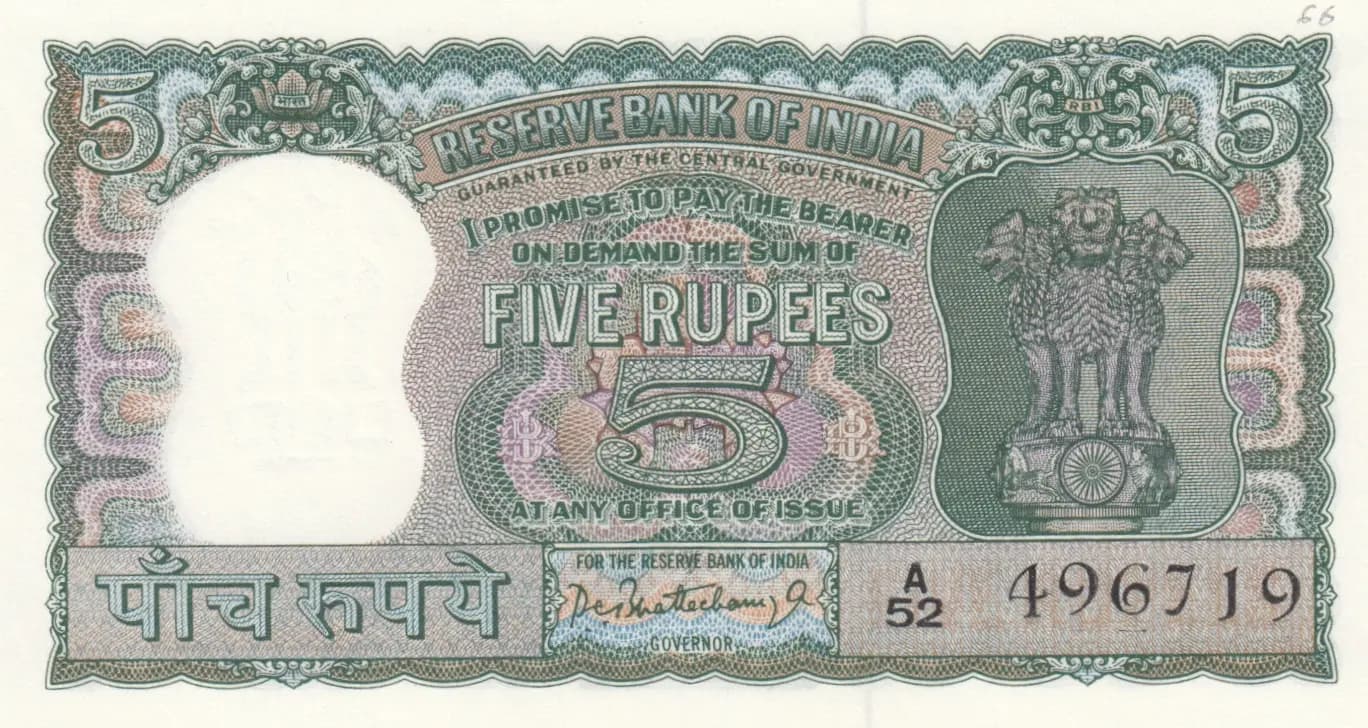
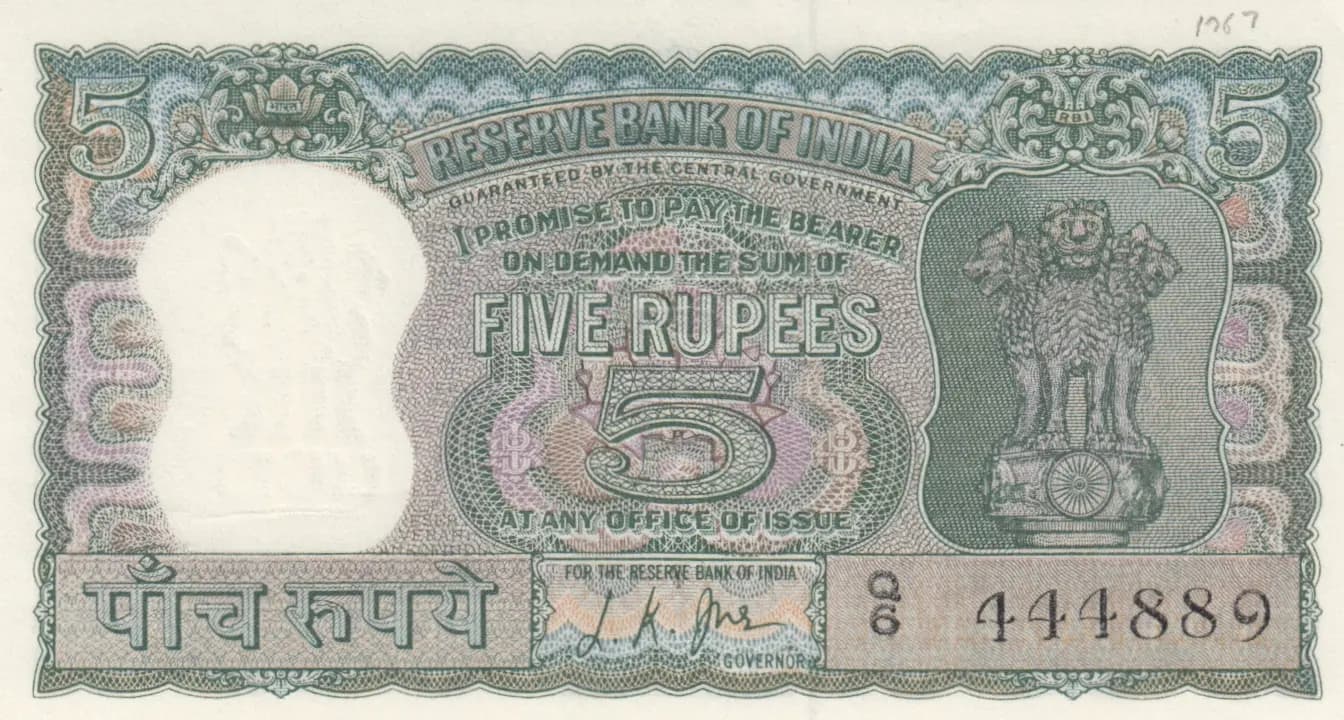
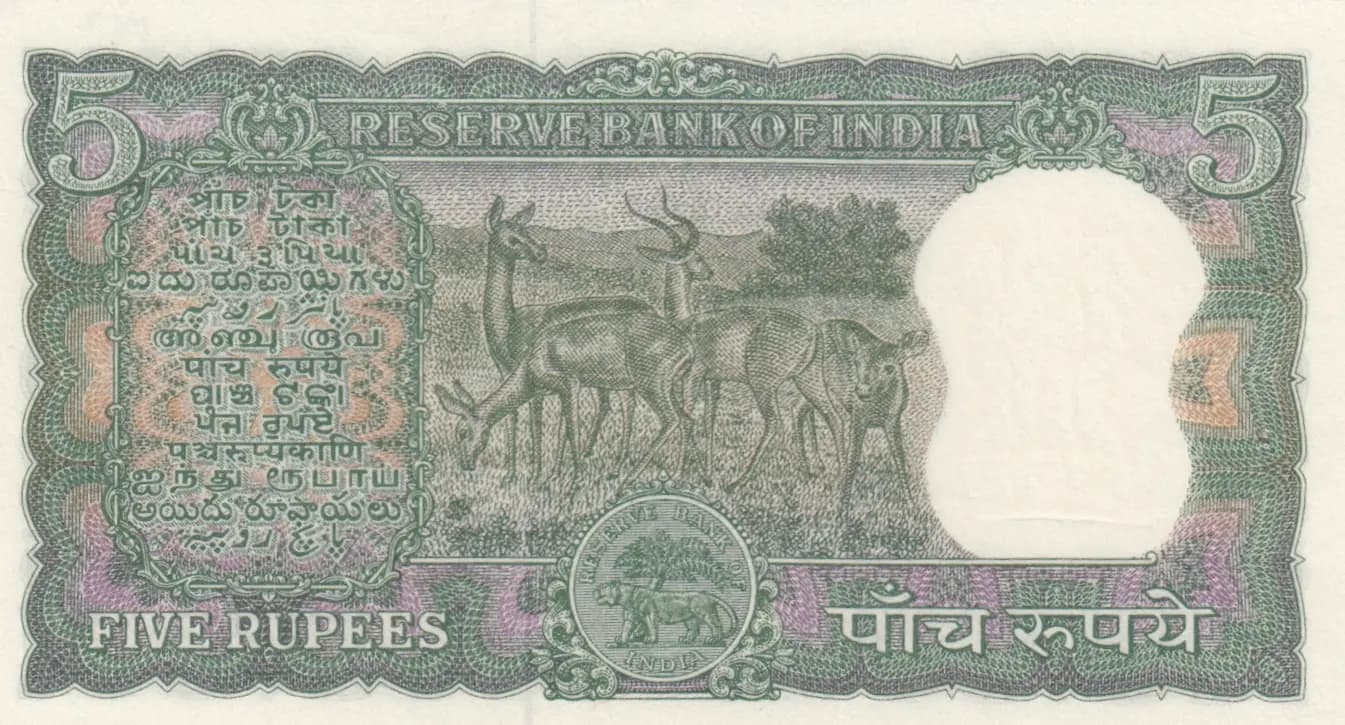
This is an exceptionally well-preserved example of India's 1969 5 Rupee note (Pick 54b), grading UNC with pristine paper quality and sharp printing throughout. The note is notable for featuring the Lion Capital of Ashoka on the obverse and a pastoral scene with grazing cattle on the reverse, representing India's cultural and agricultural heritage during the post-independence period. A significant identifying feature is the incorrect Urdu inscription at the lower left on the reverse, which distinguishes this variety (P-54b) from the corrected version (P-56), making it historically notable for collectors studying Indian currency evolution.
Common. The 1969 5 Rupee notes (both P-54b and related varieties) were issued in large quantities and remain readily available in the numismatic market. Current catalog values show UNC examples at approximately $30, and eBay market data demonstrates consistent sales in the $5-$7 range for lower grades (F-VF), with UNC examples occasionally reaching $5-$6. The high number of historical sales at modest prices and the absence of any supply constraints indicate this is a common note despite its age, making it an accessible entry-point for collectors of Indian currency.
Issued in 1969 by the Reserve Bank of India, this 5 Rupee note reflects the early post-independence era when India was establishing its monetary identity through carefully selected national symbols. The Lion Capital of Ashoka depicted on the obverse served as the official emblem of the Indian state and represented India's connection to its ancient Buddhist heritage and Ashoka's reign. The reverse pastoral scene with cattle emphasizes India's agrarian economy and cultural values during a period of economic development and nation-building.
The obverse features an ornate decorative border with intricate floral and geometric patterns in green and pink/mauve coloring. The left side contains a blank watermark area where a portrait would typically appear, which was characteristic of early Indian currency design. The center displays a large numeral '5' within an oval cartouche. The right side prominently features the Lion Capital of Ashoka, the official state emblem consisting of four Asiatic lions standing back-to-back with a dharma chakra (wheel) below, originally from the Sarnath Museum. The reverse depicts a pastoral agricultural scene with two oxen or buffalo grazing in a field with trees, symbolizing India's agrarian economy. Both sides are framed by decorative security borders with multiple language denominations reflecting India's linguistic diversity. A circular seal featuring a lion appears at the bottom center of the reverse.
OBVERSE: 'RESERVE BANK OF INDIA' (English), 'GUARANTEED BY THE CENTRAL GOVERNMENT' (English), 'PROMISE TO PAY THE BEARER ON DEMAND THE SUM OF' (English), 'FIVE RUPEES' (English), 'AT ANY OFFICE OF ISSUE' (English), 'FOR THE RESERVE BANK OF INDIA' (English), 'GOVERNOR' (English), 'पाँच रुपये' (Hindi: Five Rupees), Serial Number: 6 444889. REVERSE: 'RESERVE BANK OF INDIA' (English), 'FIVE RUPEES' (English), 'पाँच रुपये' (Hindi: Five Rupees), Multiple regional language inscriptions in Tamil, Telugu, Kannada, and other Indian scripts (all translating to 'Five Rupees' in their respective languages).
This note was produced using intaglio engraving (line engraving), evident from the fine line patterns, intricate border designs, and detailed pastoral landscape scene visible in the visual analysis. The crisp, sharp printing quality and detailed security features such as fine-line engraving throughout indicate professional-grade security printing. This note was printed by the Security Printing Press, India.
This note is specifically identified as Pick 54b, distinguished by the presence of an incorrect Urdu inscription at the lower left on the reverse. Related varieties include Pick 55 (similar note with the same incorrect Urdu error, but with different design elements) and Pick 56 (the corrected version with proper Urdu inscription). The serial number visible on this example is 6 444889. The note carries the title 'GOVERNOR' at the bottom right, consistent with notes from this issue period.