5 rupee 1966
Market Prices
6 salesAbout This Note
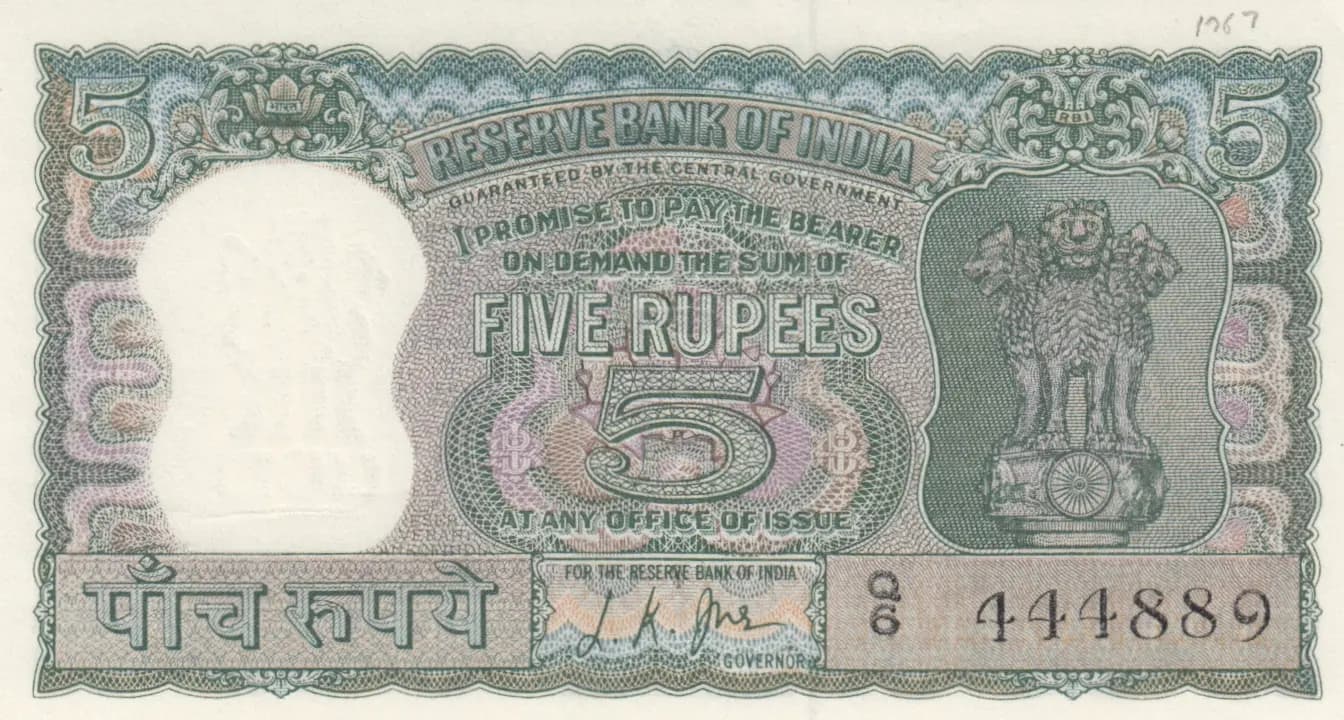
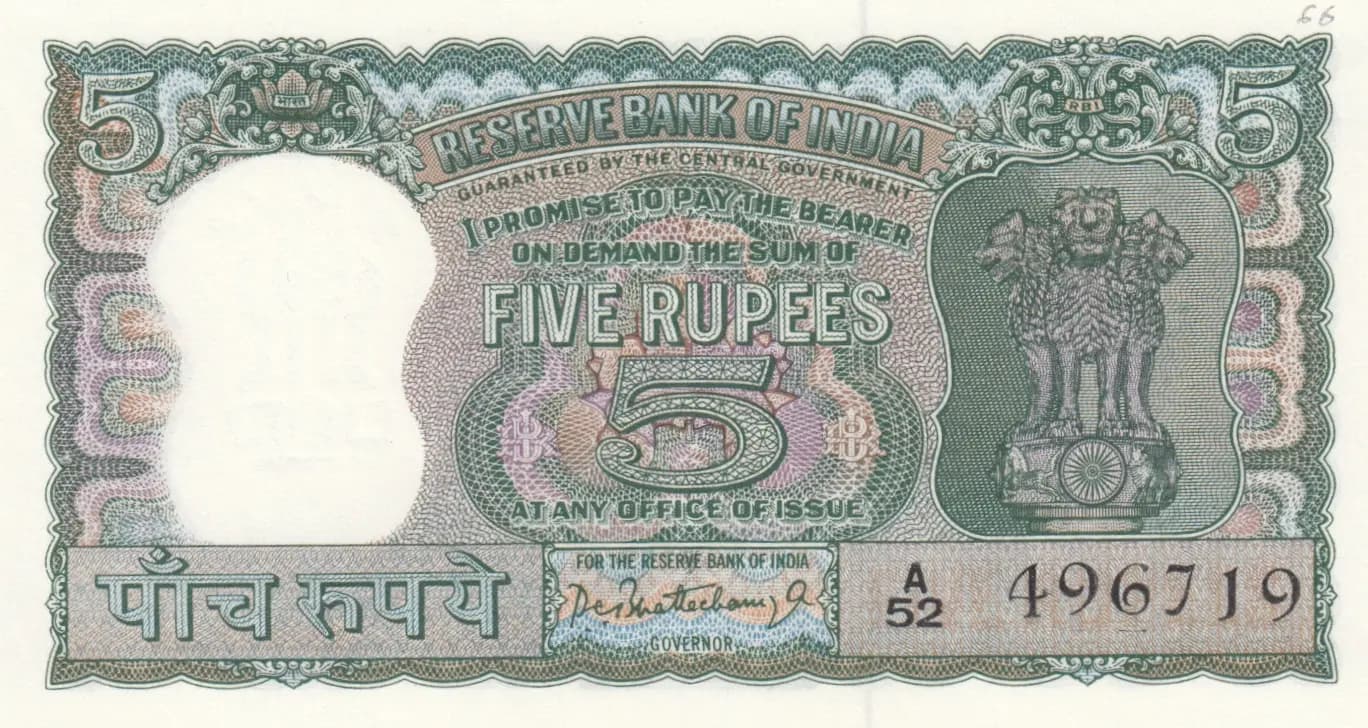
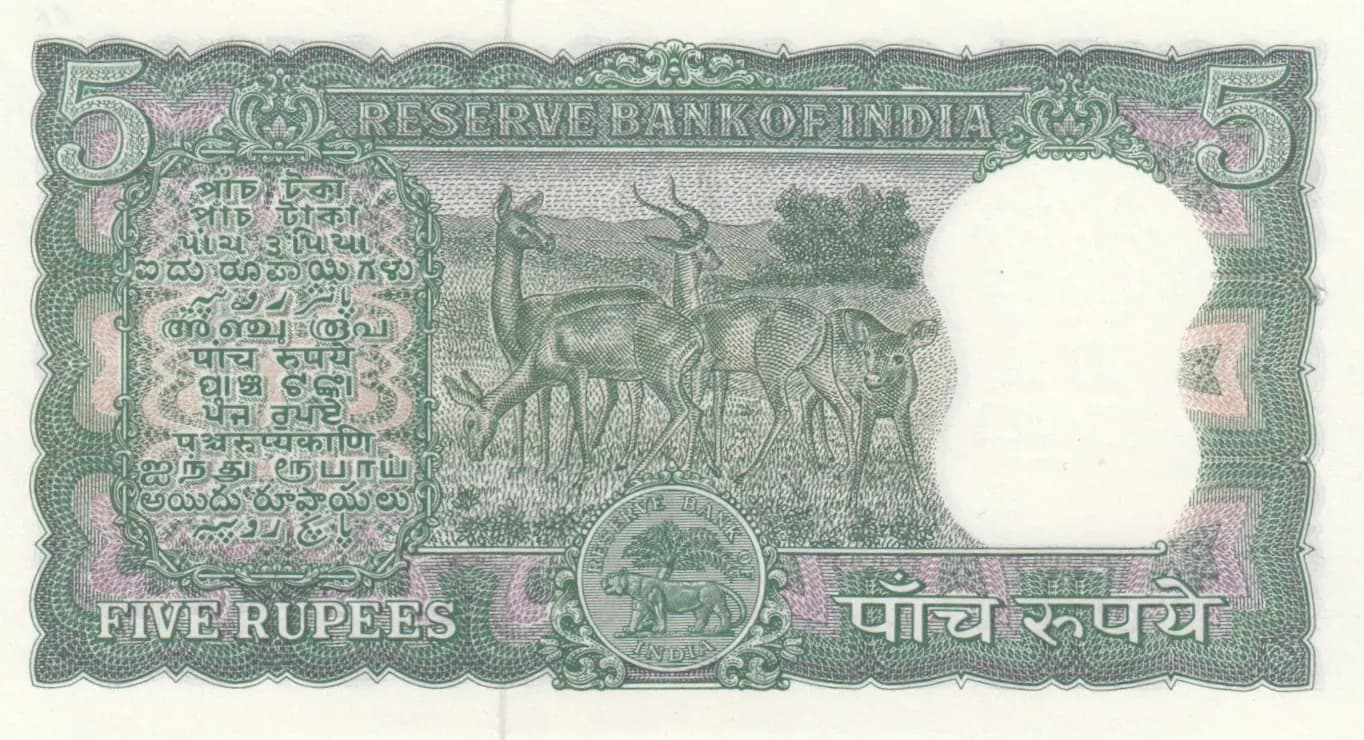
This is a 1966 Reserve Bank of India 5 Rupee note (Pick 54a) in uncirculated condition, featuring the iconic Lion Capital of Ashoka on the obverse and an antelope scene on the reverse. The note displays vibrant green and pink coloration with intricate decorative borders and fine engraving work characteristic of early Indian currency. This particular variety is notable for containing an incorrect Urdu inscription at the lower left of the reverse, making it a distinct catalog variety from the corrected version (P-56).
Common. This note is a standard circulation issue from a major denomination and issuing authority (Reserve Bank of India) with substantial print runs typical of the 1960s. eBay historical sales data shows consistent market prices in the $9–$14.50 range for UNC examples, with catalog valuations at $30 for UNC condition (2019). The availability of multiple sales records and modest price points indicate this is a readily available note in the numismatic market. The primary collector interest lies in the variety distinction (incorrect Urdu, Pick 54a) rather than scarcity.
This 1966 note was issued during India's early post-independence period, featuring national symbols deeply rooted in Indian heritage and Buddhism. The Lion Capital of Ashoka, depicted on the obverse, serves as India's national emblem and references the ancient Mauryan Empire, while the antelope on the reverse reflects India's wildlife and natural heritage. The multilingual inscriptions in English, Hindi, and South Indian scripts underscore India's commitment to linguistic pluralism in its currency during the formative years of the Republic.
The obverse features the Lion Capital of Ashoka (Ashoka Chakra emblem) as the central portrait element, displayed within a decorative medallion on the right side of the note. This comprises four lions standing back-to-back, symbolizing India's national sovereignty, positioned above the Buddhist Wheel (Ashoka Chakra). The reverse depicts a pastoral or antelope scene in the central engraving, with what appears to be wildlife in a natural setting, flanked by a circular seal containing a lion emblem at the bottom center. Both sides feature ornate floral and geometric border patterns in the decorative frame. A blank oval watermark area is positioned on the left of the obverse and right of the reverse, typical of notes from this era.
FRONT: 'Reserve Bank of India' (English); 'Guaranteed by the Central Government' (English); 'I Promise to Pay the Bearer on Demand the Sum of Five Rupees at Any Office of Issue' (English); 'पाँच रुपये' (Hindi: Five Rupees); 'For the Reserve Bank of India Governor' (English); Serial number and plate number visible. BACK: 'Reserve Bank of India' (English); 'Five Rupees' (English); 'पाँच रुपये' (Hindi: Five Rupees); 'India' (English); Denominations in Tamil, Telugu, Kannada, and Malayalam scripts on the left side (all translating to Five Rupees); Incorrect Urdu inscription at lower left (specific text affected by printing variation).
The note was produced using intaglio engraving (recess printing), evidenced by the crisp, fine line work visible in the intricate border designs, the detailed pastoral scene on the reverse, and the precise rendering of the Lion Capital of Ashoka. The multi-color printing combines green and pink base colors with white, characteristic of Indian Security Press (now De La Rue) production methods used for Reserve Bank of India currency during the 1960s. The high-quality line engraving and ornate security patterns reflect the technical capabilities of India's primary currency printer of this period.
This note is specifically Pick 54a, identified by the incorrect Urdu inscription at the lower left on the reverse. The catalog notes reference INDIA P-55 for a similar note with incorrect Urdu, and INDIA P-56 for the corrected version. Serial number observed: 496719 with plate number 52. The variety distinction between P-54a (incorrect Urdu), P-55, and P-56 (corrected Urdu) represents a significant cataloging point for collectors, though all three varieties remain common. No date marking appears on the note itself (ND — no date), typical of this issue period.