5 rupee 1962
Market Prices
16 salesAbout This Note
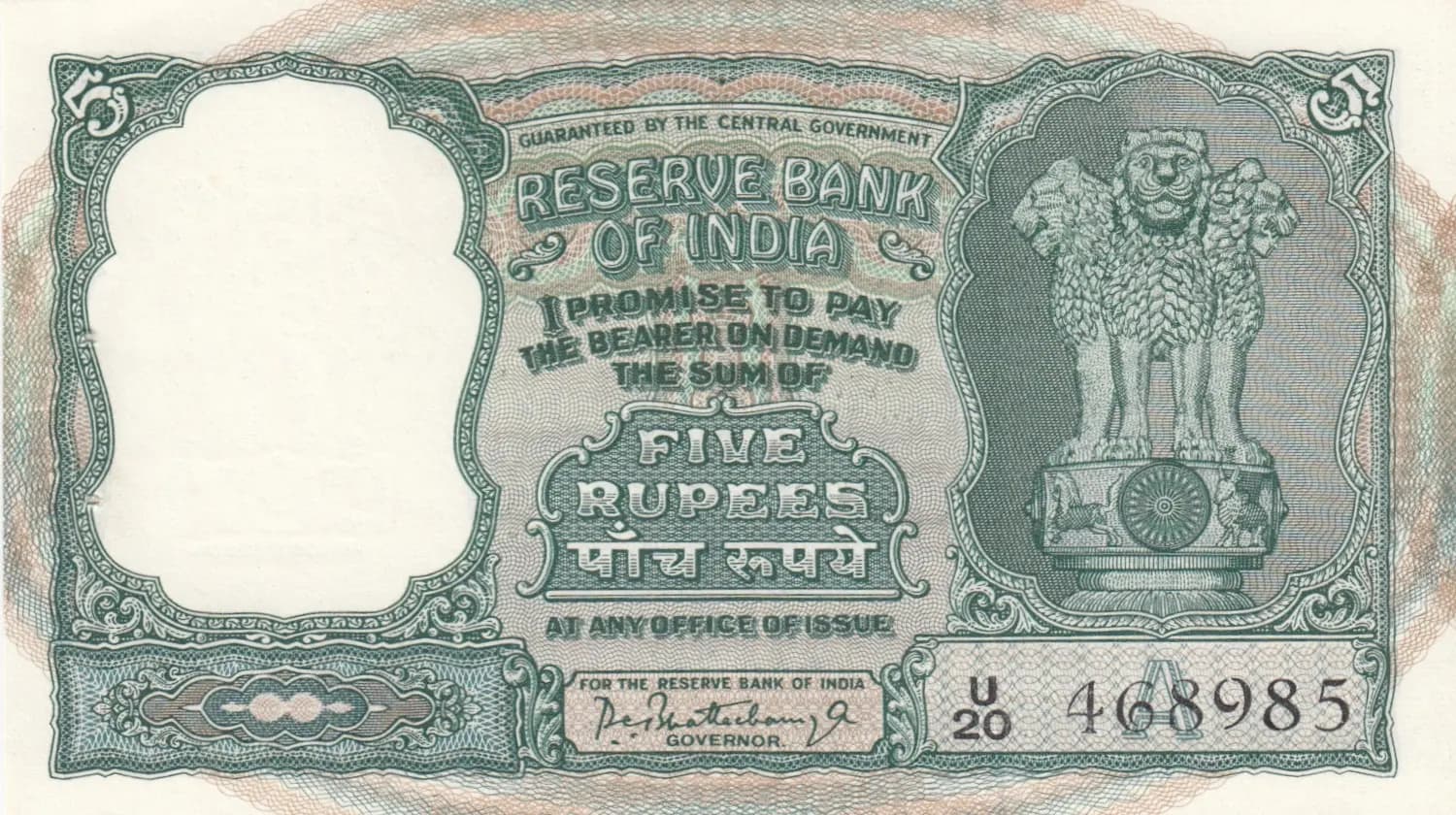
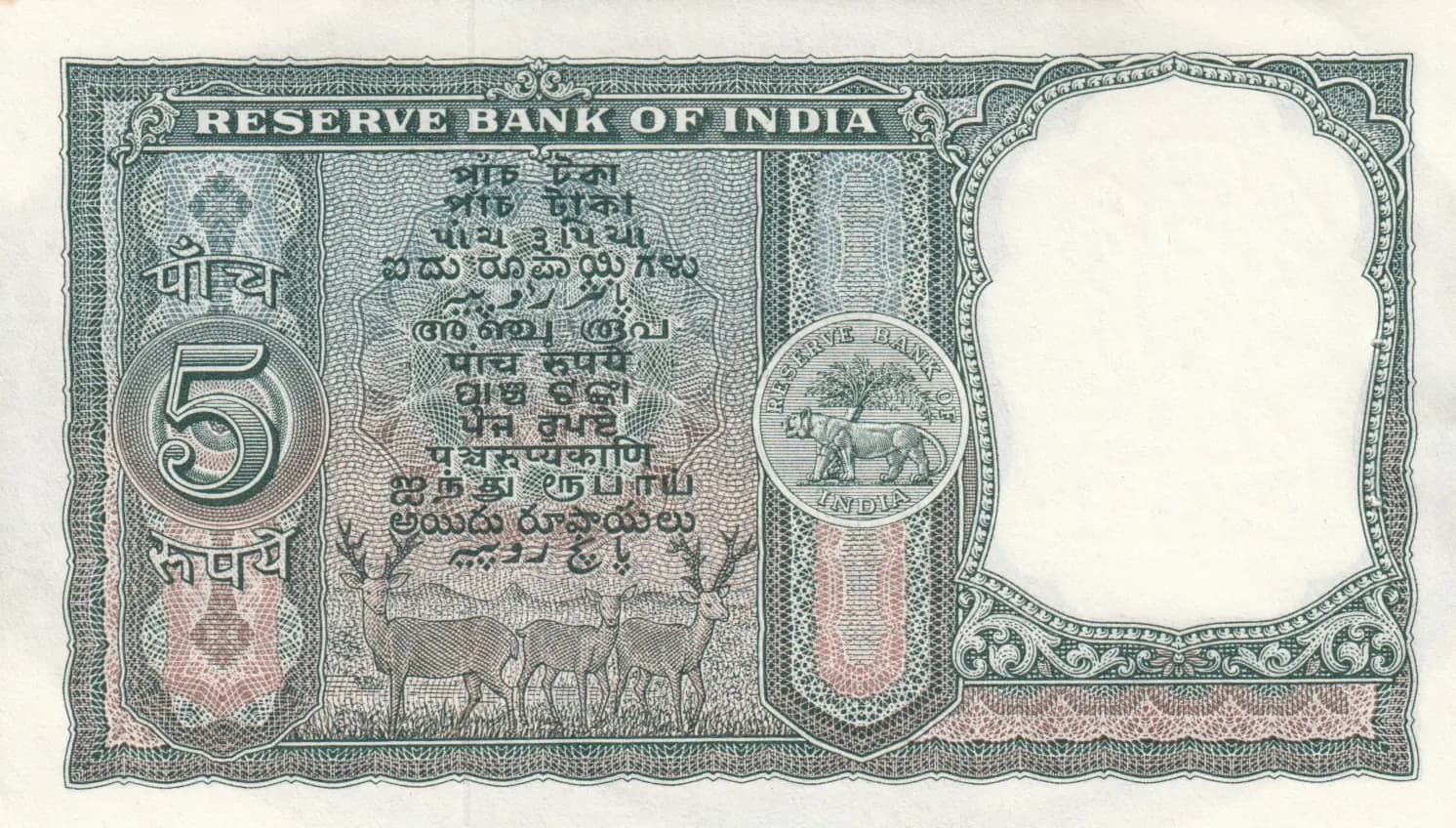
This is an exceptionally well-preserved example of India's 1962 5 Rupee note (Pick P-36a) graded AU, displaying the characteristic green and pink color scheme with crisp, uncirculated appearance and no visible wear. The note features the iconic Lion Capital of Ashoka on the obverse and cattle beneath a tree on the reverse, both rendered in fine engraving. This early Reserve Bank of India issue represents an important transitional period in Indian currency design, with bilingual English and Hindi inscriptions reflecting post-independence India's linguistic diversity.
Common. This Pick P-36a is a regular issue 5 Rupee note with substantial print runs typical of denominations intended for everyday circulation. eBay market data shows consistent availability with most examples in circulated grades (VF, EF, AUNC) selling for $8-$32, while uncirculated PMG-graded examples sell for $15-$60, indicating robust supply even in higher grades. The AU grade specimen observed is desirable but not scarce—multiple PMG graded examples have sold regularly over the past decade without achieving premium pricing. This note was printed in significant quantities and remains readily available to collectors.
Issued in 1962, just 15 years after Indian independence, this 5 Rupee note reflects the newly established Reserve Bank of India's commitment to representing national identity through numismatic imagery. The Lion Capital of Ashoka depicted on the obverse was chosen as a symbol of India's Buddhist heritage and democratic values, serving as the national emblem. The cattle and agricultural imagery on the reverse underscore India's agrarian economy during the early years of the republic, a deliberately chosen motif for a denomination intended for everyday commerce.
The obverse features the Lion Capital of Ashoka, the four-lion emblem from the 3rd-century Buddhist monument at Sarnath, now India's official national emblem. This sculpture sits atop an abacus with the dharma chakra (wheel) and is positioned prominently on the right side of the note. A large blank oval cartouche on the left indicates the watermark area. The design employs ornate decorative borders with fine-line mesh patterns in green, framing the bilingual promise clause in the center. The reverse displays a pastoral scene of cattle (oxen) grazing beneath a tree, enclosed in a circular emblem, symbolizing India's agricultural heritage. A large numeral '5' in ornate framing appears on the left, with multilingual text (Hindi, Telugu, and other Indian scripts) arranged symmetrically across the center. Both sides feature decorative borders and use a refined color palette of green and pink/salmon tones characteristic of early RBI currency design.
FRONT SIDE: 'RESERVE BANK OF INDIA' (issuing authority); 'GUARANTEED BY THE CENTRAL GOVERNMENT' (government backing); 'I PROMISE TO PAY THE BEARER ON DEMAND THE SUM OF' (standard promise clause); 'FIVE RUPEES' (denomination in English); 'पांच रुपये' (Five Rupees in Hindi, using correct plural form); 'AT ANY OFFICE OF ISSUE' (redemption location); 'FOR THE RESERVE BANK OF INDIA' (issuer attribution); 'GOVERNOR' (signature title); Serial number '20 468985'. BACK SIDE: 'RESERVE BANK OF INDIA' (repeated at top); Ornate circular '5' with 'रुपये' (Rupees in Hindi); Multiple lines of text in Hindi and regional scripts (Telugu visible) providing currency promise and redeemption information; 'INDIA' (country identification); Text translates to standard currency pledge regarding the Reserve Bank's obligation to redeem notes at stated value.
This note was produced using traditional intaglio (copperplate engraving) and letterpress printing techniques, standard for high-security currency production of the 1960s. The fine-line meshwork patterns, detailed rendering of the Ashoka capital sculpture, and the cattle scene all exhibit the characteristic crisp definition and depth of intaglio printing. The note was likely printed by the Security Printing Press or the Nasik Road Press, which were the primary printers for Reserve Bank of India currency during this period. The dual-color printing (green and pink/salmon) was achieved through multiple printing passes, with careful registration to maintain the note's artistic integrity.
This example is identified as Pick P-36a, representing the variant with English and Hindi text on the front (the correct Hindi plural 'Rupaye' form, distinguishing it from P-33 which contains an incorrect spelling). The note includes a Governor's signature (title centered) with letter 'A' designation. The serial number format '20 468985' and printing characteristics confirm this as a standard example of the 1962 issue. No unusual overprints, date variations, or signature variations are apparent in this specimen. The note represents the typical variety and specifications for P-36a throughout its issue period.