2 rupees 1969
Market Prices
2 salesAbout This Note
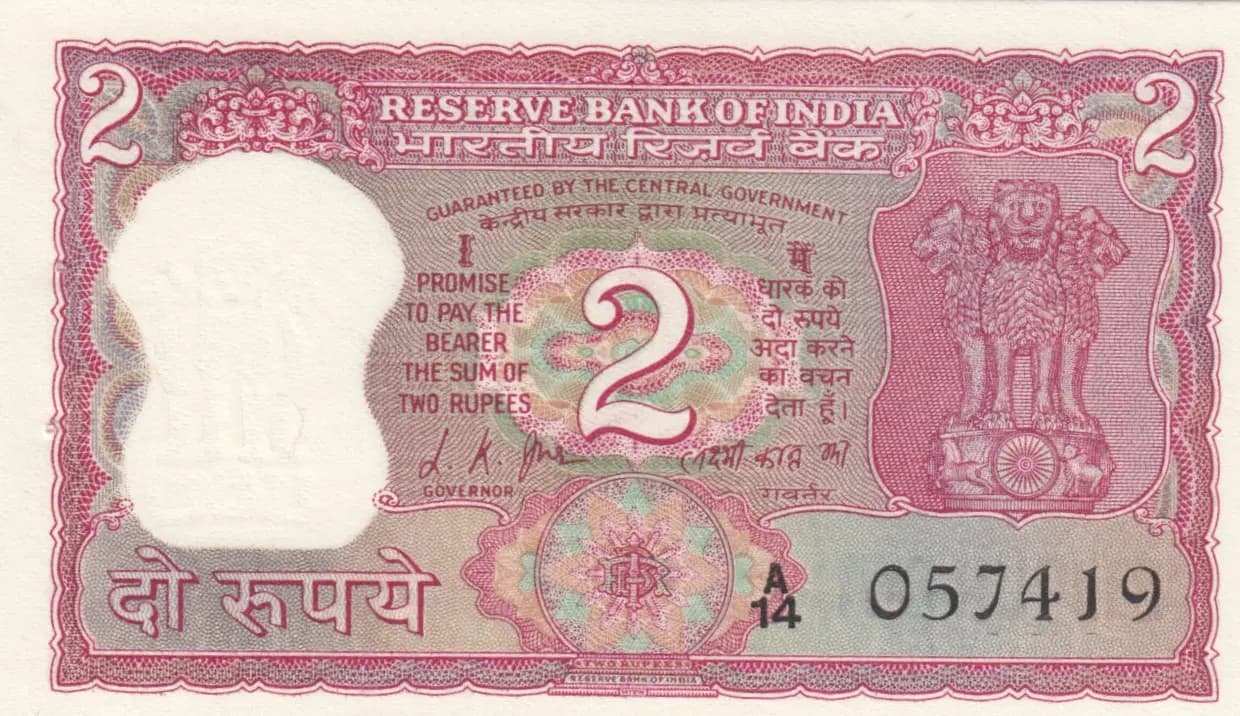
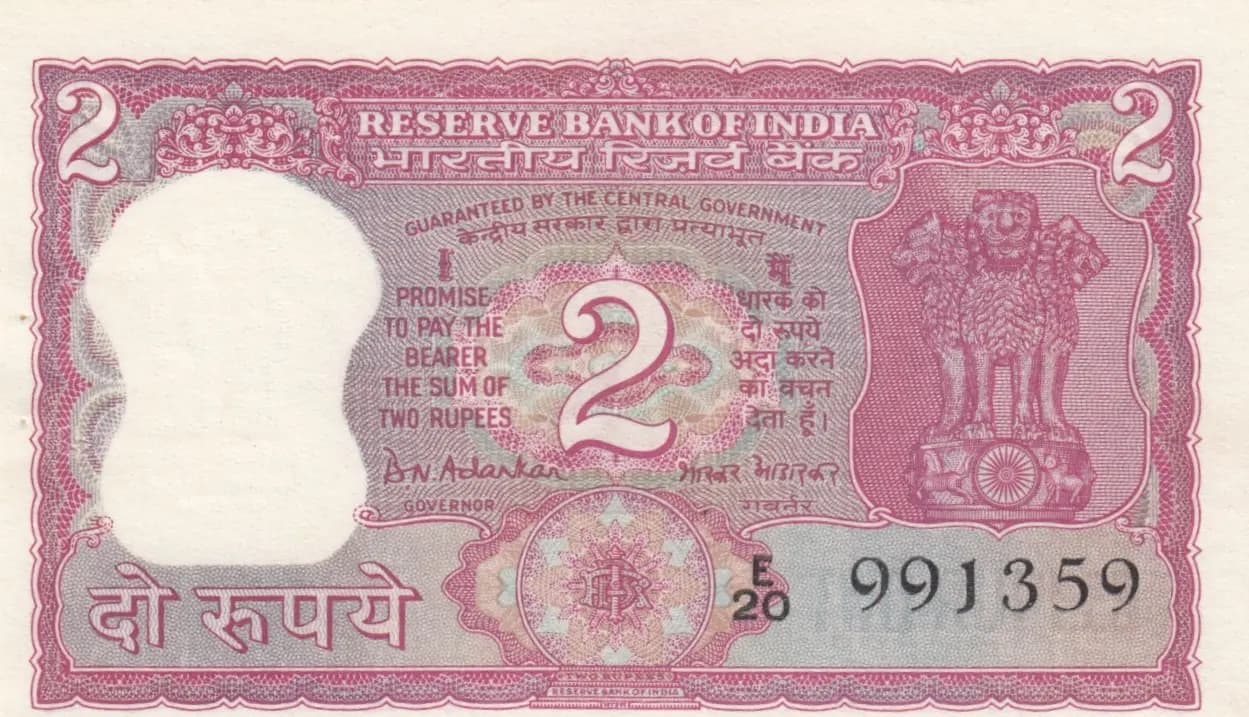
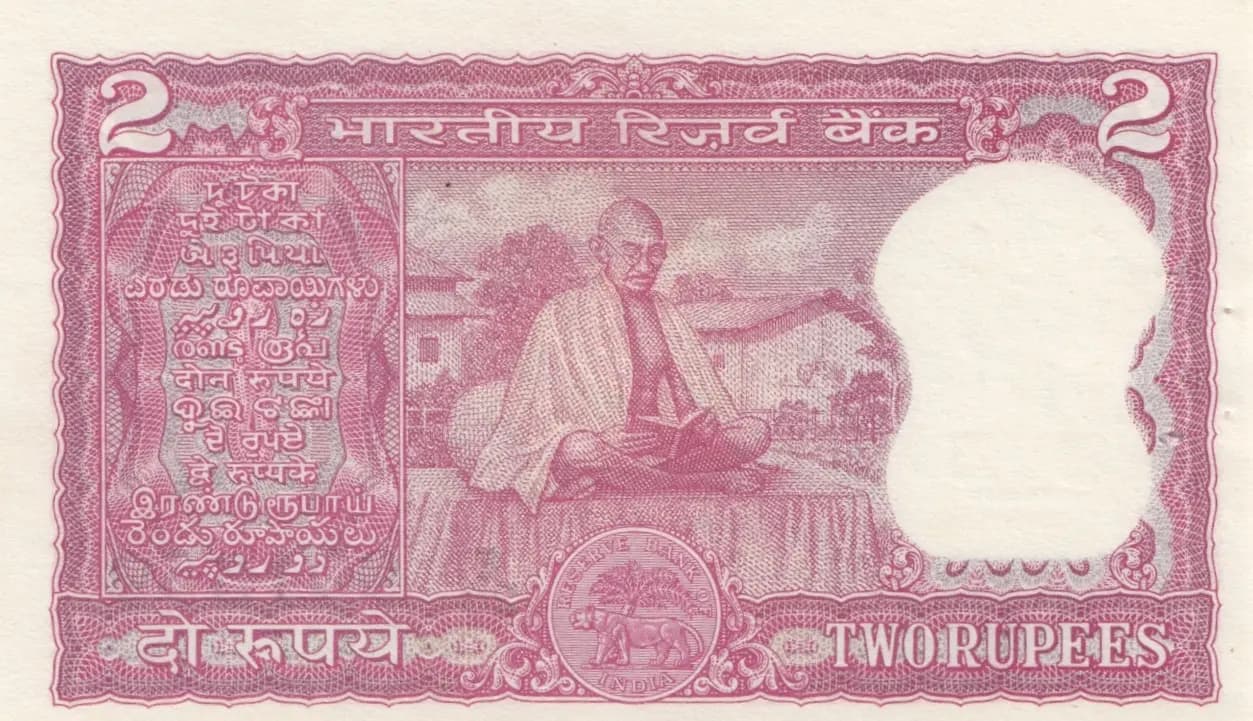
This is a well-preserved 1969 Reserve Bank of India 2 Rupee commemorative note honoring the centennial of Mahatma Gandhi's birth (1869-1969). The note displays the iconic Lion Capital of Ashoka on the obverse and a seated portrait of Gandhi on the reverse, rendered in pink/magenta and multicolored printing. In UNC condition with crisp, clear impressions throughout and no visible wear, this note represents an excellent example of India's commemorative currency from the independence era.
Common. The eBay market data provided shows recent sales in the $5-$18.50 range, with catalog values listing UNC examples at approximately $14 (2019). Print runs for this commemorative issue were substantial, and the note remains readily available to collectors. The lack of extreme scarcity markers and moderate market pricing confirm common status despite its commemorative significance.
Issued in 1969 to commemorate the 100th anniversary of Mahatma Gandhi's birth, this note reflects India's deep reverence for the father of the nation. The use of the Lion Capital of Ashoka—India's national emblem sourced from the Sarnath Museum—connects the note to ancient Indian heritage and Buddhist philosophy, while Gandhi's portrait on the reverse reinforces his central role in India's independence movement and nation-building.
This commemorative note features a distinctive design celebrating Mahatma Gandhi's centennial. The obverse displays the Lion Capital of Ashoka—a four-lion sculptural emblem originally from the Sarnath Museum and now India's national coat of arms—positioned prominently on the right side. The reverse showcases a detailed engraved portrait of Mohandas Karamchand Gandhi seated in traditional Indian attire, rendered with fine crosshatching and intricate linework typical of high-quality banknote engraving. Both sides incorporate the Ashoka Chakra (24-spoke wheel) and lion motifs within circular seals at the bottom center, reinforcing the connection to Indian national symbols. The ornate decorative borders in pink/magenta frame intricate geometric and floral patterns. A large watermark area is evident on the obverse, and bilingual inscriptions in English and Devanagari appear throughout, reflecting India's multilingual character.
FRONT: 'RESERVE BANK OF INDIA' (English) / 'भारतीय रिज़र्व बैंक' (Devanagari: Reserve Bank of India) / 'GUARANTEED BY THE CENTRAL GOVERNMENT' (English) / 'केंद्रीय सरकार द्वारा गारंटीकृत' (Devanagari: Guaranteed by the Central Government) / 'PROMISE TO PAY THE BEARER THE SUM OF TWO RUPEES' (English) / 'इस नोट के धारक को दो रुपये की राशि देने का वचन' (Devanagari: Promise to pay the bearer the sum of two rupees) / 'B.N. ADARKAR' (Governor's signature) / 'GOVERNOR' (English) / 'दो रुपये' (Devanagari: Two Rupees) / Serial number 'E/26 991359'. BACK: 'भारतीय रिज़र्व बैंक' (Devanagari: Reserve Bank of India) / 'दो रुपये' (Devanagari: Two Rupees) / 'TWO RUPEES' (English) / 'INDIA' (English) / Denomination '2' in corners.
Intaglio (engraving) printing, characteristic of high-security banknote production. The crisp, clear impressions, fine line patterns, and detailed portrait rendering with precise crosshatching are hallmarks of the intaglio process. The note exhibits the quality expected from India's banknote printer during this period, with multiple color registration and fine security linework throughout.
This note is signed by B.N. Adarkar as Governor of the Reserve Bank of India. The serial number prefix 'E/26' indicates the printing batch and series. The Pick catalog designation P-67b suggests this is a known variety within the 2 Rupee 1969 issue. Signature varieties are common for this denomination and period, with different governors' signatures appearing on notes from the same general issue timeframe.