2 rupees 1969
Market Prices
17 salesAbout This Note
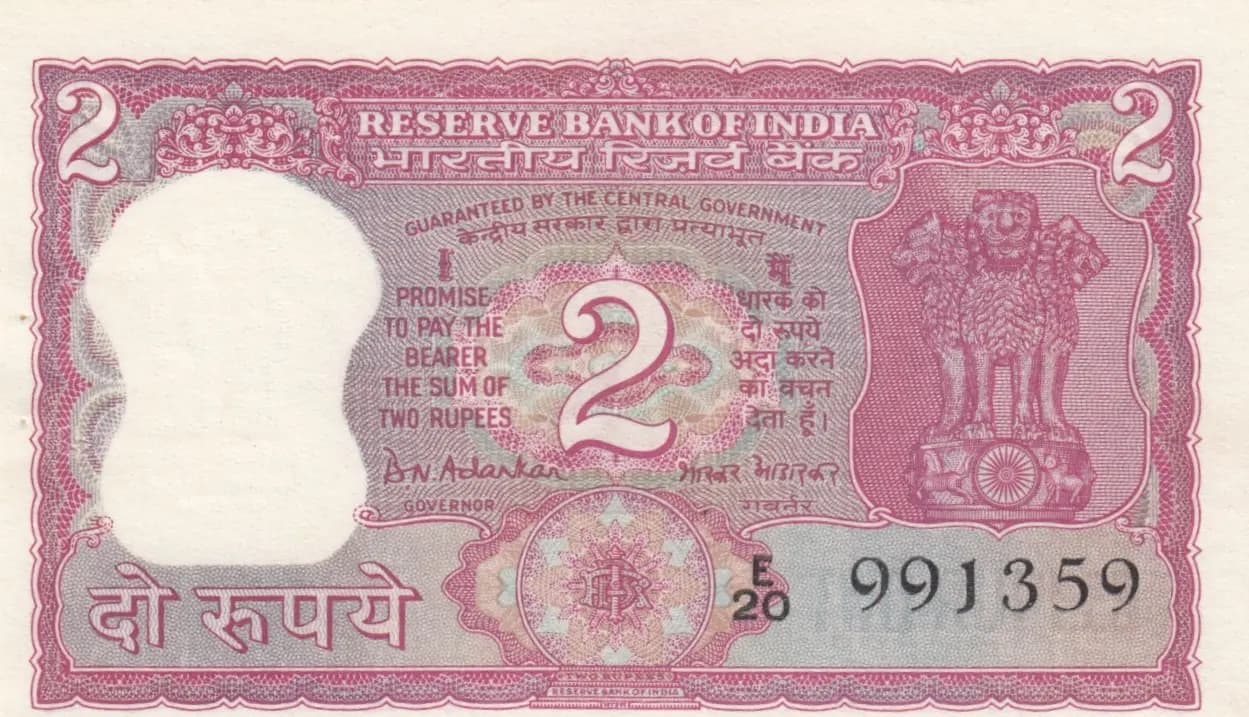
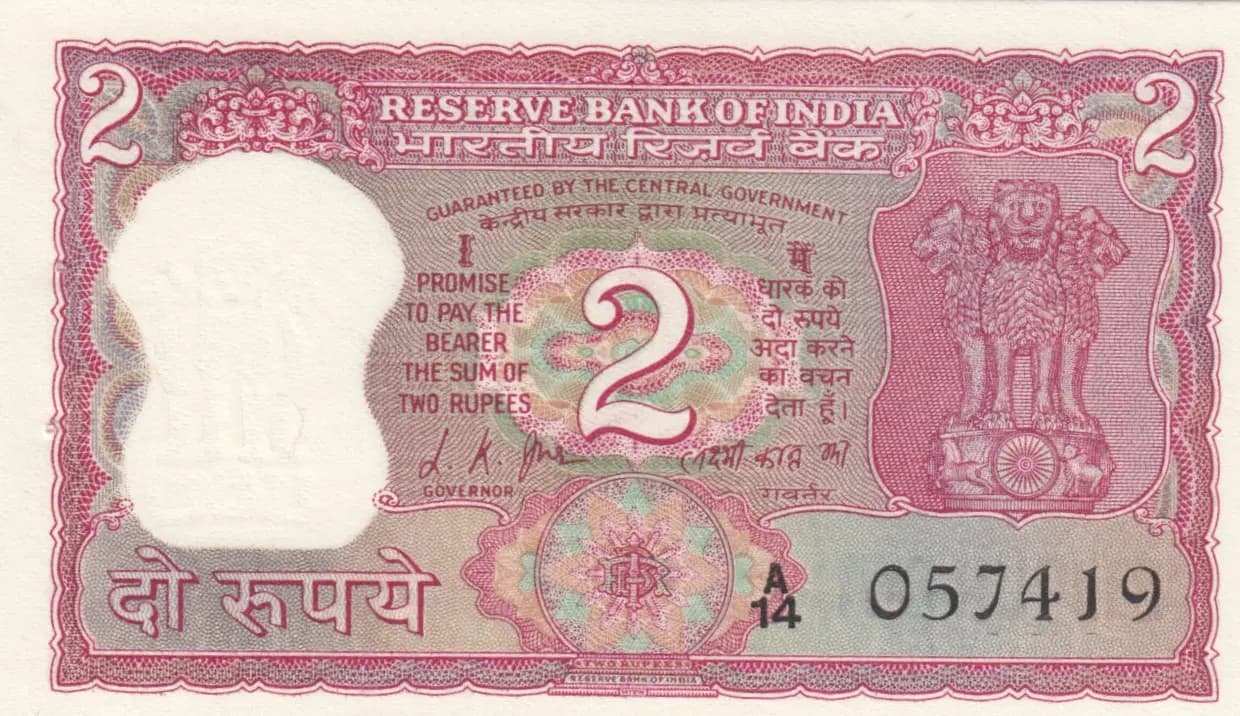
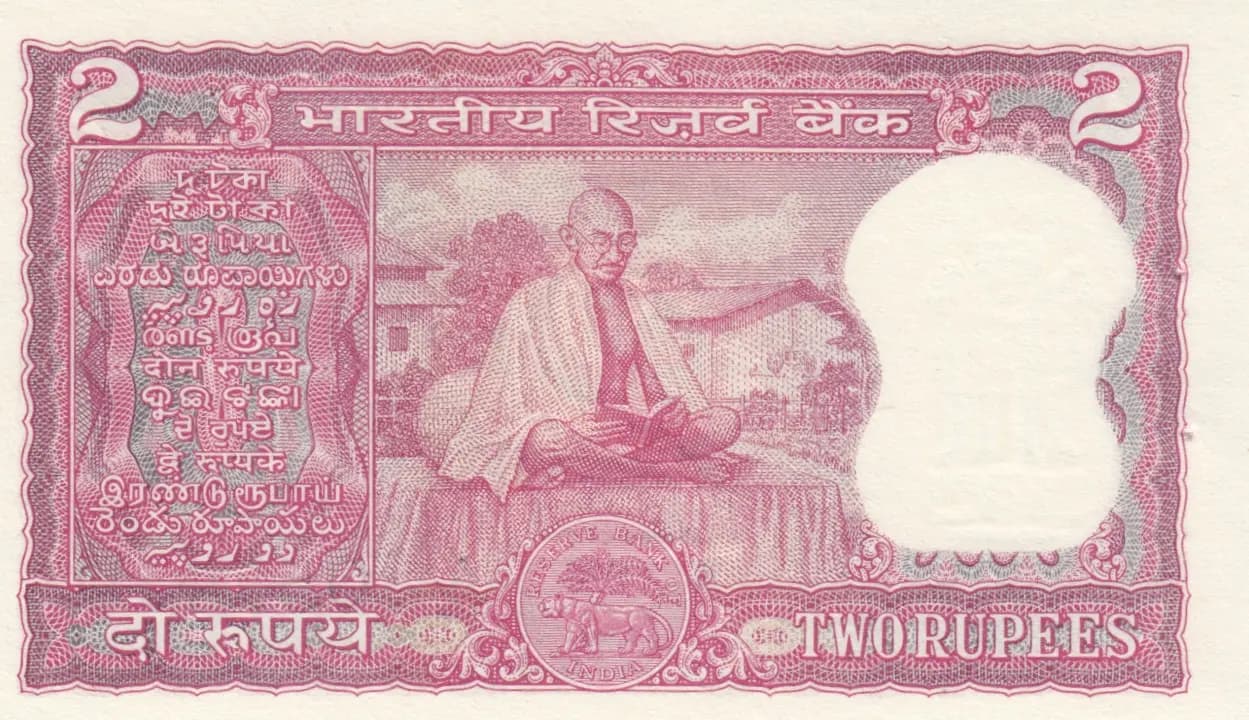
This is an uncirculated 1969 India 2 Rupees commemorative banknote (Pick P-67a) celebrating the centennial of Mahatma Gandhi's birth. The note displays exceptional condition with crisp, clean margins and no visible wear, featuring a distinctive pink/magenta color scheme with ornate guilloche borders and detailed engraved elements. The front showcases the Lion Capital of Ashoka's column from the Sarnath Museum, while the reverse features a finely detailed profile portrait of Gandhi with a mountainous landscape, making this an important piece of Indian numismatic history.
Common. Despite the commemorative status, this note was issued in substantial quantities during 1969-1970 to celebrate a major national occasion. eBay market data confirms common pricing patterns, with uncirculated examples consistently selling between $3-$13 in recent years, and even premium grades (PMG 67-68) fetching only $50-$174. The 2019 catalog value of $10 for UNC further confirms this is a widely available note among collectors. The large print run typical of commemorative issues and the note's continued common appearance in the market indicate no scarcity.
Issued in 1969-1970 by the Reserve Bank of India, this commemorative note marks the centennial of Mahatma Gandhi's birth (1869-1969), a pivotal moment in Indian history as the nation honored the independence movement's most iconic figure. The front design prominently displays the Lion Capital of Ashoka—an ancient symbol of India's pre-Buddhist heritage and now the national emblem—connecting Gandhi's modern struggle to India's ancient civilizational roots. The reverse features Gandhi himself in profile, bridging the note's dual commemoration of both India's ancient Buddhist heritage and its modern independence leader.
The obverse features the Lion Capital of Ashoka (from Sarnath Museum), depicted as a detailed engraved emblem on the right side, symbolizing India's state authority and ancient Buddhist heritage. The center contains a large white oval watermark area with the standard promise-to-pay clause. Ornate decorative borders and floral patterns frame the note in pink and magenta tones with gray accents. The reverse displays a finely engraved profile portrait of Mohandas Karamchand 'Mahatma' Gandhi facing left, rendered with meticulous line-work typical of intaglio printing. Behind the portrait is a mountain or hill landscape, suggesting Gandhi's connection to India's geography. An ornamental text panel in Hindi occupies the left side of the reverse, and a circular seal (likely the Lion emblem) appears at the bottom center between bilingual denomination text.
FRONT SIDE: 'RESERVE BANK OF INDIA' (English) / 'भारतीय रिज़र्व बैंक' (Hindi: Reserve Bank of India) / 'GUARANTEED BY THE CENTRAL GOVERNMENT' (English) / 'PROMISE TO PAY THE BEARER THE SUM OF TWO RUPEES' (English) / 'GOVERNOR' (English) / 'दो रुपये' (Hindi: Two Rupees) / Serial number: 057419 / Series letter: A. BACK SIDE: 'RESERVE BANK OF INDIA' (English) / 'भारतीय रिज़र्व बैंक' (Hindi: Reserve Bank of India) / 'TWO RUPEES' (English) / 'दो रुपये' (Hindi: Two Rupees) / Ornamental panel on left contains descriptive text in Hindi regarding the commemorative nature of the banknote.
This banknote was produced using intaglio engraving, evidenced by the fine guilloche patterns, detailed line-work in the portrait, and intricate ornamental borders visible throughout both sides. The meticulous rendering of the Lion Capital emblem and Gandhi's portrait reflects the high-security printing standards of the Reserve Bank of India's primary security printer. The note was likely printed by the Government of India Security Press (Nashik) or BRBNMPL (Bharatiya Reserve Bank Note Mudran Private Limited), which were the authorized security printers for RBI notes during this period.
This note is identified as Pick P-67a, the standard 1969-1970 issue. Varieties may include different series letters (A, B, C, etc.) and serial number ranges reflecting multiple print batches. The observed specimen shows series letter 'A' with serial number 057419, representing an early printing from the first series. No overprints, date variations, or major design variants are known for this Pick number, though signature varieties of the Governor may exist across the issue period. The bilingual text (English and Hindi) is standard for all RBI notes of this era.