2 rupees 1970
Market Prices
11 salesAbout This Note
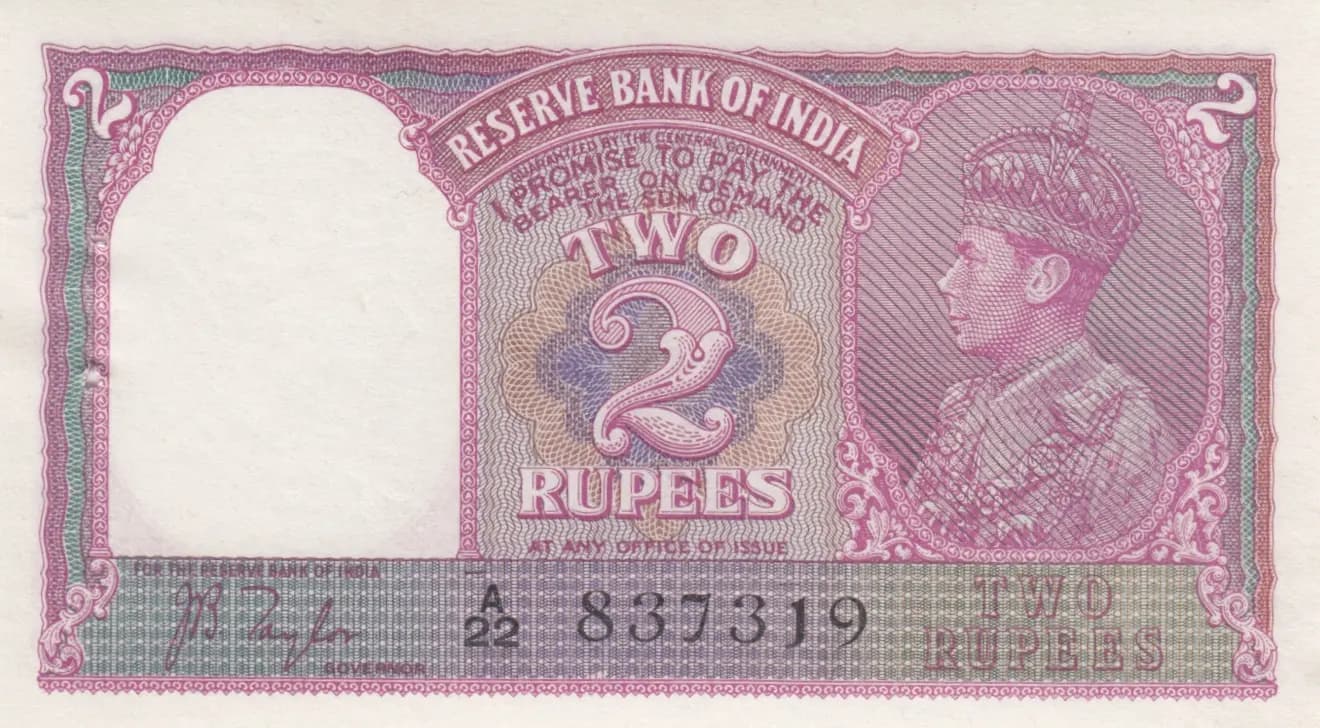
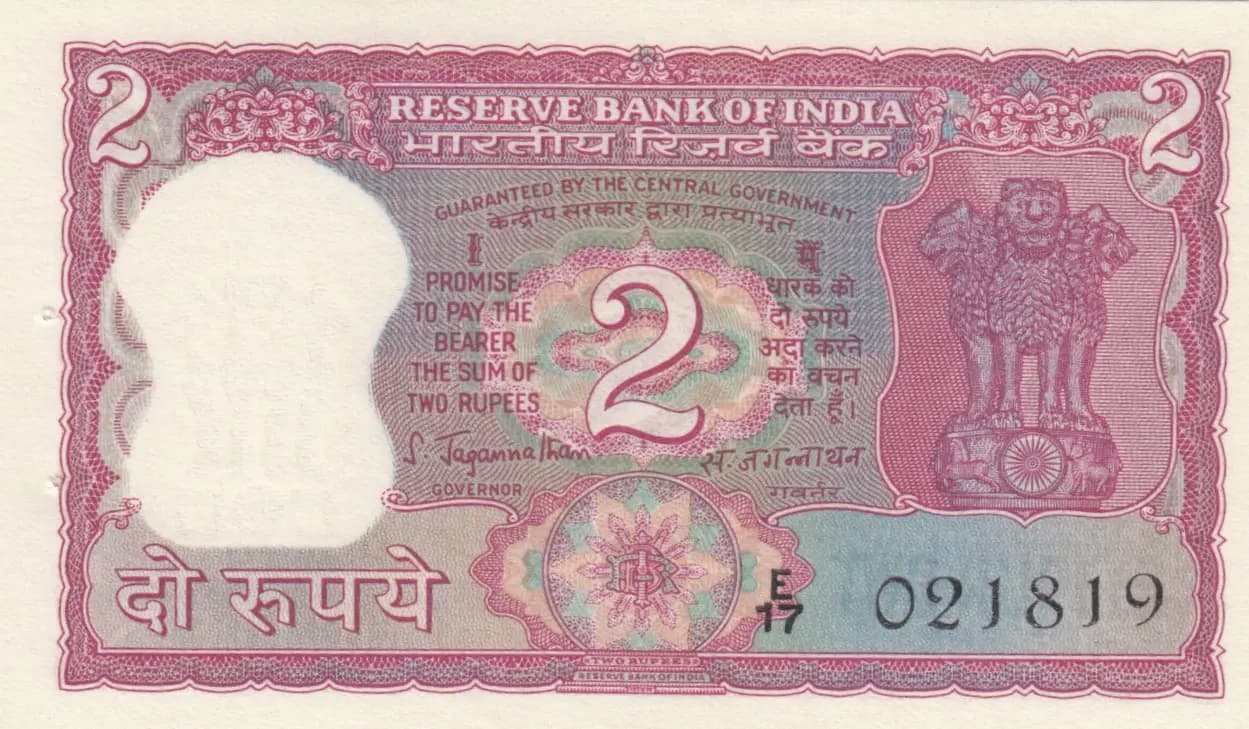
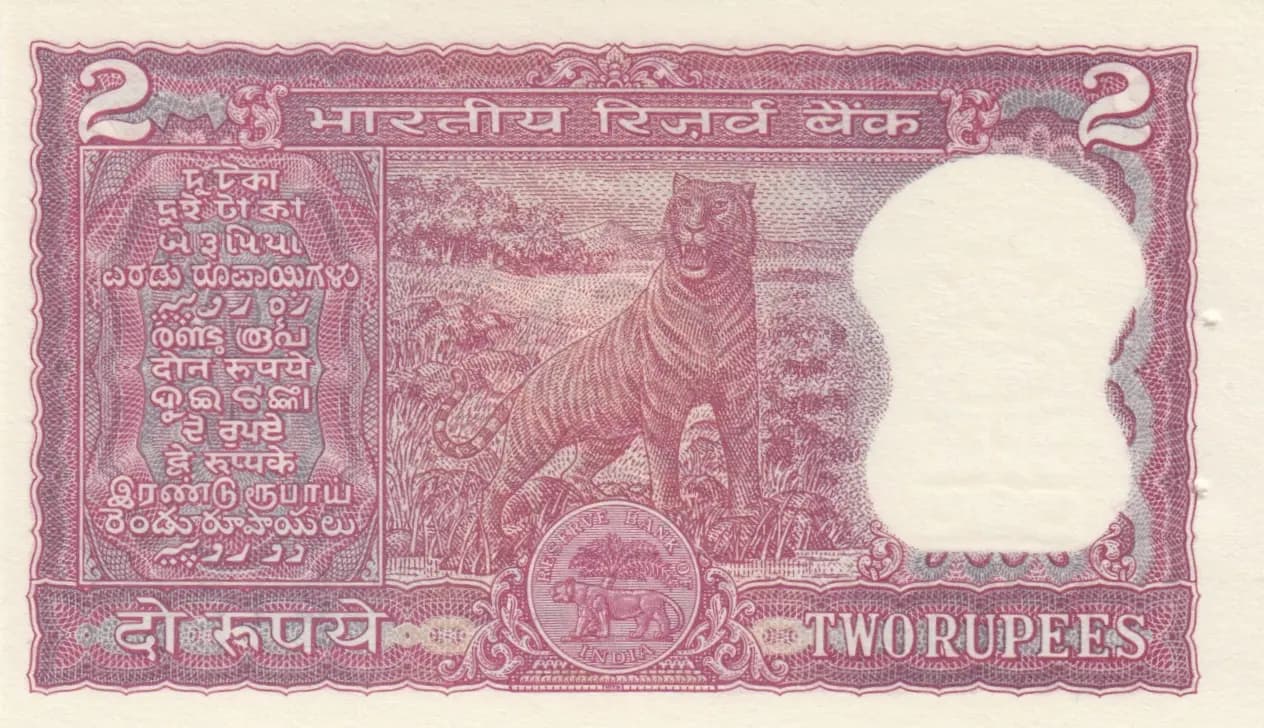
This is a Reserve Bank of India 2 Rupees note from 1970 (Pick P-52) in uncirculated condition, featuring the distinctive pink/magenta coloring characteristic of this denomination. The obverse displays the iconic Lion Capital of Ashoka on the right side with a large oval portrait space on the left, while the reverse showcases an agricultural scene with a farmer and oxen, emphasizing India's rural economy of the period. The note exhibits sharp printing quality with no visible wear, creases, or circulation marks, making it an excellent example of this regular issue denomination.
Common. This is a regular issue 2 Rupees note with substantial print run. eBay market data shows consistent sales across multiple condition grades, with UNC examples selling for $3-8 in recent years, indicating steady collector demand but no scarcity premium. The note was issued over an extended period (1965-1970s) and remains readily available to collectors.
Issued during the early decades of independent India's monetary system, this 2 Rupees note reflects the nation's economic focus on agriculture and national symbols. The Lion Capital of Ashoka—depicted from the Sarnath Museum—serves as India's national emblem and reinforces the connection to India's ancient Buddhist heritage and values of peace and sovereignty. The reverse's agricultural imagery symbolizes the importance of farming to India's post-independence economy and national identity during the 1960s-1970s period.
The obverse features the Lion Capital of Ashoka (four lions facing outward, symbolizing courage and sovereignty) positioned on the right side, with the denomination '2' prominently displayed in an ornate decorative circle at center. A large white oval space on the left indicates the watermark area for security. The note includes bilingual inscriptions in English and Hindi/Devanagari, with the Governor's signature (Jagannathan) and serial number. The reverse depicts a rural agricultural scene with a farmer working with oxen in a cultivated landscape, emphasizing India's agrarian foundation. An elephant emblem with 'IN INDIA' text appears at the bottom center, and the note is bordered with intricate geometric and decorative patterns throughout. The color scheme of pink/magenta with cream and gray tones is characteristic of this denomination.
FRONT SIDE: 'RESERVE BANK OF INDIA' (English) / 'भारतीय रिज़र्व बैंक' (Hindi: Reserve Bank of India) / 'GUARANTEED BY THE CENTRAL GOVERNMENT' (English) / 'PROMISE TO PAY THE BEARER THE SUM OF TWO RUPEES' (English) / 'दो रुपये' (Hindi: Two Rupees) / 'GOVERNOR' (English, identifying the signature authority) / 'Jagannathan' (signature of Governor) / 'E 021819' (Serial number). BACK SIDE: 'भारतीय रिज़र्व बैंक' (Hindi: Reserve Bank of India) / 'TWO RUPEES' (English) / 'दो रुपये' (Hindi: Two Rupees) / 'IN INDIA' (English, within elephant emblem).
Intaglio (engraved) printing combined with multi-color lithography, standard for Reserve Bank of India banknotes of this era. The fine line work visible in the security patterns, borders, and the detailed agricultural scene on the reverse are typical of high-security intaglio production. This note was produced by the security printers contracted by the RBI, employing traditional banknote security printing methods with intricate engraving and multi-plate color registration.
This note is cataloged as Pick P-52 and features the known characteristic of 'incorrect Urdu at lower left on back,' which distinguishes it from the corrected versions found in P-53 and P-53A. The signature of Governor Jagannathan is present, consistent with his term. Serial number E 021819 indicates the E series printing. This specific variety is notable for the Urdu inscription error that was subsequently corrected in later releases, making P-52 the original incorrect version that collectors specifically distinguish from the corrected subsequent issues.