2 rupees 1962
Market Prices
9 salesAbout This Note
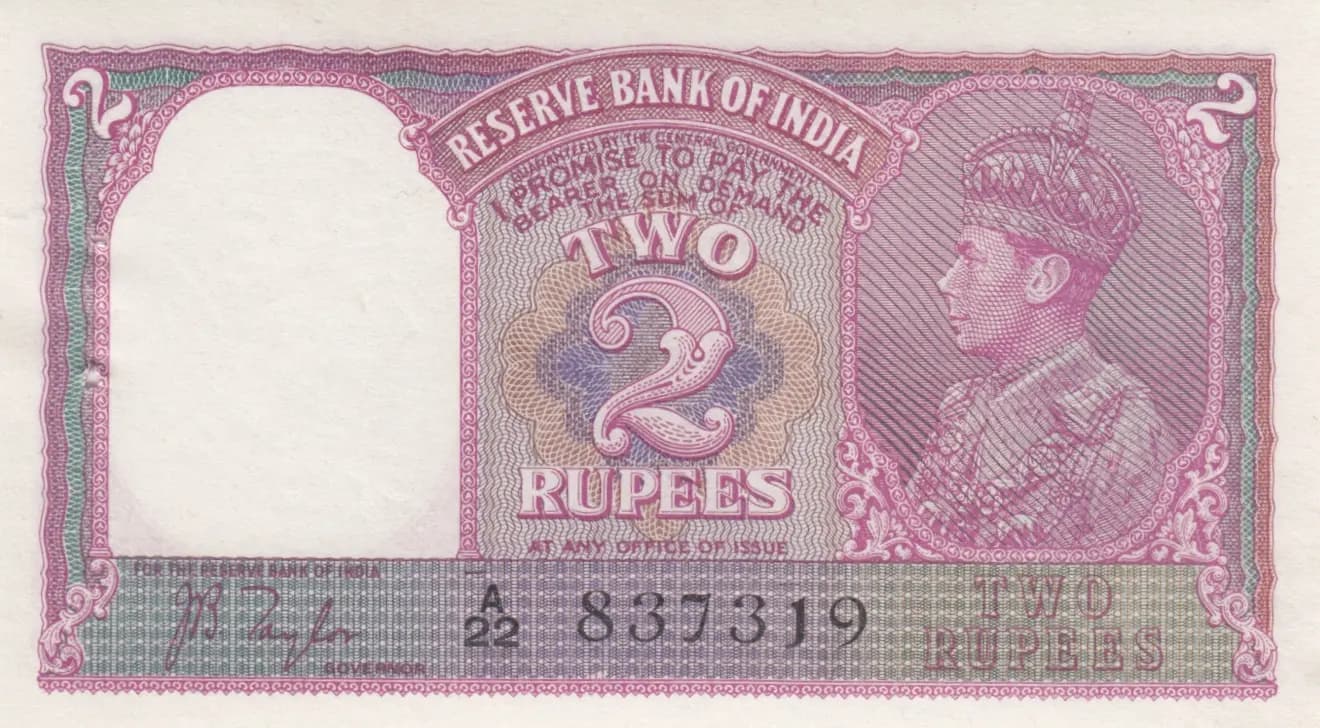
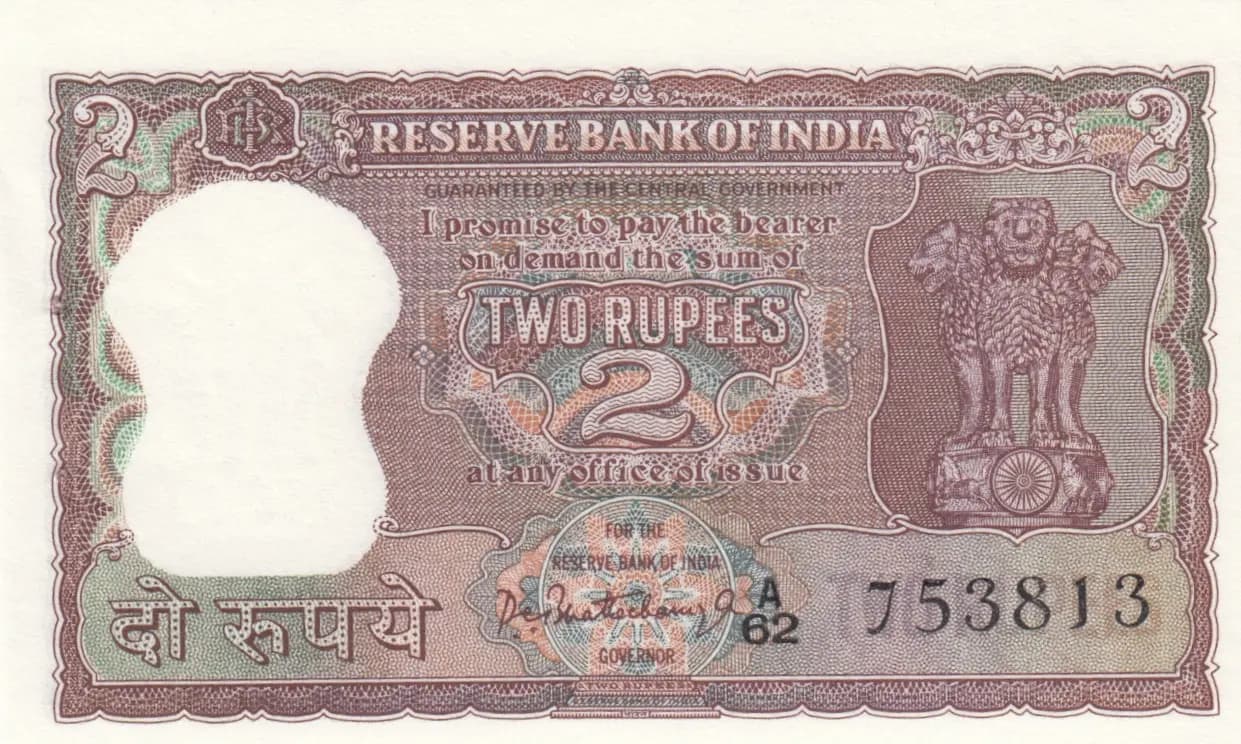
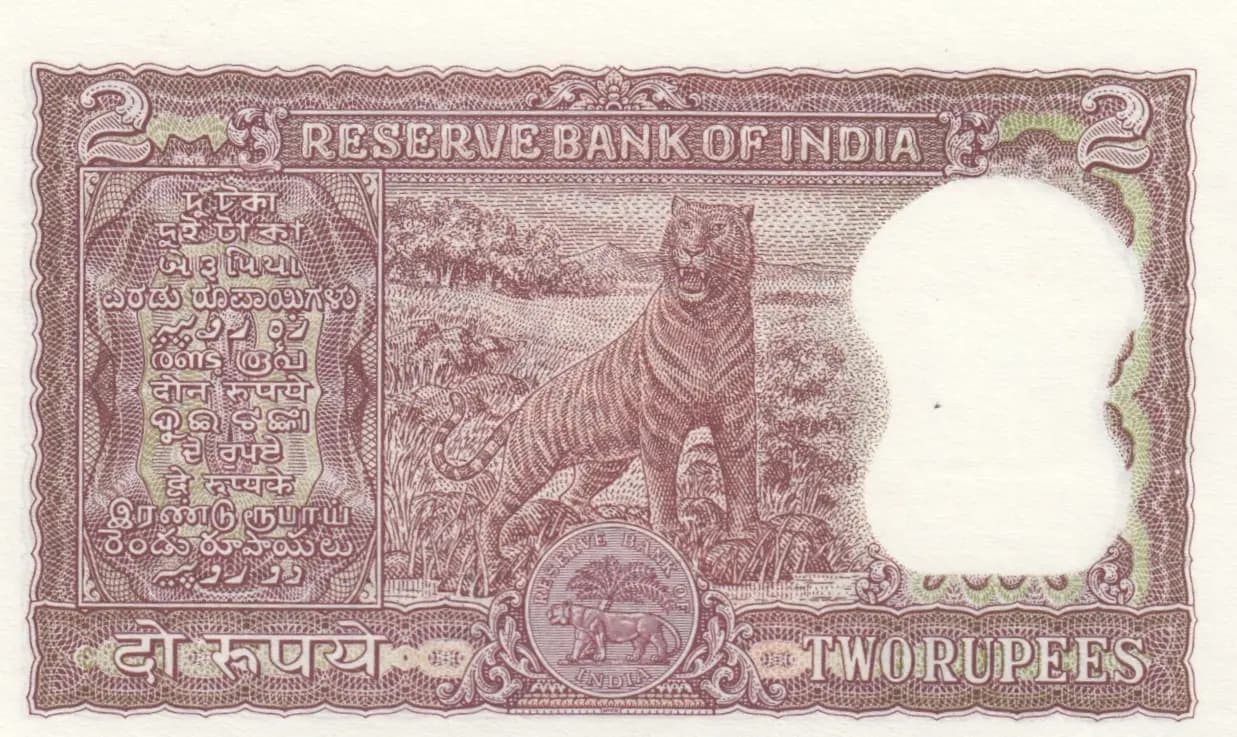
This is a Reserve Bank of India 2 Rupees banknote from 1962 (Pick-51a), presented in UNC condition. The note features the iconic Lion Capital of Ashoka on the obverse and a beautifully engraved tiger in natural landscape on the reverse, representing India's national symbols and wildlife heritage. The muted brown and green color scheme with cream accents is characteristic of this series, and the multilingual text panels reflect India's linguistic diversity during the early post-independence period.
Common. This is a standard circulation issue from the 1962-1965 period with a substantial print run. eBay market data shows consistent sales in the $6-$16 range across various conditions (UNC, AUNC, VF, EF) from 2014-2021, with UNC examples specifically selling for $6.50-$14.50, well below the threshold that would indicate scarcity. The 2019 catalog value of $14 for UNC condition is modest, and the volume of sales activity demonstrates ready availability in the secondary market. No documented print run restrictions or recall issues are associated with this Pick number.
This 2 Rupees denomination was issued by the Reserve Bank of India in 1962, during the early years of independent India's currency design evolution. The deliberate choice to feature the Lion Capital of Ashoka—drawn from the 3rd-century BCE Mauryan Empire monument now housed in the Sarnath Museum—connected modern India to its ancient Buddhist heritage and sovereignty. The tiger imagery on the reverse symbolized India's wildlife and natural resources, reflecting the nation's focus on national pride and cultural identity during this formative period of the republic.
The obverse features a prominent white oval area (likely watermark region) with the Lion Capital of Ashoka engraved on the right side—a trimurti symbol consisting of four lions back-to-back, recognizable from the Sarnath Museum artifact that serves as India's national emblem. The denomination '2' appears in decorative frames in the corners. The reverse displays a detailed engraved tiger in a naturalistic landscape setting with trees and foliage, positioned in the center-right area, demonstrating the note's commitment to depicting India's national fauna. A circular emblem featuring a lion figure appears at the bottom center (the Reserve Bank of India seal). The ornate border pattern with intricate designs frames both sides. Multiple language panels on the back reflect the Indian Constitution's recognition of regional languages, with text in Hindi (Devanagari script) and other Indian scripts, making this a truly pan-Indian design.
FRONT SIDE: 'RESERVE BANK OF INDIA' (English, top center); 'I promise to pay the Bearer on demand the Sum of' (English, legal tender promise); 'TWO RUPEES' (English, denomination); 'दो रुपये' (Hindi, Two Rupees); 'at any office of issue' (English, redemption clause); 'GOVERNOR' (English, title); Serial designation 'A 62' with number '753813'. BACK SIDE: 'RESERVE BANK OF INDIA' (English, top); 'TWO RUPEES' (English, bottom); 'दो रुपये' and 'रुपये' (Hindi, Two Rupees/Rupees); Multiple regional language text panels on left side containing denomination and promise text in various Indian scripts (Devanagari, possibly others).
This note was produced using intaglio (engraving) printing, the standard security printing method for Reserve Bank of India banknotes of this era. The fine detail visible in the Lion Capital of Ashoka, the tiger landscape engraving, and the ornate border patterns are characteristic of intaglio work. The note was likely produced by India Security Press (ISP) or De La Rue, the primary security printers contracted by the RBI during this period. The multicolor design required multiple color passes typical of currency production of the 1960s.
The observed serial number prefix 'A 62' indicates the series designation for 1962 issue. The note shows the characteristic 'GOVERNOR' title centered at the bottom (as documented in reference sources), confirming this as the standard variety of Pick-51a. Serial number 753813 represents typical numbering from the printing run. No documented major varieties (such as error inscriptions, printer changes, or significant overprints) beyond the noted 'incorrect Urdu inscription' mentioned in reference catalogs are evident from this example, though this specific variety notation would require direct examination of Urdu text against documented variants.