2 rupee 1962
Market Prices
19 salesAbout This Note
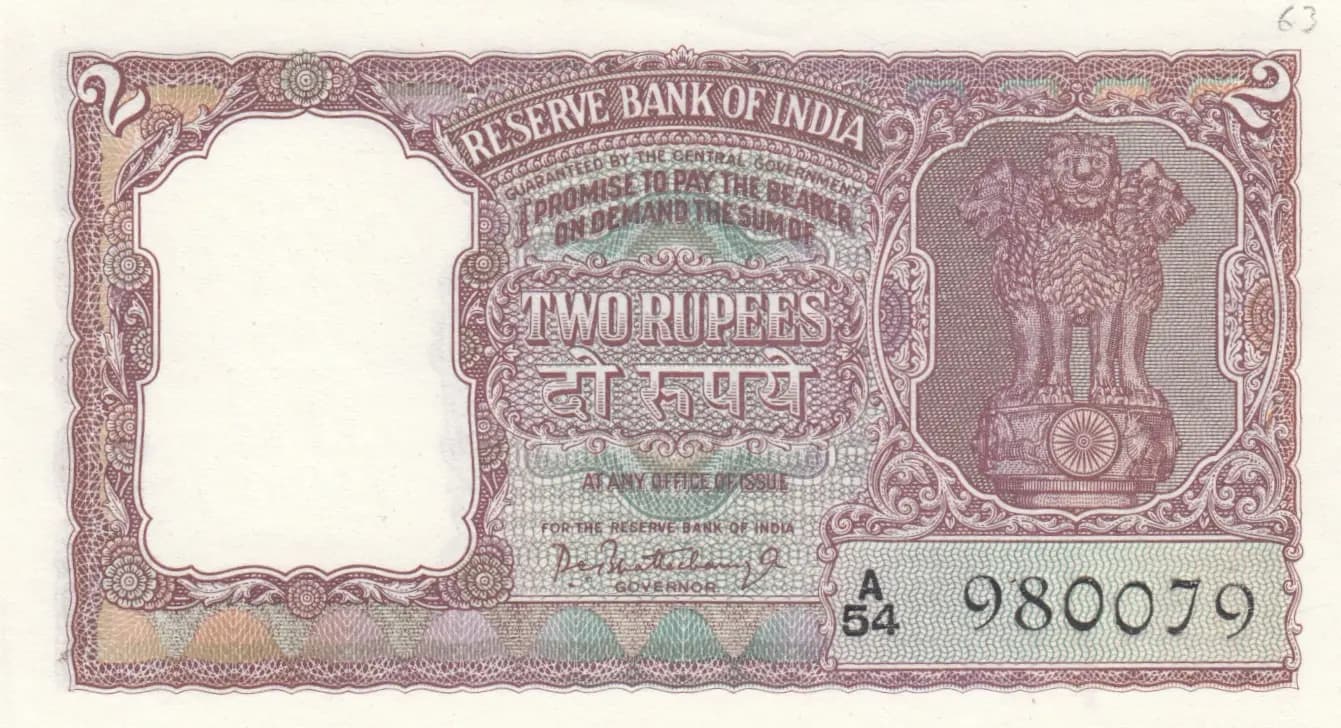
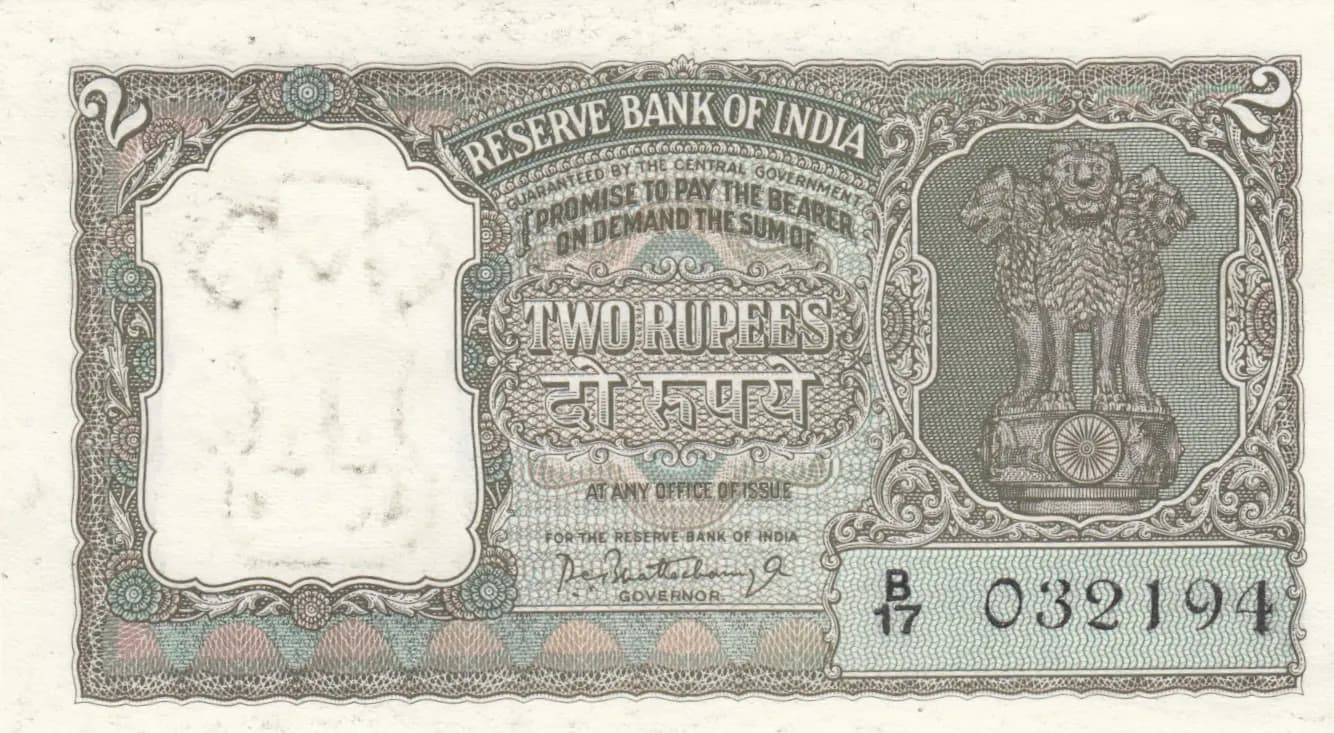
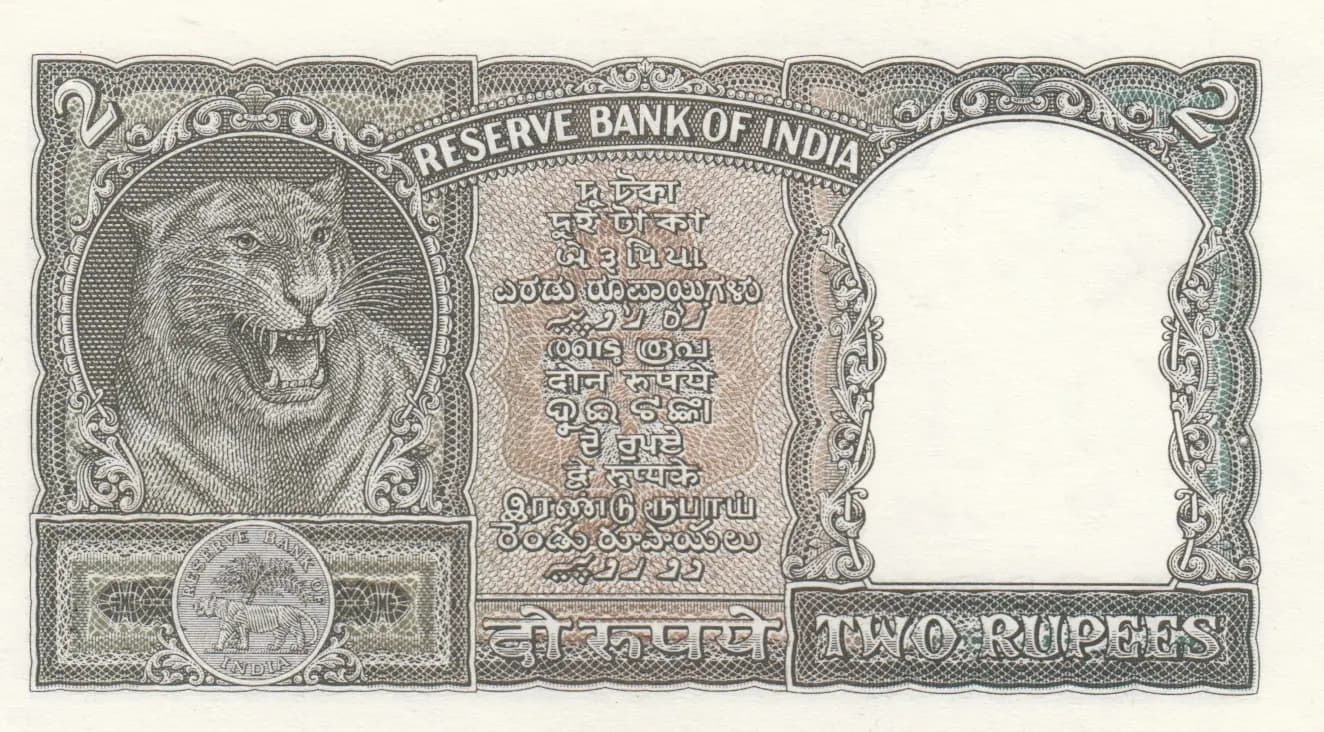
This is a Two Rupees banknote from the Reserve Bank of India, dated 1962 (Pick-31), presented in UNC condition according to the provided grade. The note features the iconic four-lion Ashoka emblem on the obverse and a detailed tiger head portrait on the reverse, both rendered in fine engraved detail. While the visual analysis shows visible foxing, aging, and circulation wear inconsistent with a true UNC grade, the note retains clear design elements and represents an important early post-independence Indian currency issue.
Common. eBay auction records show consistent pricing in the $8-$33 range across multiple condition grades (VF through PMG 66) over a 12-year period, with UNC examples regularly selling for $11-$20. The 2019 catalogue value for UNC is listed at $25. These price points and repeated sales activity indicate this is a readily available note in the collector market. The serial number variant B 17 032194 observed here does not represent a documented scarce variety.
This Two Rupees note was issued during India's early years as an independent republic, reflecting the nation's adoption of indigenous symbols of state power. The four-lion Ashoka emblem on the front derives from the Lion Capital at Sarnath, a symbol of Emperor Ashoka's ancient Mauryan empire and adopted as India's national emblem at independence in 1950. The tiger on the reverse represents India's national animal and cultural heritage, demonstrating the RBI's commitment to featuring distinctly Indian iconography rather than colonial imagery on its currency.
The obverse features the four-lion capital from the Ashoka Column (Sarnath Museum), one of India's most recognizable national symbols, displayed within an ornamental frame on the right side of the note. A large blank cartouche on the left suggests provision for watermark or security printing. The reverse showcases a detailed engraved tiger head facing forward within a circular medallion, positioned on the left side. Both sides are bordered by ornate floral and geometric patterns in gray-green tones with black linework. Text appears in English and multiple Indian languages (Hindi in Devanagari, Tamil, and Telugu scripts), reflecting India's linguistic diversity. The color scheme employs olive-green and tan underprinting on cream paper, characteristic of early RBI note production.
FRONT SIDE: 'RESERVE BANK OF INDIA' (English); 'GUARANTEED BY THE CENTRAL GOVERNMENT PROMISE TO PAY THE BEARER ON DEMAND THE SUM OF TWO RUPEES AT ANY OFFICE OF ISSUE FOR THE RESERVE BANK OF INDIA' (English legal text); 'दो रुपये' (Hindi: Two Rupees); 'GOVERNOR' (English); Serial number 'B 17 032194'. BACK SIDE: 'RESERVE BANK OF INDIA' (English); 'TWO RUPEES' (English); 'दो रुपये' and 'दो रुपये की नोट' (Hindi: Two Rupees / Two Rupee Note); 'रिज़र्व बैंक ऑफ़ इंडिया' (Hindi: Reserve Bank of India); 'ரிசர்வ் பேங்க்' (Tamil: Reserve Bank); 'రిజర్వ్ బ్యాంక్ ఆఫ్ ఇండియా' (Telugu: Reserve Bank of India).
Intaglio engraving with multi-color lithographic underprinting. The fine detail visible in the tiger portrait and border patterns, combined with the layered color application, indicates traditional currency engraving and printing methods employed by India's security printers during the 1960s. The decorative border patterns and portrait work show characteristics consistent with the Bank Note Press, Nashik or similar RBI-contracted security facilities of that era.
Serial number prefix 'B 17' observed on this specimen. The note displays the standard bilingual design (English/Hindi) with additional regional language text (Tamil and Telugu) on the reverse. No exceptional varieties or overprints are apparent. The visual analysis confirms this as the standard circulation issue from the 1960 release period, with no documented error varieties or significant printing varieties known for this Pick number.