2 rupee 1962
Market Prices
6 salesAbout This Note
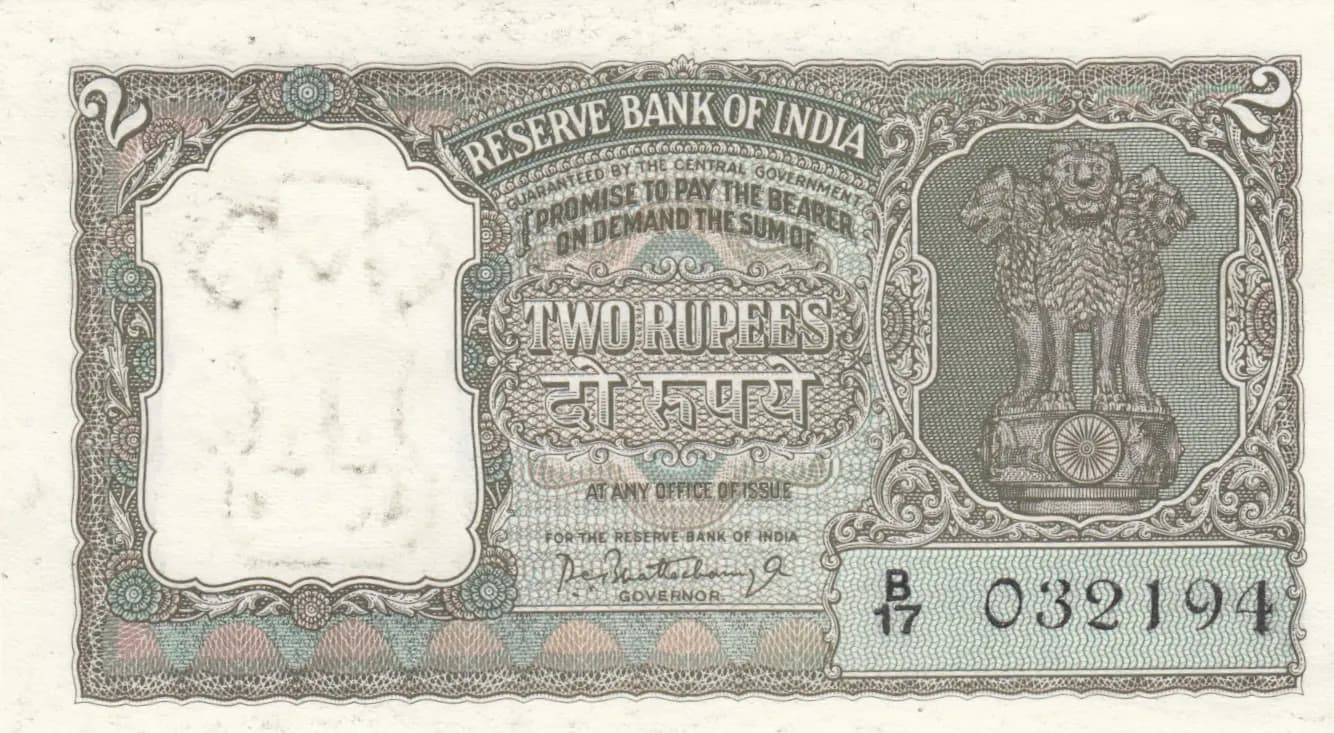
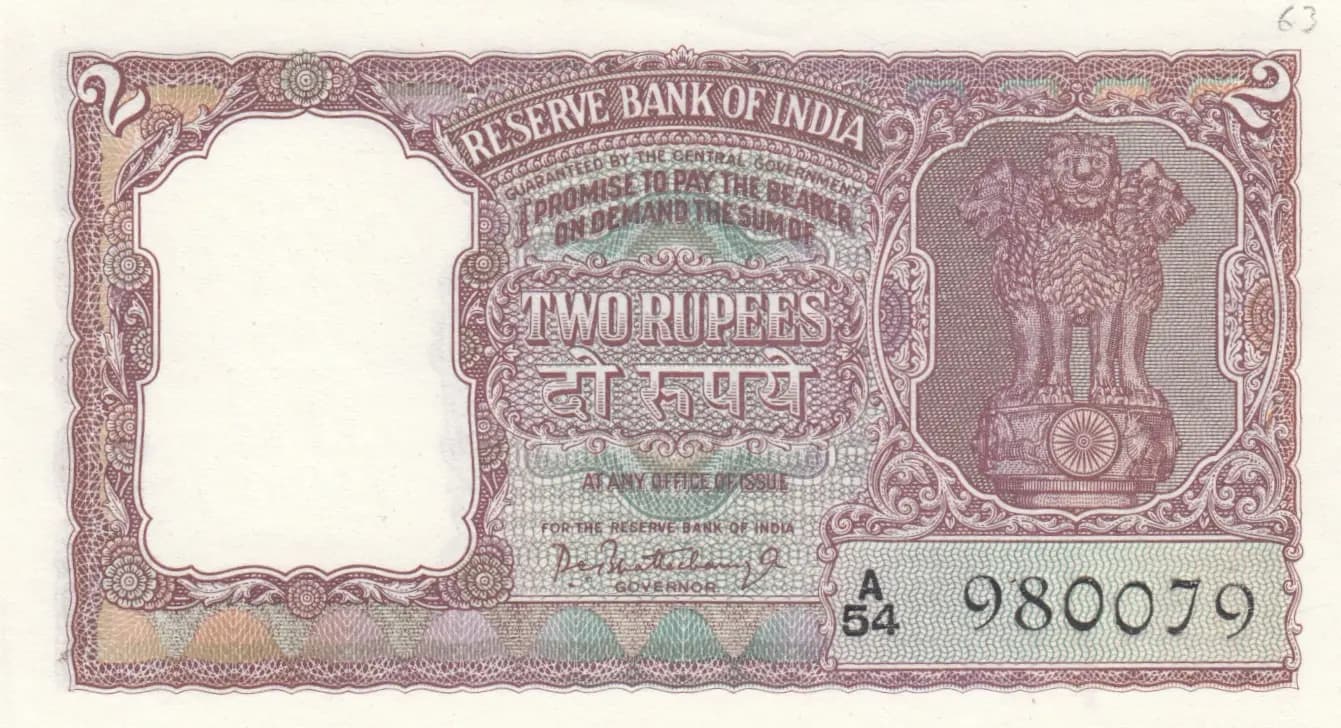
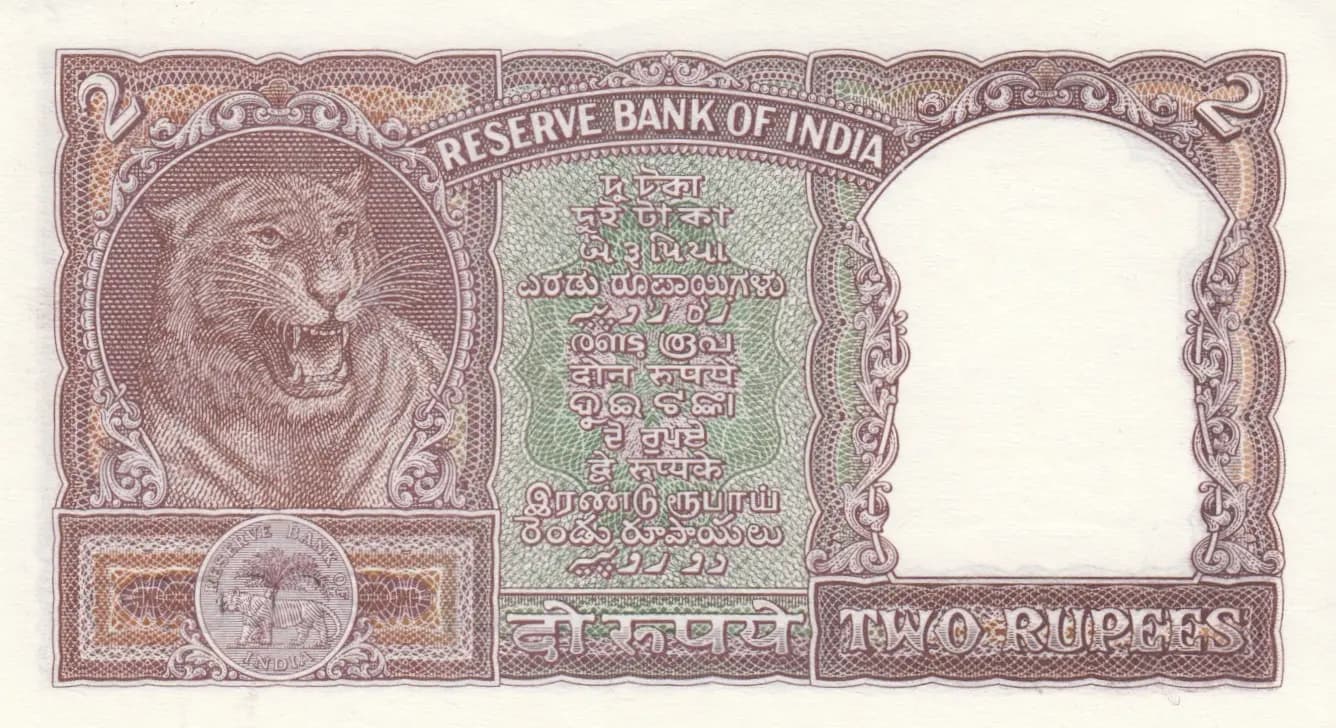
This 1962 Reserve Bank of India 2 Rupee note (Pick 30) is presented in uncirculated condition with sharp, clear printing throughout and no visible wear or handling marks. The note features the iconic Lion Capital of Ashoka on the obverse and a finely engraved tiger head in profile on the reverse, rendered in mauve and purple with green undertones. The excellent state of preservation and intricate design work make this an appealing example of early independent India's currency design.
Common. Market data shows UNC examples selling for $3.92 to $22.45 on eBay (2013-2020), with 2019 catalog valuations at $30 for UNC condition. The 1962 2 Rupee notes were issued in substantial quantities as regular circulation currency during India's early independence period. The abundance of available examples and modest market prices indicate this is a common date and denomination, making it readily available to collectors.
Issued in 1962, this note represents the early period of independent India's monetary design, featuring two emblems central to Indian national identity: the Lion Capital of Ashoka (now housed in the Sarnath Museum) from the Mauryan Empire, symbolizing the rule of law, and the tiger, representing India's wildlife and power. The currency design reflects post-independence India's effort to establish its own cultural and iconographic identity distinct from British colonial coinage and currency.
The obverse features the Lion Capital of Ashoka—the three-lion emblem with the Ashoka Chakra visible within the design—displayed prominently in a rectangular ornamental frame on the right side, representing India's state emblem and constitutional authority. The reverse showcases a detailed engraved portrait of a tiger head in left profile, rendered with fine line work characteristic of security printing. Both sides employ mauve and purple as dominant colors with green undertones and cream/off-white areas, incorporating decorative borders with floral and geometric patterns typical of RBI currency design of this era. Watermark areas are evident as blank rectangular panels on both sides.
Front side: 'RESERVE BANK OF INDIA' (English); 'GUARANTEE BY THE CENTRAL GOVERNMENT AND LEGAL TENDER' (English); 'TWO RUPEES' (English); 'दो रुपये' [Do Rupaye] (Hindi); 'FOR THE RESERVE BANK OF INDIA' (English); 'GOVERNOR' (English); Serial number A 54 980079. Back side: 'RESERVE BANK OF INDIA' (English); 'TWO RUPEES' (English); 'दो रुपये' [Do Rupaye] (Hindi); 'ரு' [Rupees] (Tamil); 'INDIA' (English); 'STATE BANK' (English). The note includes bilingual and trilingual denomination markings reflecting India's linguistic diversity.
This note was produced using intaglio engraving and letterpress printing, evident from the sharp definition of fine details in the tiger portrait and decorative elements, combined with the precise alignment of multicolor elements. The RBI currency notes of this period were printed by the Security Printing Press, India's primary government security printer, utilizing traditional banknote production methods with separate color plates for the mauve, purple, and green components.
This example is identified by the serial number prefix 'A 54' and serial number 980079. The note bears the Governor's signature, typical of RBI notes of this period. The 1962 2 Rupee issue (Pick 30) is known from the 1960 actual issue date per RBI records. No major varieties affecting this denomination are recorded for this period, though signature varieties exist across the issue range as different Governors served during the printing period.