10 rupees 1969
Market Prices
7 salesAbout This Note
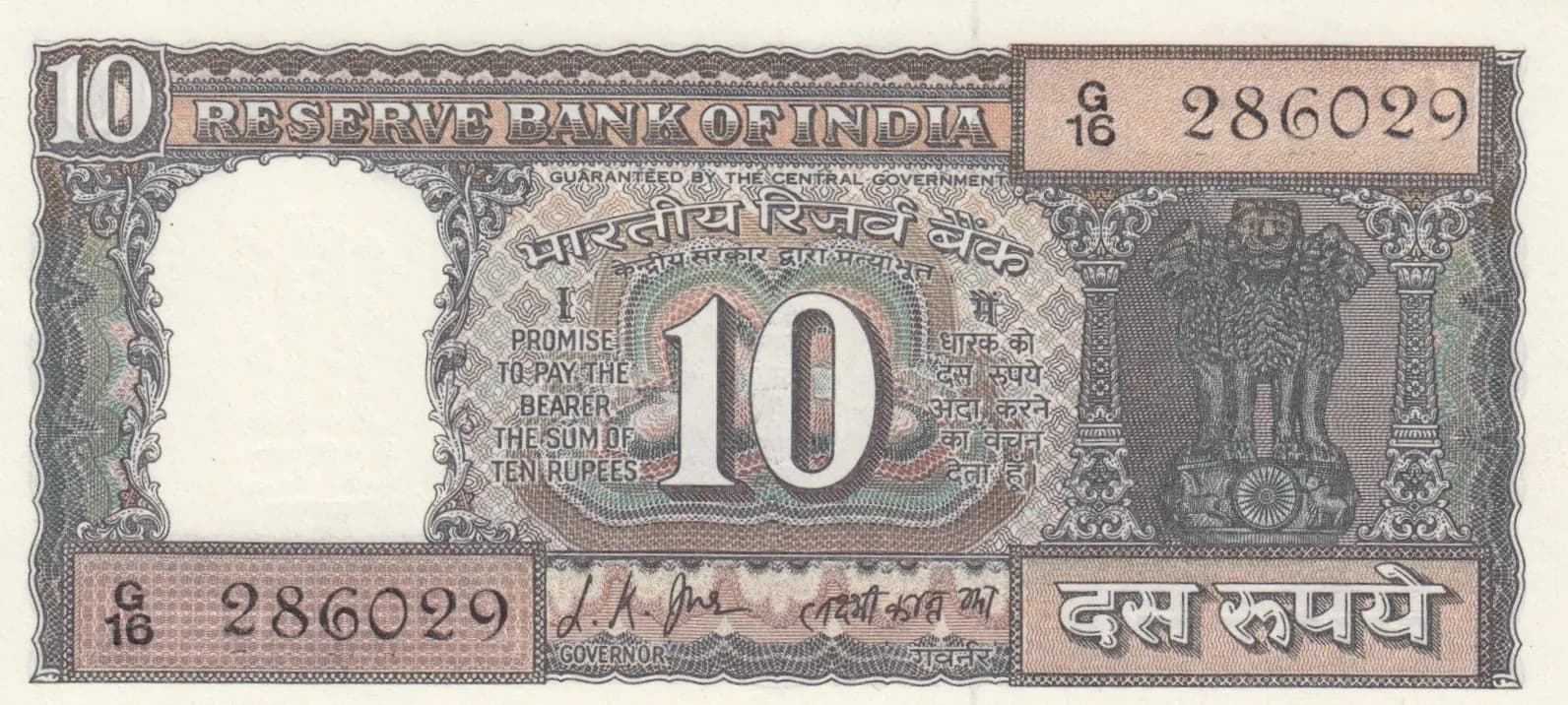
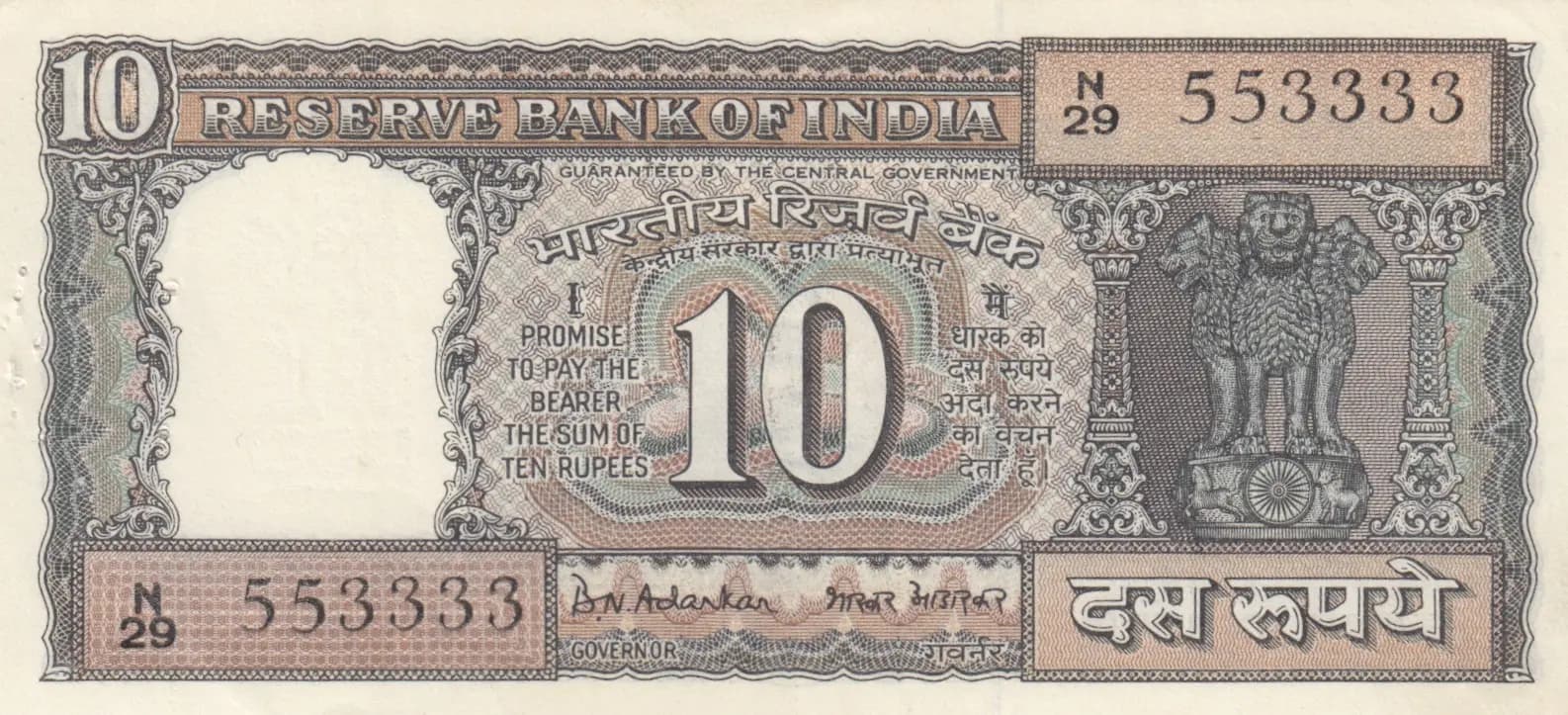
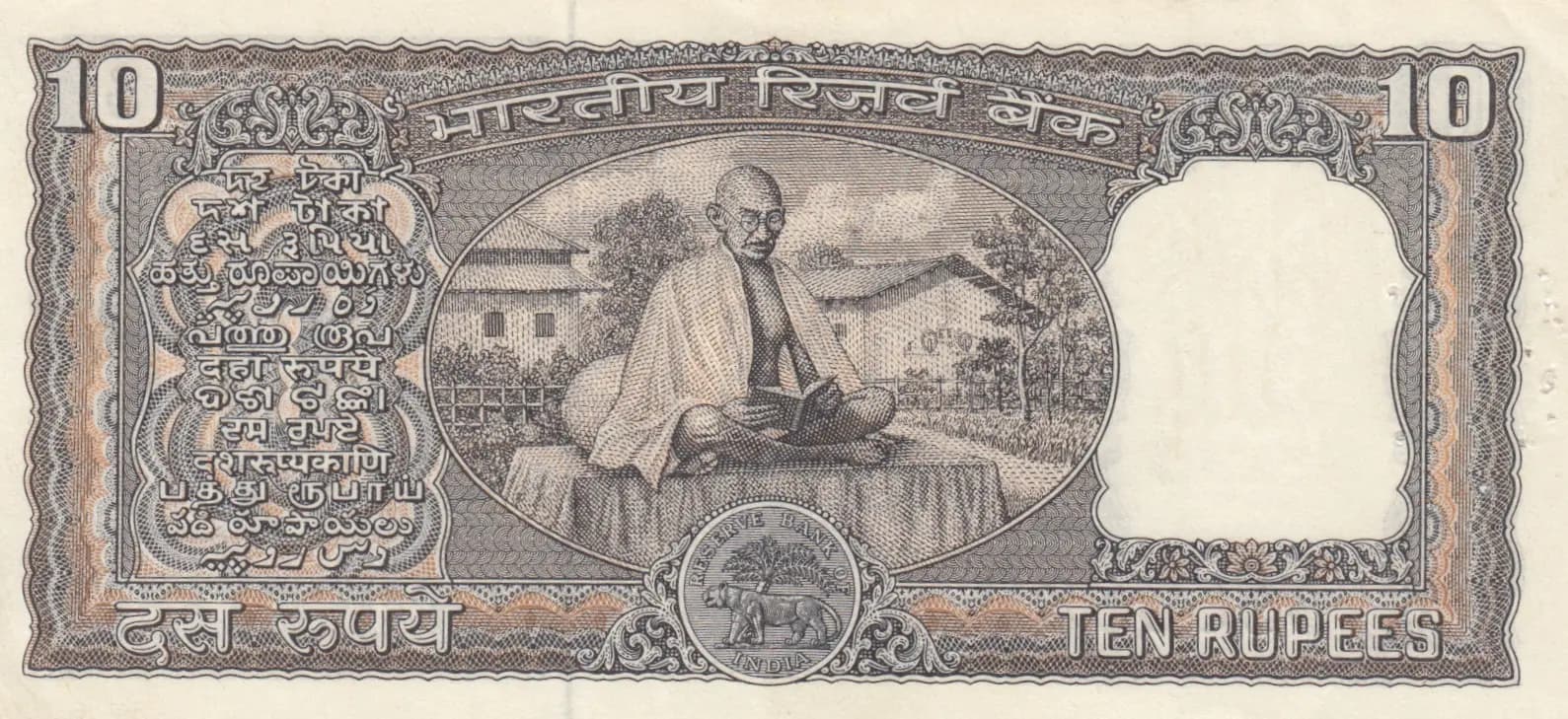
This is a commemorative 10 Rupees note from 1969 issued by the Reserve Bank of India to honor the centennial of Mahatma Gandhi's birth (1869-1969). The note is graded EF (Extremely Fine) and displays exceptional clarity with sharp printing, minimal wear, and pristine paper quality throughout both obverse and reverse. The front showcases the iconic Ashoka Chakra emblem with ornate pillars in classical architectural styling, while the reverse features a dignified portrait of Gandhi in traditional Indian attire seated in a rural agricultural setting, making this a significant piece of Indian numismatic and historical commemorative currency.
Common. While this is a commemorative issue with historical significance, the eBay price history provided shows consistent sales in the $10–$39 range with multiple transactions, indicating substantial availability in the collector market. Even high-grade examples (PMG 65–66) have sold recently in modest price ranges ($32–$39), which is typical of common notes. The print run for this commemorative issue was substantial, and the note remains readily available to collectors. The EF grade in this case is more valuable than the base denomination but does not elevate it to scarce or rare status.
This commemorative issue marks the centennial celebration of Mahatma Gandhi's birth in 1869, issued during a period of national commemoration in 1969. The Ashoka Chakra symbol on the obverse represents India's Buddhist heritage and appears on the national flag, symbolizing governance and law, while Gandhi's portrait on the reverse honors his pivotal role in India's independence movement and philosophy of non-violence. The rural agricultural setting depicted in the background reflects Gandhi's vision of a self-sufficient agrarian India and his connection to village life and traditional Indian values.
The obverse (front) features a symmetrical, formal design centered on the Ashoka Chakra—the 24-spoked dharma wheel from the capital of the Asoka pillar at Sarnath Museum—flanked by two ornate decorative pillars with elaborate floral capitals representing classical Indian architectural heritage. The design is rendered primarily in black, brown, and cream tones with pink/rose accents. The reverse (back) contains an engraved portrait of Mohandas Karamchand Gandhi seated in three-quarter view, dressed in traditional Indian shawl and attire, positioned at what appears to be a desk or work table with a rural Indian landscape background featuring agricultural buildings, vegetation, and trees. A circular seal/emblem is positioned at the bottom center. Both sides feature ornate decorative border frames with classical scroll work elements, bilingual inscriptions in English and Hindi/Devanagari script, and denomination markings.
FRONT SIDE: 'RESERVE BANK OF INDIA' (English) / 'भारतीय रिज़र्व बैंक' (Reserve Bank of India in Hindi/Devanagari); 'GUARANTEED BY THE CENTRAL GOVERNMENT' (English) / 'भारत सरकार द्वारा गारंटीकृत' (Guaranteed by the Government of India in Hindi); 'PROMISE TO PAY THE BEARER THE SUM OF TEN RUPEES' (English); '10' and 'दस रुपये' (Ten Rupees in Hindi/Devanagari); Serial number designation 'N 29 553333' (repeated top right and bottom left); 'GOVERNOR' signature line. BACK SIDE: '10' (top corners, Arabic numerals); 'TEN RUPEES' (English, bottom); 'INDIA' (English); 'भारतीय रिज़र्व बैंक' (Reserve Bank of India in Hindi); 'दस रुपये' (Ten Rupees in Hindi/Devanagari).
Intaglio (copperplate engraving) printing, evidenced by the sharp, finely detailed line work visible throughout both sides, the precise portrait rendering with subtle tonal gradations, the ornate border designs, and the crisp edge definition of all design elements. The security features include fine line engraving patterns and serial number formatting. For Indian banknotes of this period (Pick 69b era, 1969-1970), the printing was typically executed by the Security Printing Press, India or similar government-operated security printers under Reserve Bank of India specifications.
Pick catalog number 69b indicates a specific variety within the 1969 10 Rupees Gandhi Centennial issue. The serial number prefix 'N 29' visible on the example note may indicate a specific printing series or batch. The signature line present on the obverse would correspond to a particular RBI Governor's tenure. Without access to detailed variety catalogs specific to Indian commemorative issues, the primary identifier remains the Pick 69b designation. Collectors should note serial number prefixes and signature varieties when cataloging examples, as these can distinguish between different printing runs or release phases of this commemorative series.