10 rupees 1967
Market Prices
5 salesAbout This Note
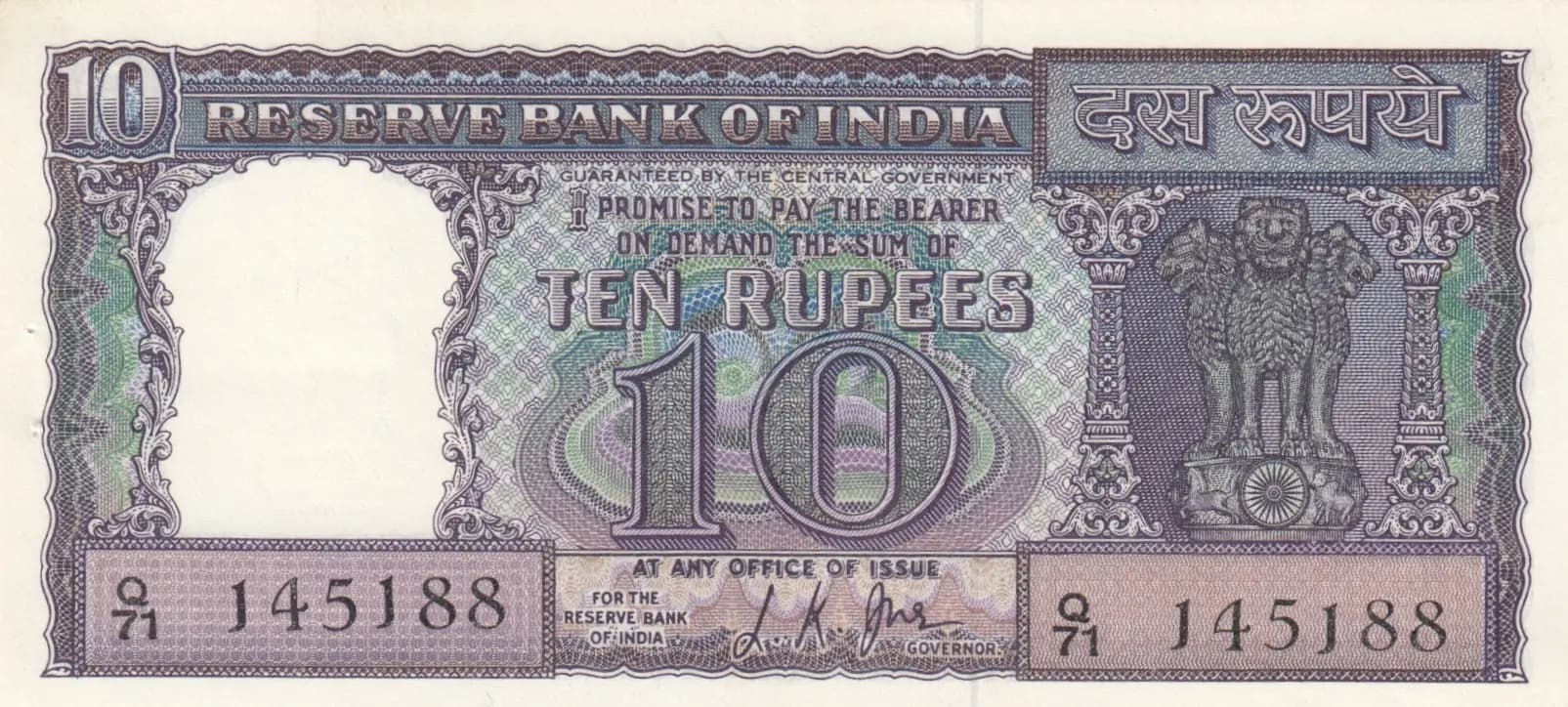
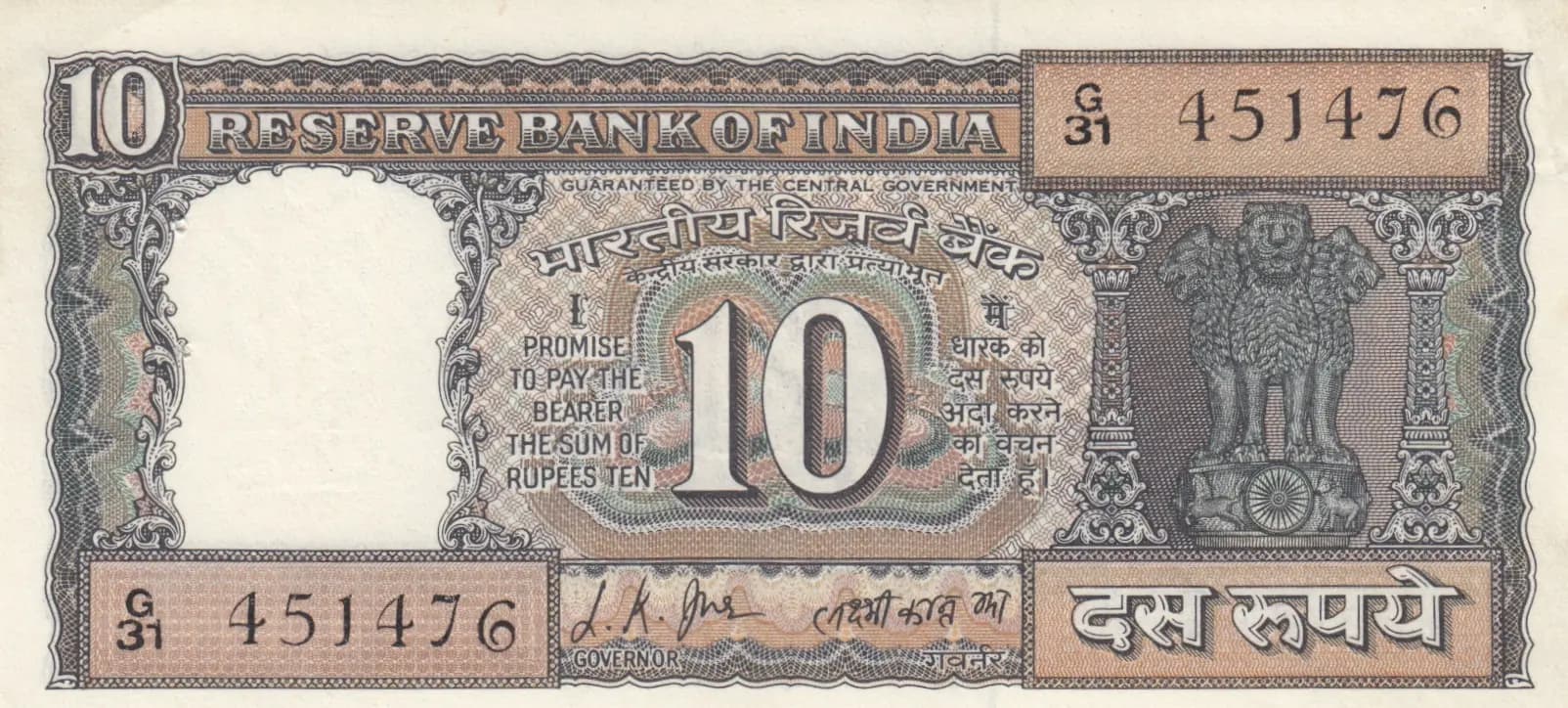
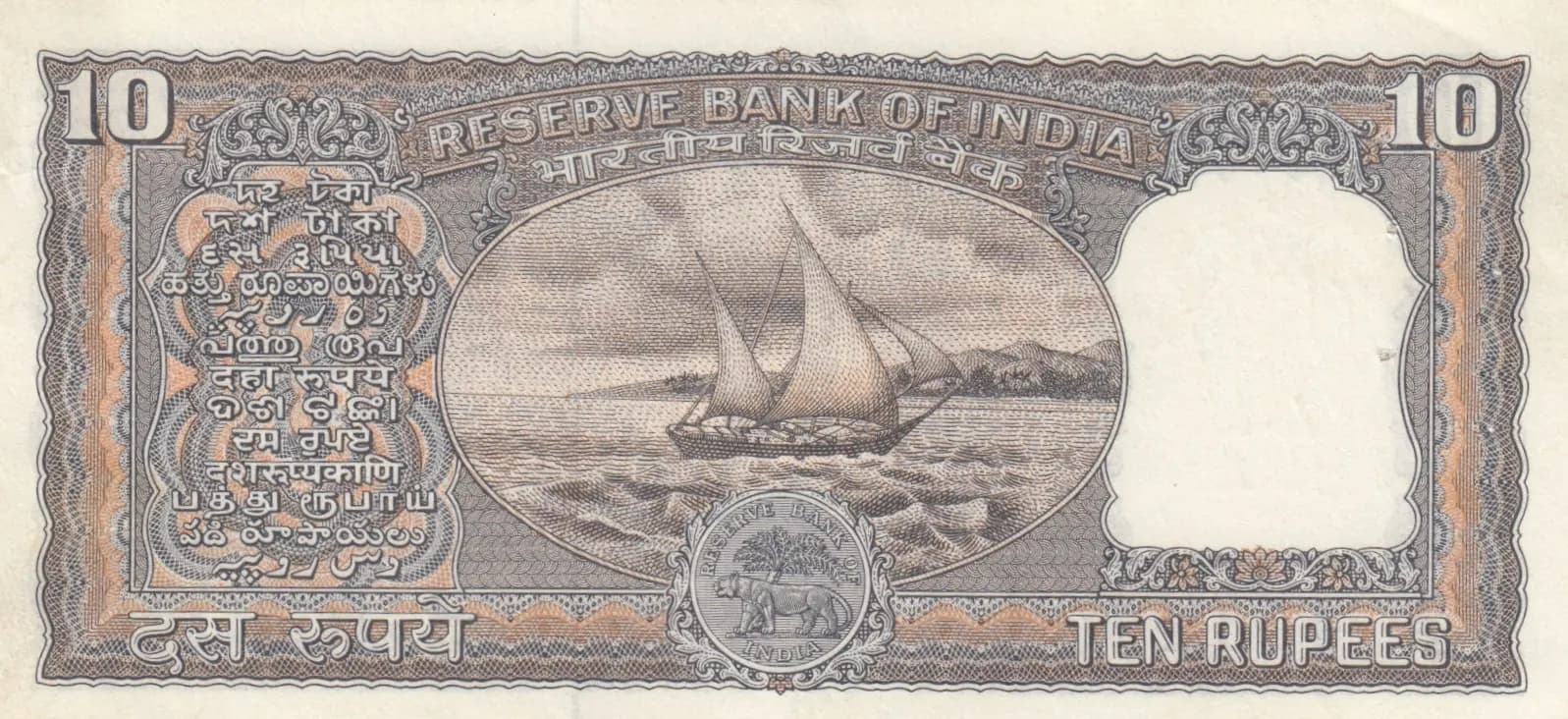
This is an AU-graded 10 Rupees banknote from India issued in 1967 by the Reserve Bank of India (Pick P-58). The note exhibits excellent preservation with no visible wear, creases, or tears, displaying the characteristic cream/beige background with brown and grey inks typical of this series. The obverse features the iconic Lion Capital of Asoka in the national emblem, while the reverse displays a traditional dhow sailing vessel, representing India's maritime heritage during the post-independence period.
Common. The eBay market data provided shows consistent sales in the $8–$15 range for AUNC specimens over multiple years (2013–2017), with catalog values of $27.50 for UNC condition. The high volume of sales activity with multiple auctions reaching double-digit bid counts indicates robust collector interest and adequate supply. This is a regular issue from a major denomination and printing year of the Reserve Bank of India, with no indication of a restricted print run or early recall. The AU grade specimen presented here represents typical market supply.
This 1967 issue reflects India's early post-independence currency designs, featuring national symbols of deep cultural significance. The Ashoka Chakra and Lion Capital represent India's Buddhist heritage and state sovereignty, while the dhow on the reverse acknowledges the nation's historical maritime trade routes and coastal commerce. These iconographic choices underscore the Reserve Bank of India's effort to establish a distinctly Indian numismatic identity in the newly independent nation.
The obverse features a central denomination numeral '10' within an ornate circular frame, flanked by elaborate decorative borders with intricate scrollwork patterns on both sides. The right side displays the national emblem of India—the Four Lion Capital of Asoka (sourced from the Sarnath Museum)—a symbol of imperial authority and dharma in Indian tradition. The design incorporates bilingual text in English and Hindi/Devanagari script, with the Governor's signature and serial number (G 31 451476) positioned in opposite corners. The reverse presents a central oval vignette depicting a traditional Indian dhow or sailing vessel on water with coastal landscape features, surrounded by ornate decorative borders. A lion emblem appears at the base of the central vignette. The design employs a symmetrical layout with text panels framed in ornamental borders on the left side and blank space on the right, typical of Reserve Bank currency design from this era.
FRONT SIDE: 'RESERVE BANK OF INDIA' (English), 'भारतीय रिज़र्व बैंक' (Hindi: Reserve Bank of India), 'I PROMISE TO PAY THE BEARER THE SUM OF RUPEES TEN' (English), 'भारत सरकार द्वारा प्रतिज्ञित' (Hindi: Guaranteed by the Government of India), 'GUARANTEED BY THE CENTRAL GOVERNMENT' (English), 'दस रुपये' (Hindi: Ten Rupees), 'GOVERNOR' (English), Serial number 'G 31 451476' (appears top right and bottom left). BACK SIDE: 'RESERVE BANK OF INDIA' (English), 'TEN RUPEES' (English), 'दस रुपये' (Hindi: Ten Rupees), denomination '10' (appears in top left and right corners), with additional regulatory text in Hindi/Devanagari script in left panel (exact content unclear due to resolution).
This note was produced using intaglio (engraved) printing combined with letterpress techniques, characteristic of high-security currency production of the 1960s. The fine line work evident in the decorative borders, the detailed engraving of the Asoka Lion Capital, and the intricate rendering of the dhow vignette demonstrate the sophisticated engraving capabilities of the security printer. The Register Bank of India's currency notes from this period were typically printed by the Security Printing Press in Nashik and/or the India Security Press in Hyderabad, employing multi-color printing with careful registration of the cream/beige base color and brown/grey overprints.
This note is identified as Pick P-58 (1967 issue). According to the catalog reference, this variety contains an incorrect Urdu spelling of the word 'Rupee' at the lower left on the back. Related varieties include P-57 (similar note with incorrect Urdu), P-59 (similar note with incorrect Urdu), and P-60/P-60A (later issues with corrected Urdu spelling and plate modifications). The serial number prefix 'G 31' observed on this specimen may indicate a specific print run or security printer batch, though further research would be needed to definitively establish which of the two primary printing facilities produced this particular note. The bilingual design (English and Hindi) is consistent across the P-58 series.