10 rupees 1967
Market Prices
6 salesAbout This Note
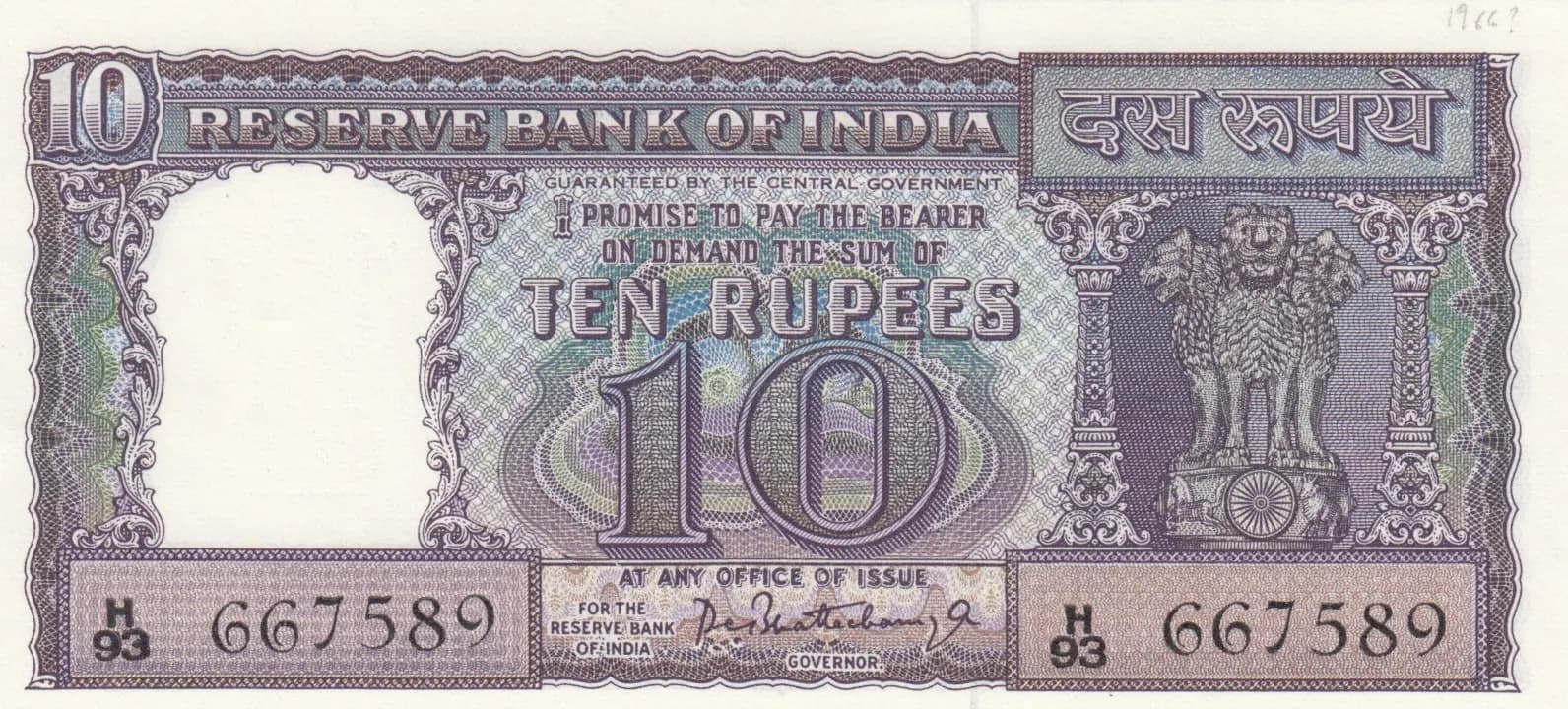
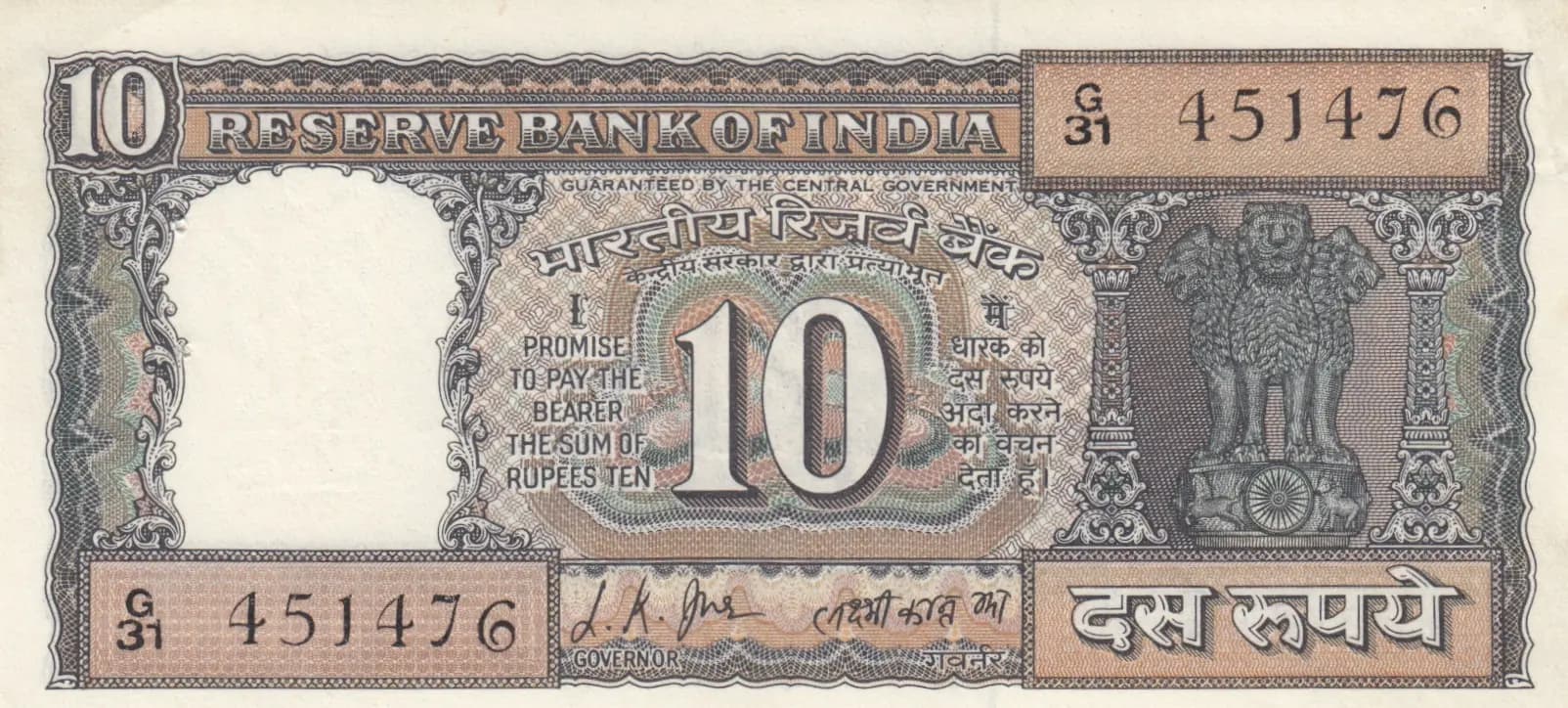
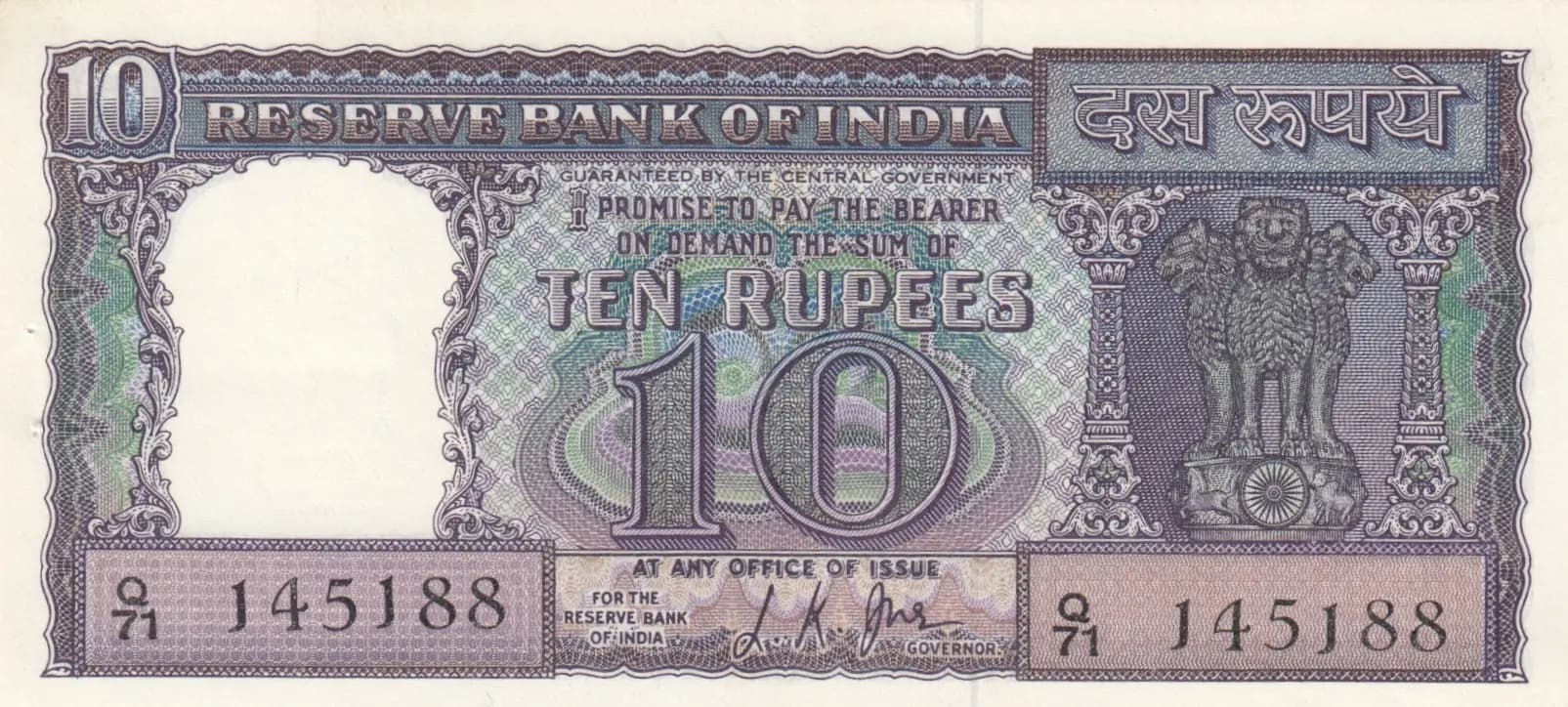
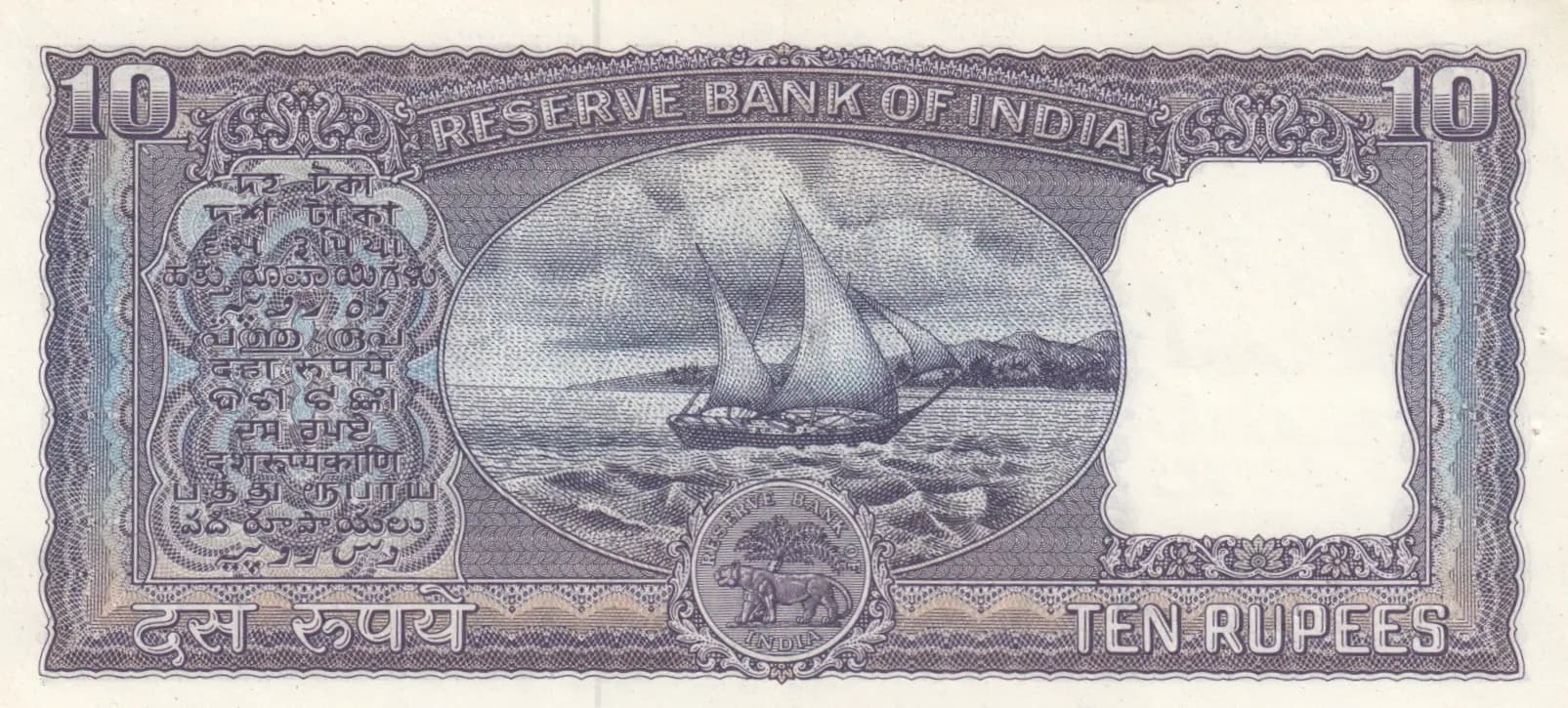
This is a well-preserved AU-graded 10 Rupees note from 1967, issued by the Reserve Bank of India (Pick-57b). The note features the iconic Four-Lion Capital of the Ashoka pillar on the obverse and a traditional dhow sailing vessel on the reverse, both rendered in fine detail. The note exhibits the characteristic purple and multicolored palette of this series with clear, sharp printing and minimal wear consistent with its AU grade, making it a solid mid-grade example of this classic Indian currency.
Common. The eBay price tracking data shows this note type sold frequently between 2013-2021 at modest prices ($1.95-$36 depending on grade), with catalogue values of $6 in VF and $20 in UNC. The AU-graded example shown falls within the typical price range for this variety ($25-$36 in comparable grades), indicating consistent collector demand but no scarcity premium. This was a standard circulation issue with large print runs typical of RBI's 10 Rupee denominations during this period.
This 10 Rupee note was issued during India's post-independence consolidation period, reflecting the nation's cultural and historical identity through its choice of national symbols. The Four-Lion Capital of Ashoka (from the Sarnath Museum) represents India's ancient Buddhist heritage and appears on the national emblem, while the dhow depicts India's maritime trade heritage, connecting to the country's commercial history with East Africa and the Arab world during this era.
The obverse features a large central denomination numeral '10' flanked by ornamental floral borders typical of mid-20th century Indian currency design. The Four-Lion Capital of Ashoka (Sarnath Museum original) is positioned on the right side, serving as India's primary national symbol. The note displays bilingual text in English and Devanagari script with the standard promise-to-pay clause and Central Government guarantee. The reverse showcases a detailed landscape engraving of a traditional dhow sailing vessel on water with coastal mountains in the background, emphasizing India's maritime heritage. A circular seal featuring an elephant appears in the lower central portion, and ornamental borders frame the entire design. The color scheme of purple/violet with green and cream tones is characteristic of this series.
FRONT: 'RESERVE BANK OF INDIA' (English) / 'भारत रिज़र्व' (Devanagari: Reserve Bank in Hindi) / 'GUARANTEED BY THE CENTRAL GOVERNMENT' / 'I PROMISE TO PAY THE BEARER ON DEMAND THE SUM OF THE TEN RUPEES AT ANY OFFICE OF ISSUE FOR THE RESERVE BANK OF INDIA' / 'GOVERNOR' / Serial Number: 145188 with prefix 'ओ' (Devanagari O). BACK: 'RESERVE BANK OF INDIA' / 'दस रुपये' (Devanagari: Ten Rupees) / Denomination numerals '10' in top corners / 'TEN RUPEES'
Intaglio (engraved) printing, a security printing method standard for Reserve Bank of India currency of this era. The fine line work, detailed landscape engraving of the dhow, and ornamental border patterns are characteristic of intaglio production. This note was likely produced by India Security Press (ISP) or De La Rue, the primary security printers for RBI during the 1960s.
This is identified as Pick-57b, which is distinguished by an incorrect Urdu spelling of 'Rupee' at the lower left on the reverse. This cataloging distinction differentiates it from later corrected versions (Pick-60 and Pick-60A) and related denominations P-58 and P-59 which share similar characteristics. The serial number prefix 'ओ' (Devanagari O) and the specific printing period (1967 as stated in catalog, though some sources indicate 1965 issue date) may further refine the variety identification. No overprints or signature variations are apparent in the visual analysis.