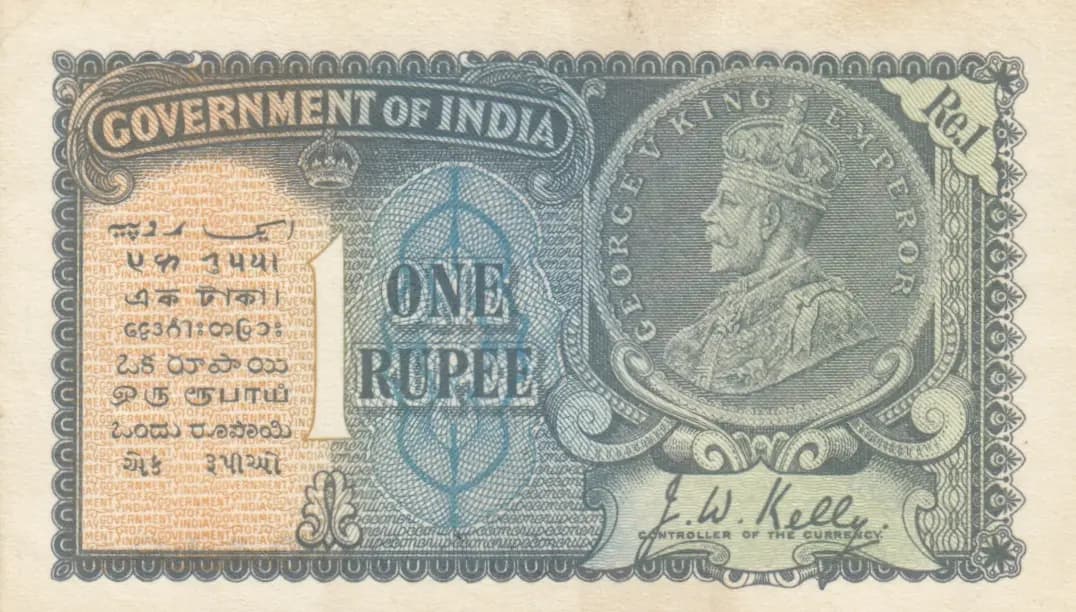
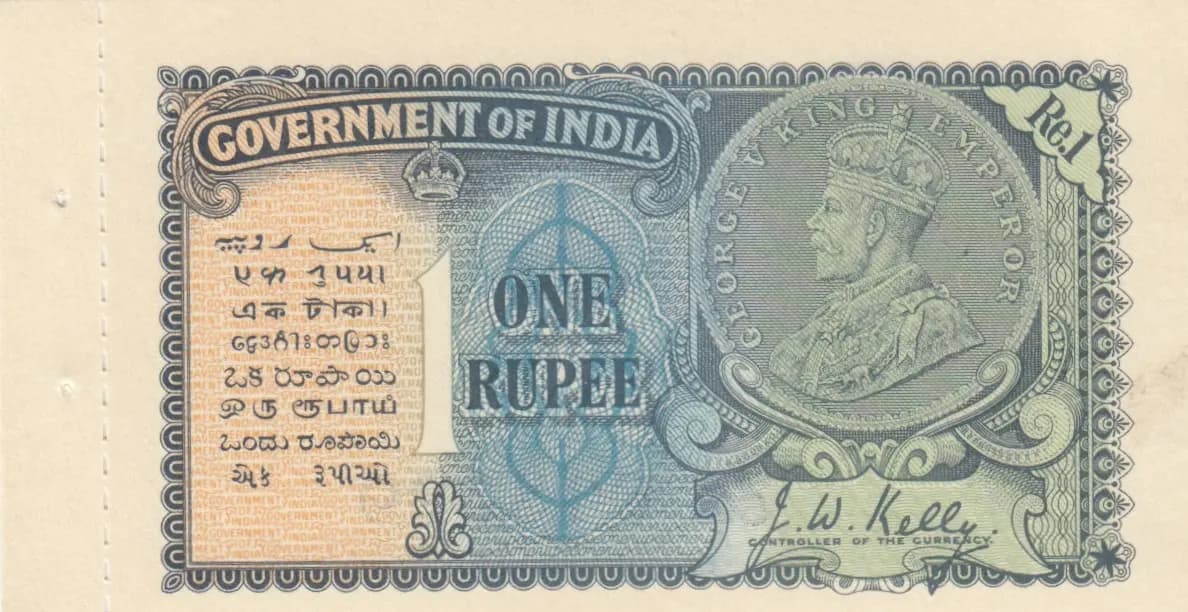
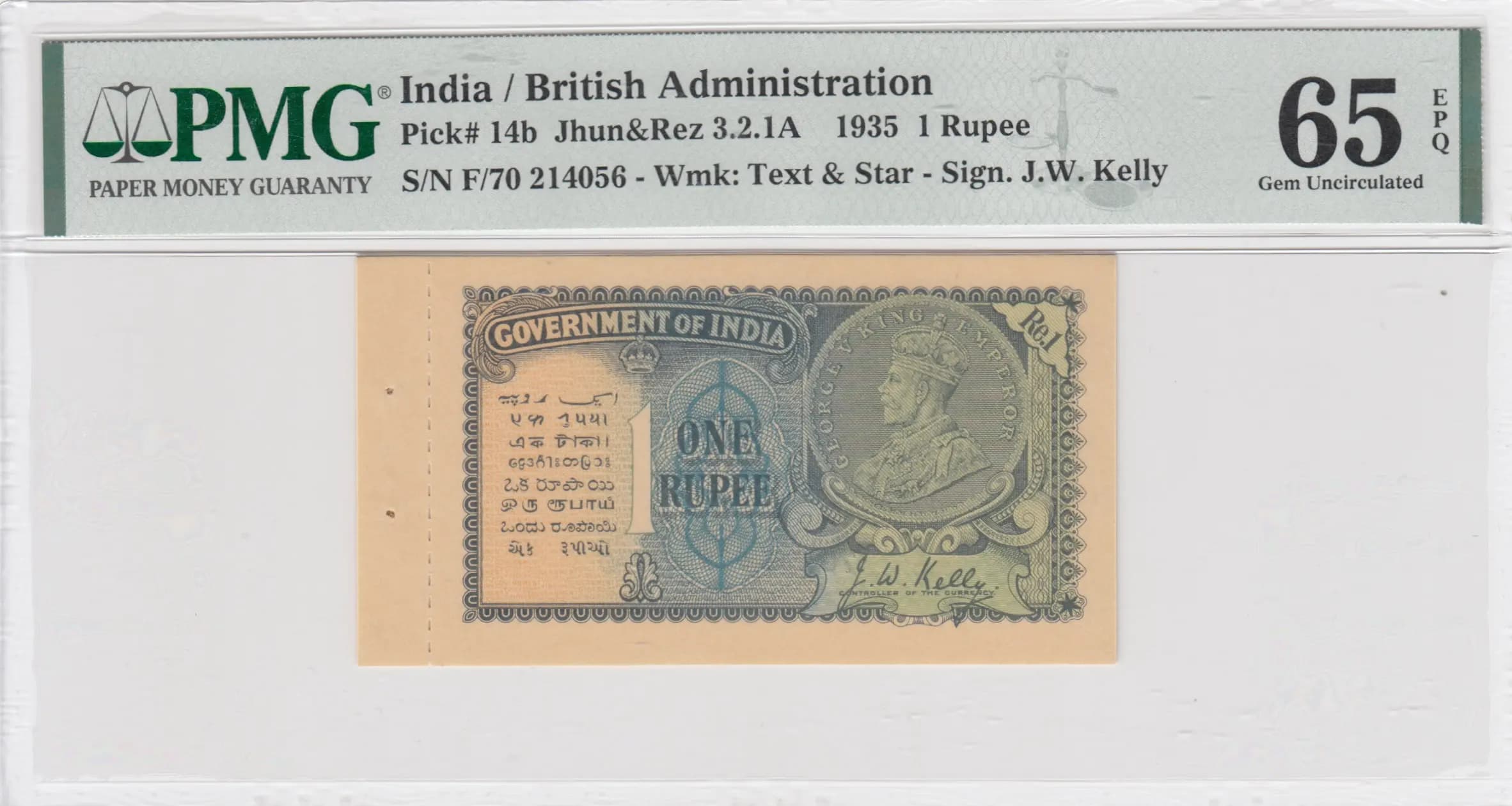
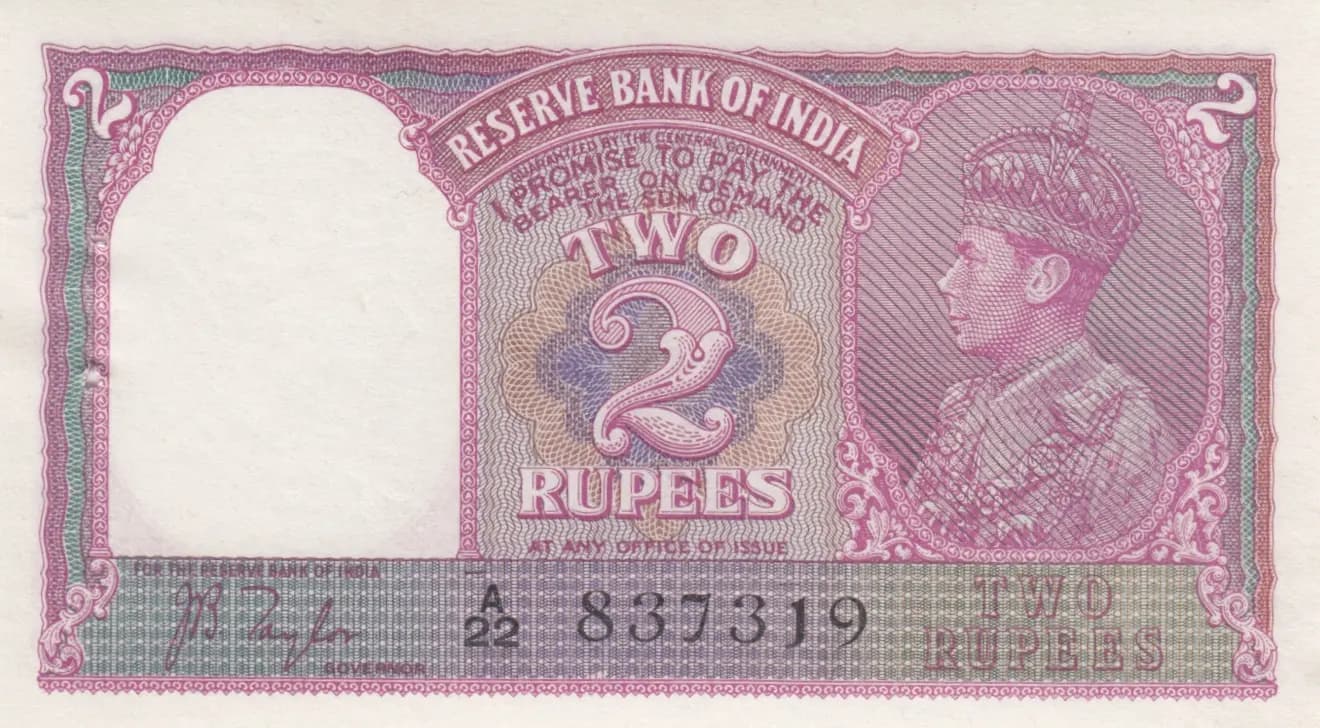
10 rupees 1949
Market Prices
15 salesAbout This Note
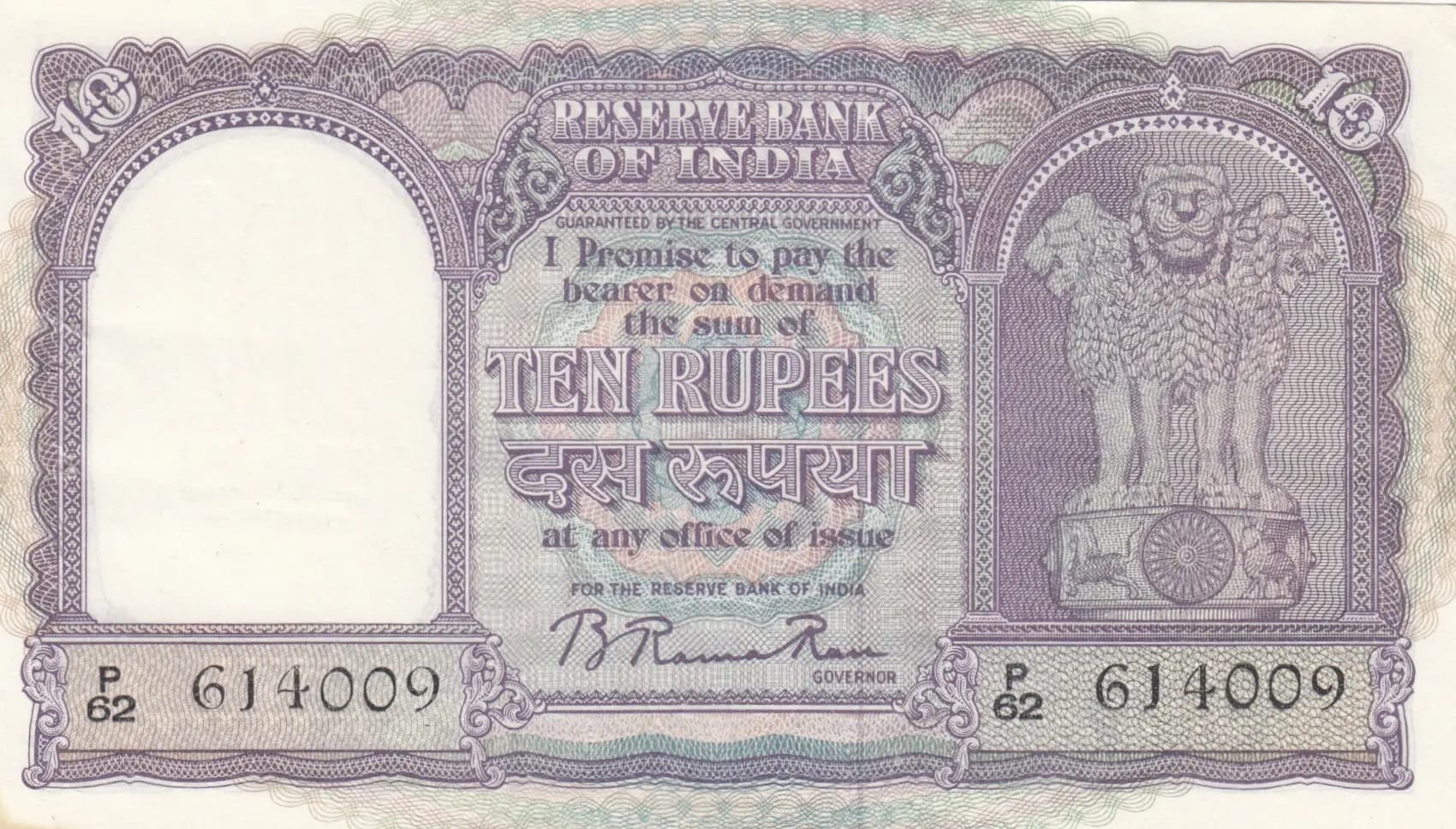
An exceptional example of India's early post-independence currency, this P-38 10 Rupees note from 1949 showcases the newly adopted Lion Capital of Ashoka emblem and traditional dhow imagery on crisp, uncirculated paper with purple and mauve tones. The note exhibits hallmark security features of the era including fine line engraving, intricate guilloche patterns, and blank portrait ovals, presented in AU condition with no visible wear, creases, or degradation. This early Reserve Bank of India issue represents a significant numismatic piece from the formative years of modern Indian currency design.
Common. The eBay price tracking data from realbanknotes.com demonstrates consistent, sustained market activity over more than a decade (2013-2025) with regular sales at modest prices: uncirculated examples typically realizing $15-27, while fine condition specimens sell for $2-9. The absence of scarcity premiums, the volume of comparable sales, and the catalog notation that this is a regular issue variant all indicate this is a widely available note among collectors. The P-38 designation in the PMG population report confirms this is a standard catalogue variety with no indication of restricted print runs or recall status. Unless the specific AU-graded serial number represented is exceptionally early or late in the printing sequence, market valuation remains consistent with common-grade pricing.
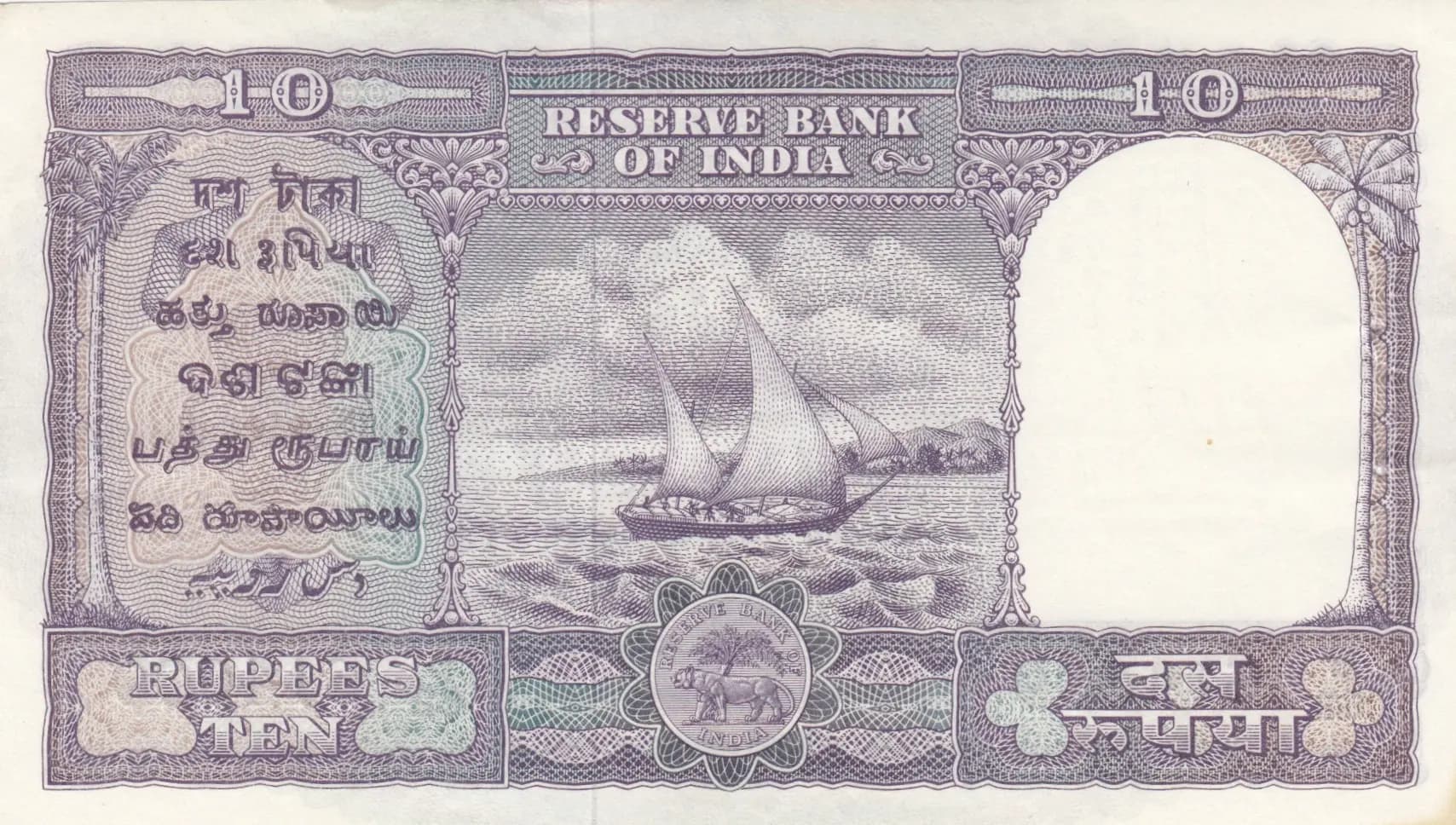
Issued in 1949, shortly after India's independence in 1947, this banknote reflects the nation's adoption of the Lion Capital of Ashoka—the four-lion emblem from the 3rd-century BCE Buddhist monument at Sarnath—as a central national symbol. The reverse features a traditional dhow sailing vessel, referencing India's long maritime trading heritage and connections to regional commerce across the Indian Ocean. The bilingual English and Hindi inscriptions, along with the regional language text on the reverse (Tamil visible in the visual analysis), demonstrate the Reserve Bank of India's commitment to inclusive currency design across the newly independent nation's diverse linguistic landscape.
The obverse features the Lion Capital of Ashoka—a sculptural emblem comprising four lions facing outward, representing the historical monument now housed in the Sarnath Museum—positioned prominently on the right side of the note. This national emblem, which became India's official state seal, is rendered in detailed engraving and serves as the primary vignette. The note includes a blank oval portrait area on the left (a security and design convention of the era), decorative corner circles containing the numeral '10', and an ornate border with geometric and floral patterns executed in guilloche technique. The reverse depicts a traditional two-sailed dhow (coastal trading vessel) centered on the design, with water indicated beneath, representing India's maritime commercial heritage. A circular State Bank of India emblem with an elephant motif appears at the bottom center. Both sides maintain consistent purple and mauve coloration with cream-white background elements. Serial numbers appear on both the obverse and reverse. The design reflects early RBI aesthetic principles combining classical Indian heritage imagery with European banknote engraving traditions.
FRONT SIDE: 'RESERVE BANK OF INDIA' (English header); 'GUARANTEED BY THE CENTRAL GOVERNMENT' (central guarantee clause); 'I Promise to pay the bearer on demand the sum of TEN RUPEES' (promise to pay); 'दश रुपया' (Hindi: 'Dasha Rupaya' - Ten Rupees, note the catalogued spelling variation); 'at any office of issue' (redemption location); 'FOR THE RESERVE BANK OF INDIA' and 'GOVERNOR' (authorization); Printer identifier 'P 62' and 'F 62' with serial number '6J4009'. BACK SIDE: 'RESERVE BANK OF INDIA' (top center); 'TEN RUPEES' (English denomination); 'दश रुपये' (Hindi: 'Dasha Rupaye' - Ten Rupees, corrected plural form); Tamil text 'பத்து ரூபாய்' (Pattu Rupay - Ten Rupees) and related regional language denominations; Circular emblem text representing State Bank of India authorization; Multiple regional script inscriptions including Devanagari script variants.
Intaglio (steel engraving) printing, evidenced by the fine line work, detailed guilloche patterns, and crisp impression quality visible throughout the note. The precise rendering of the Lion Capital emblem, the dhow vessel, and the ornate decorative borders are characteristic of traditional steel plate engraving. The note exhibits the security printer's work identifying marks ('P 62' and 'F 62'), typical of Reserve Bank of India issues produced at the government security printing facility. The multi-color effect (purple and mauve) was likely achieved through single-pass or multi-pass intaglio printing with the noted color scheme applied during the production process.
This note represents the P-38 variety of the 1949 10 Rupees issue, characterized by English and Hindi text on the obverse. The visual analysis confirms the catalogued spelling variant 'दश रुपया' (Rupaya) rather than the correct 'दश रुपये' (Rupaye), matching the distinguishing feature noted in the banknote.ws reference. Related varieties include P-37 (English text only, no Hindi), and P-39 & P-40 (corrected Hindi plural 'Rupaye' with various plate modifications). The serial numbers visible ('6J4009' with prefixes 'P 62' and 'F 62') are consistent with standard RBI issue numbering of the period. The printer identifier marks suggest this specimen was produced during a standard printing run at the government security facility.