10 rupees 1960
Market Prices
2 salesAbout This Note
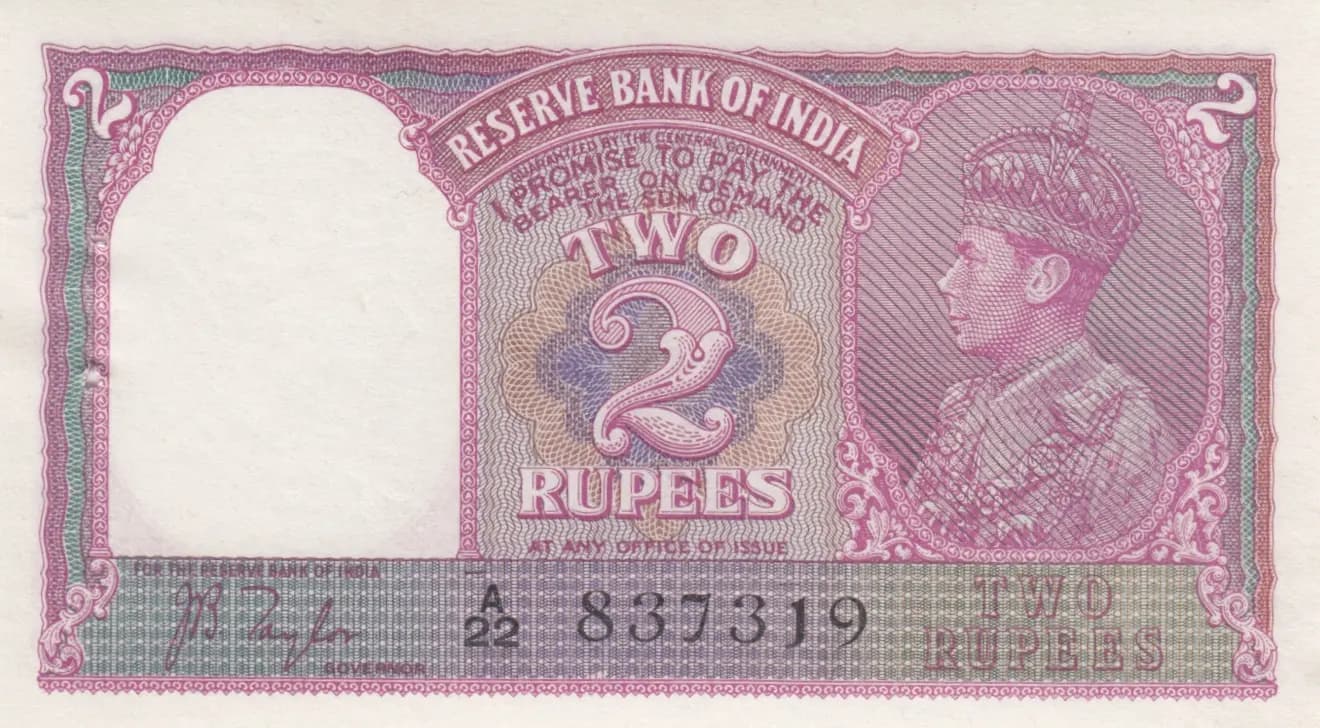
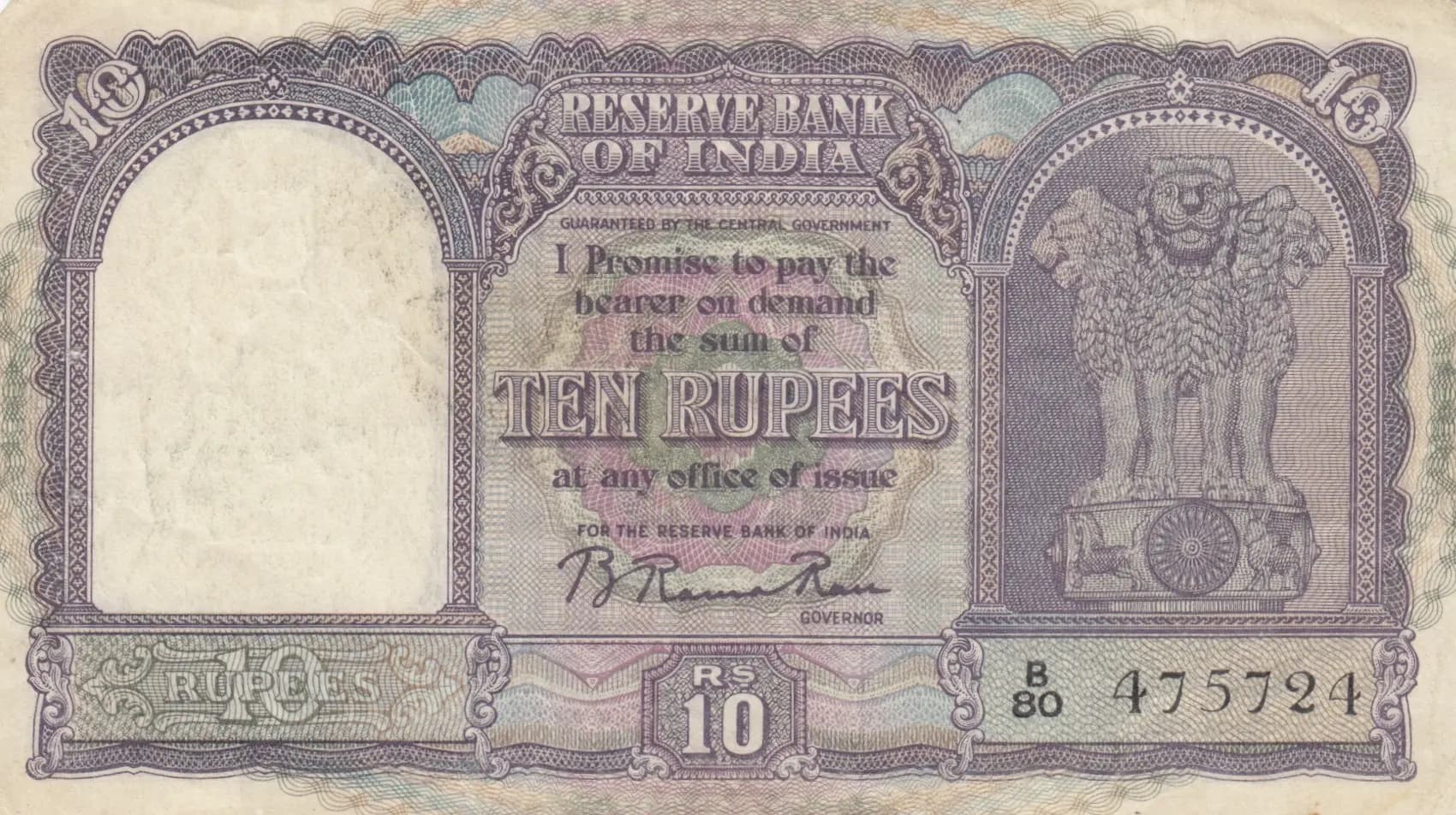
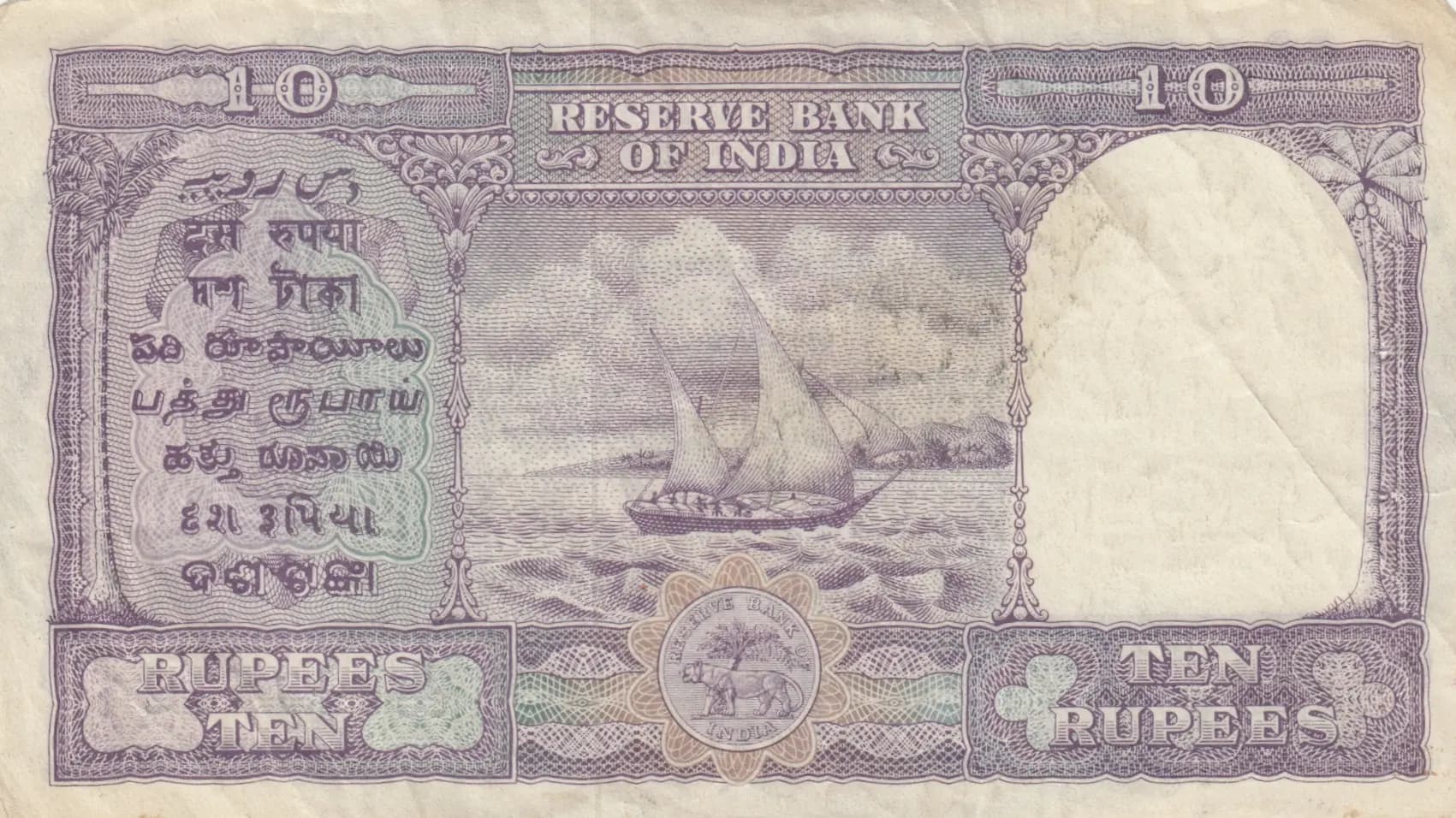
This is a Reserve Bank of India 10 Rupees note from 1960 (Pick P-37b), featuring the iconic Lion Capital of Ashoka on the obverse and a traditional Indian dhow sailing vessel on the reverse. The note displays a purple and multicolor scheme with ornate engraved borders and multilingual inscriptions. The observed specimen shows significant aging with foxing, discoloration, creasing, and yellowing consistent with VF grade—reflecting genuine circulation wear from over six decades.
Common. The 1960 10 Rupees (P-37b) is a regular issue note from the early post-independence period with substantial print runs. Market data shows examples selling on eBay for $7.50–$30 depending on condition (F to VF range), with a VF specimen cataloged at $30 as of 2019. This pricing, combined with ready availability in the collector market, confirms common status. No evidence of short print runs, early recalls, or restricted circulation exists for this Pick number.
Issued in 1960, this note commemorates India's early post-independence period and national identity through its choice of imagery. The Lion Capital of Ashoka, sourced from the Sarnath Museum, represents India's connection to the ancient Mauryan Empire and Buddhist heritage, while the dhow symbolizes India's maritime trading traditions. The multilingual reverse (Hindi, Telugu, Tamil, and Kannada) reflects India's commitment to linguistic pluralism under the newly adopted Constitution.
The obverse features the Lion Capital of Ashoka as its primary engraved vignette, positioned on the right side—a sculptural element comprising four lions back-to-back mounted on an abacus base adorned with the Ashoka Chakra (wheel). This iconic emblem serves as India's national symbol of sovereignty. The reverse depicts a traditional Indian sailing vessel (dhow) under full sail on a seascape, a maritime trading vessel typical of Indian coastal commerce. Both sides feature ornate rectangular borders with fine geometric cross-hatching, scrollwork, and decorative corner designs executed in intaglio engraving. Blank oval spaces appear on both sides (left obverse, right reverse), characteristic of period security design. The Reserve Bank of India seal—incorporating the Lion Capital and Ashoka Chakra—appears at the bottom center of the reverse.
FRONT: 'RESERVE BANK OF INDIA' / 'GUARANTEED BY THE CENTRAL GOVERNMENT' / 'I Promise to pay the bearer on demand the sum of TEN RUPEES at any office of issue' / 'FOR THE RESERVE BANK OF INDIA' / 'GOVERNOR' / 'R$ 10' (denomination cartouche) / Serial number 'B 80 475794'. BACK: 'RESERVE BANK OF INDIA' / 'RUPEES TEN RUPEES' (in decorative cartouches) / Hindi: 'रुपया दस' (Rupaya Das - Ten Rupees) / Telugu: 'పది రూపాయలు' (Padi Rupayalu - Ten Rupees) / Tamil: 'பத்து ரூபாய' (Pathu Rupai - Ten Rupees) / Kannada: 'ದಶ ರೂಪಾಯಿ' (Dasha Rupaayi - Ten Rupees).
Intaglio engraving on currency-grade paper. The fine line work, geometric cross-hatching patterns, and detailed rendering of the Lion Capital and dhow vignette are consistent with steel plate intaglio engraving, the standard method for Reserve Bank of India notes of this era. The note was likely printed at the RBI's own security press or under contract with established currency printers such as Waterlow & Sons or De La Rue, though specific printer attribution requires further research into RBI archival records for P-37b.
Pick P-37b is distinguished from related contemporary issues by English-only text on the obverse (no Hindi present on face). Related varieties include P-38, P-39, and P-40, which feature additional Hindi text on the front and various plate modifications. The observed specimen bears serial number prefix 'B 80', consistent with notes from this series. Specific Governor signature and exact plate varieties would require close examination of signature blocks and plate number details not fully legible in the provided images; these details determine sub-varieties within P-37b.