1 rupee 1951
Market Prices
6 salesAbout This Note
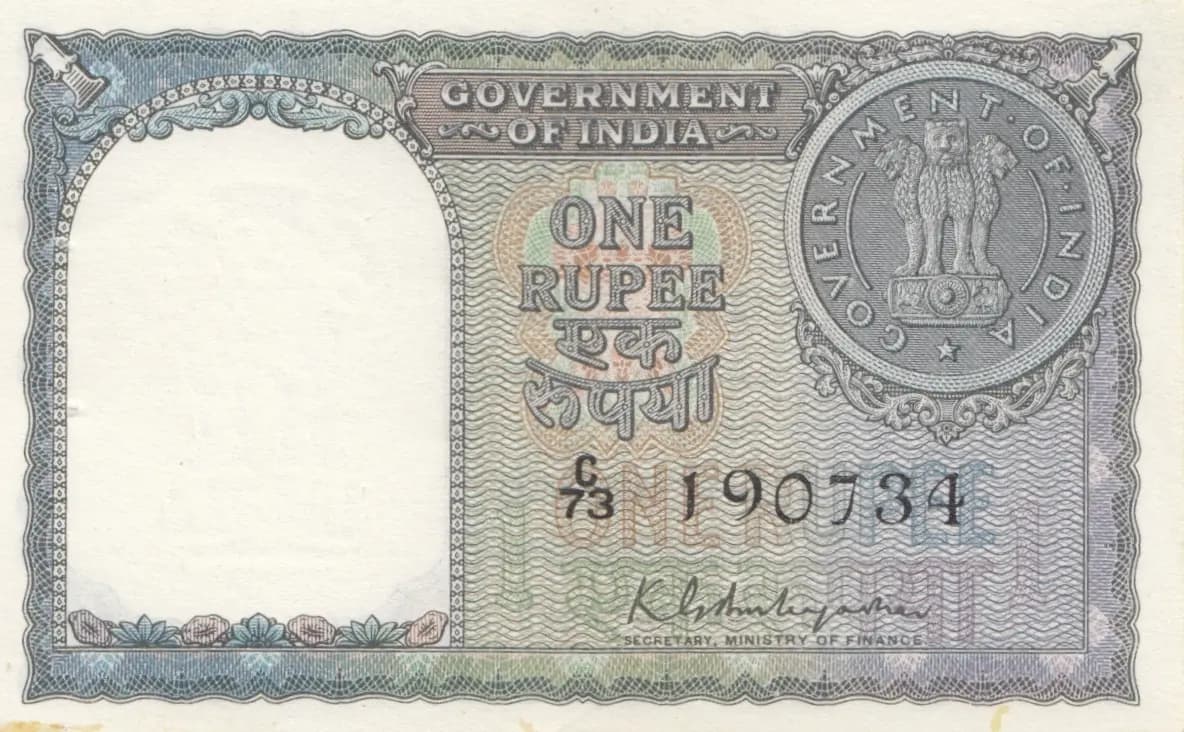
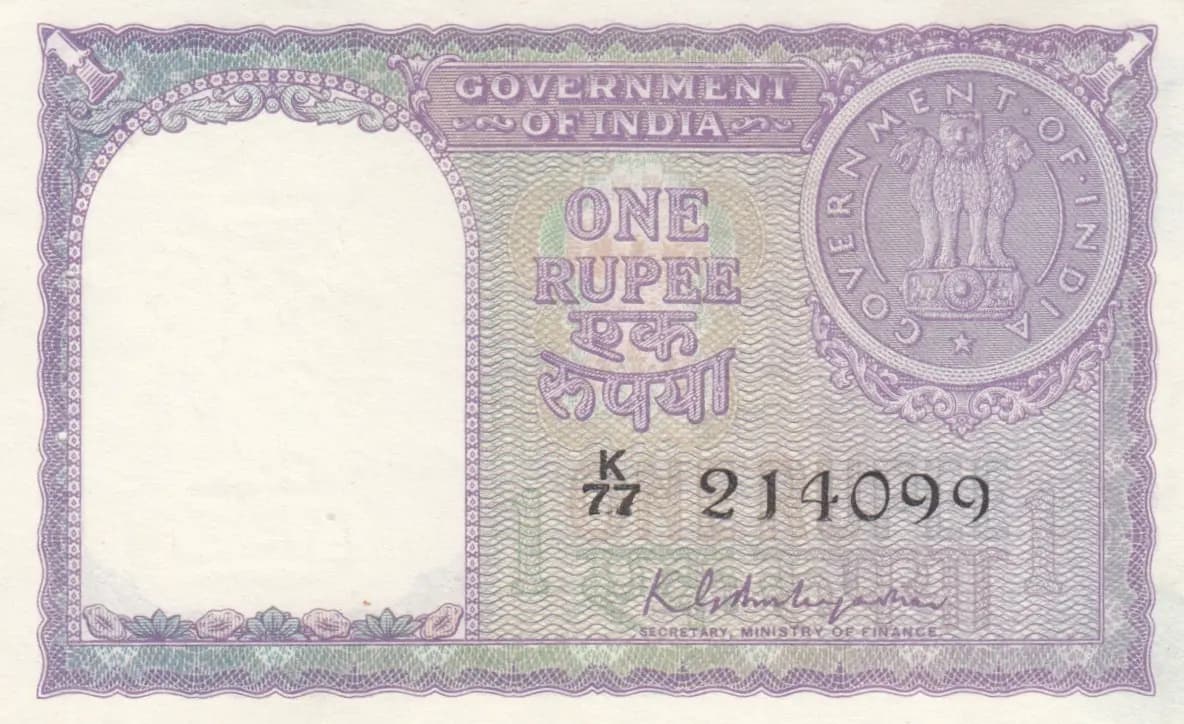
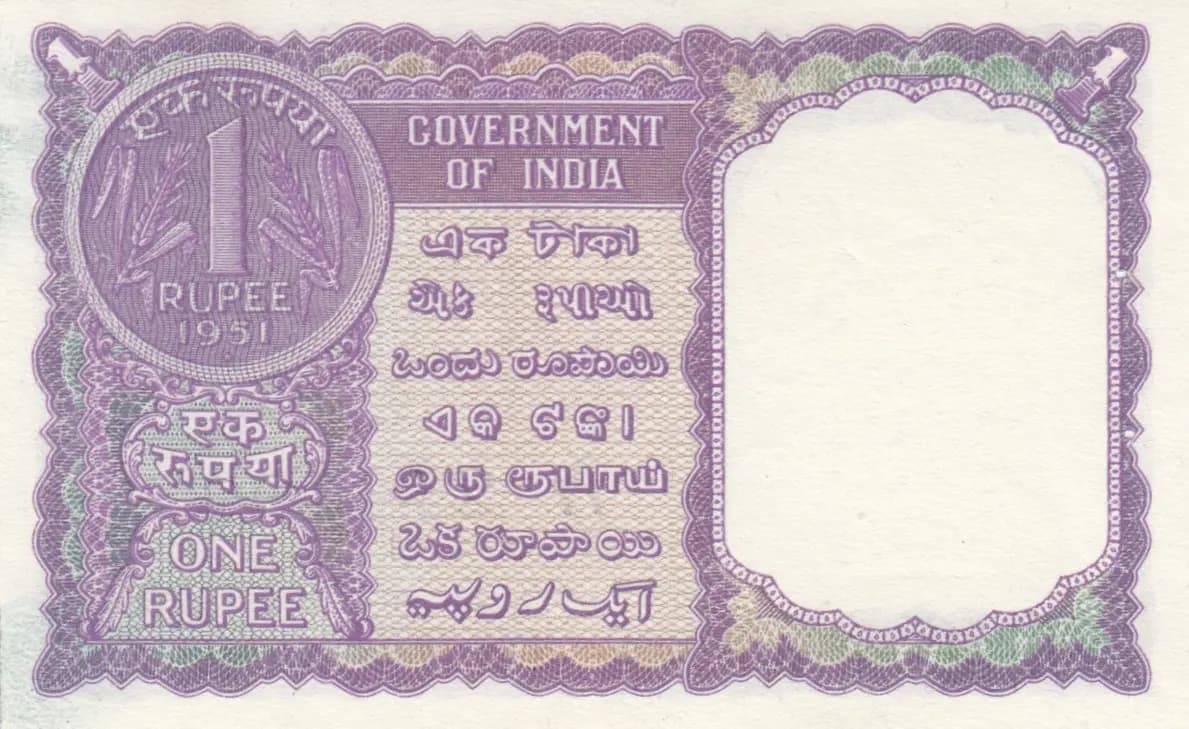
This is a Government of India One Rupee banknote from 1951 (Pick P-73), presented in uncirculated condition with exceptional preservation. The note features the iconic Lion Capital of Asoka emblem on the front and displays the denomination within a circular design on the reverse, rendered in purple/lavender tones with intricate decorative patterns. The pristine condition, sharp printing detail, and absence of wear or foxing make this an exemplary example of early independent India's currency design.
Common. The 1951 One Rupee is a regular issue with substantial circulation, evidenced by consistent availability in the numismatic market. eBay pricing data shows typical sales ranging from $1.25 to $17.50 across various grades, with UNC examples catalogued at $6.50 (2016 values), indicating steady collector interest but no scarcity premium. Large production runs during India's early independence period and the note's status as a foundational currency denomination ensure common availability even in higher grades.
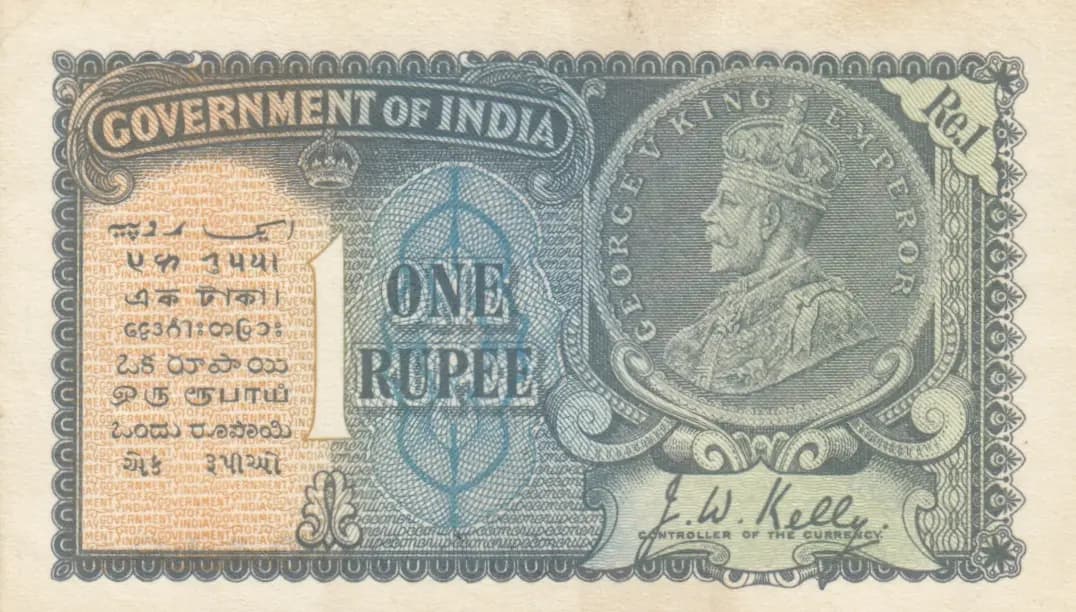
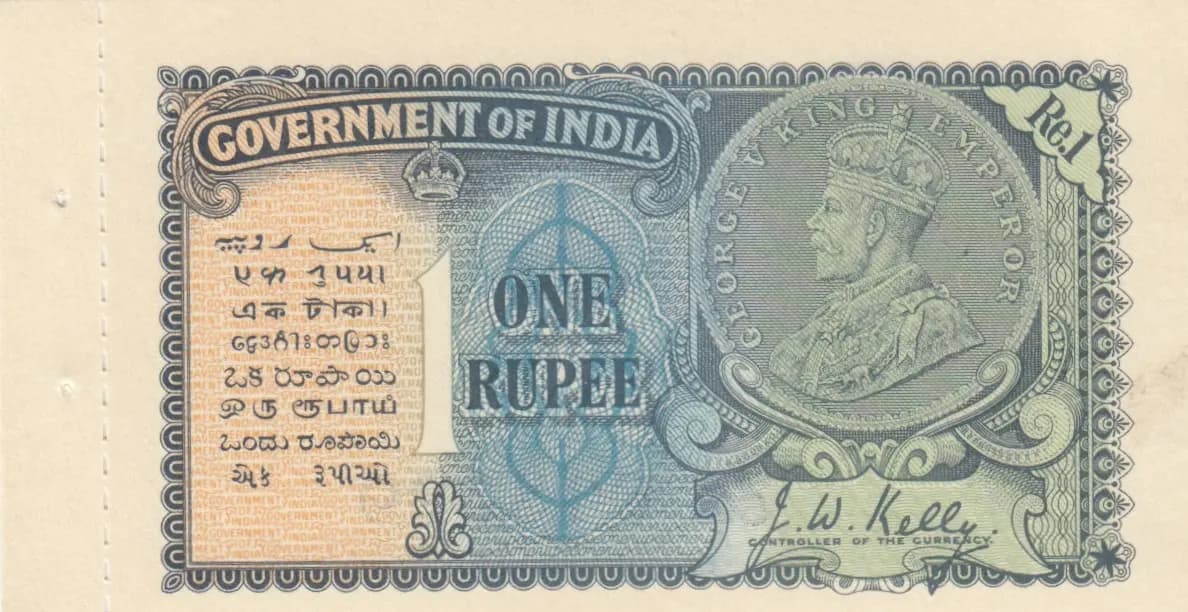
This 1951 note represents the early currency of the newly independent Indian Republic, issued just four years after independence. The prominent display of the Government of India seal featuring four lions—the Lion Capital of Asoka from the Sarnath Museum—symbolizes India's connection to its ancient Buddhist heritage and serves as the national emblem. The multilingual inscriptions on the reverse (Hindi, Kannada, Tamil, Telugu, Gujarati, and Urdu) reflect India's commitment to linguistic and cultural pluralism as enshrined in its newly adopted Constitution.
The front of the note features a large blank oval space on the left (a distinctive characteristic of this early Indian design, later replaced by portrait imagery in subsequent issues P-75 through P-77 cited in catalog references). The right side displays the Government of India's official seal: four lions standing back-to-back, derived from the Lion Capital of Asoka at the Sarnath Museum—India's national emblem symbolizing courage, strength, and pride. The reverse showcases a prominent circular design centered with the numeral '1' and denomination text 'RUPEE' with the date '1951', surrounded by 'GOVERNMENT OF INDIA' inscriptions. The design incorporates elaborate decorative floral and geometric border patterns with wave backgrounds throughout, rendered in purple and lavender with green/teal accents. Six regional language variants of 'One Rupee' appear on the reverse, reflecting India's constitutional recognition of regional languages.
FRONT SIDE: 'GOVERNMENT OF INDIA' (English); 'ONE RUPEE' (English); 'रुपये' (Hindi: Rupee); 'SECRETARY, MINISTRY OF FINANCE' (English); Serial number and plate reference 'K 77 2J14099' (English); Official signature of authorized representative. BACK SIDE: 'GOVERNMENT OF INDIA' (English, circular inscription); '1' and 'RUPEE' with '1951' (English, central circular design); 'ONE RUPEE' (English); 'एक टंका' (Hindi: One Rupee); 'ಒಂದು ರೂಪಾಯಿ' (Kannada: One Rupee); 'ஒரு ரூபாய்' (Tamil: One Rupee); 'ఒక రూపాయి' (Telugu: One Rupee); 'એક રુપया' (Gujarati: One Rupee); 'ایک روپیہ' (Urdu: One Rupee).
Intaglio engraving (also called recess printing) with multicolor offset lithography for the background elements. The intricate geometric and floral patterns, fine line work, wave pattern background, and detailed engraving of the Lion Capital seal are characteristic of high-security intaglio currency production. The sharp definition visible in the pristine UNC condition and the color gradients indicate sophisticated multi-pass printing coordination typical of government security printers of the 1950s era. This note was produced by the Government of India's security printing facilities.
The observed serial number prefix 'K 77' and the specific plate reference '2J14099' indicate this is from a particular printing plate assignment. The 1951 date on the reverse is definitive for this Pick-73 issue. No overprints or errors are visible. Known varieties for this series include different signature variants (Secretaries of the Ministry of Finance changed during the issuance period). The blank portrait oval distinguishes this Pick-73 from the later portrait-bearing variants (P-75 with Ashoka portrait, P-76, and P-77), making identification straightforward. No exceptional varieties or error notes are noted in standard catalog references for this Pick number.