1 rupee 1950
Market Prices
10 salesAbout This Note
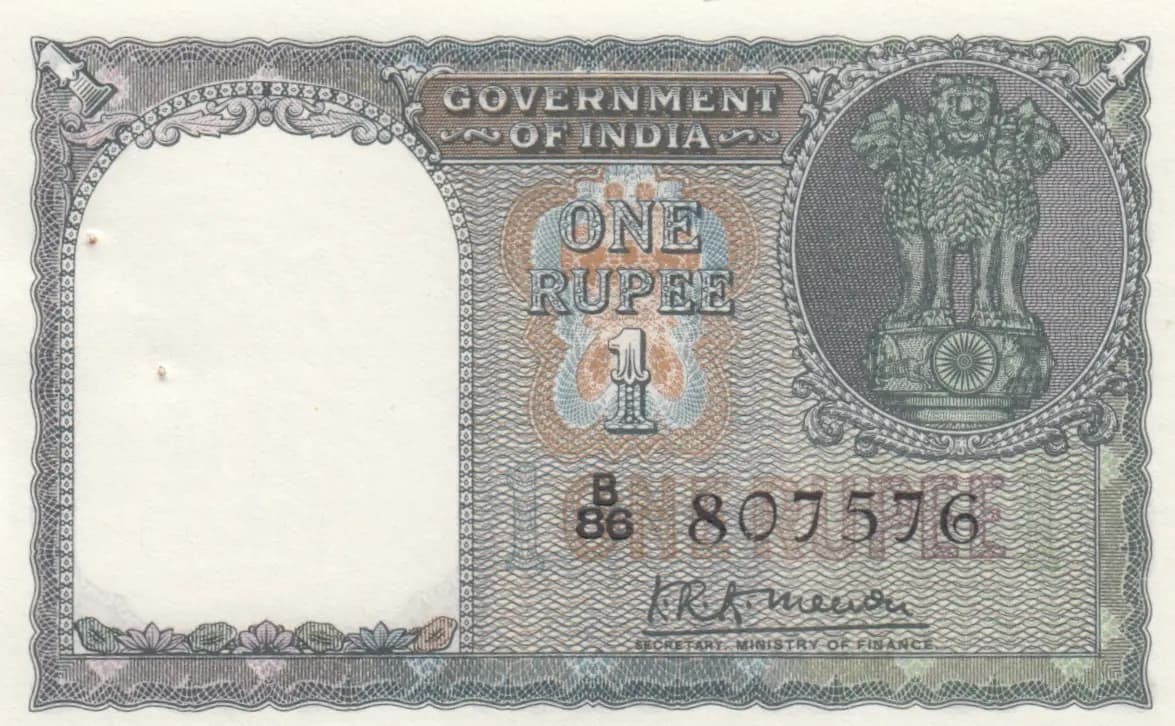
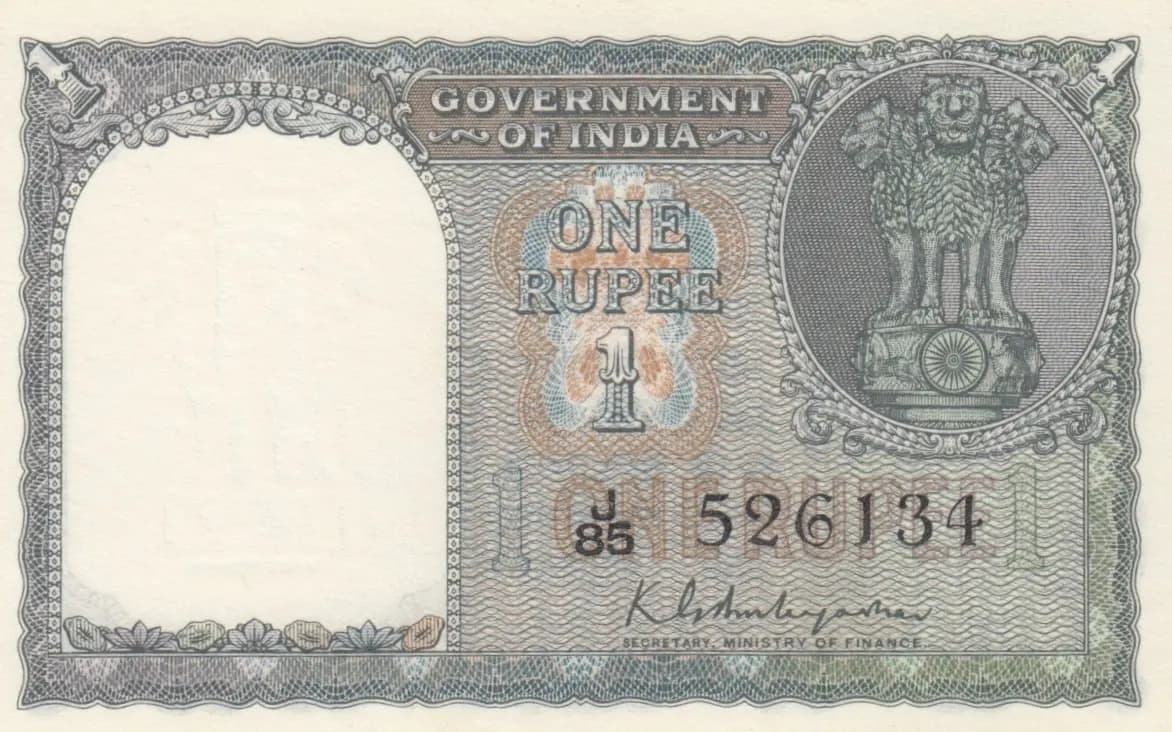
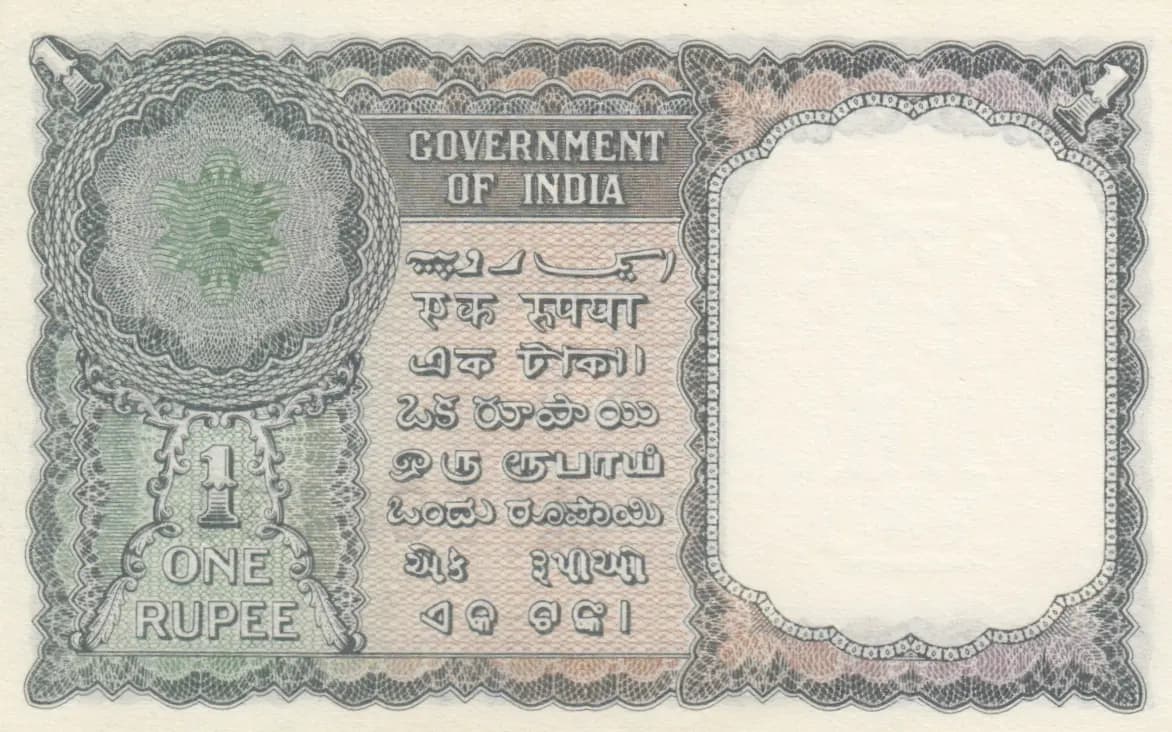
This is an exceptional example of India's first rupee note (1950), presented in pristine uncirculated condition with no signs of wear, creasing, or circulation. The note features the iconic Lion Capital of Ashoka on the obverse within an ornate circular medallion, while the reverse displays the denomination in English alongside translations in six Indian languages (Hindi, Bengali, Kannada, Telugu, and Tamil), reflecting India's linguistic diversity in its early post-independence period. As one of the foundational currency notes of the newly independent Indian Republic, this UNC specimen represents both numismatic and historical significance, with market data showing strong collector demand for premium grades.
common. This is a foundational and heavily printed issue from the early Reserve Bank of India/Government of India currency series. While the specific Pick-71b variety exists within a small population of professionally graded specimens (as reflected in the PMG Population Report showing limited certification numbers), the note itself remains common in the collector market. eBay sales data demonstrates consistent availability across condition grades, with UNC examples selling for approximately $16-$20 in recent years (2016-2021), well within the range for common circulating issues. The 2016 catalogue value of $8 UNC further supports common status. Demand exists due to historical significance as India's first post-independence rupee, but supply remains adequate.
This 1 rupee note was issued by the Government of India in 1949-1950, marking the currency of the newly independent Indian nation following independence in 1947. The prominent use of the Lion Capital of Ashoka—derived from the Mauryan Empire's ancient symbol now housed in the Sarnath Museum—deliberately connected modern India to its classical heritage and Buddhist traditions, symbolizing national continuity and sovereignty. The multilingual reverse design reflected the Indian Constitution's commitment to recognizing the nation's linguistic and cultural diversity, with denominations presented in major regional scripts alongside English.
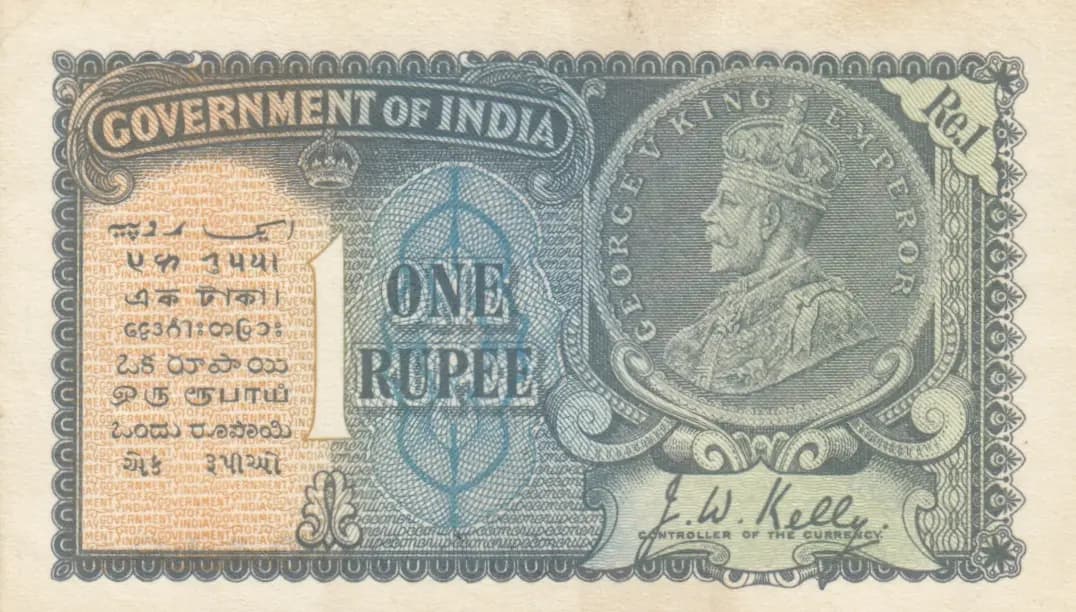
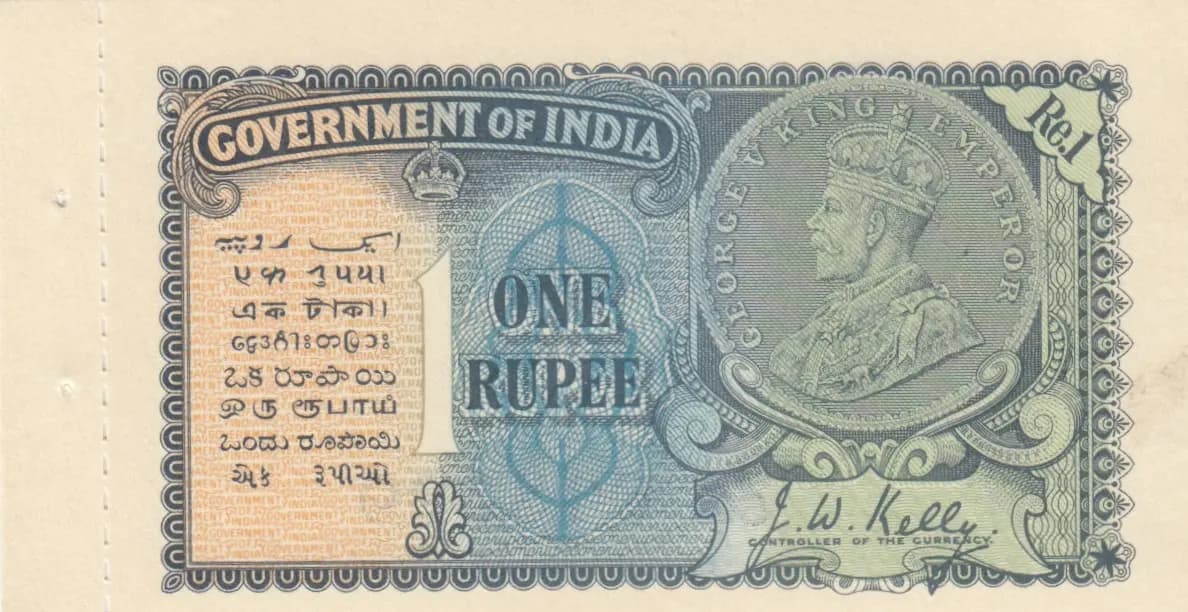
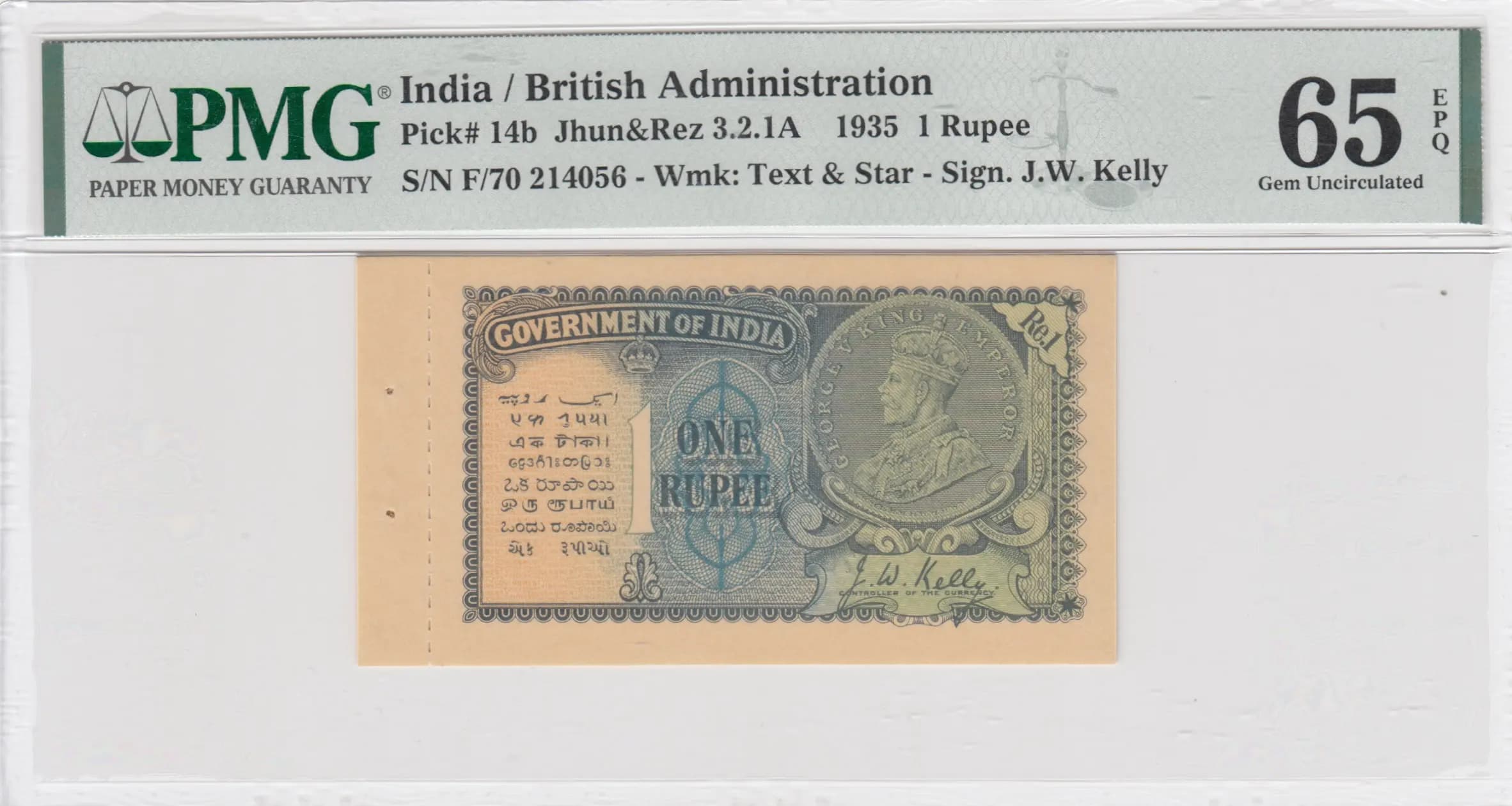
The obverse features a left-aligned blank field with denomination markings on the right, culminating in the central design element: the Lion Capital of Ashoka, a four-lion emblem mounted above the Dharma Chakra (wheel of law), presented within an ornate circular medallion with decorative borders. The note employs classical engraving techniques with intricate wavy background patterns and fine linework throughout, rendered in gray, brown, and cream tones. The reverse maintains similar ornamental borders and engraving patterns but is organized around a vertical axis, with 'ONE RUPEE' in English housed within a decorative floral frame on the left, while the central column displays the denomination in six major Indian languages vertically arranged, creating a symbol of national unity. The multilingual approach—featuring Hindi, Bengali, Kannada, Telugu, and Tamil alongside English—was a deliberate expression of the Indian Constitution's principle of recognizing multiple official languages.
FRONT: 'GOVERNMENT OF INDIA' (English, issuing authority); 'ONE RUPEE' (English, denomination); '1' (numeral denomination); Serial number '85 526134'; 'SECRETARY, MINISTRY OF FINANCE' (English, authorizing official title); Signature of 'K. R. Puri' (Finance Secretary). BACK: 'ONE RUPEE' (English, within decorative frame); 'एक रुपया' (Hindi Devanagari: One Rupee); 'এক টাকা' (Bengali: One Rupee); 'ಒಂದು ರೂಪಾಯಿ' (Kannada: One Rupee); 'ఒక రూపాయి' (Telugu: One Rupee); 'ஒண்டு ரூபாய்' (Tamil: One Rupee); 'GOVERNMENT OF INDIA' (English); '1' (numeral denomination).
The note was produced using intaglio engraving (recess printing), evidenced by the fine linear patterns, intricate wavy background textures, and sharp detail reproduction visible in both the Lion Capital medallion and ornamental borders. The multi-color printing (combining gray, brown, green, and cream tones across obverse and reverse) indicates separate plate work for each color pass. This note was likely printed by the Government of India Security Press or under government contract, employing the highest security printing standards of the early post-independence period.
This specimen is identified as Pick-71b variant (as opposed to P-71a, noted in PMG Population Report). The note is signed by K. R. Puri in his capacity as Secretary, Ministry of Finance. Serial number observed: 85 526134. The specific variety designation (71b vs. 71a) may relate to signature varieties, watermark differences, or minor design modifications during the 1949-1950 printing period. Collectors should verify their specimens against the Pick catalog to confirm the precise variety, as signature varieties and serial number prefixes are common distinguishing factors for early Indian rupee notes.