1 rupee 1949
Market Prices
2 salesAbout This Note
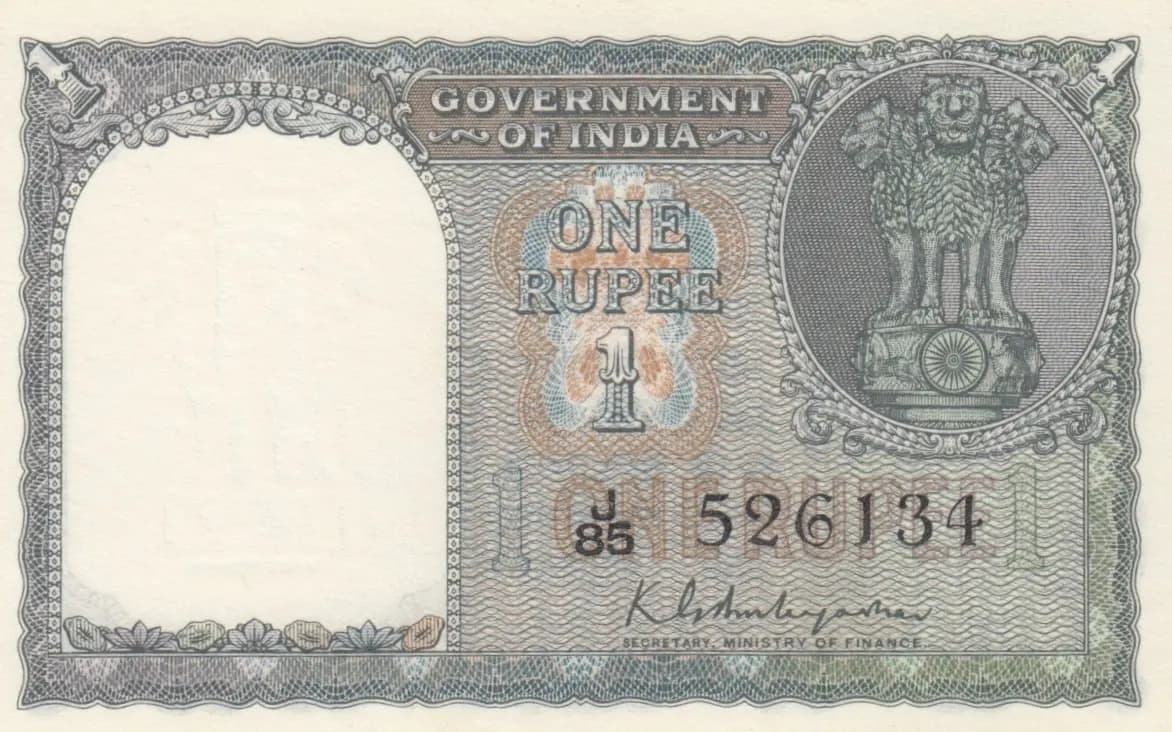
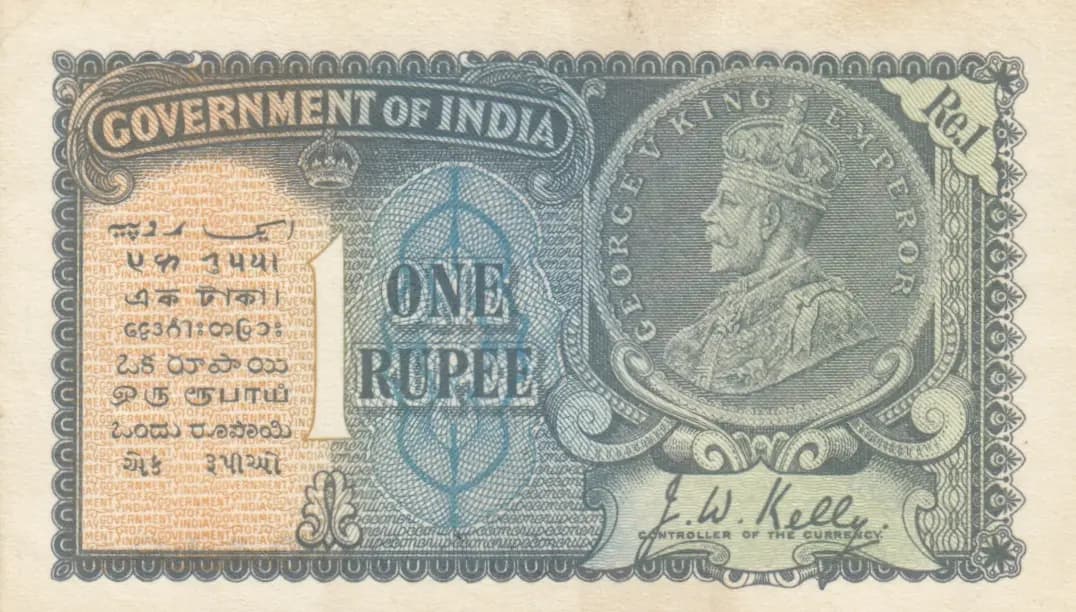
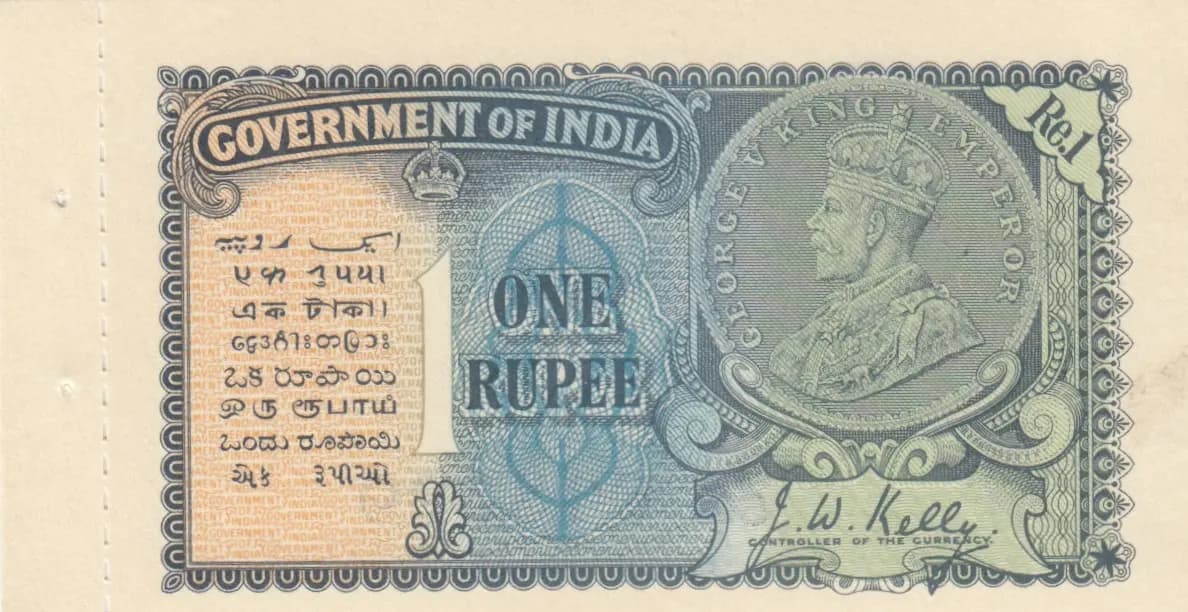
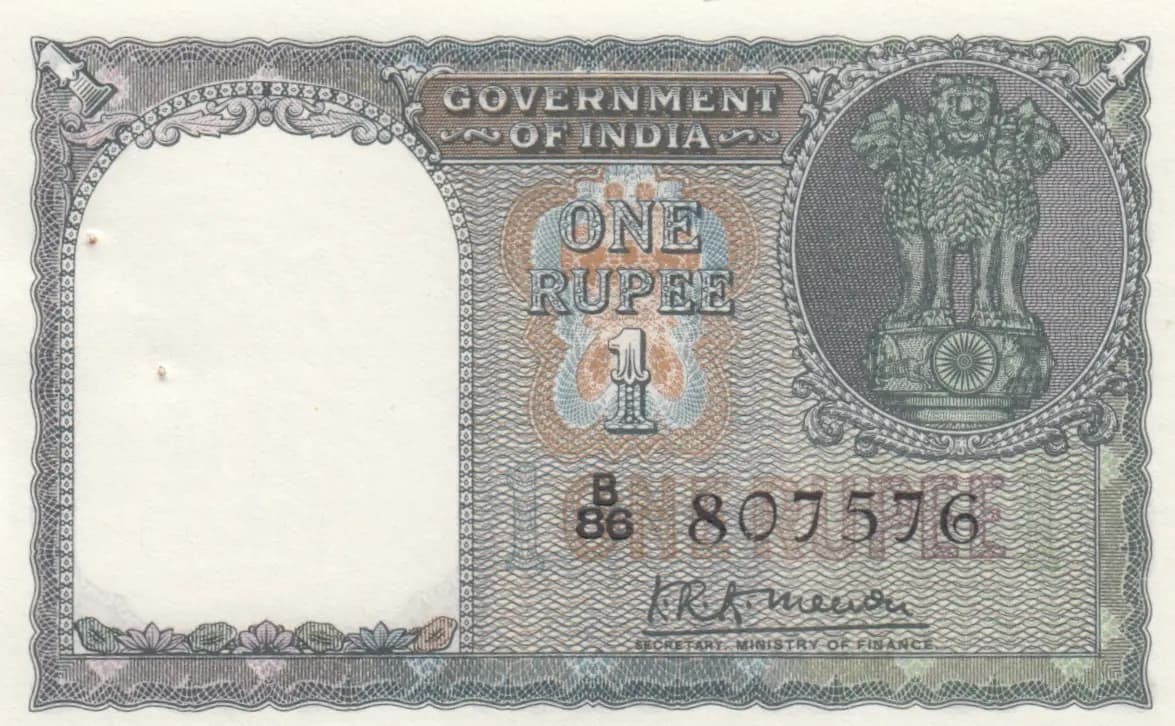
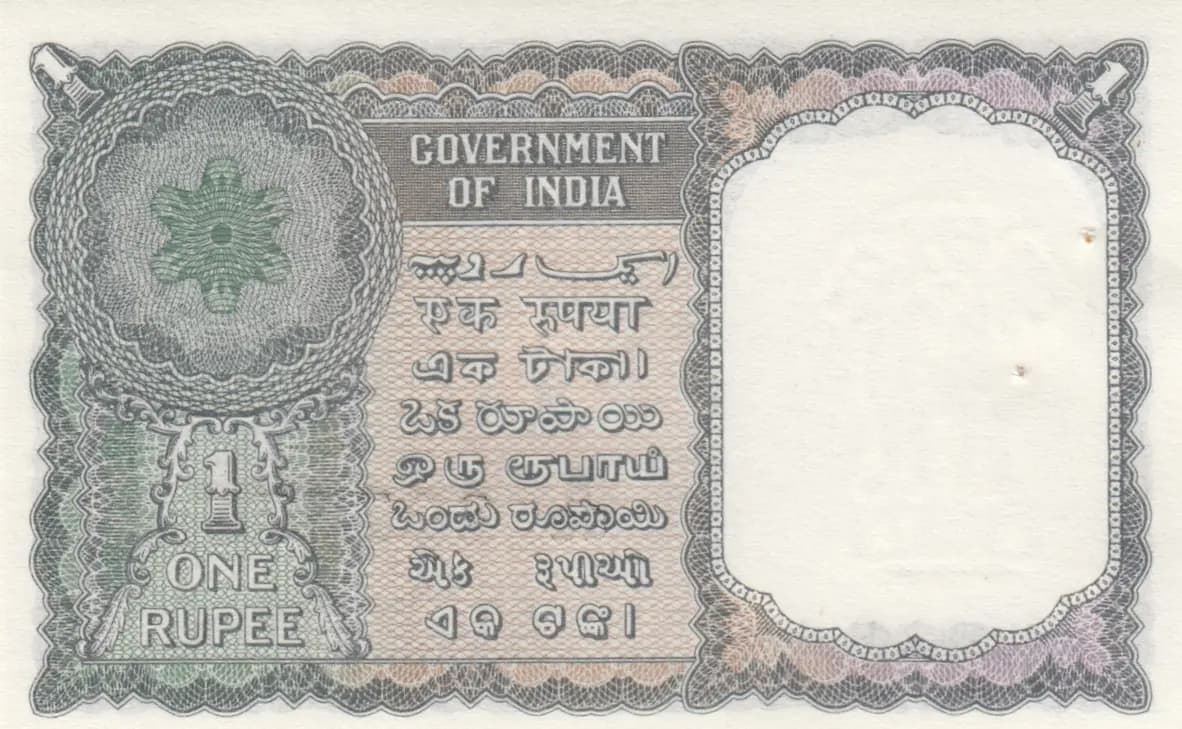
This is an exceptionally well-preserved example of India's first independent currency issue—a 1 Rupee note from 1949 featuring the iconic Lion Capital of Asoka (Sarnath). The note displays the hallmark design of early Indian rupee notes with ornate engraved borders, multilingual denomination text on the reverse, and the Government of India's commitment to linguistic inclusivity across eight Indian scripts. Despite minor age-related foxing and light spotting consistent with 75+ years of storage, the note remains in uncirculated condition with sharp detail and intact structural integrity, making it a historically significant artifact of post-independence India.
Common. This is a regular issue from India's first independent currency series with substantial print runs. The catalog value of $8 in UNC condition (2016) and eBay comparable sales in the $140–$150 range for PMG-graded examples confirm this note is readily available to collectors. While historically significant as part of India's first post-independence currency, no evidence of short print runs, recall, or scarcity exists. The note's age (75+ years) and survival in UNC condition make it desirable, but abundant examples remain in the market.
Issued in 1949, shortly after India's independence in 1947, this note represents the Government of India's first autonomous currency design. The deliberate choice to feature the Lion Capital of Asoka—a symbol of the ancient Mauryan Empire and now India's national emblem—reflects the new nation's connection to its pre-colonial heritage and Buddhist/Ashoka's principles of governance. The inclusion of denominations in eight different Indian scripts (Devanagari, Bengali, Telugu, Kannada, Malayalam, Tamil, Gujarati, and Oriya) demonstrates the early Indian state's commitment to linguistic pluralism across its diverse population, a defining feature of Nehru-era secular nationalism.
The obverse (front) features a classical layout with an ornate engraved border frame containing intricate line work and repeating decorative patterns. Dominating the right side is a circular medallion displaying the Lion Capital of Asoka (Sarnath capital)—four lions facing cardinal directions surrounding an Ashoka Chakra—rendered as the nation's principal heraldic symbol. 'GOVERNMENT OF INDIA' is positioned at the top center with 'ONE RUPEE' prominently displayed in the middle section, flanked by a blank oval cartouche on the left (typical of early Indian note design for portrait or additional imagery). The reverse showcases the multilingual character of the new Indian state, with a decorative circular floral design on the left and denomination text arranged in eight Indian scripts radiating across the center and right portions. The color palette employs gray-black, brown, and green tones typical of early post-war currency engraving, with cream/white paper stock showing age-appropriate patina.
Front Side: 'GOVERNMENT OF INDIA' (English, top center); 'ONE RUPEE' (English, center); '1' (numeral denomination); Serial number 'B86 807576' (alphanumeric identifier); 'SECRETARY, MINISTRY OF FINANCE' (English, lower section); 'R.K. Neumann' (signature of authorized official). Back Side: 'GOVERNMENT OF INDIA' (English, top center); 'ONE RUPEE' (English); '1' (numeral); 'एक रुपया' (Devanagari/Hindi: One Rupee); 'एक टका' (Bengali: One Rupee); 'ఒక రూపాయి' (Telugu: One Rupee); 'ಒಂದು ರೂಪಾಯಿ' (Kannada: One Rupee); 'ഒരു രൂപയ്യ' (Malayalam: One Rupee); Additional denominations in Tamil, Gujarati, and Oriya scripts (all translating to 'One Rupee').
Intaglio engraving (line engraving/copperplate printing), the standard security printing technique for currency of this era. The fine detail visible in the ornate borders, the precision of the decorative patterns, and the sharp definition of text and the Ashoka emblem all indicate professional security printer work. For Indian rupees of this period, notes were produced by the Government of India Press and major security printers including Waterlow & Sons, but specific attribution for this Pick number would require additional documentation.
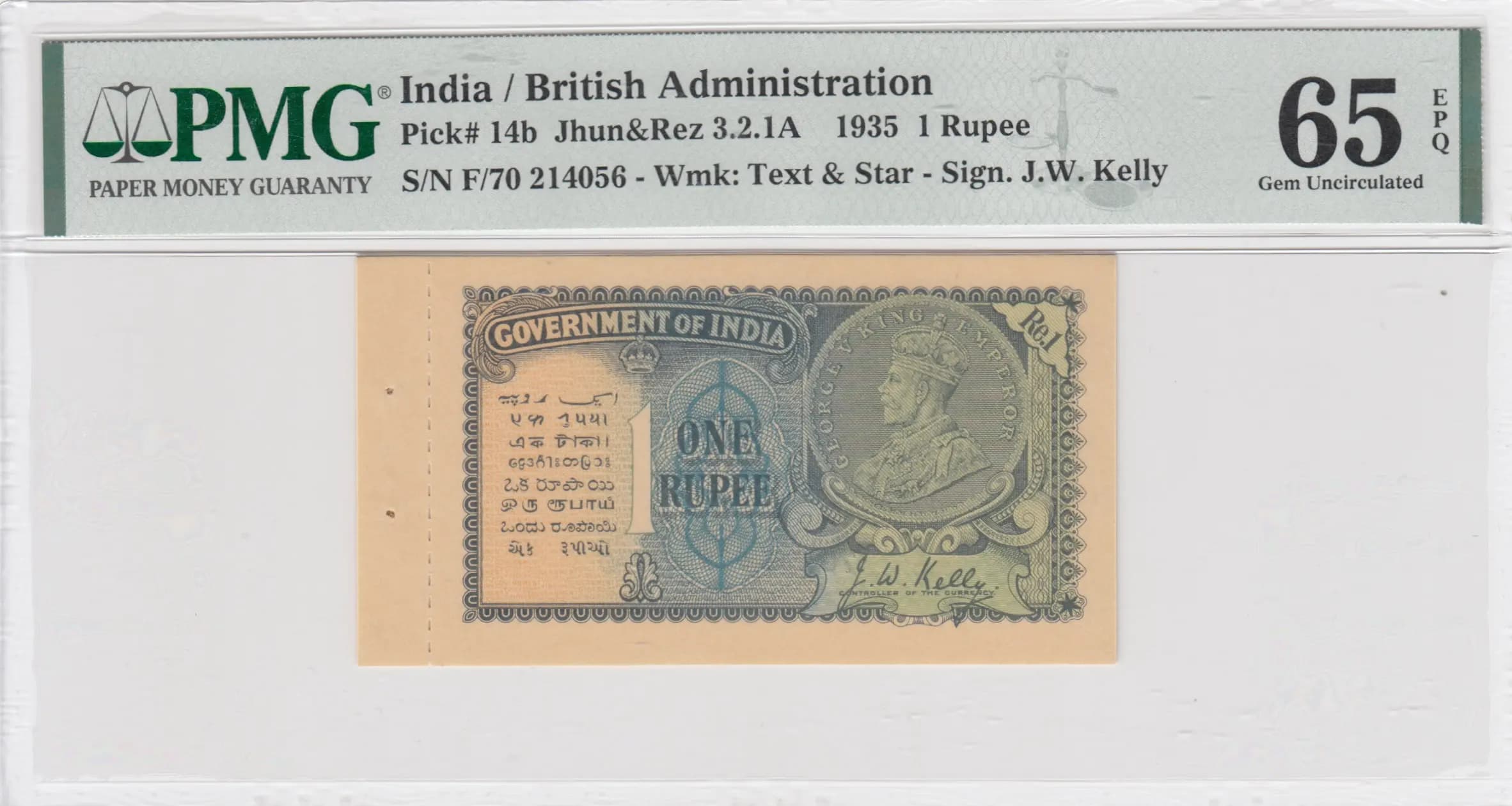
Pick number P-71a identifies this as the primary variant of the 1 Rupee (1949) issue. The observed serial number 'B86 807576' indicates a note from the 'B' series printing. The signature of 'R.K. Neumann' (Secretary, Ministry of Finance) is consistent with the early post-independence authorization period. Variants of this issue may exist with different signature authorities and serial number prefixes reflecting successive printings through 1950; however, PMG cataloging records one primary variant for this Pick designation, suggesting limited differentiation in the professional grading market.