500 sylis 1980
Market Prices
28 salesAbout This Note
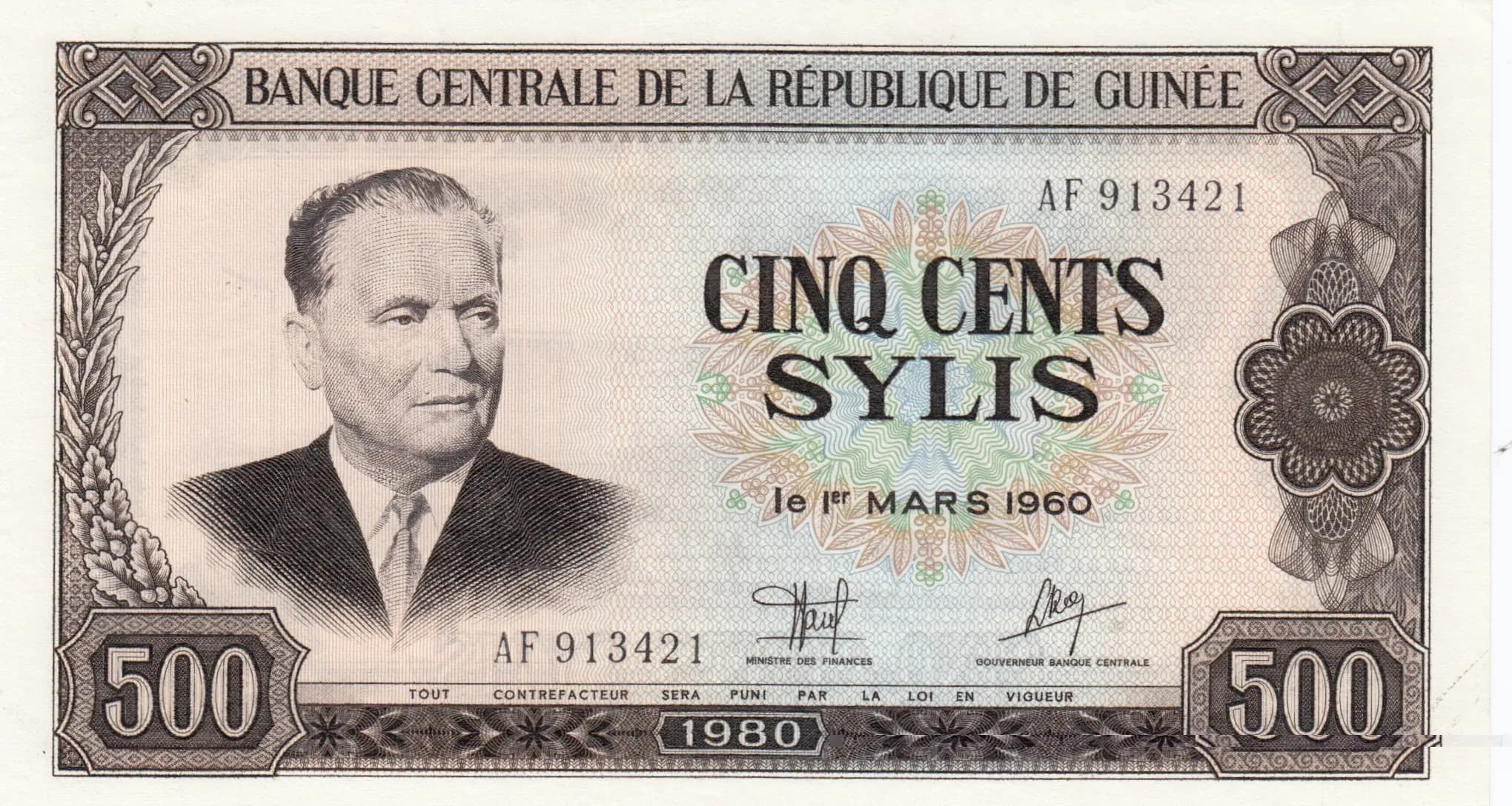
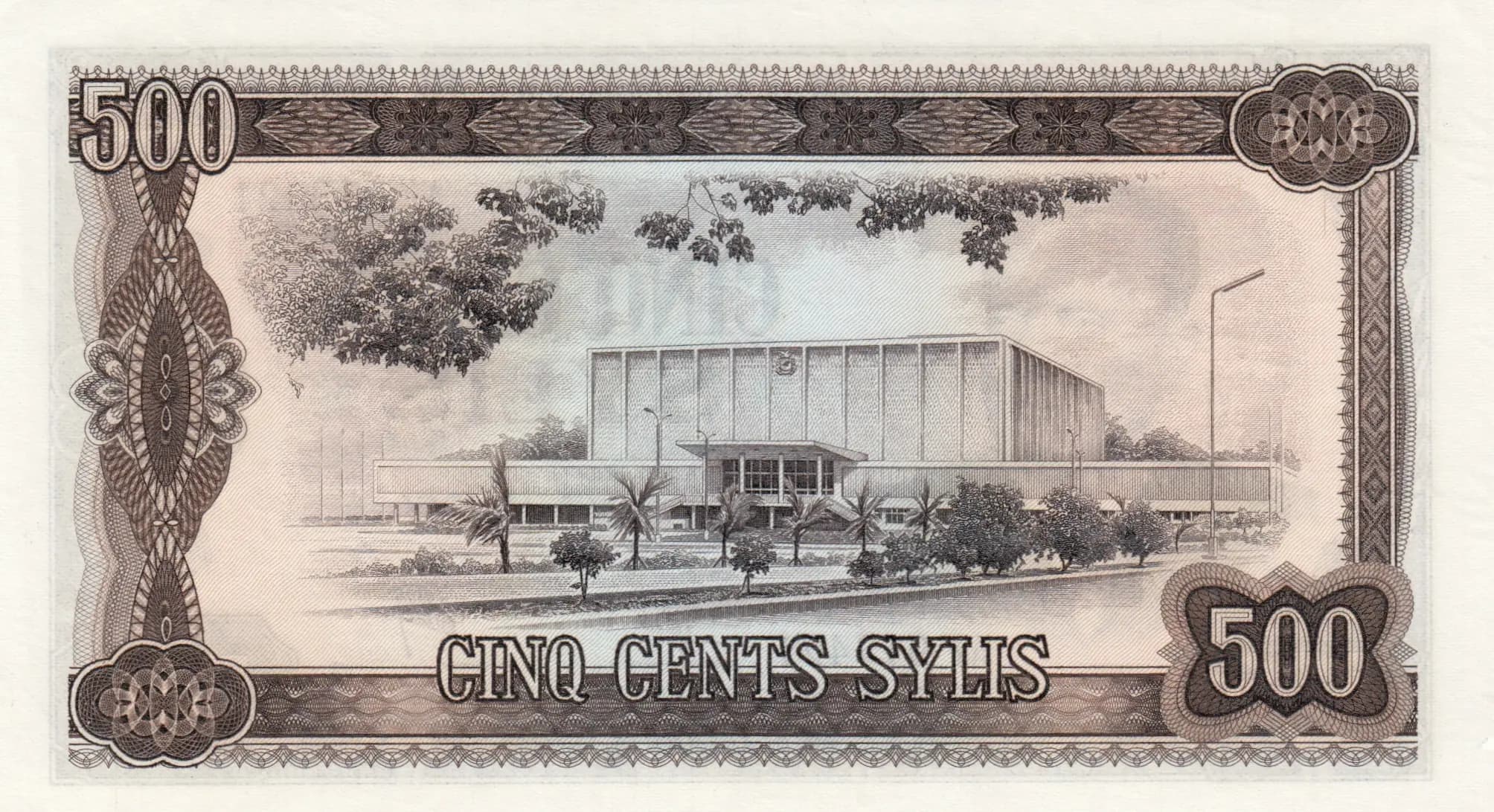
This is an exceptionally well-preserved example of Guinea's 500 Sylis note from 1980, graded UNC, displaying crisp printing and pristine condition throughout. The note features a formal portrait of Josip Broz Tito on the obverse and the modernist People's Palace of Conakry on the reverse, commemorating both Tito's historic 1961 visit to Guinea and his death in 1980. The fine engraving work and ornamental security patterns are clearly rendered without any visible wear, folds, or circulation marks.
Common. The eBay price history provided shows consistent sales across multiple grades ranging from $2–$74 over the past decade, with UNC examples regularly selling in the $12–$22 range. The 2019 catalogue value of $12.50 for UNC confirms this is a readily available note in the secondary market. While commemorative notes have some collector interest, the consistent and affordable pricing across numerous transactions indicates this is not scarce.
This 1980 issue commemorates the intersection of two significant historical moments: Yugoslav President Josip Broz Tito's March 1961 state visit to newly independent Guinea and his death in 1980. The dual commemoration reflects the Cold War-era relationships between non-aligned nations, with Guinea under Ahmed Sékou Touré maintaining close ties with Yugoslavia. The choice to honor Tito on a Guinean banknote underscores the diplomatic significance of Tito's visit during Guinea's early years of independence and the broader pan-African socialist movements of the era.
The obverse features a formal portrait of Josip Broz Tito, the President of Yugoslavia, rendered in classical engraving style on the left side of the note, showing a middle-aged man in dark business suit and tie facing left. The portrait is surrounded by elaborate ornamental frames with geometric and floral motifs, including rosette security designs in the corners. The reverse depicts the People's Palace (Palais du Peuple) in Conakry, the modernist seat of Guinea's government, shown with its distinctive horizontal striped architectural facade, set within landscaped grounds with palm trees and curved approach pathways. Large denomination numerals '500' appear in the corners of both sides, with ornamental rosettes and geometric border patterns providing decorative framing throughout.
FRONT SIDE: 'BANQUE CENTRALE DE LA REPUBLIQUE DE GUINEE' (Central Bank of the Republic of Guinea) | 'CINQ CENTS SYLIS' (Five Hundred Sylis) | 'le 1er MARS 1960' (the 1st March 1960, date of the enabling law) | 'MINISTRE DES FINANCES' (Minister of Finance) | 'GOUVERNEUR BANQUE CENTRALE' (Governor Central Bank) | 'TOUT CONTREFACTEUR SERA PUNI PAR LA LOI EN VIGUEUR' (Any counterfeiter will be punished by law in force) | Serial number 'AF 913421' | '1980' (issue year) | '500' (denomination). BACK SIDE: '500' (denomination numeral, top left and bottom right corners) | 'CINQ CENTS SYLIS' (Five Hundred Sylis).
Intaglio engraving (line engraving), the classical security printing method used for banknote production. The fine detail work visible in both the portrait and architectural imagery, combined with the intricate ornamental patterns and rosette designs, indicates traditional Bureau of Engraving and Printing techniques typical of central bank currency production in 1980.
Identified as Pick P-27a (the primary and known variant catalogued by PMG). The note displays the standard 1980 design with the obligatory 'le 1er MARS 1960' date reference (the date of the Central Bank law) distinct from the 1980 issue date. Serial number prefix 'AF' is visible; no overprints or unusual varieties are apparent from the visual analysis. The note appears to be from the standard circulation issue of 1980.