100 francs 1958
Market Prices
15 salesAbout This Note
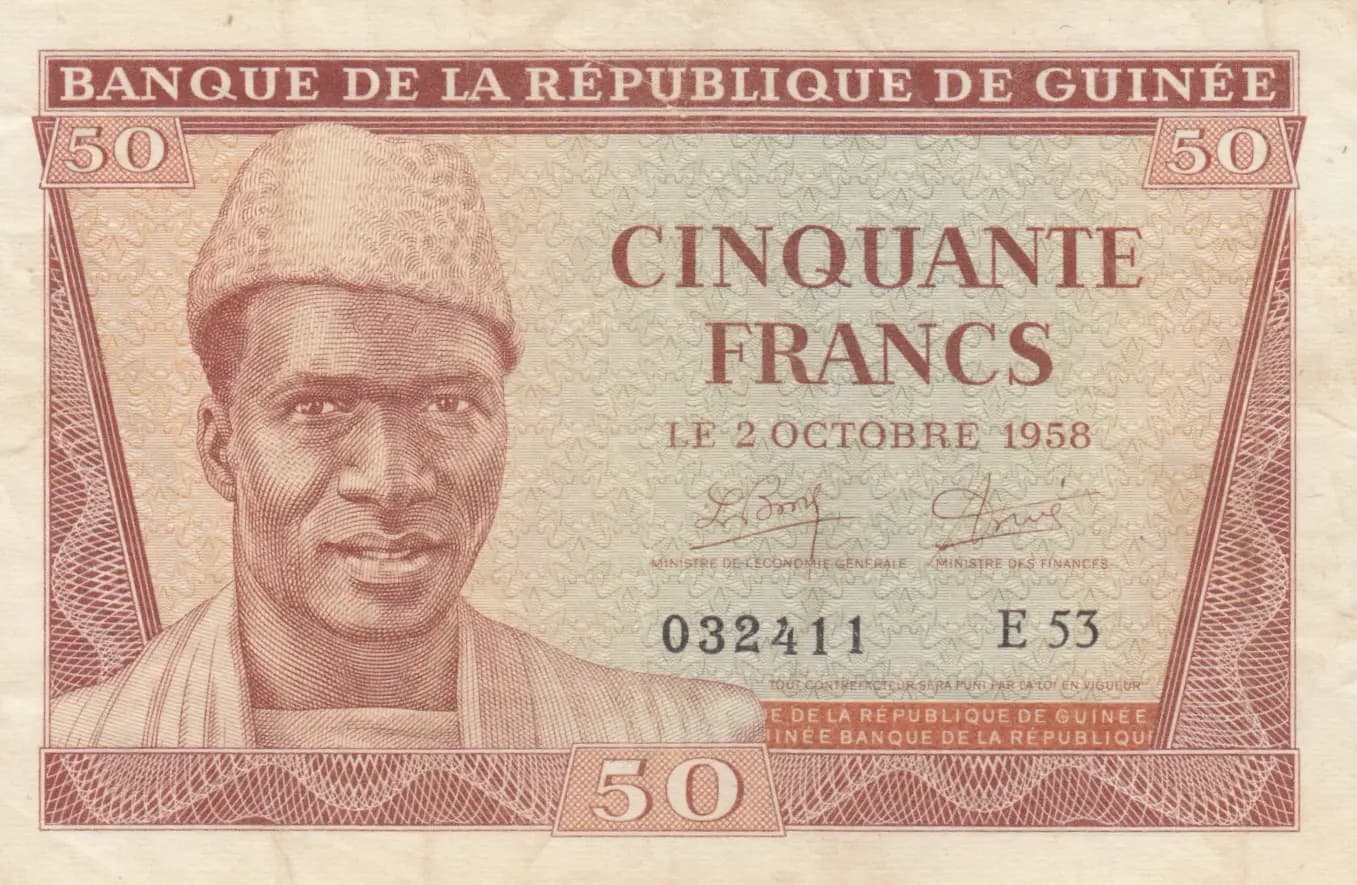
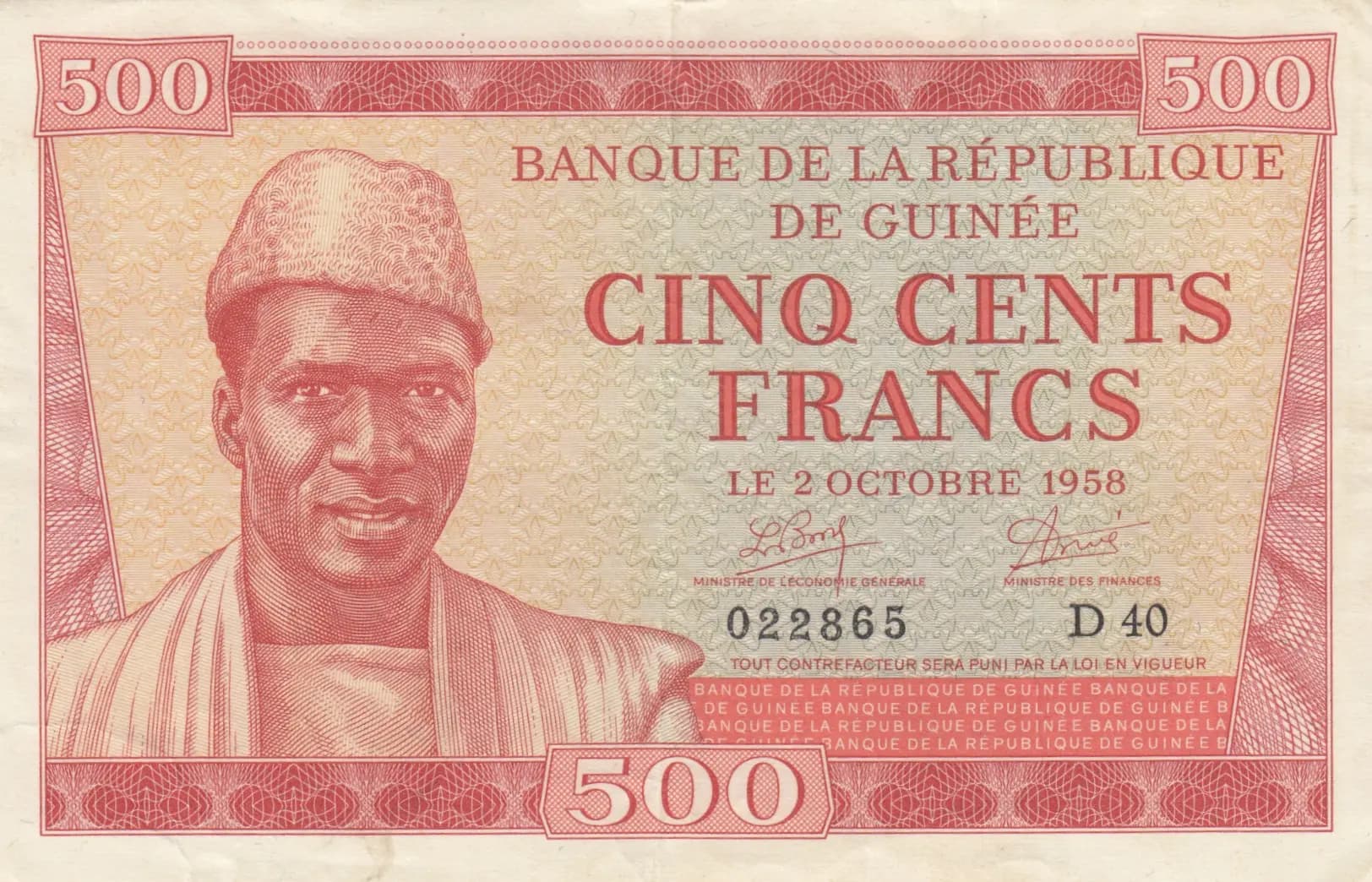
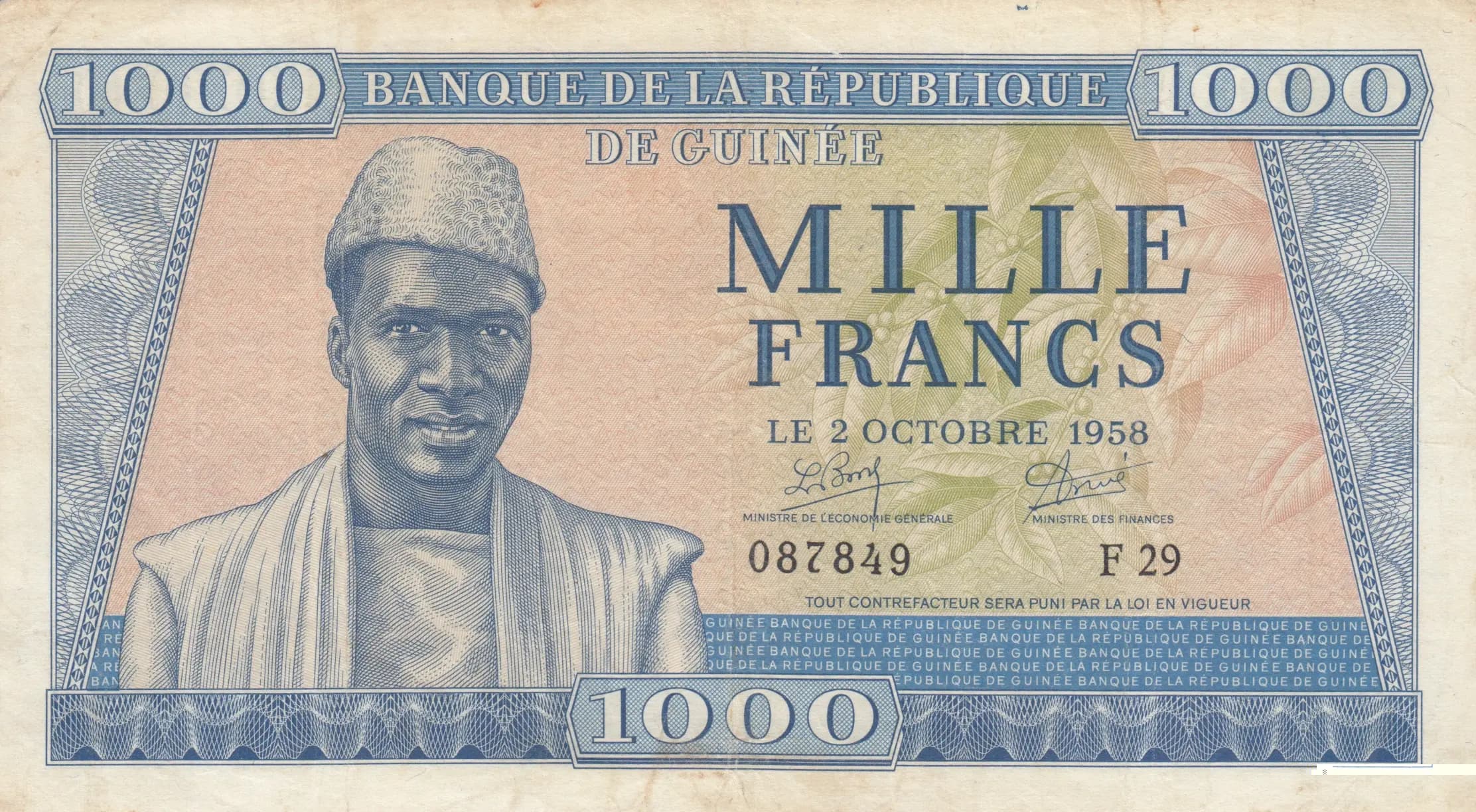
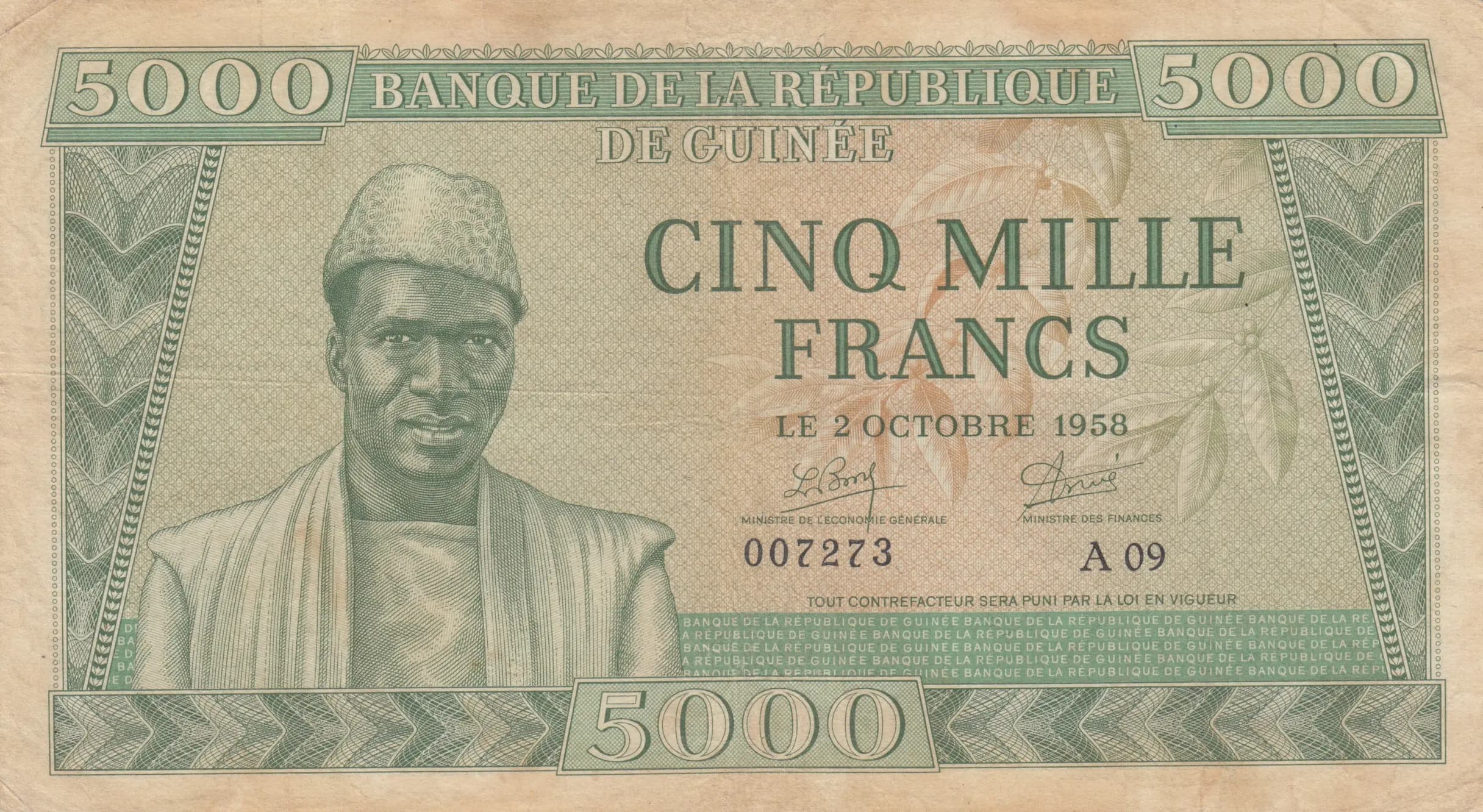
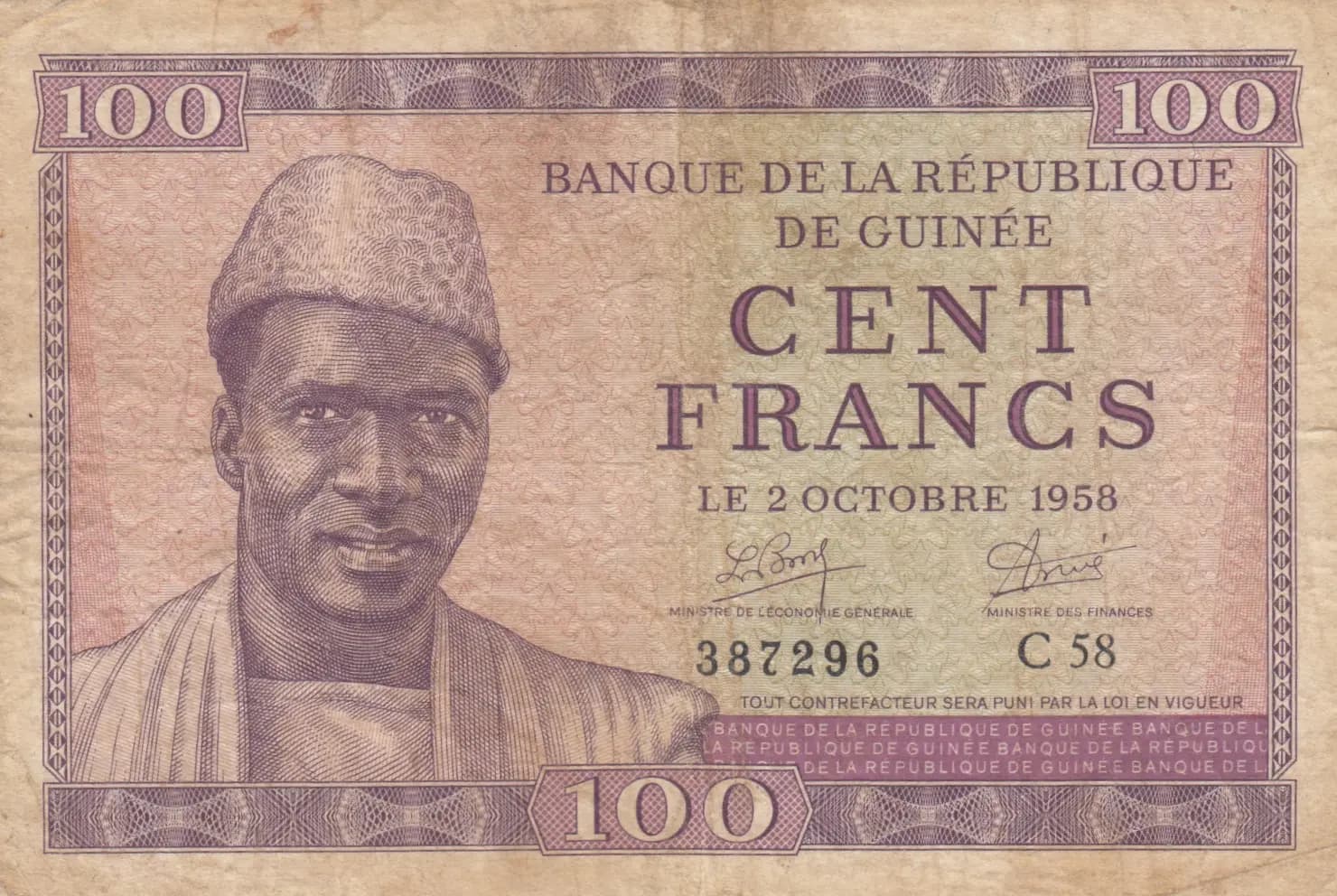
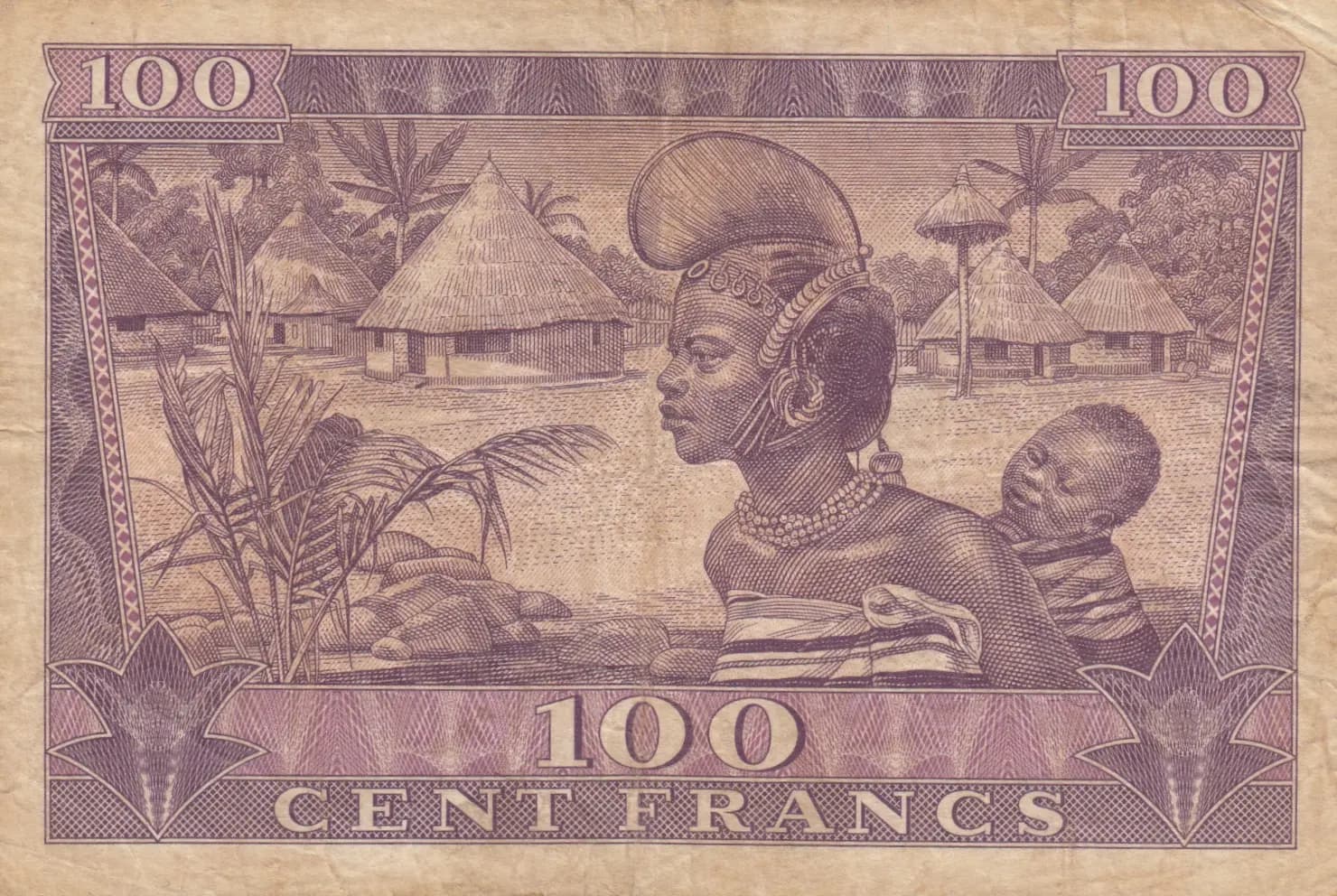
This Guinea 100 Francs from October 2, 1958 (Pick P-7) features the iconic portrait of President Ahmed Sékou Touré on the obverse and a culturally significant scene of a Peul woman with child and traditional village on the reverse, both executed in fine purple/mauve engraving. The note shows honest circulation wear with visible creasing, foxing, and age-related discoloration consistent with F (Fine) grade; the design clarity remains legible despite the patina of age, making it an accessible example of Guinea's first independent currency issue.
Common. This is a regular issue from Guinea's inaugural currency series with substantial print runs. eBay market data shows consistent sales activity across multiple condition grades from 2013-2024, with F-graded notes regularly realizing $7-$50 depending on bidder interest, and catalog values at $15 (VG) and $50 (VF) indicating healthy market liquidity. The note was not recalled, and Guinea's banking system remained stable, allowing broad circulation. High volume of sales records demonstrates this is readily available in the collector market.
Issued on October 2, 1958, this note commemorates Guinea's independence referendum and marks the birth of the Banque de la République de Guinée under President Ahmed Sékou Touré's newly sovereign nation. The reverse imagery celebrating Peul cultural heritage with traditional village architecture and domestic scenes reflects Guinea's pan-African identity and emphasis on indigenous culture during the early post-colonial period. This date is historically significant as Guinea was the only French West African colony to vote 'No' in the September 28, 1958 referendum on the French Community, leading to immediate independence.
The obverse features a three-quarter facing right portrait of President Ahmed Sékou Touré wearing a traditional cylindrical head covering (fez), positioned on the left side of the note within an ornate rectangular frame. The reverse depicts a Peul woman in traditional dress with elaborate beaded necklace and head covering shown in left-facing profile, accompanied by a child, set within a village landscape featuring 4-5 traditional conical thatched-roof huts, palm trees on the left, and tropical vegetation in the foreground. Both sides employ intricate decorative geometric border patterns, lattice work, and ornamental frames. The color scheme throughout is predominantly purple and mauve with beige and tan highlights, typical of 1950s French-influenced West African currency design.
Front side: 'BANQUE DE LA RÉPUBLIQUE DE GUINÉE' (Bank of the Republic of Guinea), 'CENT FRANCS' (One Hundred Francs), 'LE 2 OCTOBRE 1958' (October 2, 1958), 'MINISTRE DE L'ÉCONOMIE GÉNÉRALE' (Minister of General Economy), 'MINISTRE DES FINANCES' (Minister of Finance), 'TOUT CONTREFACTEUR SERA PUNI PAR LA LOI EN VIGUEUR' (Any counterfeiter will be punished by law in force), with denomination numerals '100' in corners and series identifier 'C 58' with serial number '387296'. Back side: 'CENT FRANCS' (One Hundred Francs) with denomination numerals '100' in all four corners.
Intaglio engraving (line engraving with cross-hatching), evident from the fine detail, complex geometric security patterns, and the characteristic appearance of engraved portraiture and background scenes. The detailed cross-hatching visible throughout the design, particularly in the border ornaments and portrait rendering, confirms traditional steel plate engraving methodology typical of French security printing houses that produced early African Central Bank issues.
The observed variety is series 'C 58' with serial number 387296, representing the standard C-series printing from October 1958. No overprints, signature variations, or color variants are evident in this example. Pick catalog P-7 represents the sole primary variety for the 100 Francs denomination of this date; the PMG population report reference to 'P-7s' (500 Pesos) appears to be a cataloging system artifact unrelated to this Guinea note.