1000 francs 1958
Market Prices
14 salesAbout This Note
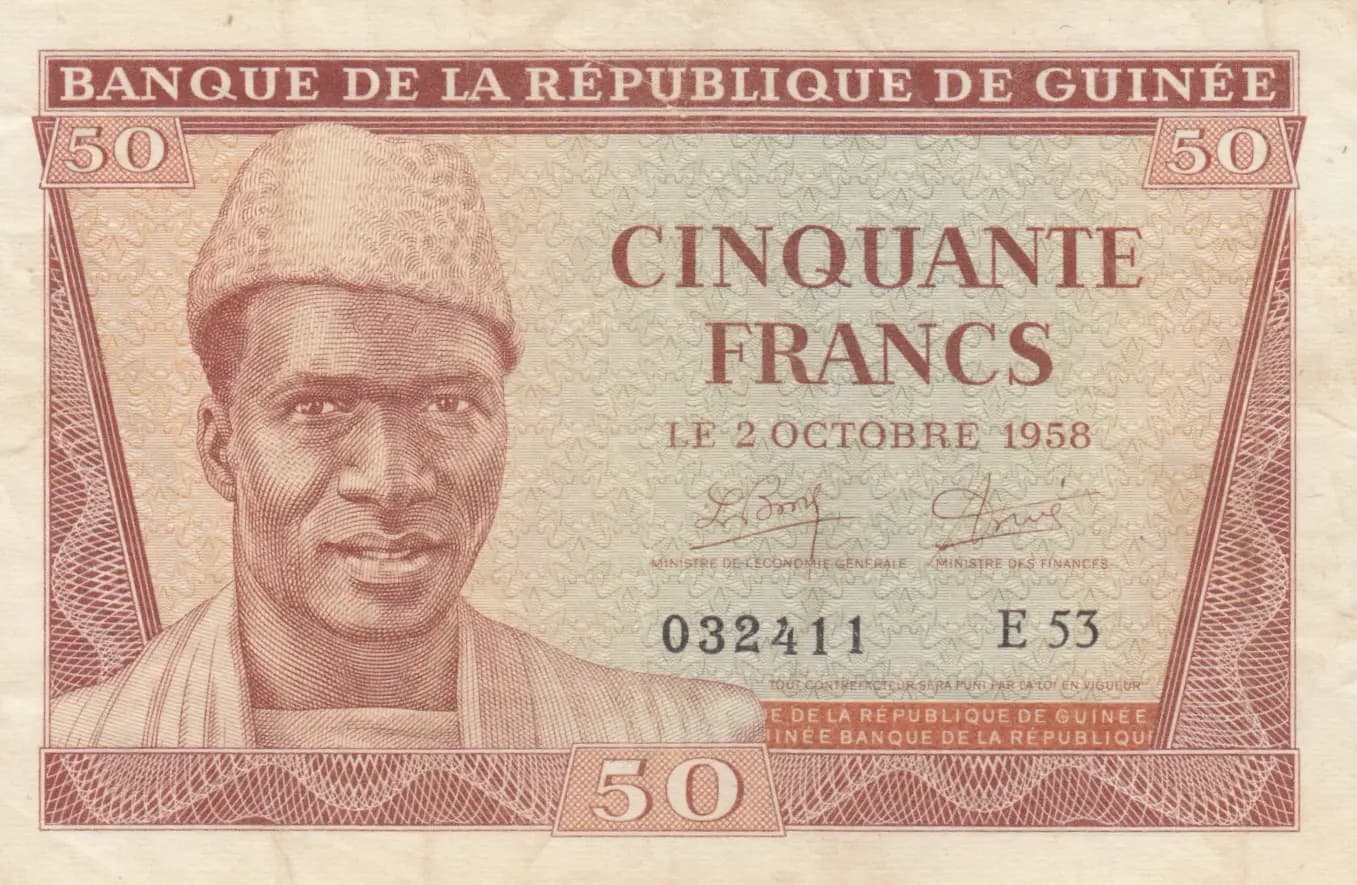
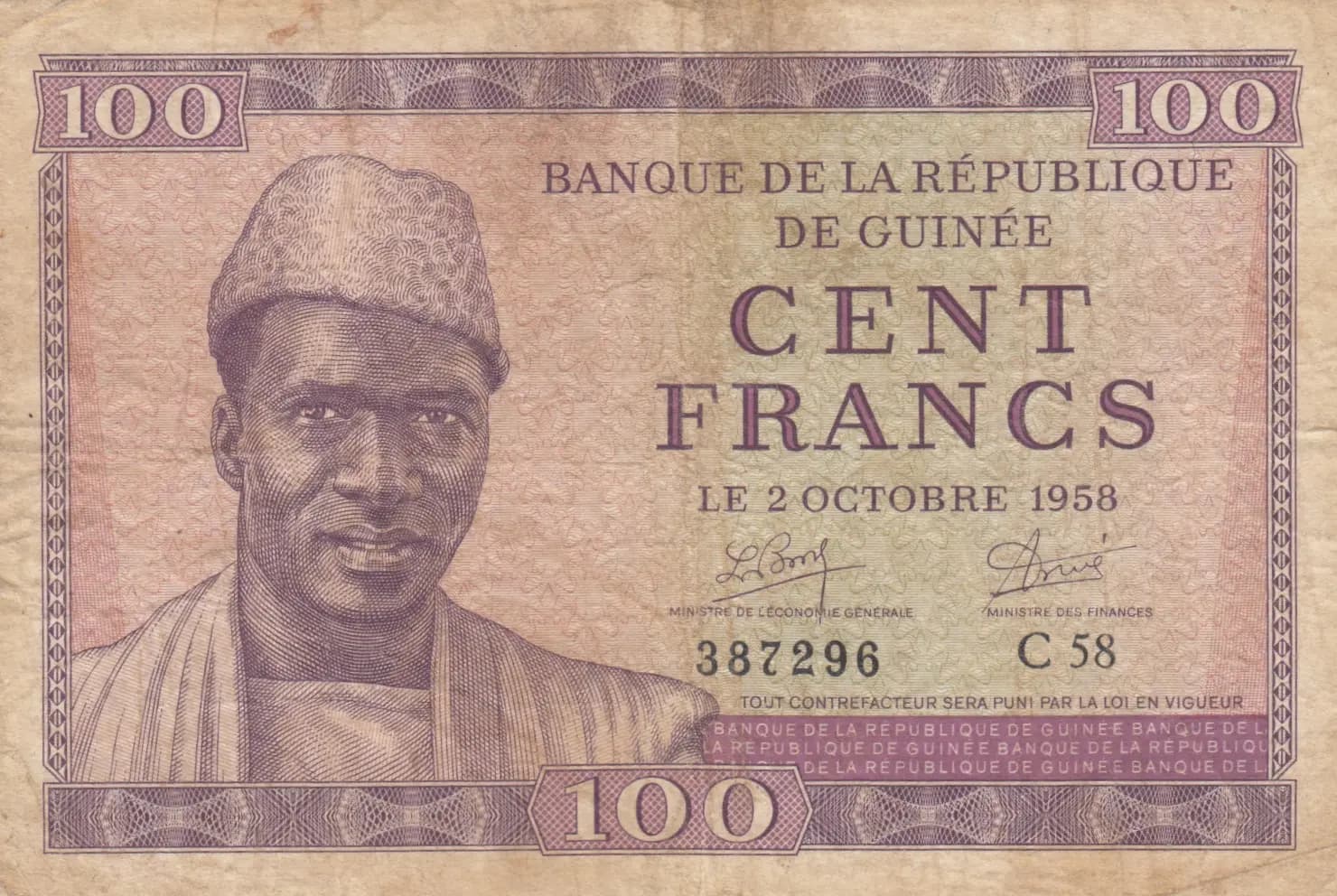
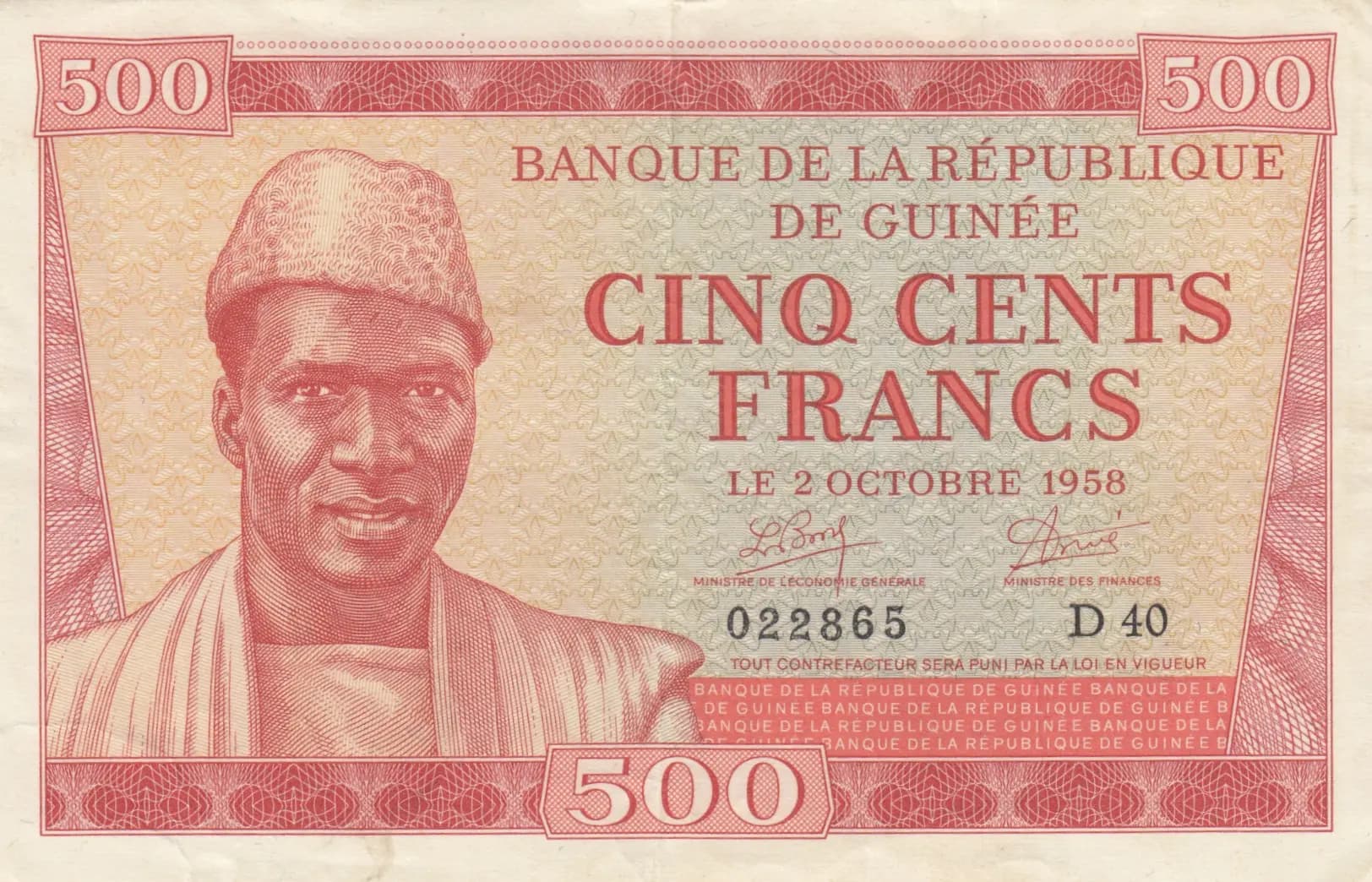
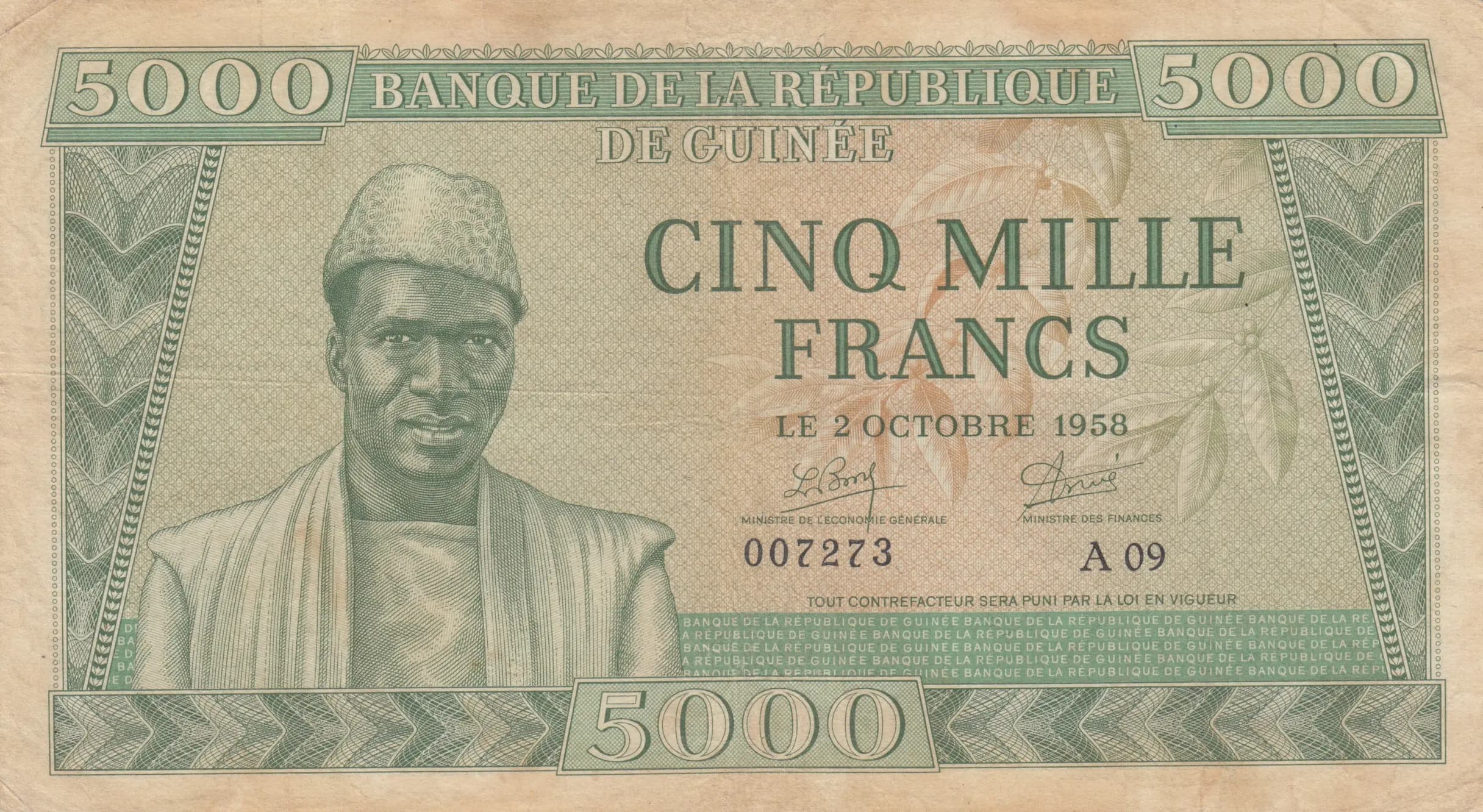
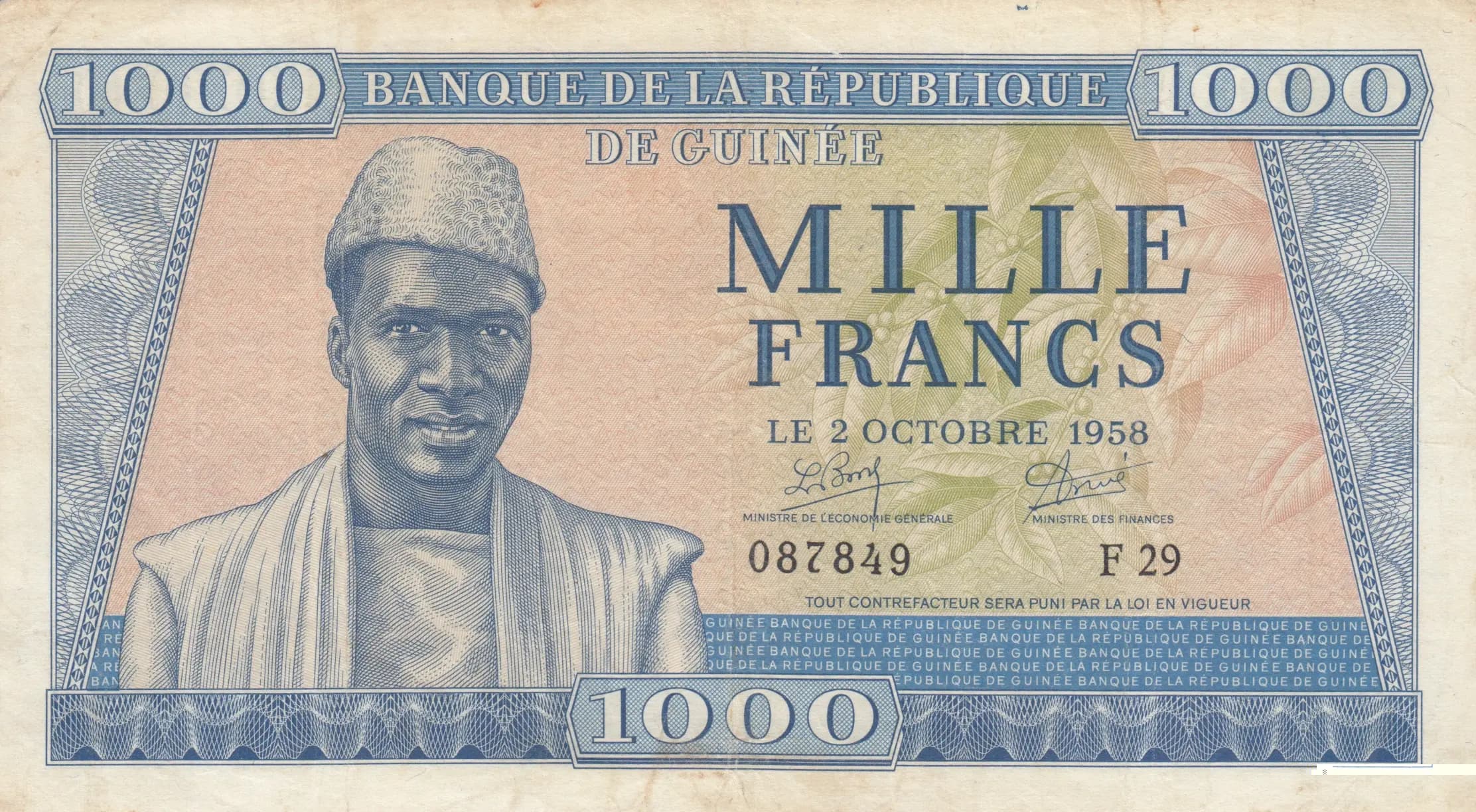
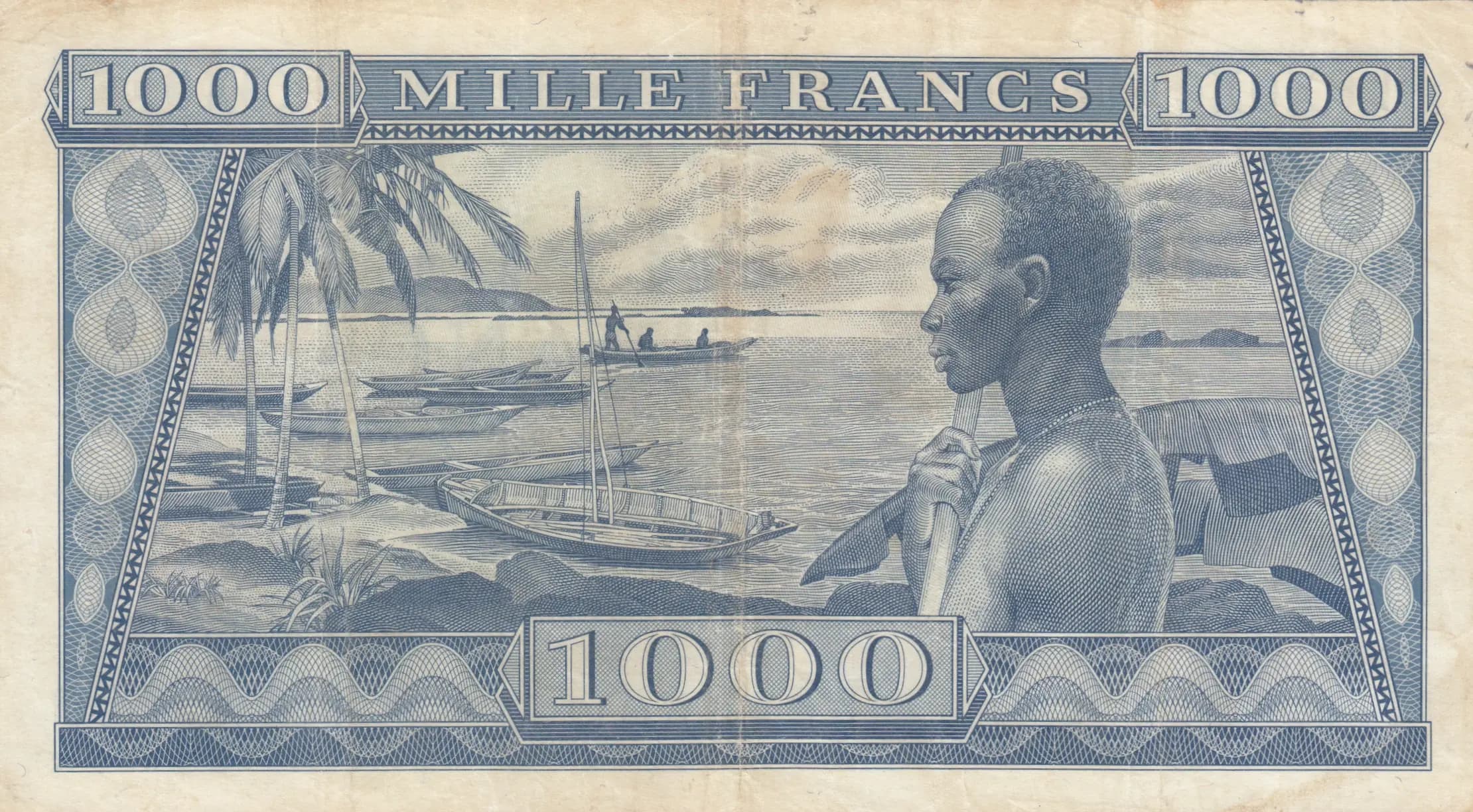
This 1000 Francs note from Guinea's inaugural 1958 issue represents an important artifact of the nation's independence period. The note exhibits classic VF condition with age-appropriate patina, foxing, and circulation wear while maintaining strong structural integrity and legible design elements. The front features a dignified portrait of Ahmed Sékou Touré in traditional dress, while the reverse depicts a dynamic riverside scene with fishermen and traditional boats, making this an ethnographically rich example of early post-colonial African banknote design.
Common. EBay market data shows this note (in various conditions) sells regularly in the $8–$70 range, with VF examples typically realizing $30–$40. The 2016 catalogue valuation of $110 for VF is substantially higher than recent market performance, suggesting either improved availability or collector preference shifts. The consistent appearance of this note in the secondary market across multiple condition grades and time periods (2010–2021) indicates a reasonable print run and adequate supply for collectors.
Issued on October 2, 1958, just days after Guinea's independence referendum, this banknote commemorates the nation's break from French colonial rule under President Ahmed Sékou Touré. The reverse imagery of fishermen and riverside activity reflects Guinea's economic reliance on natural resources and traditional livelihoods during the early independence period. The French-language inscriptions and classical engraving style demonstrate continuity with French design traditions while asserting Guinea's new sovereign identity through its own central bank.
The obverse features a formal portrait of Ahmed Sékou Touré, Guinea's first president, rendered in three-quarter view wearing traditional West African ceremonial dress including a decorated cap and draped robes, symbolizing national identity and cultural pride. The reverse depicts a picturesque scene of traditional Guinea riverine life: fishermen and boatmen navigate a waterway lined with palm trees in a tropical landscape setting, rendered in fine-line engraving to capture both the ethnographic detail and economic significance of fishing to the new nation. Both sides employ decorative geometric borders in a medallion pattern typical of contemporary French banknote design. The multicolor printing in blue, tan, peach, and green creates visual hierarchy while maintaining the formal gravitas appropriate to a nation-state's first currency.
FRONT: 'Banque de la République de Guinée' (Bank of the Republic of Guinea) | '1000 Mille Francs' (1000 Thousand Francs) | 'Le 2 Octobre 1958' (October 2, 1958) | 'Ministre de l'Économie Générale' (Minister of General Economy) | 'Ministre des Finances' (Minister of Finance) | 'Tout Contrefacteur Sera Puni par la Loi en Vigueur' (Any counterfeiter will be punished by current law) | Serial number '087849' | Series designation 'F 29'. BACK: '1000 Mille Francs' (1000 Thousand Francs) with repeating institutional identification.
Intaglio engraving (line engraving) throughout, characteristic of high-security banknote production of the era. The fine-line shading technique, intricate facial detailing, and complex geometric border work are hallmarks of traditional banknote engraving. The printer information is not definitively indicated in the visible inscriptions, though French security printers (likely Banque de France-affiliated contractors) were standard for early West African central bank issues.
Series designation 'F 29' with serial number '087849' observed on this example. Early issues of Guinea's 1000 Francs are known to exist with minor signature and series variations reflecting different ministerial tenures in late 1958. The October 2, 1958 date is fixed across all regular issues of this Pick number. No significant overprint or emergency varieties are known for this denomination and issuer.