100 sylis 1971
Market Prices
34 salesAbout This Note
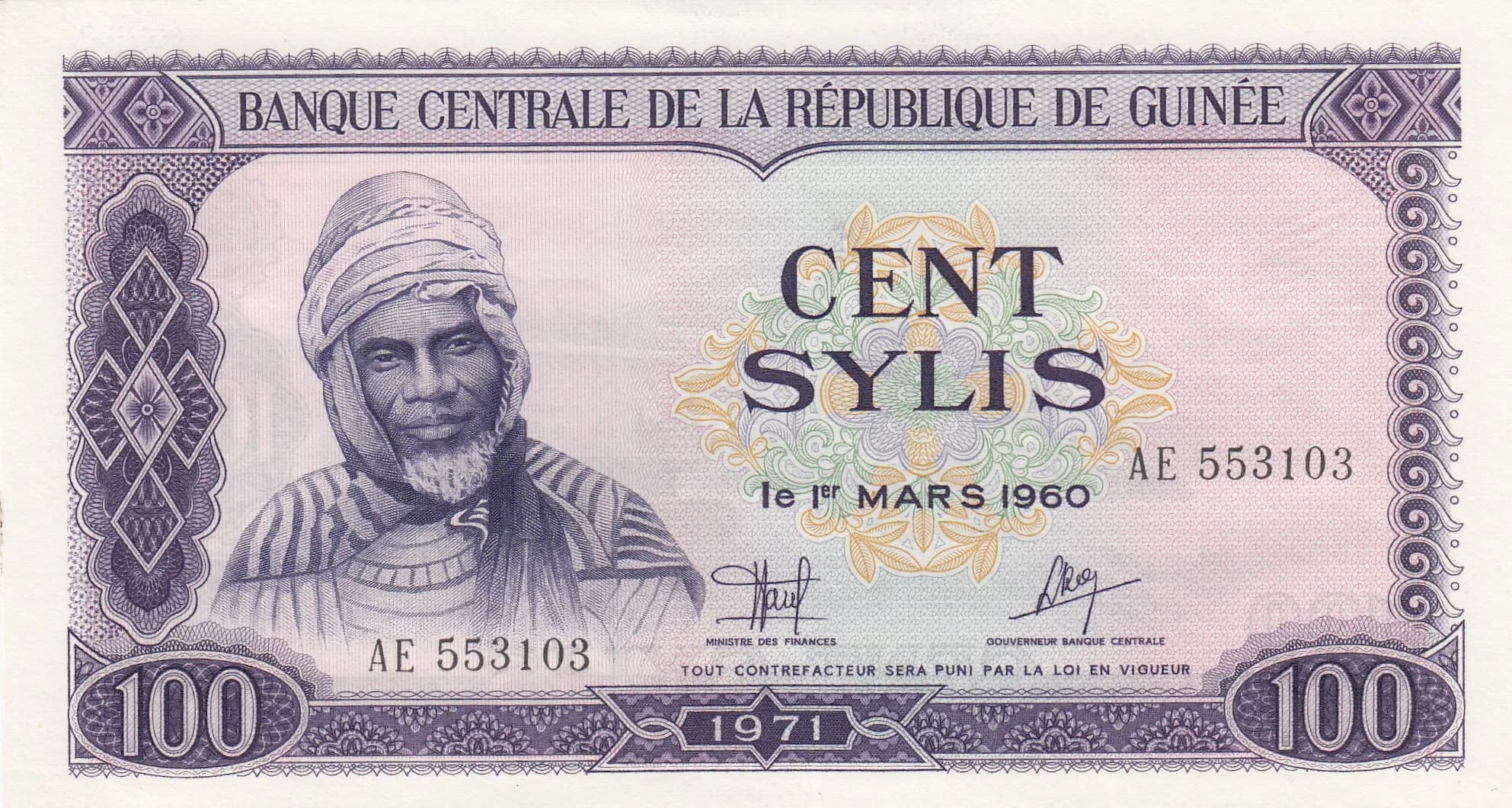
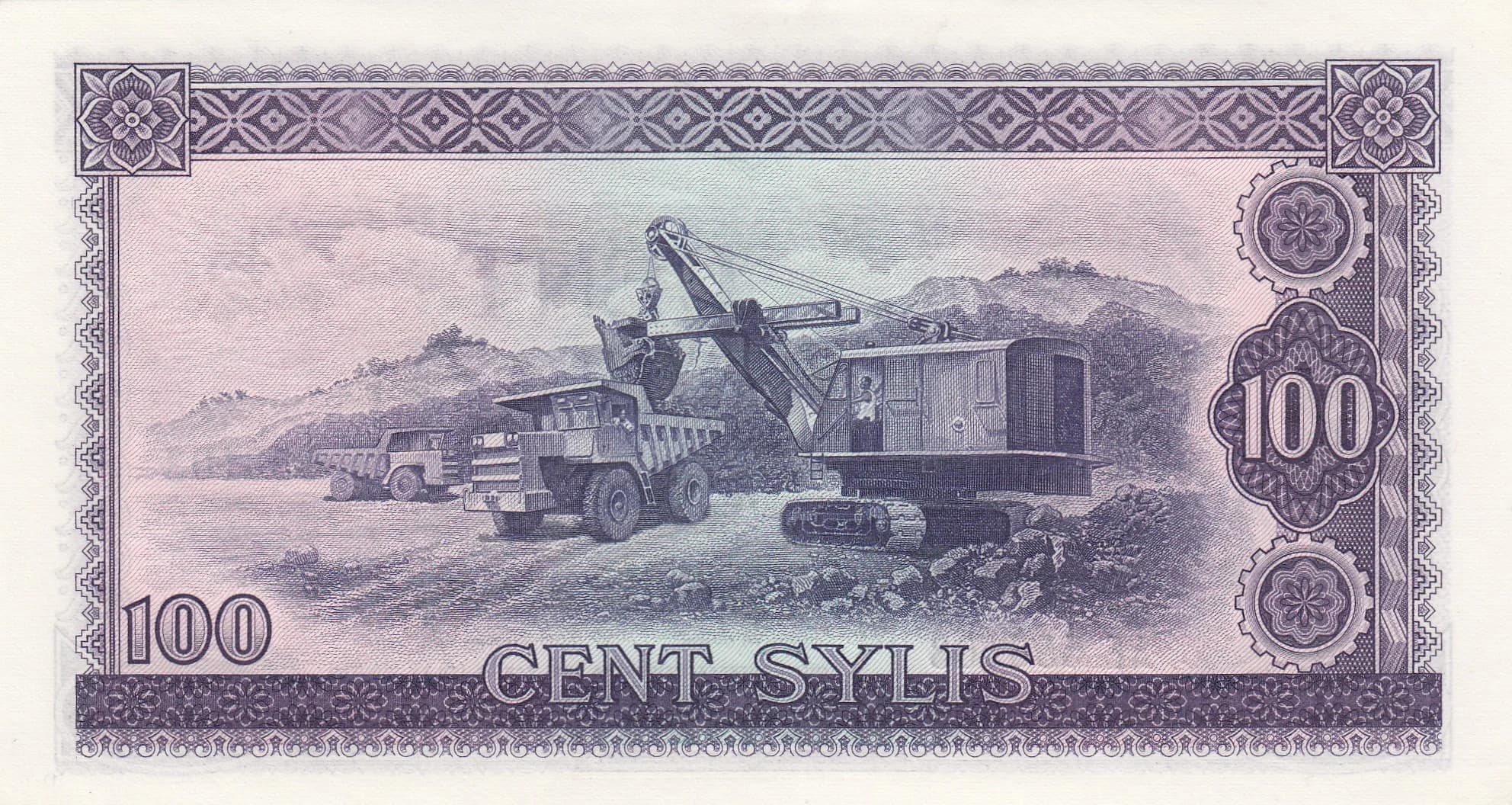
This is an exceptionally well-preserved uncirculated example of Guinea's 100 Sylis note from 1971, featuring a striking purple and violet color scheme with intricate geometric ornamentation. The obverse displays a portrait of Samory Touré in traditional dress, while the reverse depicts active bauxite mining operations with heavy excavation equipment—reflecting Guinea's mineral wealth during the post-independence period. The crisp condition with sharp margins, no creases or wear, and vibrant color saturation makes this a desirable specimen for collectors of West African currency.
Common. The eBay sales data shows consistent market activity over more than a decade (2011–2023) with UNC examples selling in the $6–$43 range, indicating adequate supply in the collector market. The 2019 catalogue value of $9 for UNC reinforces that this is a readily available note. While professional grading population data is limited, the regular appearance of this denomination in circulation records and persistent below-$50 valuations for uncirculated specimens confirm it is a common issue with no scarcity premium.
Issued in 1971 by the Banque Centrale de la République de Guinée under the authority of the Law of 1960, this note commemorates Samory Touré, the great-grandfather of President Ahmed Sékou Touré, connecting Guinea's post-colonial leadership to pre-colonial resistance against French colonization. The reverse's emphasis on open-pit bauxite mining reflects Guinea's strategic importance as one of Africa's leading bauxite producers during the 1970s, when such industrial imagery symbolized national economic development and modernization under Touré's government.
The obverse features a formal portrait of Samory Touré positioned at the left, depicted wearing a traditional head wrapping and striped garment, facing the viewer. The denomination 'Cent Sylis' is prominently centered with ornamental floral and leaf designs surrounding the text. Decorative geometric patterns and borders frame both sides of the note in intricate detail. The reverse depicts an active industrial mining scene with a large steam shovel excavator and dump truck engaged in loading operations, set against a hilly landscape—representing Guinea's bauxite mining industry. The color palette of purple, violet, and pink tones with light blue-green accents creates visual harmony across both sides, while repeated ornamental corner medallions with geometric and floral motifs provide security and aesthetic framing.
FRONT: 'Banque Centrale de la République de Guinée' (Central Bank of the Republic of Guinea); 'Cent Sylis' (One Hundred Sylis); '1er Mars 1960' (1st March 1960—the authorizing law date); 'Ministre des Finances' (Minister of Finance); 'Gouverneur Banque Centrale' (Governor Central Bank); 'Tout Contrefacteur Sera Puni par la Loi en Vigueur' (Any counterfeiter will be punished by law in force); '1971' (issue year); Serial number 'AE 553103'. BACK: '100' and 'Cent Sylis' (One Hundred Sylis) appear in decorative frames.
Intaglio engraving (recess printing), evident from the fine line details, intricate geometric patterns, sharp serif typography, and the dimensional quality visible in the ornamental borders and portraiture. The consistent ink saturation and crisp impression characteristic of intaglio printing are apparent throughout the design. The specific security printer for this series is likely Banque de France or a European security printer associated with Central Bank of Guinea production during the early 1970s, though definitive attribution would require archival records.
This specimen bears serial number AE 553103. The note is issued under the Law of 1st March 1960 with the 1971 date, representing a single main variety for Pick P-19. No overprints, color variants, or signature varieties are apparent from the visual analysis. The standard variety lacks the distinguishing features (such as printer marks or significant serial number anomalies) that would classify it as a notable collectible variant.