6 pence 1943
Market Prices
About This Note
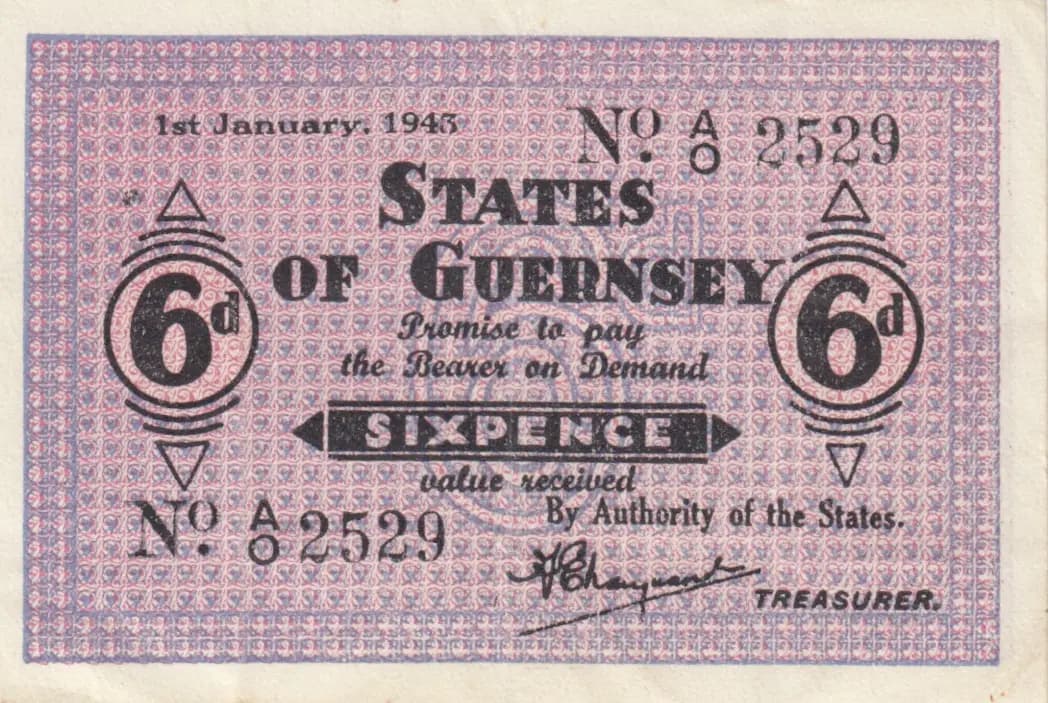
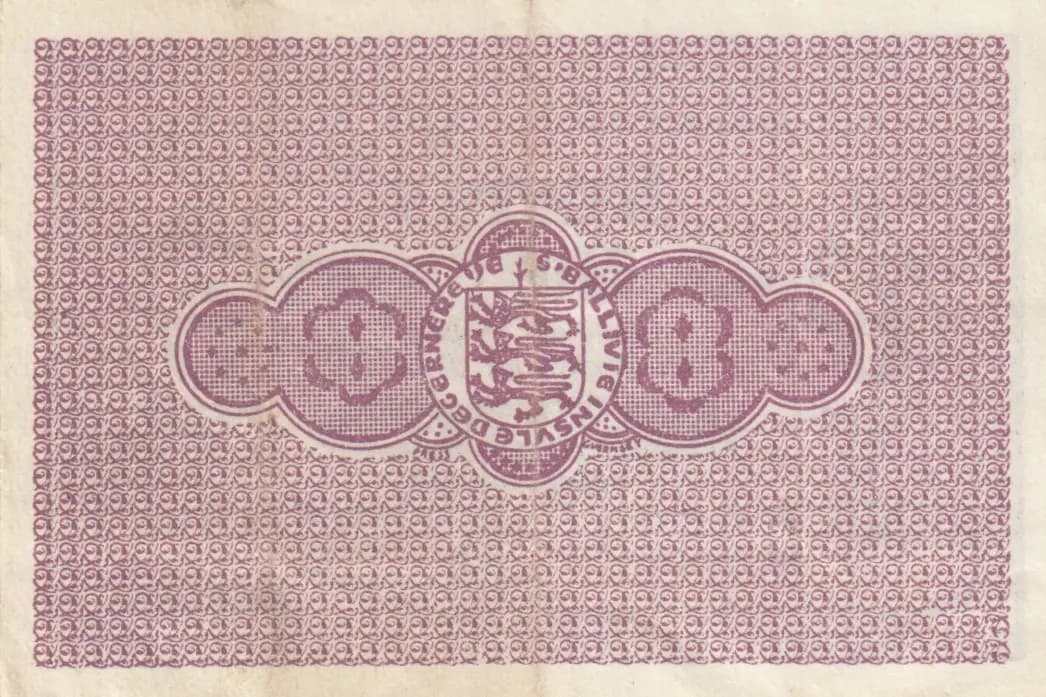
This Guernsey 6 Pence note from 1943 (Pick P-28) presents in Very Fine condition with visible signs of age and circulation appropriate to its World War II era origin. The note features an attractive pink and mauve color scheme with decorative geometric patterns and a prominent heraldic lion rampant on the reverse, characteristic of Channel Islands emergency currency. Despite moderate foxing and creasing consistent with its age, the serial number A 2529 and ornamental design elements remain relatively clear, making this a solid example of Guernsey's wartime small denomination emergency issue.
Common. This Pick P-28 6 Pence note appears regularly in the secondary market with eBay listings across multiple condition grades ranging from $67.50 (G) to $590.00 (UNC), and 2016 catalog values from $25 to $200, indicating steady collector demand but no scarcity. The presence of multiple condition-graded examples in active circulation suggests an adequate original print run that was not significantly depleted through recall or destruction. The VF-grade example described here, with estimated market value around $250 based on eBay comparable sales, represents a typical specimen of this issue.
Issued on 1 January 1943 by the Treasurer of The States of Guernsey, this 6 pence note represents emergency currency produced during German occupation of the Channel Islands in World War II. The heraldic lion rampant displayed prominently on the reverse serves as a symbol of Guernsey's sovereignty and identity during this period of occupation. These notes were essential small-denomination currency for the civilian population under occupation, making them historically significant documents of wartime Island administration.
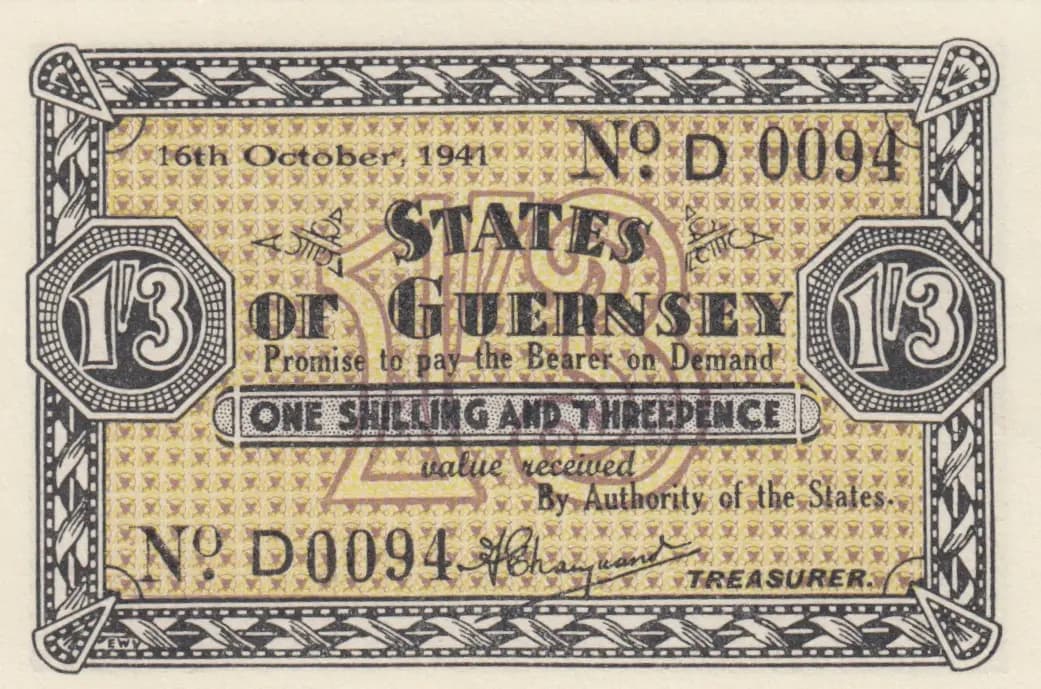
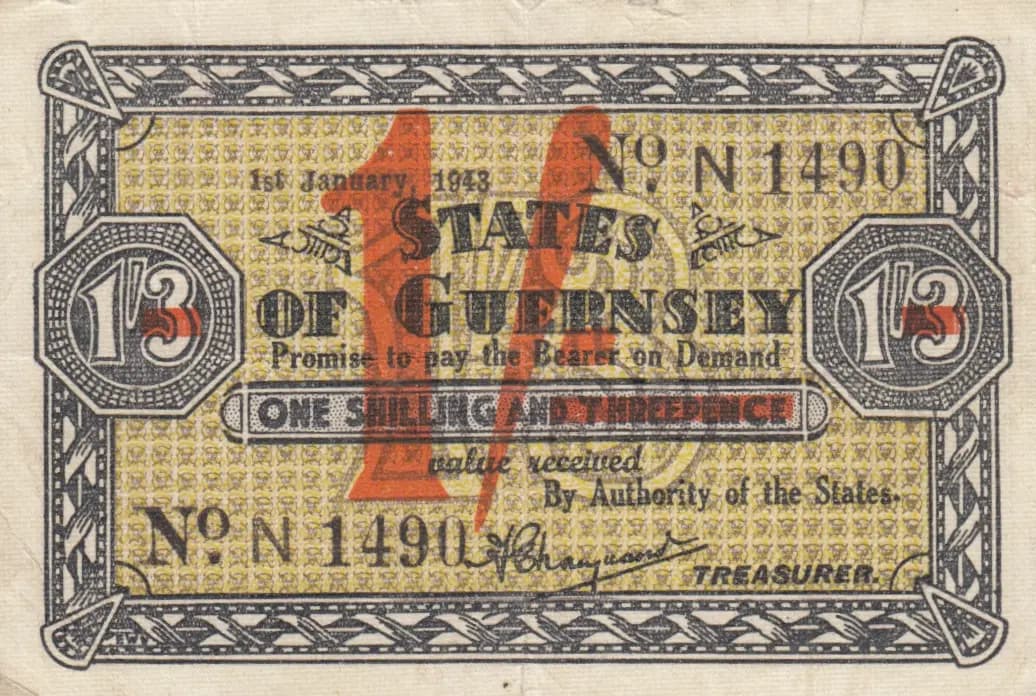
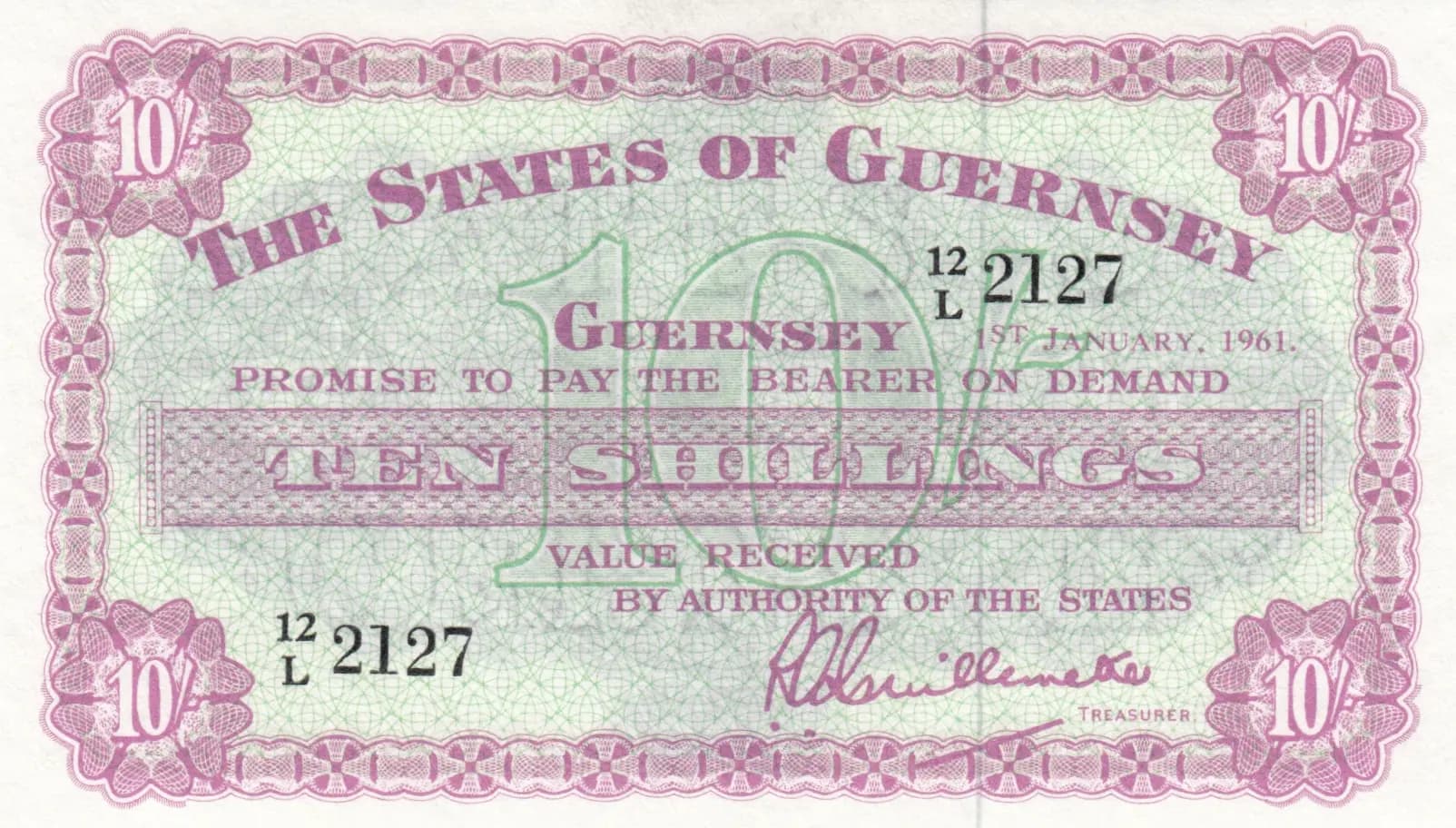
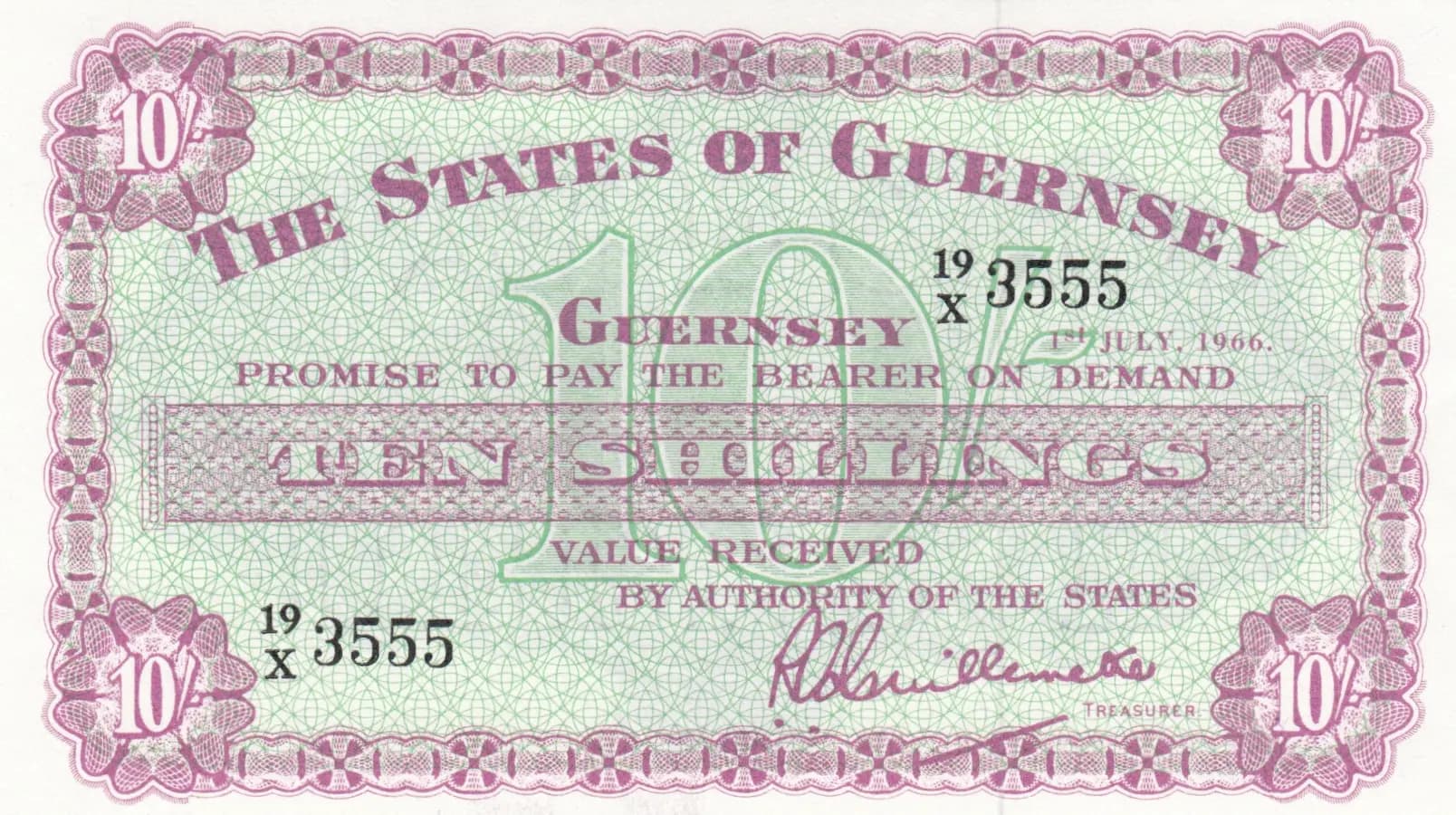
The obverse features a symmetrical layout with decorative triangular ornaments positioned in all four corners and inverted triangular symbols in lower corners, surrounding a central field dominated by circular denomination symbols with concentric rings. The design utilizes a repeating micro-pattern background in pink and mauve tones with cream/beige highlights, typical of security printing to deter counterfeiting. The reverse displays the coat of arms of Guernsey featuring a heraldic lion rampant housed within an ornamental quatrefoil or shield-like frame, surrounded by decorative circular and curved elements. The entire reverse surface maintains the same pink and mauve repeating pattern background. Both sides employ symmetrical, formal design principles consistent with British Commonwealth emergency currency of the period.
FRONT: 'Promise to pay the Bearer on Demand' (standard currency obligation); 'STATES OF GUERNSEY' (issuing authority); 'SIXPENCE' and '6d' (denomination); 'By Authority of the States' and 'TREASURER.' (authorization); 'N.° A 2529' (serial number, appears twice); '1st January: 1945' (date inscription - note discrepancy with cataloged 1943 issue date); 'oaths received' (administrative notation). BACK: 'GUERNSEY' (country identification); '30' (printing reference or check mark); heraldic coat of arms display (no text inscription).
This note was produced using letterpress or intaglio printing methods, evidenced by the crisp geometric patterns and the precise registration of the heraldic design. The repeating micro-pattern background visible throughout both sides suggests security printing employing tint plates or guilloché patterns characteristic of wartime British Commonwealth currency production. The color scheme of pink, mauve, and cream indicates multi-color printing requiring separate passes or plates. While specific printer attribution for Guernsey's wartime notes requires archival confirmation, such emergency issues were typically produced by established security printers under British government coordination.
Serial number A 2529 indicates this specimen carries the standard letter-prefix format for Guernsey's 1943 emergency issues. PMG population reports indicate one catalogued variant for Pick P-28, suggesting minimal significant varieties are recognized within this base number. The date inscription reading '1st January: 1945' on the observed note warrants verification against the cataloged issue date of 1943 - this may reflect either an error in the visual analysis transcription or a printing variant with alternative date inscription that collectors should investigate further. No signature varieties, overprints, or other distinguishing characteristics specific to this particular serial number have been identified.